


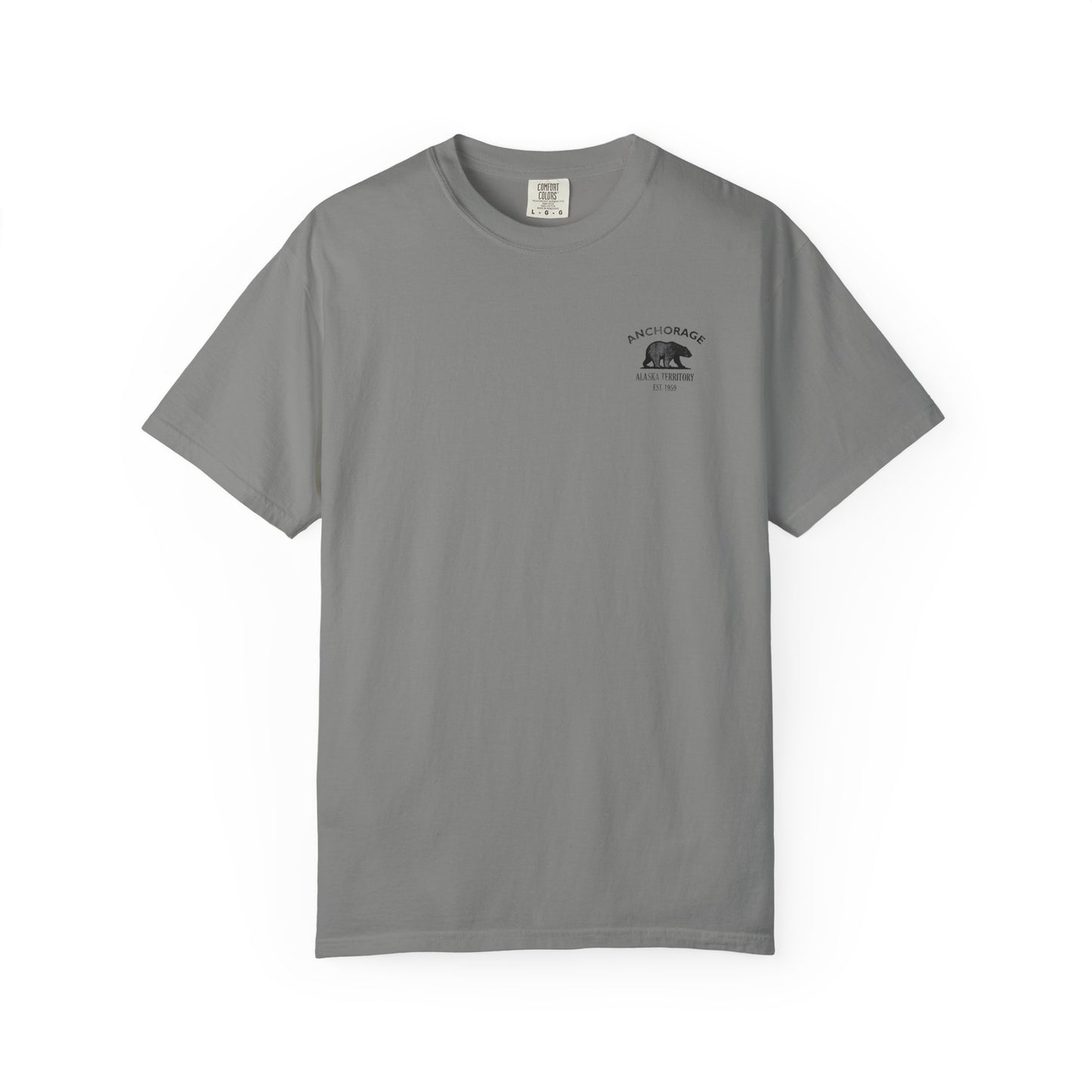
The Second World War remade the town. Its position on the air route to Asia made Anchorage strategically vital, and the military built Elmendorf Field and Fort Richardson — today combined as Joint Base Elmendorf-Richardson — on the high ground north of the city. The bases brought roads, runways, payrolls, and people, and Anchorage grew through the war and the Cold War from a small rail town into the population center of the territory. By the time Alaska approached statehood, the city had quietly become the place where the rest of the state did its business.
It is a city wedged between water and rock. Anchorage occupies a narrow coastal shelf between the two arms of Cook Inlet — Knik Arm and Turnagain Arm — with the steep wall of the Chugach Mountains rising directly behind downtown. The inlet carries one of the largest tidal ranges in North America, and on Turnagain Arm a bore tide can roll in as a single visible wave, chased by surfers and photographers. Behind the city, Chugach State Park spreads across nearly half a million acres, one of the largest state parks in the country, so that moose wander the bike paths and the peaks stay snow-streaked into summer. Few cities of its size sit so completely inside their own wilderness.
Why People Visit Anchorage
Anchorage offers Alaska in one place — a real city with museums, trails, and good food, set inside the scenery most people come north to see. Visitors come for the mountains and the inlet, the wildlife and the long summer light, and stay for the easy access to everything beyond. From the coastal trail to the Chugach, it rewards a day or a week. It is rugged, scenic, and genuinely Alaska.
