


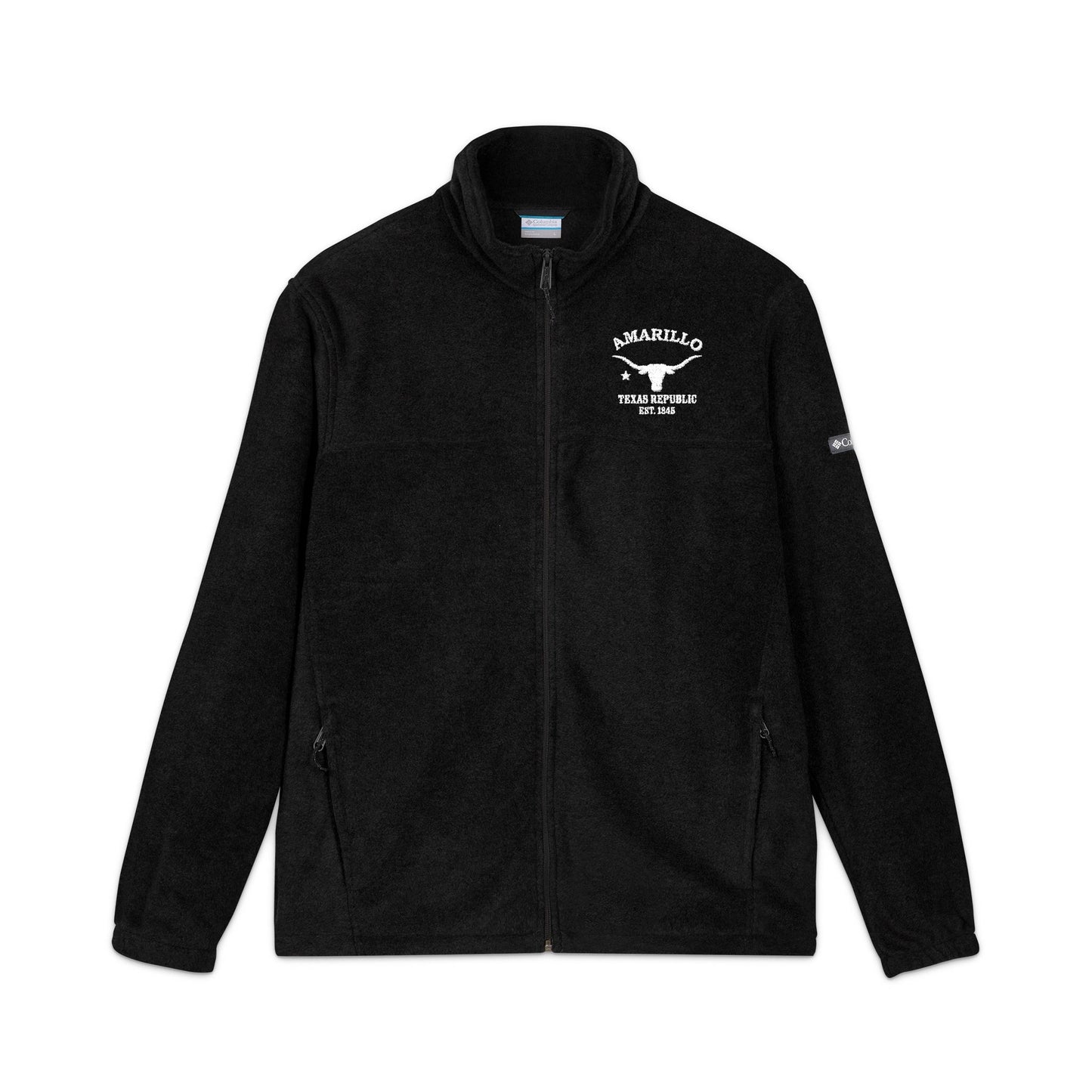

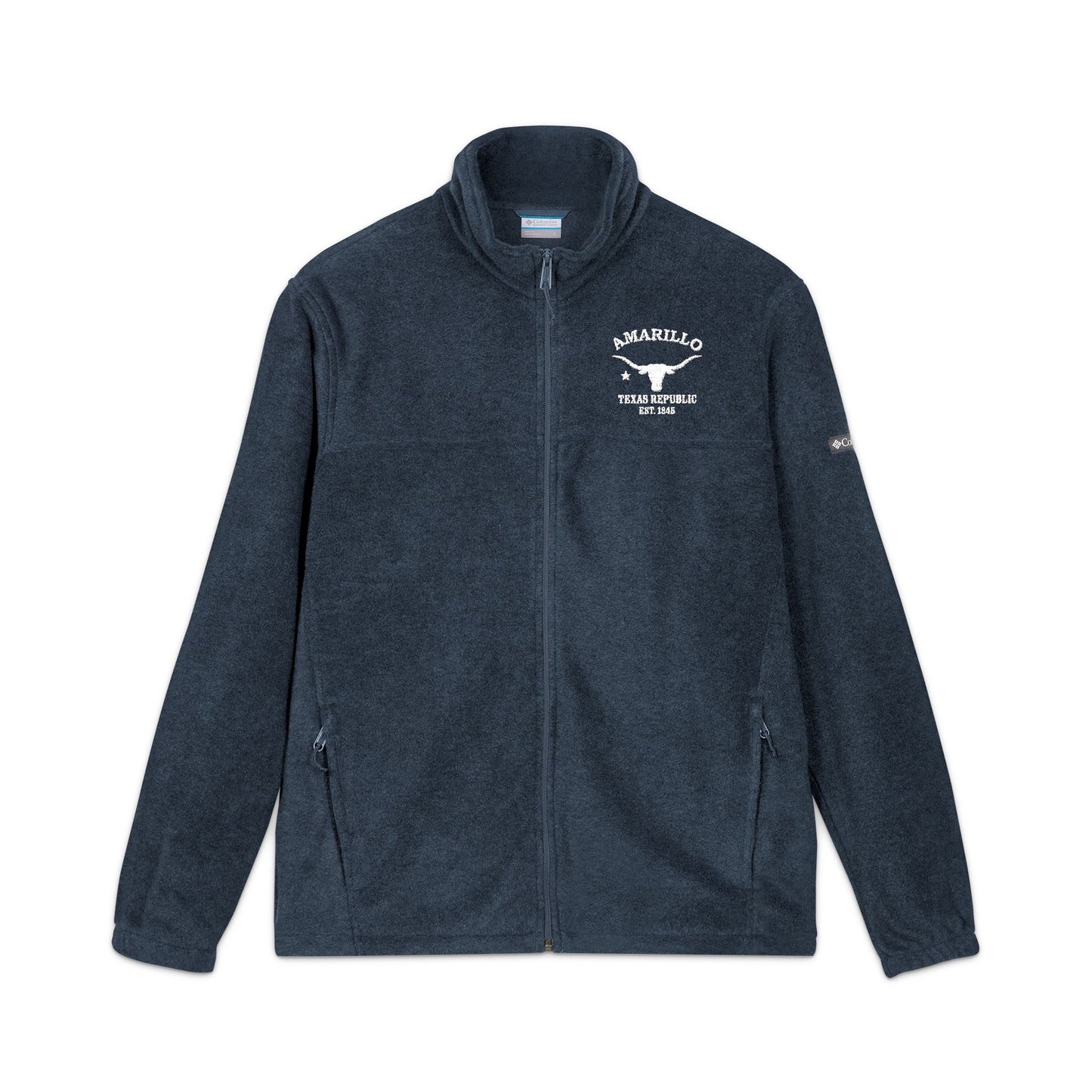
Our Amarillo logo carries a Texas longhorn — the cattle breed that built the open range — and a Lone Star over "1845," the year of statehood and the shared emblem of every Merlin Classics Texas place. Printed black-and-white with the worn look of a branding iron or an old highway shield, the longhorn and star read as Texas in shorthand: cattle country, the Lone Star, the wide Panhandle horizon. What makes this one Amarillo is the place behind it — the Yellow City, the cattle trains, the Quarter-Horse country, and the Mother Road running through the middle of it all.
They named it yellow. When the railroad reached the high plains of the Texas Panhandle in 1887, the cattle town that sprang up took the Spanish word for yellow — amarillo — for the wildflowers, or the soil. The Yellow City grew into one of the busiest cattle-shipping points on earth, then a marquee stop on Route 66 halfway between Chicago and the coast, with the second-largest canyon in the country cut into the plains just to the south. Cattle, canyon, and the Mother Road — this is Amarillo, and this page tells its story.
Why People Visit Amarillo Texas
Amarillo draws visitors with a mix of Western heritage, natural wonder, and Mother Road Americana. Travelers find it both a marquee stop along historic Route 66 and the gateway to Palo Duro Canyon, with deep cattle-ranching and Quarter-Horse traditions and the wide, plainspoken character of the high plains. It is proud, practical, and unmistakably Texan.
