Sarasota Florida — Retro Vintage History
What's with the circus? In the 1920s the most famous circus impresario of his age, John Ringling, moved his show's winter quarters to Sarasota — and a sleepy Gulf town became the "Circus Capital of the World." For three decades the circus wintered here while Ringling raised a Venetian palace on the bay and filled an Italian-Renaissance museum with Old Masters. The big top eventually moved on, but the town it built stayed: Florida's arts capital, on the white sand of the Gulf.
Wear the HistoryLong before the circus arrived, Sarasota was a small settlement on the bay — pioneer families farming and fishing the Gulf shore, joined by a colony of Scots in 1885. The town incorporated in 1902 and grew slowly along the waterfront. Then came the 1920s, and a circus magnate with a fortune and a vision, and everything about the place changed.
What's with the palace on the bay? It's Ca' d'Zan — "House of John" in the Venetian dialect — the mansion John and Mable Ringling completed on Sarasota Bay between 1924 and 1926: pink stucco, glazed terracotta, and a marble terrace at the water's edge. Beside it Ringling built an Italian-Renaissance palazzo modeled on the Uffizi and filled it with Old Masters; it opened in 1930 as the Museum of Art. The circus made Sarasota famous, but the palace and the museum made it an arts capital.

What Ringling started, the town carried on. Sarasota became Florida's arts capital — the opera, the theaters, the Van Wezel hall, Marie Selby's bayfront gardens — a remarkable cultural density for a city its size. And just across the water lay the other half of its fame: the barrier islands, where Siesta Key's sand is almost pure quartz, so fine and white it stays cool underfoot. Arts and Gulf beach, side by side, became the Sarasota signature.
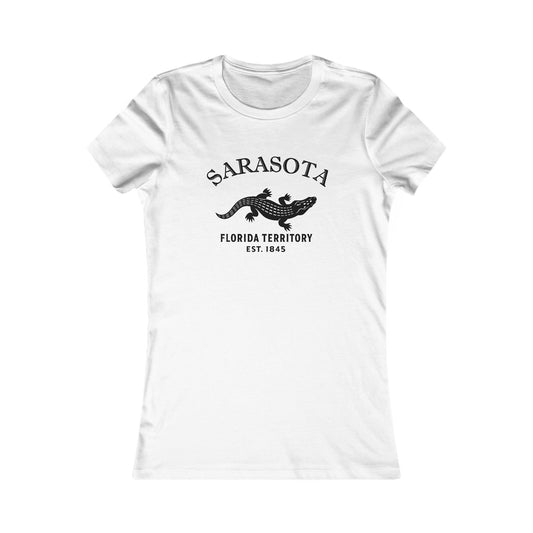
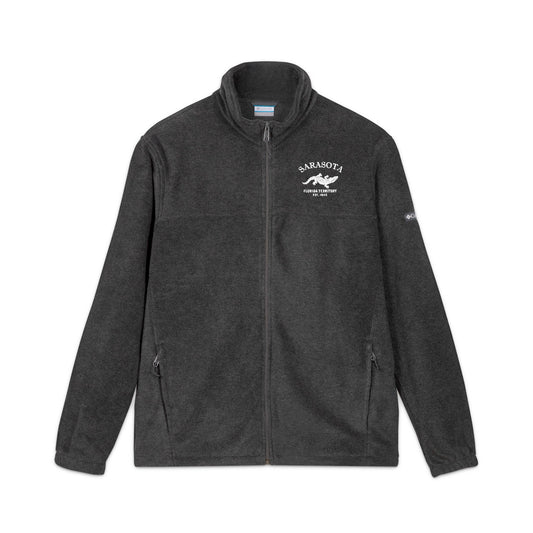
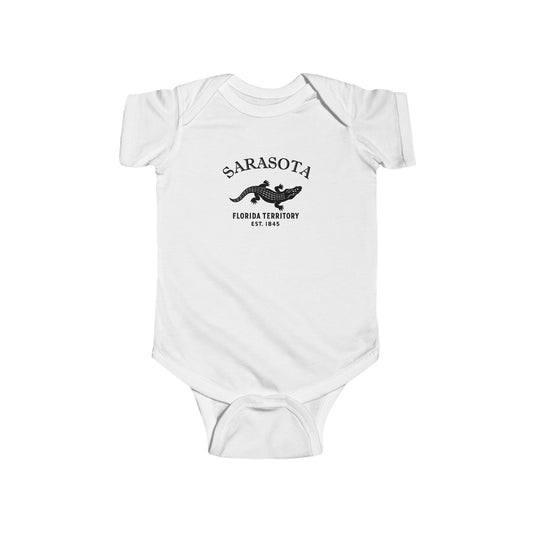
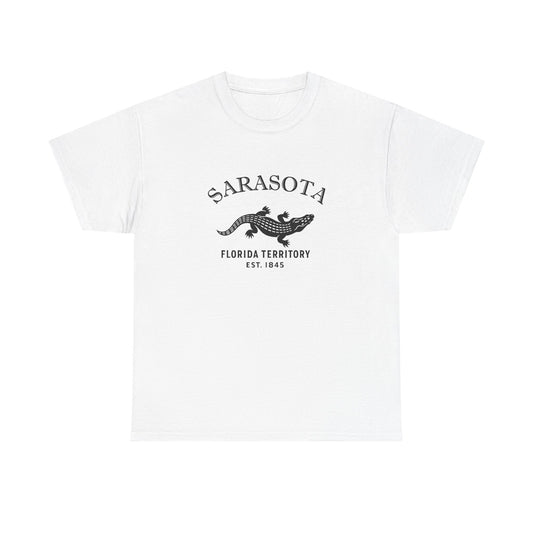
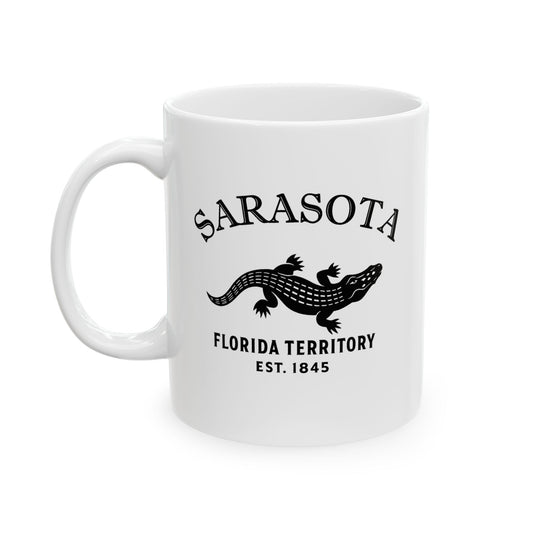
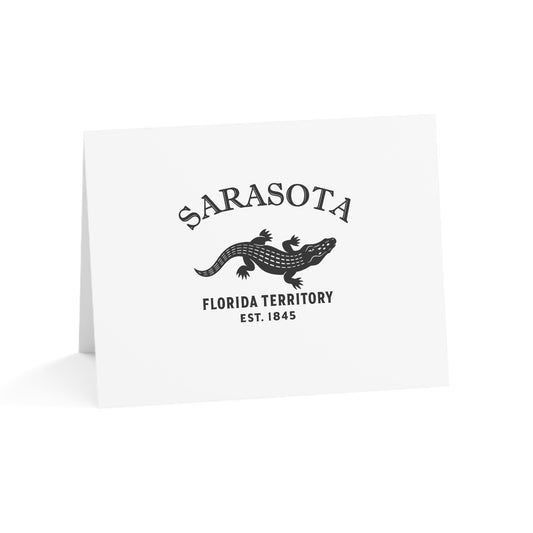
Our Sarasota logo carries Florida's alligator over "1845," the year Florida joined the Union — the shared emblem of every Merlin Classics Florida place. Printed black-and-white with the worn look of an old crate label or a woodcut stamp, the gator reads as Florida in shorthand: subtropical, sun-baked, and a little wild. What makes this one Sarasota is the place behind it — the circus capital, the palace on the bay, the museum, and the white sand of the keys.
Today Sarasota is known for two things at once: a Gulf-coast arts capital of museums, gardens, and theaters, and the white-sand beaches of Siesta and Lido Keys. Our Sarasota designs gather that identity — the alligator-and-1845 emblem, the Gulf coast, and a coastal art-print line for the walls — into wearable and framable form. From the circus capital to the arts capital, on the white sands of the Gulf — wear a little of Sarasota's Florida history.

Sarasota Florida — Travel Guide
Visiting Sarasota Florida Today
Sarasota pairs a Gulf-coast arts legacy with white-sand beaches and bayfront gardens — a small city with the cultural institutions of a much larger one, wrapped around a circus-baron's Gilded-Age dream.
The Ringling Legacy, Gardens & the Gulf in Sarasota Florida
For visitors searching for things to do in Sarasota, Florida:
- Tour The Ringling — Ca' d'Zan, the Museum of Art (the State Art Museum of Florida), and the bayfront grounds.
- Wander Marie Selby Botanical Gardens, with orchids, banyans, and bayfront walkways.
- Spend an afternoon on Siesta Key, whose fine white quartz sand is regularly ranked among the country's best.
- Browse St. Armands Circle, the 1920s Mediterranean shopping district near Lido Key.
- Catch a performance at the Van Wezel Performing Arts Hall on the bayfront.
Why People Visit Sarasota Florida
Sarasota draws a rare mix of arts traveler and beachgoer: a museum and opera town that is also a Gulf-coast resort. Visitors find Old Masters and orchids in the morning and white sand in the afternoon, all within a few miles of the bay. It is cultured, sunny, and unmistakably Florida.
Wear the History

For deeper reading on the Sarasota, Florida history described here — the 1885 Scots colony and 1902 town incorporation, John and Mable Ringling's 1920s transformation of the city, Ca' d'Zan (1924–26), the move of the circus winter quarters in 1927, and the 1930 opening of the Ringling Museum of Art — it may be useful to consult (1) the Sarasota County Historical Resources and the History Center, (2) the Sarasota County Libraries local-history collection, (3) the State Library and Archives of Florida and the Florida Historical Society, (4) the City of Sarasota clerk's records office, and (5) The Ringling (the State Art Museum of Florida) research library. For travel and visitor information, it may be useful to contact (1) Visit Sarasota County, (2) Visit Florida, (3) the Sarasota County Parks, Recreation and Natural Resources department, (4) The Ringling and Marie Selby Botanical Gardens, and (5) the regional Sarasota–Bradenton (SRQ) airport and visitor information desks.
Shop the Sarasota Florida collection
View full collection-
Sarasota Florida Vintage Retro Premium Crewneck Sweatshirt - Black Logo
Regular price $48.00 USDRegular price -
Sarasota Florida Vintage Retro Premium Crewneck Sweatshirt - White Logo
Regular price $48.00 USDRegular price -
Sarasota Florida Vintage Retro Womens Fitted Ringspun Cotton Tee - Black Logo
Regular price $28.00 USDRegular price -
Shoreline Trio - Silhouette Art Giclée Unframed Art Print
Regular price From $34.00 USDRegular price -
Boy and Hound - Silhouette Art Framed Art Print
Regular price From $96.00 USDRegular price -
Sarasota Florida Vintage Retro Unisex Embroidered Fleece Jacket - White Logo
Regular price $98.00 USDRegular price -
Sarasota Florida Vintage Retro Cotton Jersey Baby Bodysuit - Black Logo
Regular price $26.00 USDRegular price -
Between Horse and Hound - Silhouette Art Giclée Unframed Art Print
Regular price From $34.00 USDRegular price -
Shoreline Trio - Silhouette Art Framed Art Print
Regular price From $96.00 USDRegular price -
Sarasota Florida Vintage Retro Unisex Heavy Cotton Hoodie - Black Logo
Regular price $56.00 USDRegular price -
Sarasota Florida Vintage Retro Embroidered Cotton Cap - Black Logo
Regular price $32.00 USDRegular price -
Shoreline Trio II - Silhouette Art Giclée Unframed Art Print
Regular price From $34.00 USDRegular price -
Whitewater Run - Silhouette Art Framed Art Print
Regular price From $96.00 USDRegular price -
Sarasota Florida Vintage Retro Unisex Heavy Cotton Tee - Black Logo
Regular price $22.00 USDRegular price -
Sarasota Florida Vintage Retro Ceramic Mug - Black Logo
Regular price From $16.00 USDRegular price -
Boy and Hound - Silhouette Art Giclée Unframed Art Print
Regular price From $34.00 USDRegular price -
Whitewater Leap - Silhouette Art Framed Art Print
Regular price From $96.00 USDRegular price -
Sarasota Florida Vintage Retro Unisex Embroidered Cotton Polo - Black Logo
Regular price $48.00 USDRegular price -
-
Whitewater Leap - Silhouette Art Giclée Unframed Art Print
Regular price From $34.00 USDRegular price -
Boy and Hound Portrait - Silhouette Art Framed Art Print
Regular price From $112.00 USDRegular price -
Sarasota Florida Vintage Retro Unisex Heavy Crewneck Sweatshirt - White Logo
Regular price $44.00 USDRegular price -
Sarasota Florida Vintage Retro Thank You Card Set - Black Logo
Regular price From $25.00 USDRegular price -
Boy and Hound Portrait - Silhouette Art Giclée Unframed Art Print
Regular price From $44.00 USDRegular price