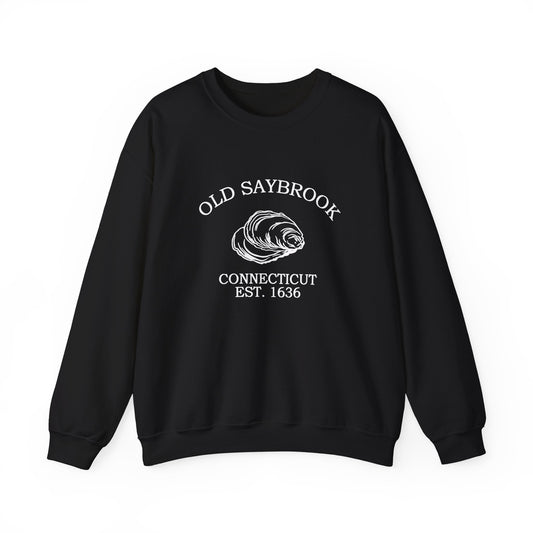
Old Saybrook Connecticut — Retro Vintage History
What's with the River Defenses of Old Saybrook? Where river meets Sound, the water can be gentle one day and pushy the next, and towns learn to live with that power through walls, banks, and smart placement. River Defenses is the nickname for the practical fixes that keep streets and yards from being rewritten: riprap, dunes, and edges built to take a hit. A quick cue is the debris line: if you see fresh sticks high on the grass, the last tide ran strong enough to test the defenses. That is flow and wind, not drama. Between salt marsh and open water, Old Saybrook feels like a place always bracing, quietly, for the next surge.
Wear the HistoryWhere you're from. Where you love. Where you explored. Where you belong.
At the mouth of the Connecticut River since 1635. The river that runs the length of New England — 410 miles from the Canadian border — ends here, at a quiet point of land where Long Island Sound finally takes it in. In the autumn of 1635, a 36-year-old English engineer named Lion Gardiner sailed up to that point with a commission from two English lords, William Fiennes (Lord Saye and Sele) and Robert Greville (Lord Brooke), to build a fortified settlement at the river's mouth. He built Saybrook Fort that winter — the town's name is a contraction of the two lords' titles — and the colony he founded became the first officially-chartered English settlement in Connecticut, predating Hartford by a year. Sixty-six years later, in 1701, ten Congregationalist ministers met at a Saybrook parsonage to charter a Collegiate School for the colony — the institution that would be renamed Yale College in 1718 and would hold its first commencements at Saybrook before moving to New Haven in 1716. David Bushnell was born in Saybrook in 1740 to a farming family. He entered Yale late, at thirty, graduated in July 1775 just as the Revolutionary War began, and went straight home to his brother Ezra's Saybrook farm to build a boat. By that fall he had finished the Turtle — a seven-foot oak-hulled, hand-cranked, screw-propelled, one-man submersible designed to attach a gunpowder mine to the keel of a British warship. He tested it that summer in the Connecticut River off what is now Ayer's Point. It was the world's first combat submarine. George Washington called Bushnell's work "an effort of genius." Lynde Point Lighthouse went up at the river's mouth in 1803 — the oldest in Connecticut, still standing on the same outcrop today. The Saybrook Breakwater Light followed in 1886, marking the navigable channel from offshore. The Fenwick borough — named for George Fenwick, Lion Gardiner's Saybrook Colony co-founder — became a quiet shoreline retreat in the late nineteenth century, the kind of small community where a single family could live in the same house for ninety years. The colony, the college, the submarine, the two lighthouses, the borough. One point of land. One mouth of one river. Almost four hundred years.
QUICK FACTS — OLD SAYBROOK, CT
Saybrook Colony, founded 1635 when Lion Gardiner built Saybrook Fort at the Connecticut River's mouth, is the oldest officially-chartered settlement in Connecticut — a year older than Hartford.
The town's name is a contraction of two English lords' titles — Lord Saye and Sele and Lord Brooke, who commissioned the fort.
Yale began here: the Collegiate School was chartered at Saybrook in 1701 and met in town until 1716, before moving to New Haven and taking the name Yale in 1718.
David Bushnell tested the Turtle — the world's first combat submarine — in the Connecticut River off Ayer's Point in 1775; Washington called his work "an effort of genius."
Lynde Point Lighthouse (1803) is the oldest lighthouse in Connecticut; the Saybrook Breakwater Light (1886) stands offshore on the jetty beside it.
Katharine Hepburn lived at the borough of Fenwick for most of her life and died there in 2003; the restored Main Street theater that bears her name opened in 2009.
The Old Saybrook South Green, a 20-acre National Register district, preserves the town green and buildings from the port's prosperous 1760-1900 era.
Old Saybrook sits in Middlesex County where the Connecticut River meets Long Island Sound — about 10,500 people, one ZIP code (06475), and two lighthouses.
The colony's first years were hard ones — Saybrook Fort stood under siege through the winter of 1636-37 during the Pequot War, and the settlement that survived grew slowly outward from the fort into a farming and seafaring town. By the eighteenth and nineteenth centuries Old Saybrook was a working port: shipyards on the coves, oyster beds in the rivers whose names still say so, and captains' and merchants' houses rising around the green — the Hart House of 1767 and the James Pharmacy of 1790 among the survivors, and the South Green itself now a National Register district of that prosperous port century.
The railroad remade the town's geography in 1873, when the Shore Line route and the Connecticut Valley line met at a junction here, and the shoreline that had launched ships began receiving summer visitors instead. Cottage colonies spread along the beaches, and on the peninsula between South Cove and the Sound the borough of Fenwick took shape in the late nineteenth century — shingled houses, a small golf course, and families who returned every summer for generations, the Hepburns among them from 1913.

The modern town keeps all of it within a few square miles: a Main Street of nineteenth-century storefronts ending at the marsh, the restored theater on Main Street drawing year-round audiences since 2009, the Amtrak station on the old junction, and the boardwalks at Saybrook Point looking out to Lynde Point Light. It is a town of about ten and a half thousand people with more shoreline than size — beaches, coves, two rivers named for oysters and hammocks, and the causeway running out to Fenwick.
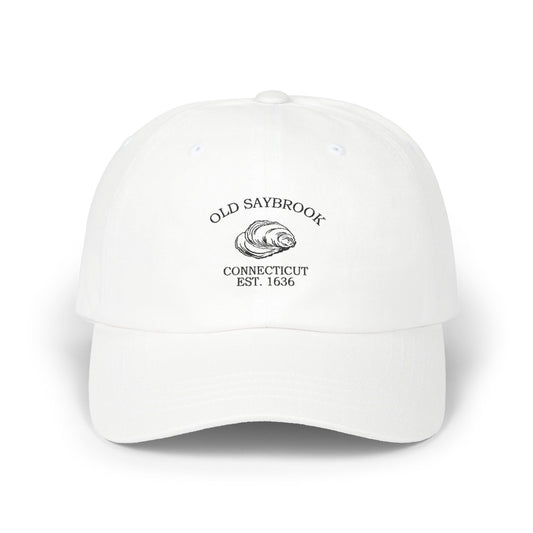
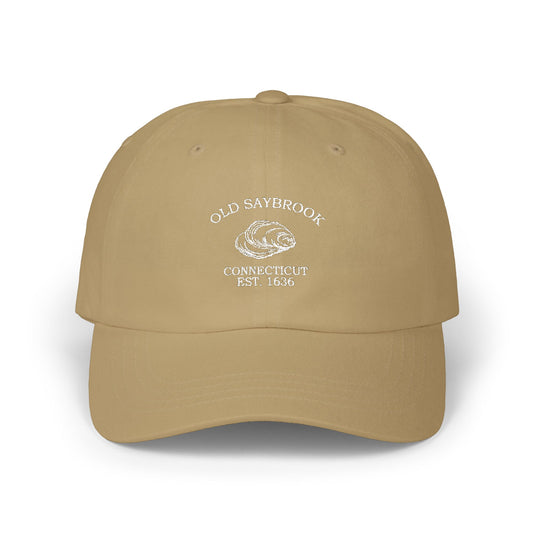
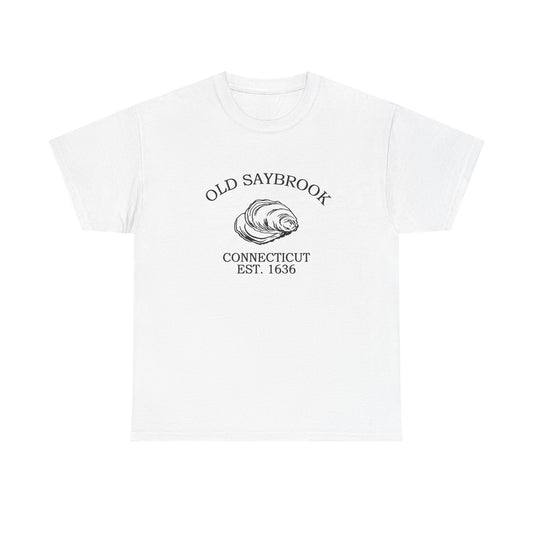
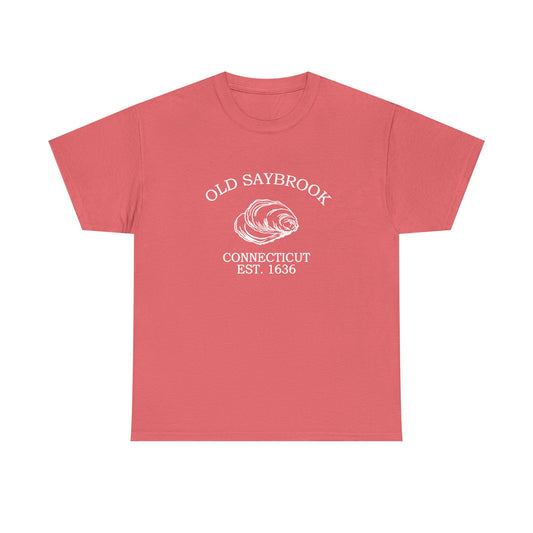
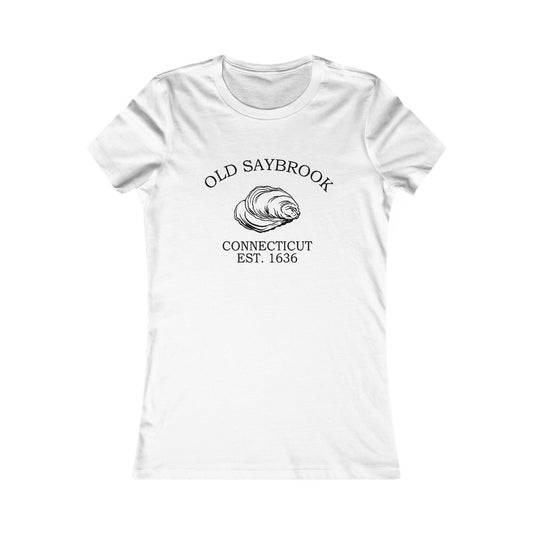
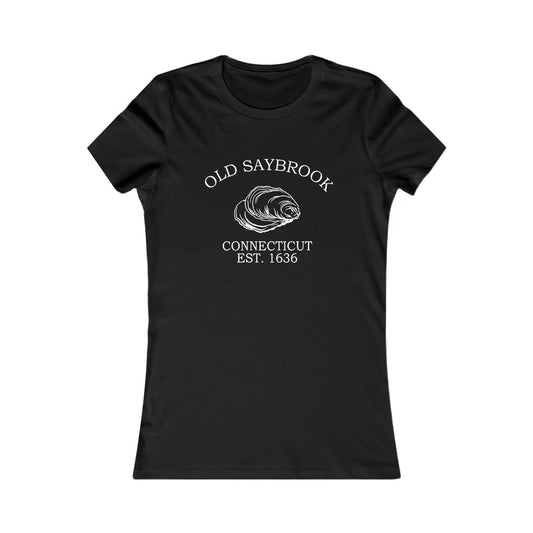
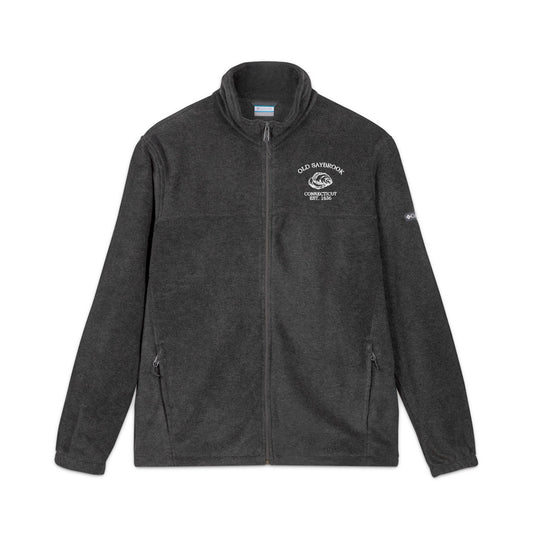
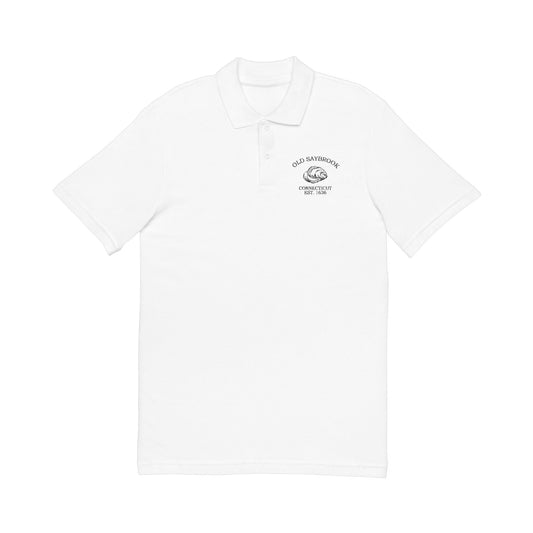
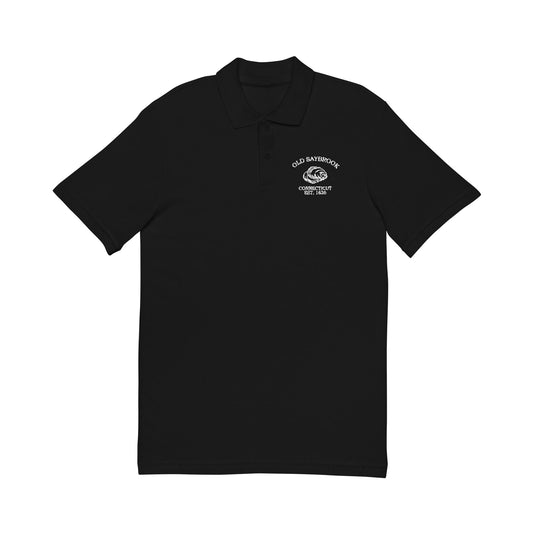
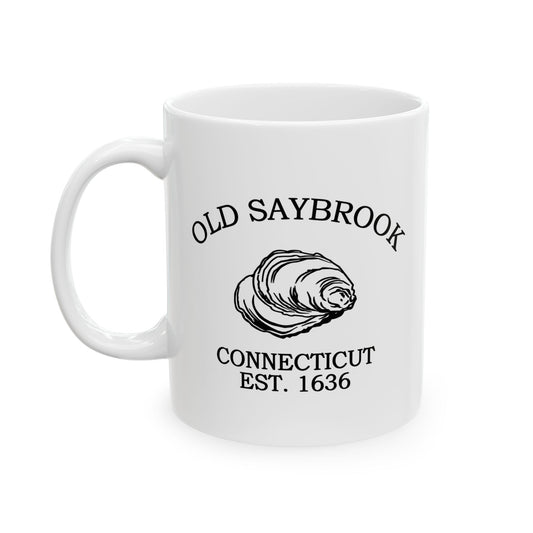
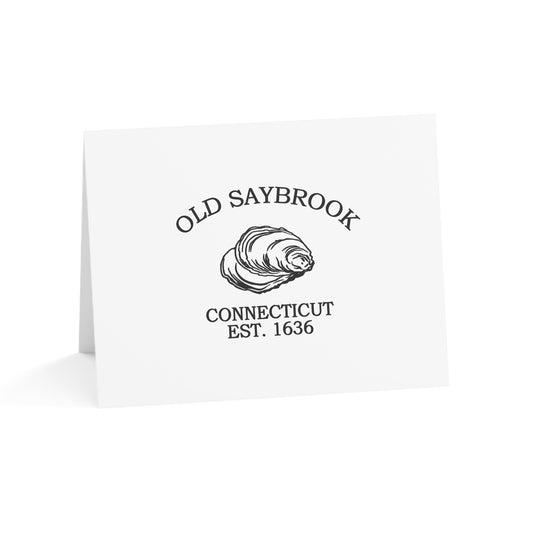
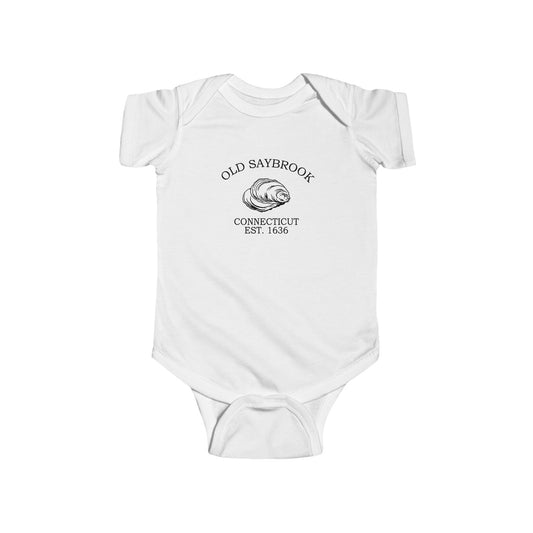
Our Old Saybrook retro logo uses Connecticut's oyster-shell motif over "Connecticut - Est. 1636," symbolizing shoreline abundance and tying the design to the colonial founding of the state. Its black-and-white styling is retro, resembling oyster crate labels and coastal signage, and it bridges Old Saybrook's dual identity: colonial port and modern shoreline town. On merchandise it reads authentic and vintage — an emblem of Connecticut shoreline pride.
So Old Saybrook gathers the oldest colony, Yale's first home, the first submarine, and two lighthouses onto one point of land at the mouth of New England's longest river — and our Old Saybrook designs gather that into wearable form. Whether Old Saybrook is your hometown, your summer place, the shore you visited once and never forgot, or the New England town you still dream of, wear the history. At the river's mouth since 1635.

Old Saybrook Connecticut — Travel Guide
Visiting Old Saybrook Connecticut Today
Old Saybrook sits where the Connecticut River meets Long Island Sound, with public beaches, two historic lighthouses at the river's mouth, a Main Street of nineteenth-century storefronts, and the quiet shoreline borough of Fenwick a short causeway away.
Harbors, Parks, and Attractions in Old Saybrook Connecticut
For visitors searching for things to do in Old Saybrook Connecticut:
- Relax at Harveys Beach, shallow waters and soft sand for easy family time on Long Island Sound.
- Walk Fort Saybrook Monument Park, interpretive signs marking the 1635 fort site near the marsh and the river mouth.
- Tour the General William Hart House (1767), a Federal-era home with period rooms and gardens reflecting eighteenth-century town life.
- Stroll Saybrook Point, boardwalks and marinas with views to Lynde Point Lighthouse (1803) at the river mouth.
- Visit the Katharine Hepburn Cultural Arts Center on Main Street, an intimate restored theater hosting year-round performances.
- Drive across the causeway to Fenwick borough, a quiet shoreline community of shingled houses on the peninsula between South Cove and the Sound.
Why People Visit Old Saybrook Connecticut
Old Saybrook balances four centuries of colonial heritage with simple seaside walks. Visitors enjoy lighthouse views, marsh boardwalks, and quiet beaches at the mouth of New England's longest river. It is coastal, welcoming, and steeped in local pride. Travelers find year-round appeal in parks, paths, and the historic Main Street district. The setting combines natural beauty with accessible neighborhoods and landmarks. History and everyday culture sit side by side in a welcoming way.
Wear the History
Where you're from. Where you love. Where you explored. Where you belong.
Kindred Cities
Greetings to visitors from Whitby, England and Lunenburg, Canada — kindred old harbour towns at the river's mouth.
Old Saybrook has guarded the mouth of the Connecticut River since colonial days, and Whitby and Lunenburg share its weathered, seafaring grace. Whitby sits where the Esk meets the North Sea, an old whaling and abbey town of red roofs; Lunenburg is Nova Scotia's UNESCO-listed colonial port, painted and preserved; Old Saybrook holds the river's mouth where Yale was first founded, its Saybrook Point and Main Street worn smooth by three and a half centuries. River-mouth towns that kept their history close.
Old Saybrook charms anyone fond of a historic shore town: the wide Connecticut River meeting the Sound, a Main Street of colonial homes and the spot where Yale began, and the easy New England summer of a town Katharine Hepburn called home. Come and visit us soon.
When you plan the trip, the Town of Old Saybrook and the Connecticut Office of Tourism are the place to start.
Wear the History
Where you're from. Where you love. Where you explored. Where you belong.

For deeper reading on Old Saybrook, Connecticut history described here, it may be useful to consult (1) the Old Saybrook Historical Society, the leading local resource on Saybrook Colony, Fort Saybrook, the Hart House, the James Pharmacy, and the Fenwick borough's founding-era and turn-of-the-century records; (2) the Connecticut State Library and State Archives in Hartford for colonial-era charters, the Lords Saye and Brooke commission to Lion Gardiner, and the Yale at Saybrook records from 1701 to 1716; (3) the Acton Public Library local history room in Old Saybrook for genealogical and town-government primary sources; (4) the Beinecke Rare Book and Manuscript Library at Yale University in New Haven for Collegiate School founding documents and early-Yale correspondence from the Saybrook period; and (5) the Submarine Force Library and Museum in Groton, Connecticut, for archival materials on David Bushnell, the Turtle, and the early American submarine tradition that began on a Saybrook farm in 1775. For deeper local and family history research in Old Saybrook, it may be useful to reach out to (1) the Old Saybrook Historical Society at the Old Saybrook General Store / Hart House campus, (2) the Connecticut State Library in Hartford, (3) the New England Historic Genealogical Society in Boston, (4) the Town of Old Saybrook Clerk's Office for town meeting records since 1854, and (5) the First Church of Christ Congregational of Old Saybrook (1840 Greek Revival building, congregation traces to the original Saybrook Colony meetinghouse). For travel and visitor information in Old Saybrook, it may be useful to contact (1) the Connecticut River Valley and Shoreline Visitors Council, (2) the Town of Old Saybrook Parks and Recreation Department, (3) the Connecticut State Parks and Public Outreach Division, and (4) the Lower Connecticut River Valley Council of Governments.
Shop the Old Saybrook Connecticut collection
View full collection-
Old Saybrook Connecticut Vintage Retro Premium Crewneck Sweatshirt - Black Logo
Regular price $48.00 USDRegular price -
Old Saybrook Connecticut Vintage Retro Premium Crewneck Sweatshirt - White Logo
Regular price $48.00 USDRegular price -
Old Saybrook Connecticut Vintage Retro Embroidered Cotton Cap - Black Logo
Regular price $32.00 USDRegular price -
Old Saybrook Connecticut Vintage Retro Embroidered Cotton Cap - White Logo
Regular price $32.00 USDRegular price -
Old Saybrook Connecticut Vintage Retro Unisex Heavy Cotton Tee - Black Logo
Regular price $22.00 USDRegular price -
Old Saybrook Connecticut Vintage Retro Unisex Heavy Cotton Tee - White Logo
Regular price $22.00 USDRegular price -
Old Saybrook Connecticut Vintage Retro Unisex Heavy Cotton Hoodie - Black Logo
Regular price $56.00 USDRegular price -
Old Saybrook Connecticut Vintage Retro Unisex Heavy Cotton Hoodie - White Logo
Regular price $56.00 USDRegular price -
Old Saybrook Connecticut Vintage Retro Womens Fitted Ringspun Cotton Tee - Black Logo
Regular price $28.00 USDRegular price -
-
Old Saybrook Connecticut Vintage Retro Unisex Embroidered Fleece Jacket - White Logo
Regular price $98.00 USDRegular price -
Old Saybrook Connecticut Vintage Retro Cotton Canvas Tote Bag - Black Logo
Regular price $25.00 USDRegular price -
Old Saybrook Connecticut Vintage Retro Cotton Canvas Tote Bag - White Logo
Regular price $25.00 USDRegular price -
Old Saybrook Connecticut Vintage Retro Back Printed Art Series Cotton Tee - Black Logo
Regular price $32.00 USDRegular price -
Old Saybrook Connecticut Vintage Retro Giclée Print Art Series Poster
Regular price From $38.00 USDRegular price -
Old Saybrook Connecticut Vintage Retro Unisex Embroidered Cotton Polo - Black Logo
Regular price $48.00 USDRegular price -
Old Saybrook Connecticut Vintage Retro Vinyl Sticker - Black Logo
Regular price From $6.00 USDRegular price -
Old Saybrook Connecticut Vintage Retro Ceramic Mug - Black Logo
Regular price From $16.00 USDRegular price -
Old Saybrook Connecticut Vintage Retro Thank You Card Set - Black Logo
Regular price From $25.00 USDRegular price -
Old Saybrook Connecticut Vintage Retro Cotton Jersey Baby Bodysuit - Black Logo
Regular price $26.00 USDRegular price -
Old Saybrook Connecticut Vintage Retro Unisex Cotton Jersey Tank Top - Black Logo
Regular price $28.00 USDRegular price -
Old Saybrook Connecticut Vintage Retro Unisex Cotton Jersey Tank Top - White Logo
Regular price $28.00 USDRegular price -
Old Saybrook Connecticut Vintage Retro Unisex Heavy Crewneck Sweatshirt - White Logo
Regular price $44.00 USDRegular price