






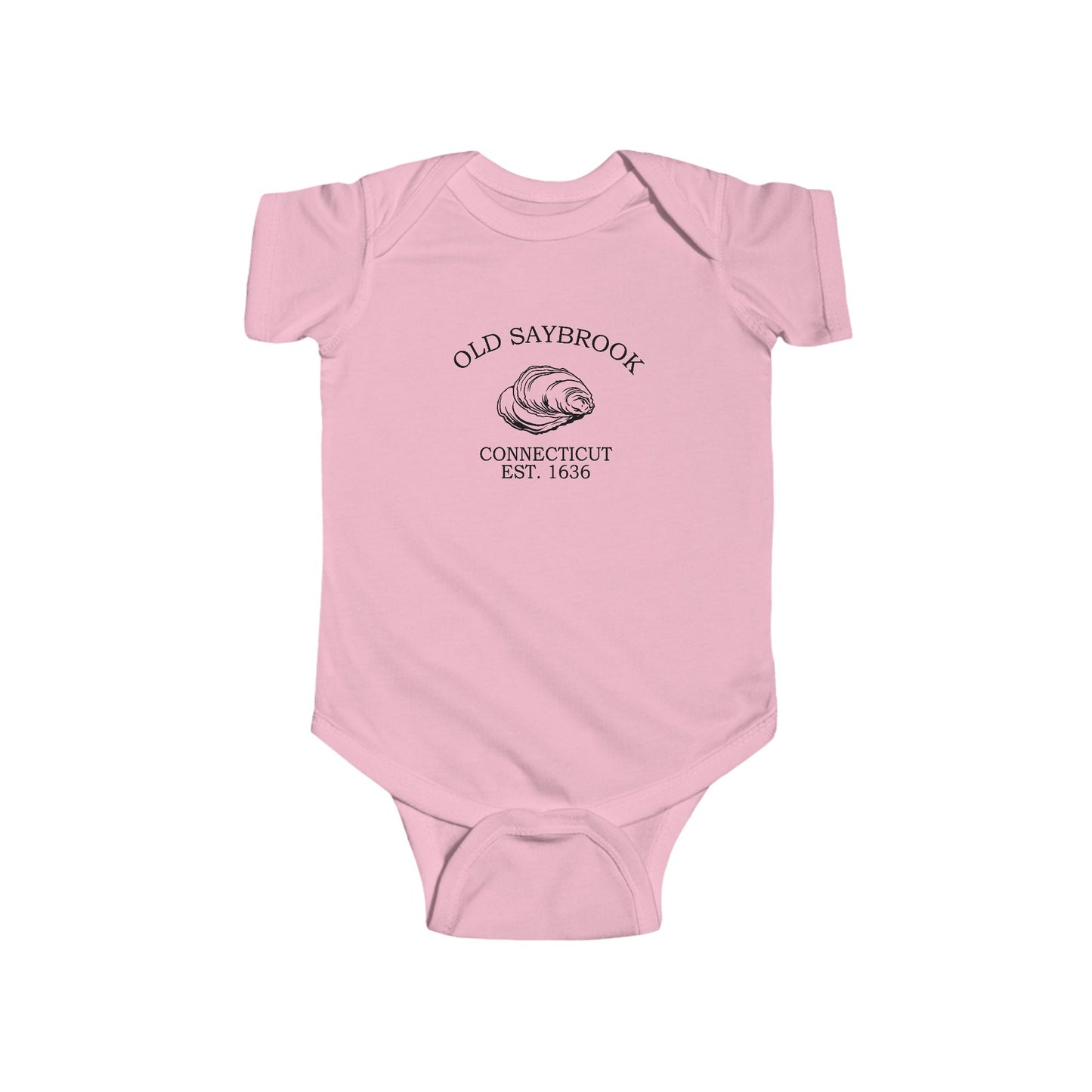
The colony's first years were hard ones — Saybrook Fort stood under siege through the winter of 1636-37 during the Pequot War, and the settlement that survived grew slowly outward from the fort into a farming and seafaring town. By the eighteenth and nineteenth centuries Old Saybrook was a working port: shipyards on the coves, oyster beds in the rivers whose names still say so, and captains' and merchants' houses rising around the green — the Hart House of 1767 and the James Pharmacy of 1790 among the survivors, and the South Green itself now a National Register district of that prosperous port century.
So Old Saybrook gathers the oldest colony, Yale's first home, the first submarine, and two lighthouses onto one point of land at the mouth of New England's longest river — and our Old Saybrook designs gather that into wearable form. Whether Old Saybrook is your hometown, your summer place, the shore you visited once and never forgot, or the New England town you still dream of, wear the history. At the river's mouth since 1635.
Why People Visit Old Saybrook Connecticut
- Relax at Harveys Beach, shallow waters and soft sand for easy family time on Long Island Sound.
- Walk Fort Saybrook Monument Park, interpretive signs marking the 1635 fort site near the marsh and the river mouth.
- Tour the General William Hart House (1767), a Federal-era home with period rooms and gardens reflecting eighteenth-century town life.
- Stroll Saybrook Point, boardwalks and marinas with views to Lynde Point Lighthouse (1803) at the river mouth.
- Visit the Katharine Hepburn Cultural Arts Center on Main Street, an intimate restored theater hosting year-round performances.
- Drive across the causeway to Fenwick borough, a quiet shoreline community of shingled houses on the peninsula between South Cove and the Sound.
