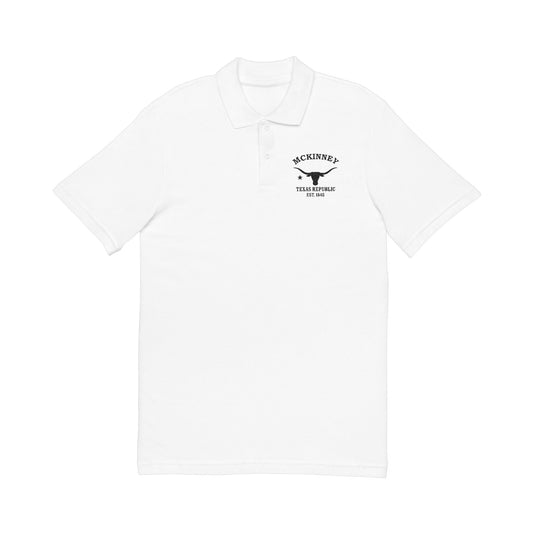
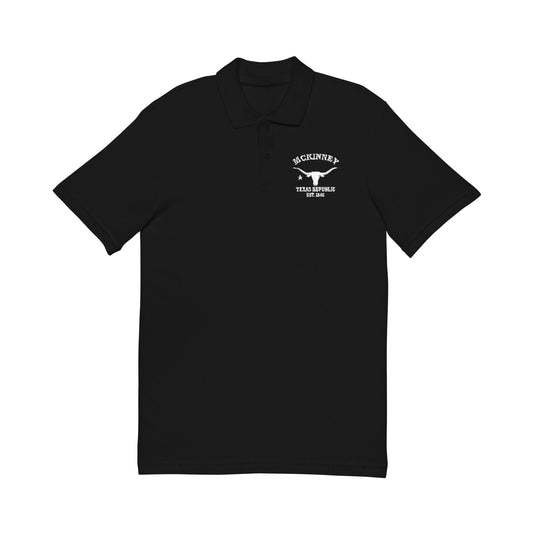
McKinney Texas — Retro Vintage History
What's with the Square? Stand in the middle of downtown McKinney and you are on one of Texas's great town squares: the 1875 Collin County Courthouse at the center, brick Victorian storefronts on all four sides, a hundred-plus shops and restaurants, shade trees, and string lights for the evenings. It is the kind of courthouse square that quietly disappeared from most American towns in the last century. McKinney kept its — and built a whole city around it. Locals just call it 'the Square,' and it still sets the rhythm of the whole town.
Wear the HistoryThe name goes back to the founding of Texas itself. Both the city and Collin County are named for Collin McKinney — a surveyor and pioneer who was one of the five men who drafted, and a signer of, the Texas Declaration of Independence in 1836, and the oldest of all the signers. He never actually lived in the town that carries his name, settling instead farther east near the Red River. Collin County was created in 1846; in 1848 the county seat moved here, and the next year William Davis donated 120 acres for the townsite.

The courthouse is the heart of the square. Built in 1875 by the architect Charles Wheelock in the French Second Empire style — a steep mansard roof, twin towers, decorative cut stone — it was said at completion to be the tallest building in Texas north of San Antonio. It was drastically remodeled in 1927, vacated in 1979, and then carefully restored: in 2006 it reopened as the McKinney Performing Arts Center, with the old courtroom, judge's bench and jury box intact, now a stage. When it first opened in 1876, a thousand locals came for a buffet dinner and a dance that ran past dawn.
A county-seat town grew here for two reasons: cotton and the railroad. When the Houston and Texas Central Railroad reached McKinney in 1872, the town became a regional shipping hub for cotton and grain, and the courthouse era was the era when, as people here still say, cotton was king. Gins, flour mills, and a cotton mill turned the rich Blackland Prairie soil into the town's livelihood for generations; by the 1920s Collin County was one of the largest cotton-producing counties in the entire country.
Downtown filled with the families who ran it. The Heard brothers kept an 1880s mercantile and opera house on the square; Stephen Heard's restored Victorian mansion is now the Heard-Craig Center for the Arts, and John Heard's daughter Bessie turned her love of wildlife into the Heard Natural Science Museum and Wildlife Sanctuary, with trails and live animals on the edge of town. The 1911 post office is now the Collin County History Museum.
McKinney has worked hard to keep its past standing. Chestnut Square Historic Village gathers ten buildings from the 1850s through the 1930s — a chapel, a general store, old family homes — where the town's early life is kept alive through living-history events. The whole downtown is a historic district, one of the best-preserved in Texas, anchored by the Texas Main Street square.
And then McKinney exploded. A Collin County seat thirty miles north of Dallas, it became one of the fastest-growing cities in America and was named the number-one Best Place to Live in America by Money magazine in 2014. Yet for all the new neighborhoods ringing it, the square is still the heart of the place — a farmers market, festivals, live music, and a Saturday crowd that still orbits the same old courthouse. McKinney has topped national lists again and again since, but the answer is always the same: the square, the schools, and Dallas an easy drive away.
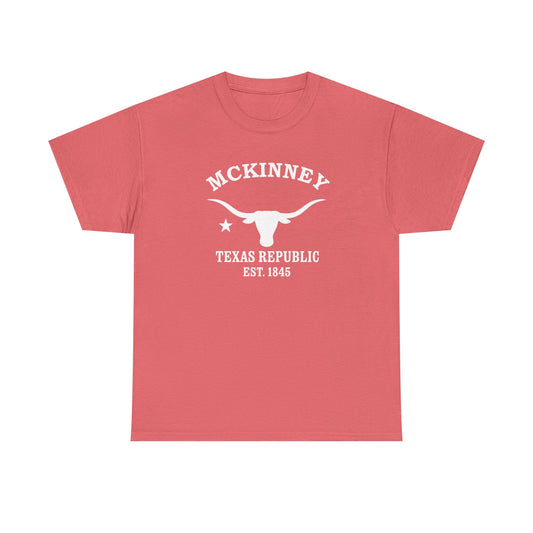
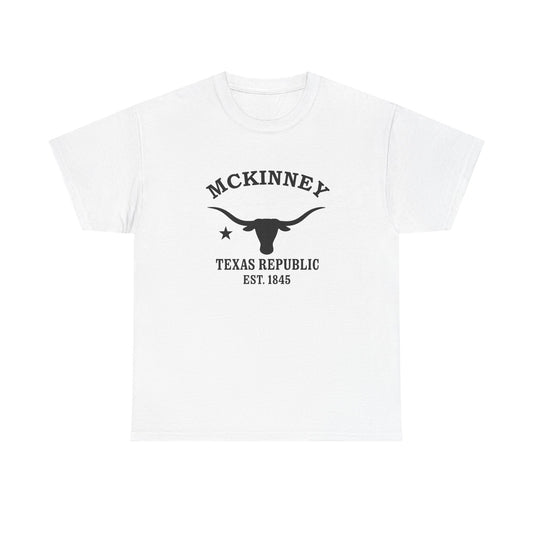
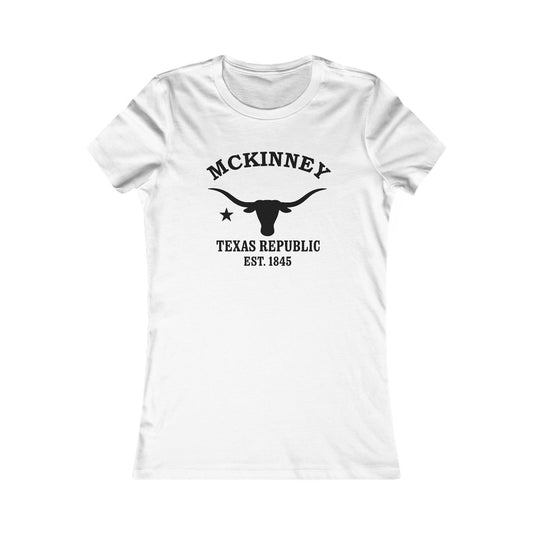
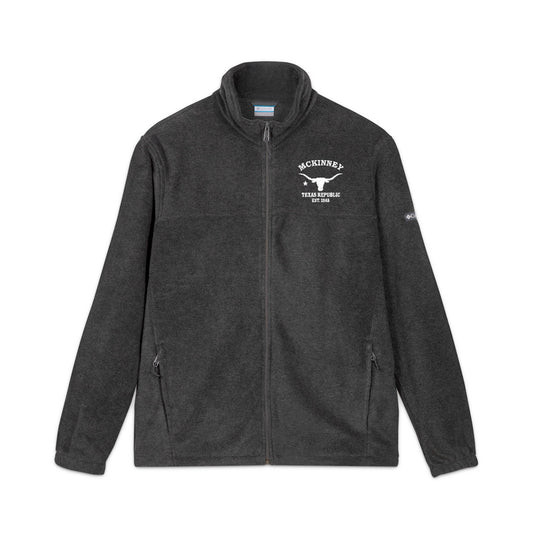
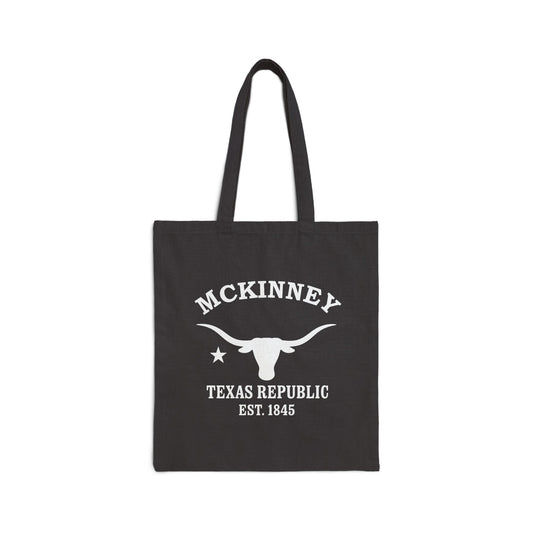
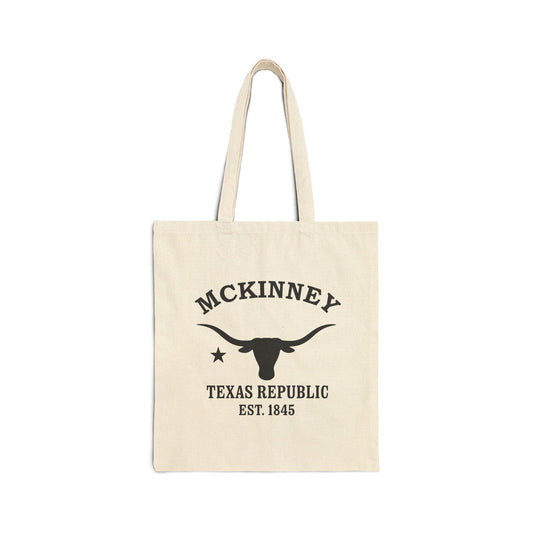
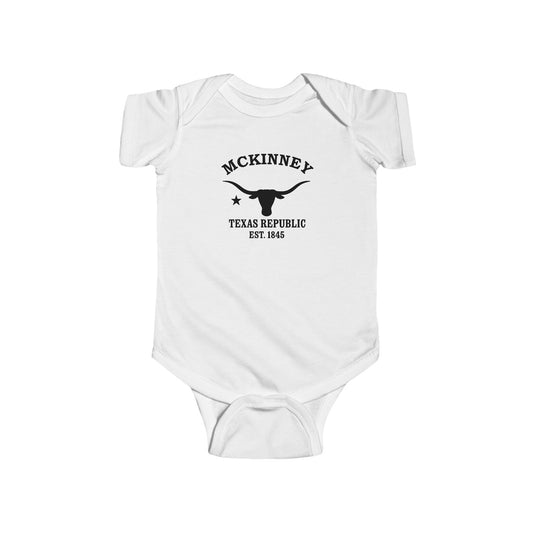
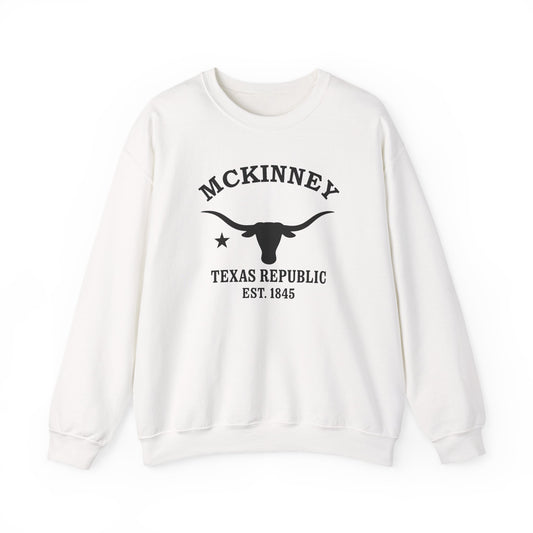
Our McKinney logo carries the Texas longhorn above ‘Texas Republic — Est. 1845,’ the shared retro emblem of our Texas towns; the longhorn stands for the cattle-and-frontier heritage and the star for the Lone Star, and 1845 marks the year Texas joined the Union. Rendered in black-and-white, like an old cattle brand or rodeo poster, it ties McKinney to every other Texas town we make. What makes this one McKinney is the town behind the brand — the square, the 1875 courthouse, and the man who helped sign Texas into being.
So McKinney gathers a signer of the Texas Declaration, an 1875 courthouse, and one of Texas's finest town squares onto the Blackland Prairie. Our McKinney designs gather that into wearable form. Wear the history. Texas history, on the square — McKinney, TX.

McKinney, Texas — Travel Guide
Visiting McKinney Today
McKinney sits about thirty miles north of Dallas, a Collin County seat built around one of Texas's best-preserved courthouse squares. The 1875 courthouse anchors a downtown of brick storefronts, shops, and music, with history museums, a wildlife sanctuary, and family parks spread around it.
The Square, the Courthouse & the Museums
For visitors looking for things to do in McKinney, Texas:
- Walk the Historic Downtown Square, with 100-plus shops and restaurants around the 1875 courthouse.
- See the McKinney Performing Arts Center inside the restored Collin County Courthouse.
- Explore Chestnut Square Historic Village, ten buildings of 1850s-1930s McKinney.
- Visit the Heard Natural Science Museum and Wildlife Sanctuary, with trails and live animals.
- Tour the Collin County History Museum in the 1911 post office.
- See the Heard-Craig Center for the Arts in a restored Victorian mansion.
- Browse the McKinney Farmers Market on the square.
- Ride the mountain-bike loops at Erwin Park, wooded paths and open prairie.
- Catch live music and festivals on the square year-round, from the farmers market to the holiday lights.
Why People Visit McKinney
Visitors choose McKinney for its handsome square, approachable museums, and easy walkability. It balances small-city heritage with everyday outdoor spaces, from the courthouse and Chestnut Square to the Heard sanctuary and the park trails. Families and day-trippers find a friendly layout and an unhurried pace, with year-round appeal in its parks, paths, and public spaces — and the historic square always at the center of it.
Wear the History
Kindred Cities
We're glad to welcome visitors from Chester, England and Oakville, Canada — kindred towns of a beloved old center and an easy quality of life.
McKinney is forever turning up on 'best places to live' lists, and Chester and Oakville know the formula. Chester wraps Roman walls and Tudor galleries around one of England's prettiest old centers; Oakville is the lakeside Toronto suburb of leafy streets and a charming downtown; McKinney pairs a famously handsome historic square — brick storefronts and shade trees — with one of the fastest-growing, family-friendly suburbs in Texas. Towns that kept their old hearts while everything around them grew.
McKinney charms anyone who values an old downtown: a historic courthouse square of shops, cafés and music, miles of family neighbourhoods around it, and Dallas close enough for the big-city days. Come and visit us soon.
When you plan the trip, Visit McKinney is the place to start.
Wear the History

For deeper reading on the McKinney history described here — Collin McKinney and the Texas Declaration of Independence, the 1848 county seat and the 1875 Collin County Courthouse, the cotton-and-railroad economy, the downtown square and historic district, and McKinney's modern Best-Place-to-Live era — it may be useful to consult (1) the Collin County History Museum in the restored 1911 post office building, (2) the McKinney Public Library and the Roy and Helen Hall Memorial Library local history room, (3) the Texas State Library and Archives Commission, (4) the City of McKinney Historic Preservation office, and (5) the Heritage Guild of McKinney at Chestnut Square. For travel and visitor information, it may be useful to contact (1) Visit McKinney, (2) Travel Texas, (3) the Historic Downtown McKinney Main Street program, (4) the Heard Natural Science Museum and Wildlife Sanctuary, and (5) McKinney Parks and Recreation.
Shop the McKinney Texas collection
View full collection-
Mckinney Texas Vintage Retro Premium Crewneck Sweatshirt - Black Logo
Regular price $42.00 USDRegular price -
Mckinney Texas Vintage Retro Premium Crewneck Sweatshirt - White Logo
Regular price $42.00 USDRegular price -
McKinney Texas Vintage Retro Unisex Heavy Cotton Hoodie - White Logo
Regular price $48.00 USDRegular price -
McKinney Texas Vintage Retro Unisex Heavy Cotton Hoodie - Black Logo
Regular price $48.00 USDRegular price -
McKinney Texas Vintage Retro Embroidered Cotton Cap - White Logo
Regular price $32.00 USDRegular price -
McKinney Texas Vintage Retro Embroidered Cotton Cap - Black Logo
Regular price $32.00 USDRegular price -
McKinney Texas Vintage Retro Vinyl Sticker - Black Logo
Regular price From $6.00 USDRegular price -
McKinney Texas Vintage Retro Unisex Heavy Cotton Tee - White Logo
Regular price $22.00 USDRegular price -
McKinney Texas Vintage Retro Unisex Heavy Cotton Tee - Black Logo
Regular price $22.00 USDRegular price -
-
McKinney Texas Vintage Retro Womens Fitted Ringspun Cotton Tee - Black Logo
Regular price $28.00 USDRegular price -
McKinney Texas Vintage Retro Unisex Embroidered Fleece Jacket - White Logo
Regular price $98.00 USDRegular price -
McKinney Texas Vintage Retro Ceramic Mug - Black Logo
Regular price From $16.00 USDRegular price -
McKinney Texas Vintage Retro Cotton Canvas Tote Bag - White Logo
Regular price $25.00 USDRegular price -
McKinney Texas Vintage Retro Cotton Canvas Tote Bag - Black Logo
Regular price $25.00 USDRegular price -
McKinney Texas Vintage Retro Thank You Card Set - Black Logo
Regular price From $25.00 USDRegular price -
McKinney Texas Vintage Retro Cotton Jersey Baby Bodysuit - Black Logo
Regular price $26.00 USDRegular price -
McKinney Texas Vintage Retro Unisex Cotton Jersey Tank Top - Black Logo
Regular price $28.00 USDRegular price -
McKinney Texas Vintage Retro Unisex Cotton Jersey Tank Top - White Logo
Regular price $28.00 USDRegular price -
McKinney Texas Vintage Retro Unisex Heavy Crewneck Sweatshirt - Black Logo
Regular price $38.00 USDRegular price -
McKinney Texas Vintage Retro Unisex Heavy Crewneck Sweatshirt - White Logo
Regular price $38.00 USDRegular price -
McKinney Texas Vintage Retro Unisex Embroidered Cotton Polo - Black Logo
Regular price $48.00 USDRegular price -
McKinney Texas Vintage Retro Back Printed Art Series Cotton Tee - Black Logo
Regular price $32.00 USDRegular price