




A county-seat town grew here for two reasons: cotton and the railroad. When the Houston and Texas Central Railroad reached McKinney in 1872, the town became a regional shipping hub for cotton and grain, and the courthouse era was the era when, as people here still say, cotton was king. Gins, flour mills, and a cotton mill turned the rich Blackland Prairie soil into the town's livelihood for generations; by the 1920s Collin County was one of the largest cotton-producing counties in the entire country.
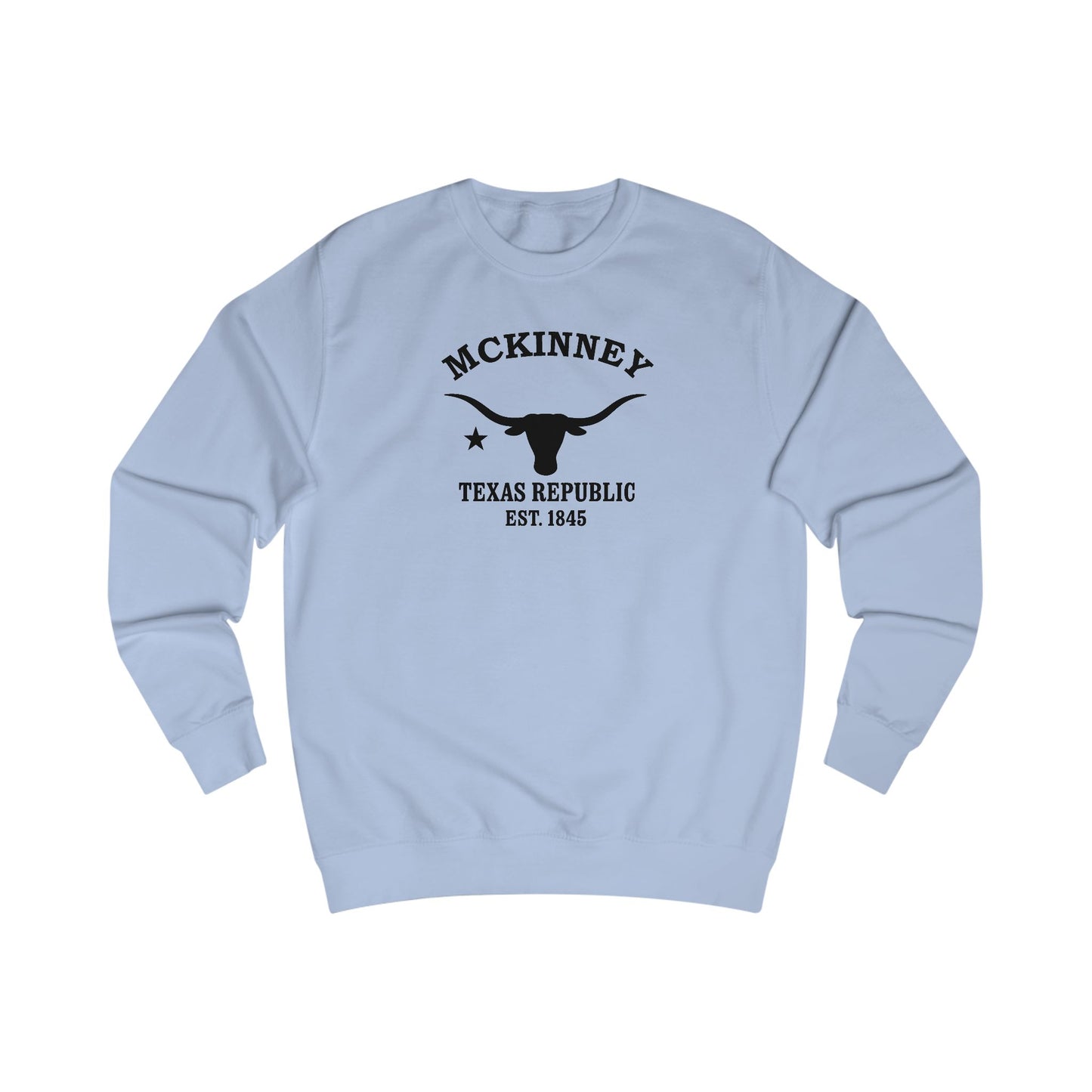
Our McKinney logo carries the Texas longhorn above ‘Texas Republic — Est. 1845,’ the shared retro emblem of our Texas towns; the longhorn stands for the cattle-and-frontier heritage and the star for the Lone Star, and 1845 marks the year Texas joined the Union. Rendered in black-and-white, like an old cattle brand or rodeo poster, it ties McKinney to every other Texas town we make. What makes this one McKinney is the town behind the brand — the square, the 1875 courthouse, and the man who helped sign Texas into being.
Why People Visit McKinney
Visitors choose McKinney for its handsome square, approachable museums, and easy walkability. It balances small-city heritage with everyday outdoor spaces, from the courthouse and Chestnut Square to the Heard sanctuary and the park trails. Families and day-trippers find a friendly layout and an unhurried pace, with year-round appeal in its parks, paths, and public spaces — and the historic square always at the center of it.
