Denali Alaska — Retro Vintage History
What's with the Great One? Long before any map carried a name, the Koyukon Athabascan people called the mountain Denali — "the High One," or "the Great One" — and the name fit. At 20,310 feet it is the tallest peak in North America, rising so far above the surrounding lowlands that, measured base to summit, it is one of the most dramatic mountains on Earth. It makes its own weather, hides behind its own clouds for days, and rewards the patient with a clear view that feels earned. The gateway town at the park's edge takes its name, and its whole reason for being, from that one immense presence on the horizon.
Wear the HistoryThe mountain's deepest history is Athabascan. For centuries the Koyukon and neighboring Athabascan peoples lived across this interior country, hunting, fishing, and moving with the seasons, with Denali standing at the center of the land and its stories. The name they gave it — Denali, the High One — carried respect for a mountain that dominated every horizon and every season. That long Indigenous presence is the foundation of the place, and the name itself is the clearest thread running from that history straight through to today.
The name on the map, by contrast, has gone back and forth. In 1896 a gold prospector attached the name Mount McKinley to the peak, and the federal government made it official in 1917. Alaskans kept calling it Denali, and the state recognized that name in 1975; the federal name became Denali in 2015, then reverted to Mount McKinley in 2025. Through all of it the mountain never moved and the Athabascan name never went away — which is why, to most who know it, the peak has always simply been Denali, the Great One, whatever the paperwork said.

Protecting the country around the mountain came early. Driven by the conservation advocate Charles Sheldon, who wanted to safeguard the region's Dall sheep and wildlife, Congress established the park in 1917 as Mount McKinley National Park. The Alaska Railroad soon carried the first visitors north, lodges and a single park road followed, and the place grew slowly into one of the great wilderness parks of the country. In 1980 it was vastly expanded and renamed Denali National Park and Preserve — the official name it still carries — restoring Denali, at least, to the land around the peak.
What the park protects is a whole living landscape, not just a summit. Six million acres run from spruce taiga up through open tundra to glacier and rock, threaded by braided gray rivers and crossed by a single 92-mile Park Road. It is some of the best wildlife country anywhere: grizzly and black bear, moose, caribou, wolves, and the white Dall sheep that first inspired the park — the famous "Big Five." Wonder Lake mirrors the mountain on a still morning, and the buses that run the Park Road are how most visitors see it all.
The mountain also draws climbers from around the world. The first ascent came in 1913, when the Hudson Stuck expedition reached the top and Walter Harper — a young Koyukon Athabascan — became the first person to set foot on the summit, a fitting first for a peak that carried an Athabascan name. Today climbers fly in to the glaciers each spring to attempt the West Buttress and other routes, testing themselves against the cold, the altitude, and the sudden weather that the Great One is famous for throwing at anyone who tries it.
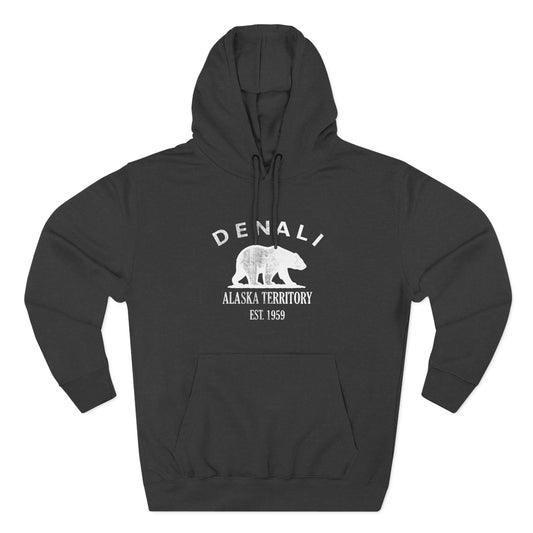
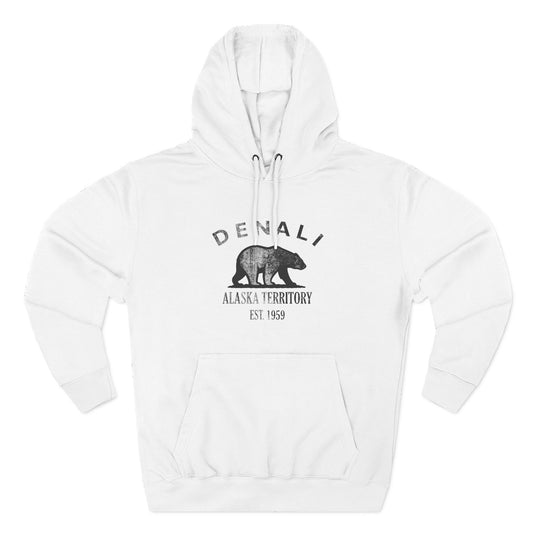
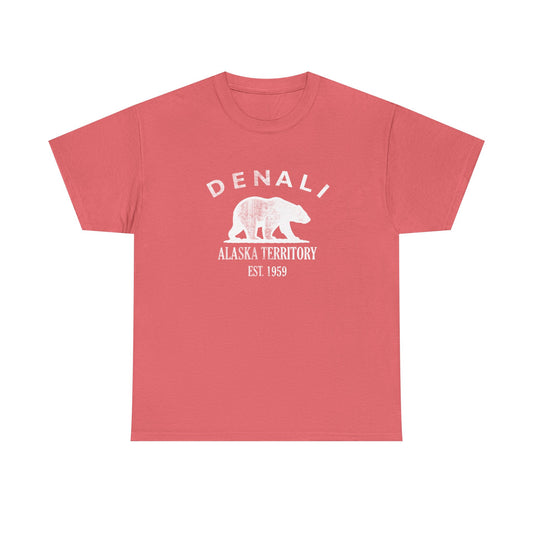
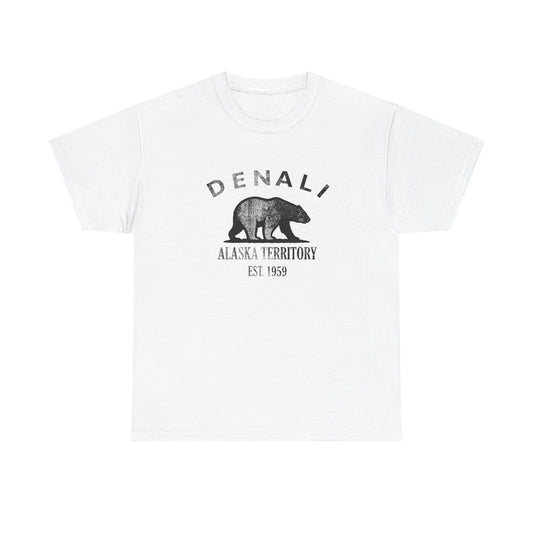
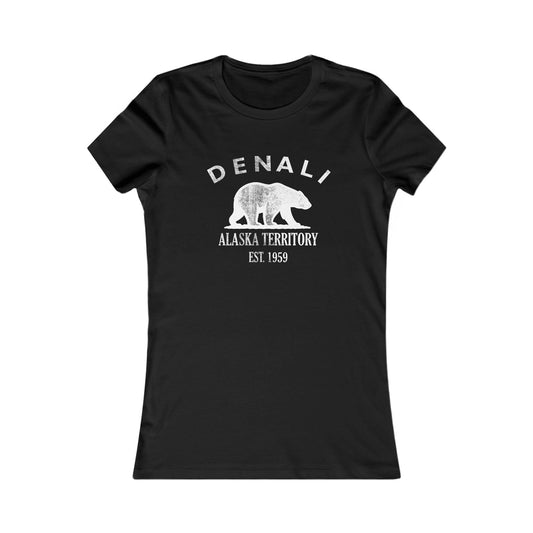
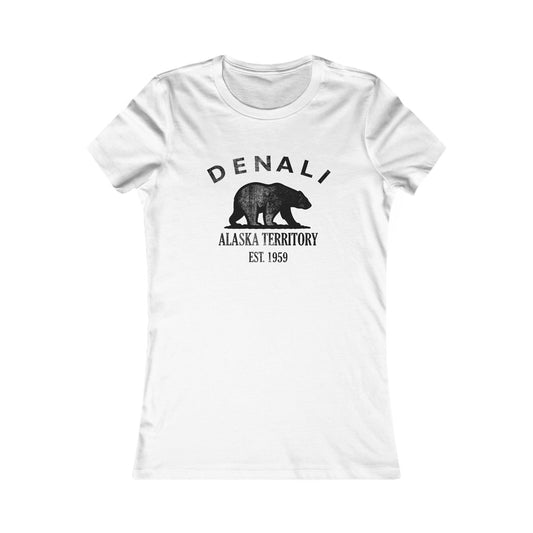
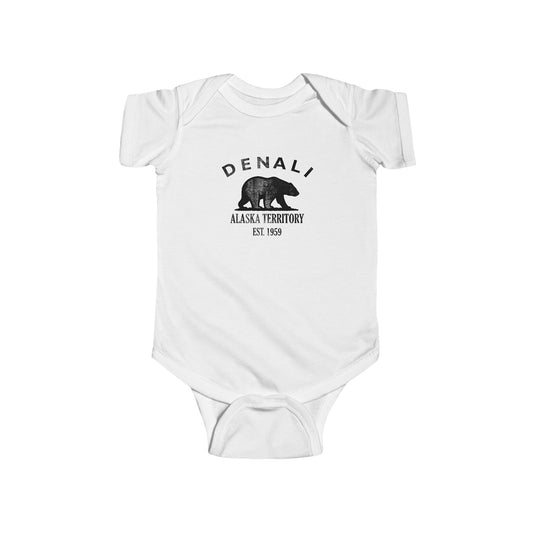
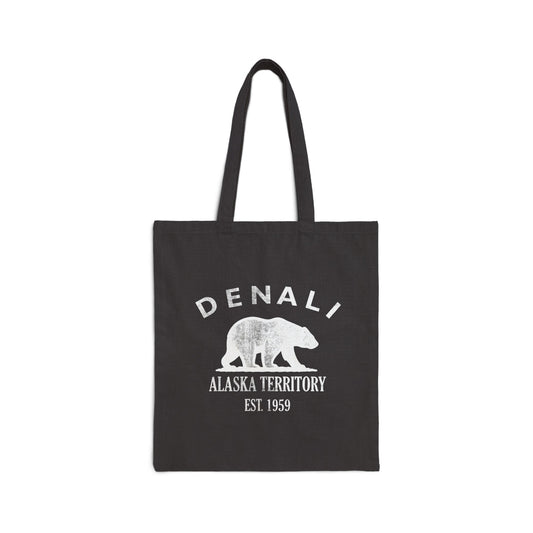
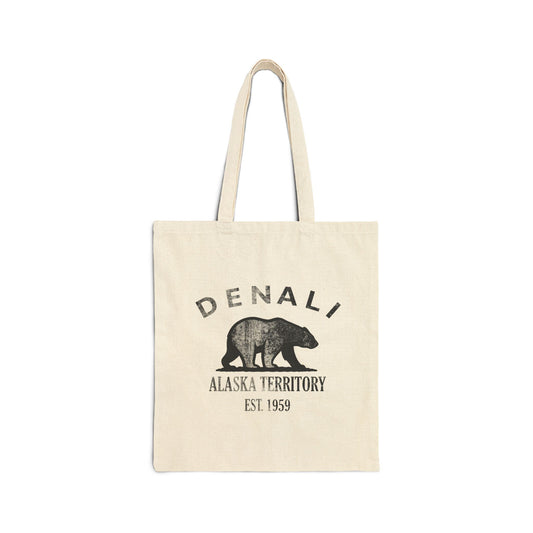
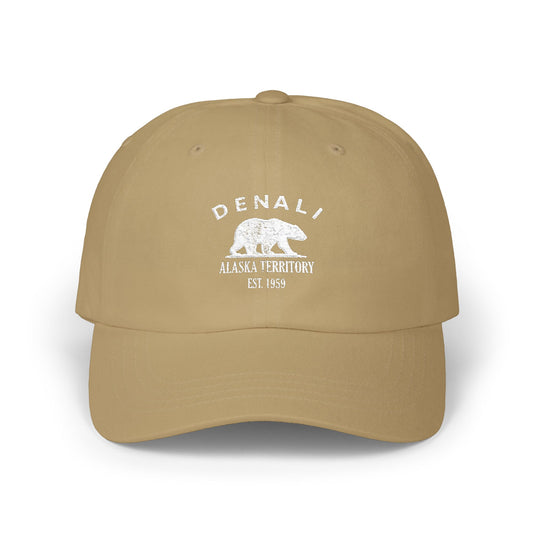
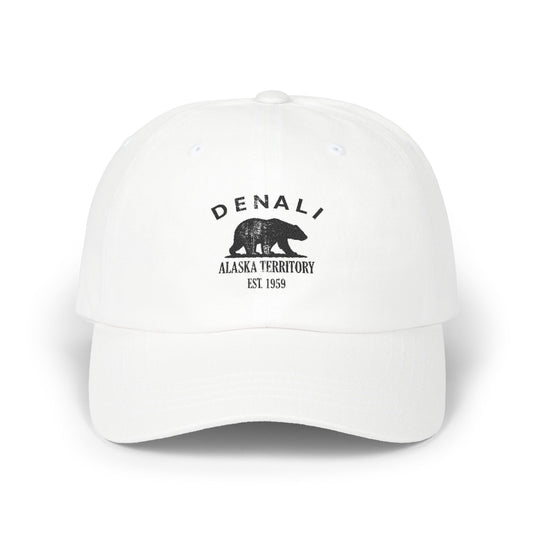
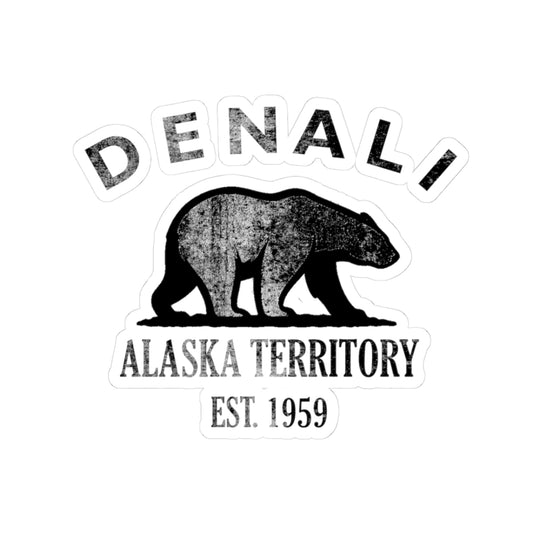
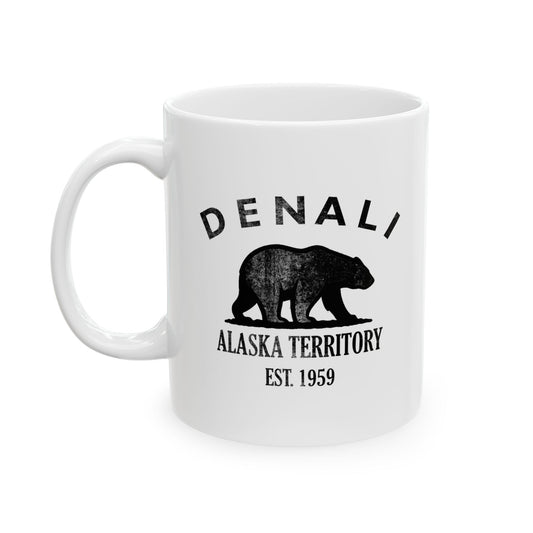
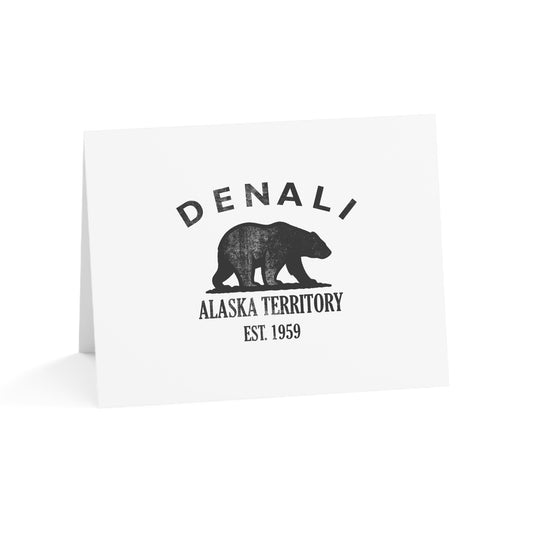
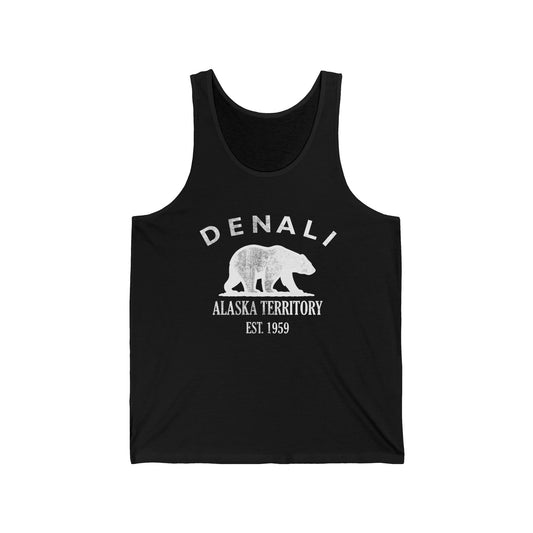
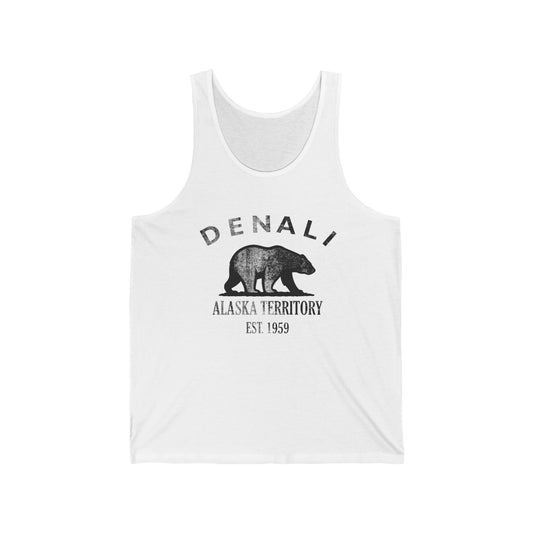
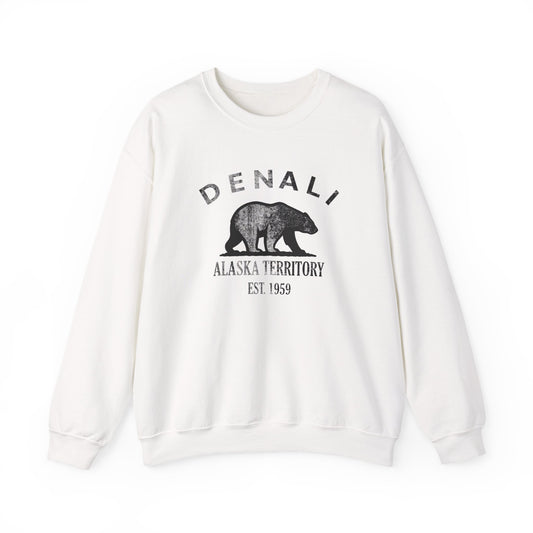
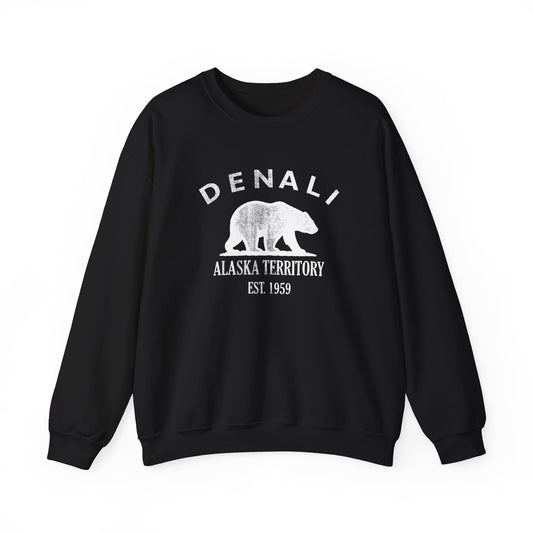
Our Denali logo carries Alaska's bear over "Alaska Territory · Est. 1959," the year Alaska became the forty-ninth state — the shared emblem of every Merlin Classics Alaska place. Printed in a distressed black-and-white that reads like an old outfitter's stamp, the bear is the Last Frontier in shorthand: rugged, wild, and at home in the cold. The bear is the through-line that ties Denali to every other Alaska place we make. What makes this one Denali is everything around it — the Great One, the Park Road, and the Alaska Range.
Today Denali is the gateway to the Great One — a small community at the edge of one of the world's great wild parks, where the Alaska Railroad still stops and the Park Road still runs west toward the mountain. Its story reaches from a Koyukon Athabascan homeland through a century of conservation to the national park that bears the old name once more. Our Denali designs gather that identity into wearable form — the bear-and-1959 emblem, the Great One, and the Range. Denali, Alaska: the High One on the horizon.

Denali, Alaska — Travel Guide
Visiting Denali Today
Denali sits along the Parks Highway and the Alaska Railroad between Anchorage and Fairbanks, at the entrance to Denali National Park and Preserve. The gateway community has lodges, outfitters, and the park's visitor center, with the single Park Road, shuttle buses, trails, and flightseeing all reaching into six million acres of subarctic wilderness around the Great One.
The Park Road, Wonder Lake & Denali's Wildlife
For visitors looking for things to do in Denali, Alaska:
- Start at the main visitor center for exhibits, maps, and ranger programs at the park entrance.
- Ride the Park Road shuttle deep into the park for wildlife and views of the Great One.
- Walk the Savage River loop through a glacially carved valley of rapids and boulders.
- Visit the Eielson Visitor Center for alpine views and the park art gallery.
- Hike down to Horseshoe Lake for calm water below forested bluffs.
- Stop at the sled dog kennels — the only working sled-dog team in the National Park System.
Why People Visit Denali
Denali offers North America's highest peak above a vast, living subarctic ecosystem — wilderness on a scale that is genuinely humbling. Visitors come for the Great One, the wildlife, and the Park Road, and stay for the quiet hikes, the railroad journey, and the immense scenery of the Alaska Range. From the gateway lodges to the tundra at the end of the road, it rewards both a quick stop and a long stay. It is immense, wild, and unforgettable in every season.
Wear the History

For deeper reading on the Denali history described here — the Koyukon and Athabascan heritage of the interior, the naming of the mountain and the histories of both Denali and Mount McKinley, the 1913 first ascent led by Hudson Stuck with Walter Harper, the establishment of the park in 1917 and its 1980 expansion into Denali National Park and Preserve, and the mountaineering and conservation record — it may be useful to consult (1) the National Park Service for Denali National Park and Preserve, (2) the Alaska State Library, Archives and Museum and the Alaska Historical Society, (3) the University of Alaska Fairbanks and its Alaska and Polar Regions Collections, (4) the U.S. Board on Geographic Names for the naming record, and (5) the Alaska Office of History and Archaeology. For travel and visitor information, it may be useful to contact (1) the National Park Service Denali Visitor Center, (2) the Denali Borough and the Greater Healy/Denali Chamber of Commerce, (3) the Alaska Railroad and the Parks Highway corridor services, (4) Alaska State Parks, and (5) the National Weather Service for interior Alaska and mountain advisories.
Shop the Denali Alaska collection
View full collection-
Denali Alaska Vintage Retro Premium Crewneck Sweatshirt - Black Logo
Regular price $48.00 USDRegular price -
Denali Alaska Vintage Retro Premium Crewneck Sweatshirt - White Logo
Regular price $48.00 USDRegular price -
Denali Alaska Vintage Retro Unisex Heavy Cotton Hoodie - White Logo
Regular price $56.00 USDRegular price -
Denali Alaska Vintage Retro Unisex Heavy Cotton Hoodie - Black Logo
Regular price $56.00 USDRegular price -
Denali Alaska Vintage Retro Unisex Heavy Cotton Tee - White Logo
Regular price $22.00 USDRegular price -
Denali Alaska Vintage Retro Unisex Heavy Cotton Tee - Black Logo
Regular price $22.00 USDRegular price -
Denali Alaska Vintage Retro Back Printed Art Series Cotton Tee - Black Logo
Regular price $32.00 USDRegular price -
Denali Alaska Vintage Retro Giclée Print Art Series Poster
Regular price From $38.00 USDRegular price -
-
Denali Alaska Vintage Retro Womens Fitted Ringspun Cotton Tee - Black Logo
Regular price $28.00 USDRegular price -
Denali Alaska Vintage Retro Cotton Jersey Baby Bodysuit - Black Logo
Regular price $26.00 USDRegular price -
Denali Alaska Vintage Retro Cotton Canvas Tote Bag - White Logo
Regular price $25.00 USDRegular price -
Denali Alaska Vintage Retro Cotton Canvas Tote Bag - Black Logo
Regular price $25.00 USDRegular price -
Denali Alaska Vintage Retro Embroidered Cotton Cap - White Logo
Regular price $32.00 USDRegular price -
Denali Alaska Vintage Retro Embroidered Cotton Cap - Black Logo
Regular price $32.00 USDRegular price -
Denali Alaska Vintage Retro Vinyl Sticker - Black Logo
Regular price From $6.00 USDRegular price -
Denali Alaska Vintage Retro Ceramic Mug - Black Logo
Regular price From $16.00 USDRegular price -
Denali Alaska Vintage Retro Thank You Card Set - Black Logo
Regular price From $25.00 USDRegular price -
Denali Alaska Vintage Retro Unisex Cotton Jersey Tank Top - White Logo
Regular price $28.00 USDRegular price -
Denali Alaska Vintage Retro Unisex Cotton Jersey Tank Top - Black Logo
Regular price $28.00 USDRegular price -
Denali Alaska Vintage Retro Unisex Heavy Crewneck Sweatshirt - Black Logo
Regular price $44.00 USDRegular price -
Denali Alaska Vintage Retro Unisex Heavy Crewneck Sweatshirt - White Logo
Regular price $44.00 USDRegular price -
Denali Alaska Vintage Retro Unisex Embroidered Cotton Polo - Black Logo
Regular price $48.00 USDRegular price