Anchorage Alaska — Retro Vintage History
What's with the cargo planes? Stand at the edge of Anchorage on a clear evening and you will see them: wide-bodied freighters descending over Cook Inlet, one after another, all night long. It surprises most visitors, but Ted Stevens Anchorage International consistently ranks among the busiest airports on earth by cargo. The reason is geography. Anchorage sits almost exactly on the great-circle line between the factories of Asia, the markets of North America, and the cities of Europe — close enough that a fuel stop here lets a freighter carry more freight and less fuel. So the world's packages pass through the top of the Last Frontier, and a railroad tent-camp on a mudflat became one of the busiest waypoints in global trade.
Wear the HistoryAnchorage's story, though, begins long before the runways. The Dena'ina Athabascan people lived along Cook Inlet for centuries, fishing its waters and moving with the seasons across a homeland that reached from the tideflats to the mountains. The modern city is much younger. In 1915 the federal government chose the flat bench above Ship Creek as the construction headquarters for the new Alaska Railroad, and a tent city went up almost overnight. That summer the government auctioned town lots, laying out the downtown grid that survives today, and within five years the camp had become an incorporated town. Anchorage was, from the first, a place built to move people and freight.
It is a city wedged between water and rock. Anchorage occupies a narrow coastal shelf between the two arms of Cook Inlet — Knik Arm and Turnagain Arm — with the steep wall of the Chugach Mountains rising directly behind downtown. The inlet carries one of the largest tidal ranges in North America, and on Turnagain Arm a bore tide can roll in as a single visible wave, chased by surfers and photographers. Behind the city, Chugach State Park spreads across nearly half a million acres, one of the largest state parks in the country, so that moose wander the bike paths and the peaks stay snow-streaked into summer. Few cities of its size sit so completely inside their own wilderness.

The Second World War remade the town. Its position on the air route to Asia made Anchorage strategically vital, and the military built Elmendorf Field and Fort Richardson — today combined as Joint Base Elmendorf-Richardson — on the high ground north of the city. The bases brought roads, runways, payrolls, and people, and Anchorage grew through the war and the Cold War from a small rail town into the population center of the territory. By the time Alaska approached statehood, the city had quietly become the place where the rest of the state did its business.
Then, on Good Friday in 1964, the ground itself moved. The Great Alaska Earthquake measured magnitude 9.2 — the most powerful ever recorded in North America and the second-largest measured anywhere on earth. It shook for several minutes, dropping a stretch of Fourth Avenue and carrying part of the Turnagain neighborhood toward the inlet. The city rebuilt with remarkable speed, and the quake became part of Anchorage's identity rather than the end of its story — a reminder that this is a place built on a young and restless coast, where the land is as much a character as the people who settled it.
Oil completed the transformation. The 1968 discovery at Prudhoe Bay and the pipeline boom that followed in the 1970s sent money and headquarters to Anchorage, which became the corporate and logistics capital of the state even though Juneau remained its seat of government. In 1975 the city and the surrounding borough merged into the unified Municipality of Anchorage. Today roughly two of every five Alaskans live here, and the city anchors the road, rail, air, and sea routes that hold the enormous state together — the hinge on which much of Alaska turns.
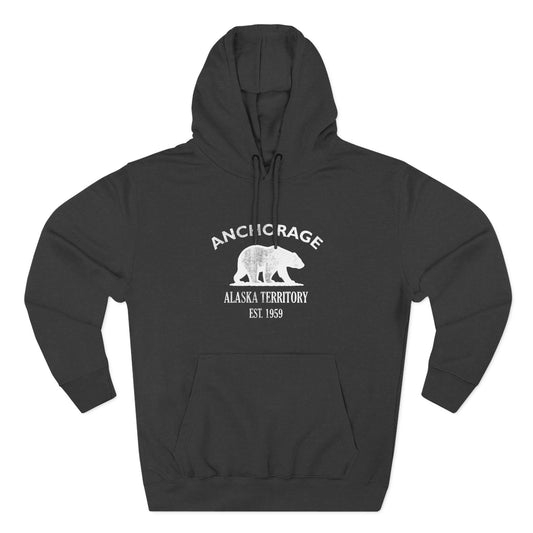
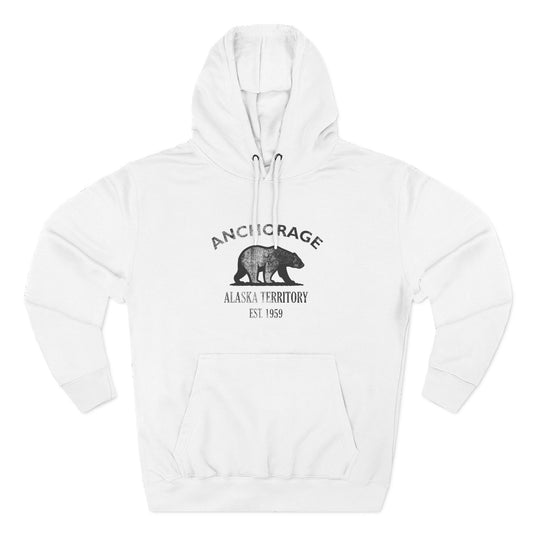
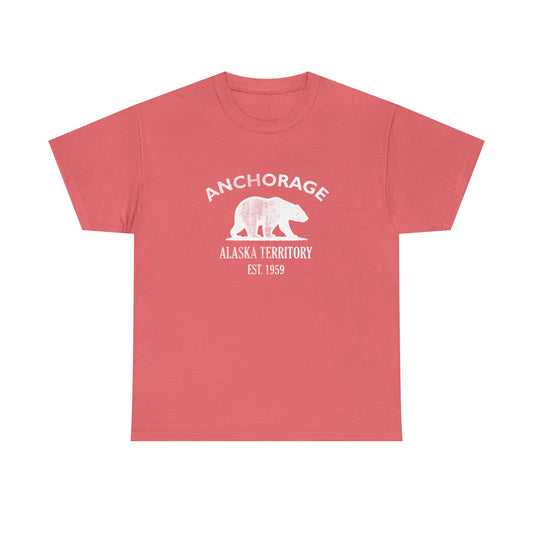
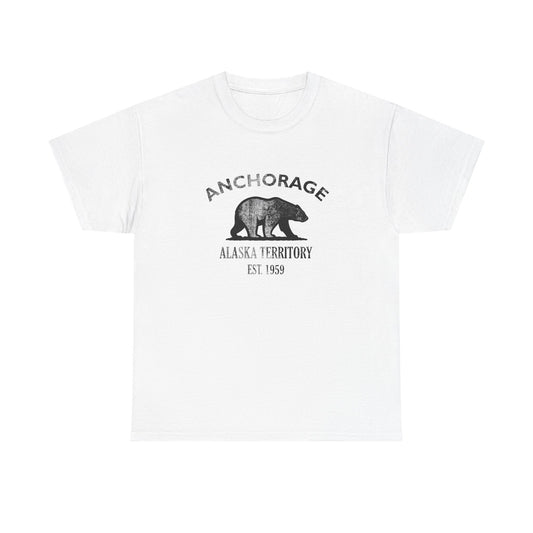
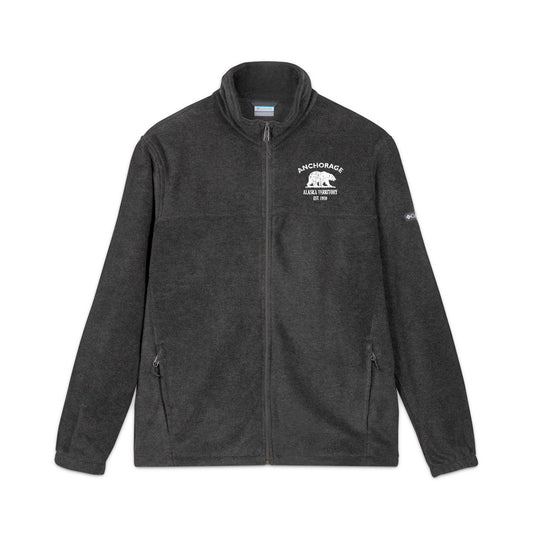
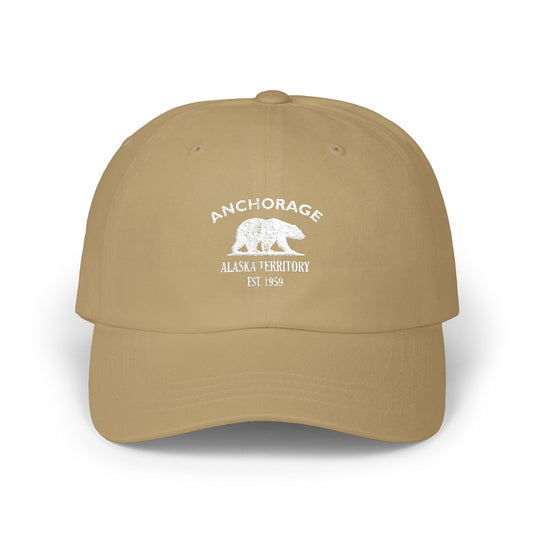
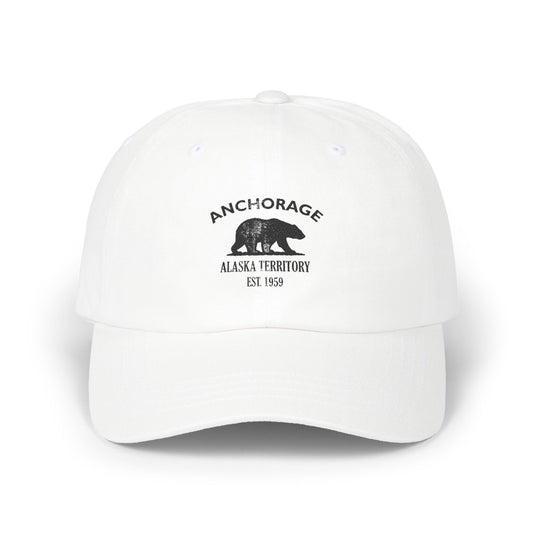
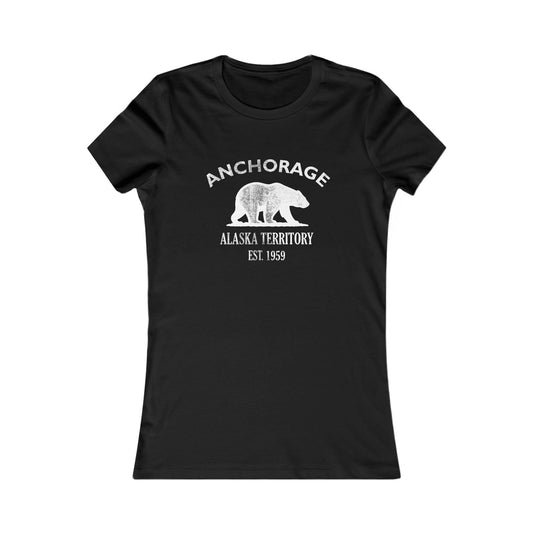
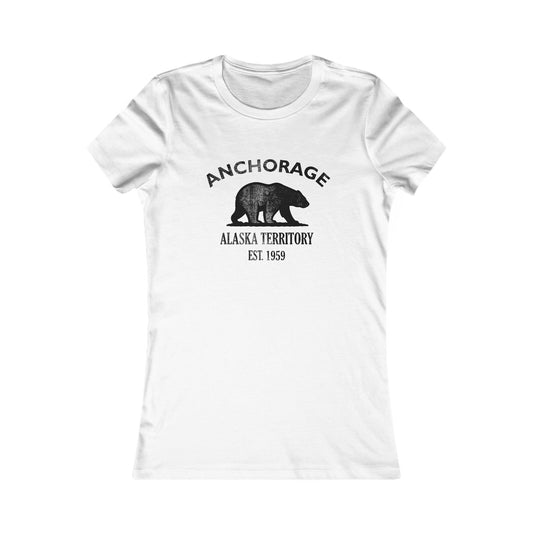
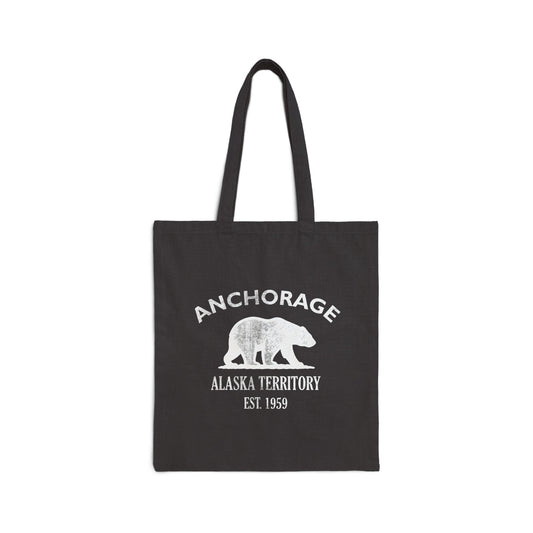
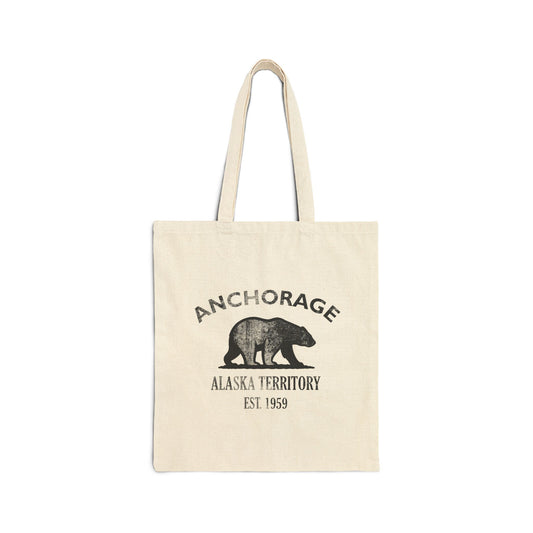
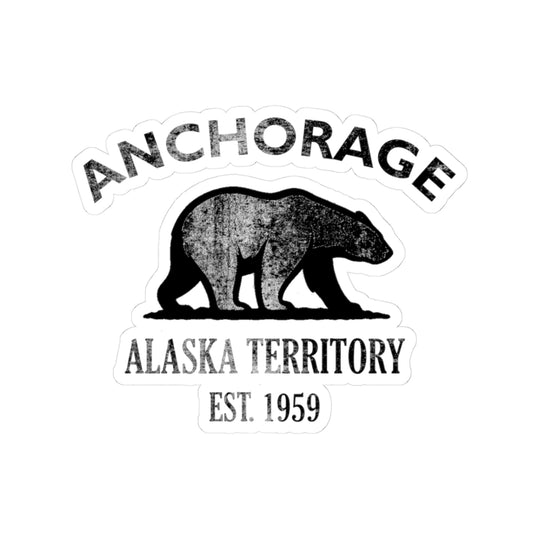
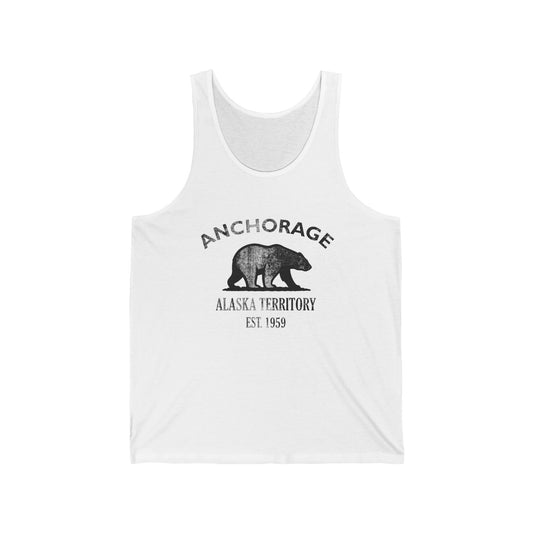
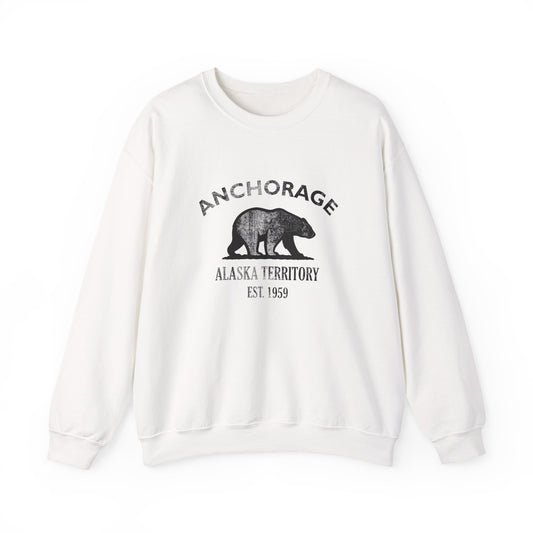
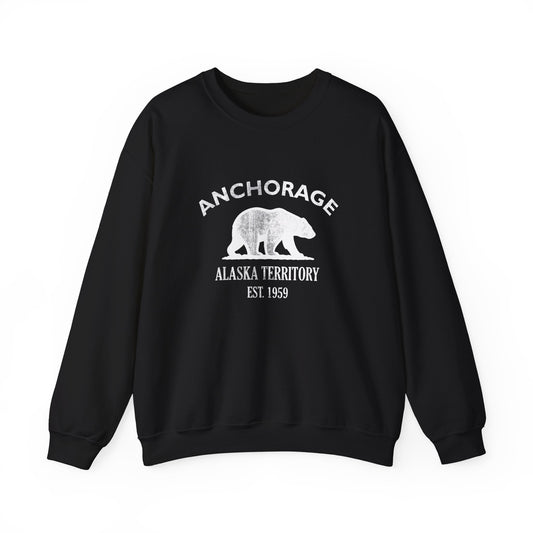
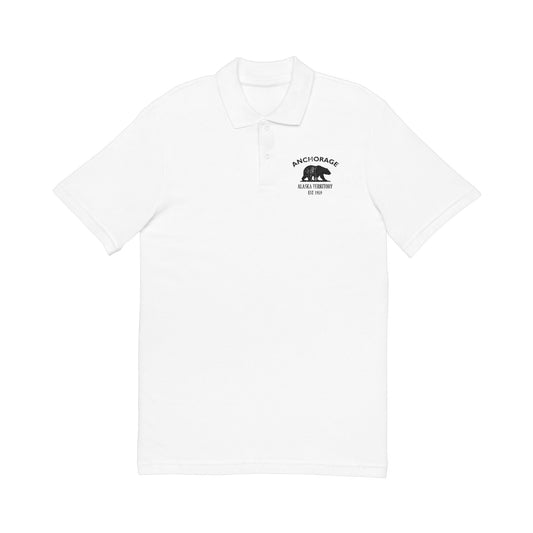
Our Anchorage logo carries Alaska's bear, set above “Alaska Territory · Est. 1959” — the rugged retro mark shared by every Merlin Classics Alaska place. Printed in a worn black-and-white that recalls an old outfitter's stamp, the bear is the Last Frontier in shorthand: tough, self-reliant, and at home in hard country. The bear is the through-line that links Anchorage to every other Alaska town we make. What makes this one Anchorage is everything around it — Cook Inlet and the Chugach, the rail-born downtown, the freighters passing overhead, and the ceremonial start of the Iditarod on Fourth Avenue.
Today Anchorage is Alaska's front door — the city most travelers pass through on the way to Denali, the Kenai Peninsula, or Seward, and the place where nearly half the state actually lives. Each March the Iditarod's ceremonial start sends sled teams down Fourth Avenue before the real race restarts to the north, and in late winter the Fur Rendezvous fills downtown. Our Anchorage designs gather that identity into wearable form — the bear, the mountains, and the inlet. Anchorage, Alaska: between the tide and the mountains, at the top of the world.

Anchorage, Alaska — Travel Guide
Visiting Anchorage Today
Anchorage sits on Cook Inlet at the foot of the Chugach Mountains, the largest city in Alaska and the gateway to Southcentral Alaska. It is an easy, walkable base — museums and a long coastal trail downtown, wilderness on its eastern edge, and day trips to Denali, the Kenai Peninsula, and Seward in every direction. Moose on the bike paths and mountains over the skyline come standard.
Cook Inlet, the Chugach & Downtown
For visitors looking for things to do in Anchorage, Alaska:
- Ride or walk the Tony Knowles Coastal Trail along Cook Inlet, with views of the Chugach and, on a clear day, Denali.
- Visit the Anchorage Museum at the Rasmuson Center for Alaska art, history, and Native culture.
- Walk downtown Fourth Avenue, the ceremonial starting line of the Iditarod on the first Saturday of March.
- Watch for the Turnagain Arm bore tide, one of the largest tidal waves of its kind in North America.
- Hike or ski in Chugach State Park, nearly half a million acres of wilderness on the city's edge.
- Catch the sunset from Point Woronzof, looking across the inlet to Mount Susitna and the volcanoes beyond.
- Ride the Alaska Railroad south to Seward or north toward Denali from the historic downtown depot.
- Time a winter visit to Fur Rendezvous, Anchorage's late-winter festival.
Why People Visit Anchorage
Anchorage offers Alaska in one place — a real city with museums, trails, and good food, set inside the scenery most people come north to see. Visitors come for the mountains and the inlet, the wildlife and the long summer light, and stay for the easy access to everything beyond. From the coastal trail to the Chugach, it rewards a day or a week. It is rugged, scenic, and genuinely Alaska.
Wear the History

For deeper reading on the Anchorage history described here — the Dena'ina Athabascan homeland on Cook Inlet, the 1915 founding as the Alaska Railroad construction headquarters, the military expansion of the Second World War and the Cold War, the 1964 Good Friday earthquake, the oil-era growth that followed the 1968 Prudhoe Bay discovery, and the 1975 creation of the unified Municipality — it may be useful to consult (1) the Anchorage Museum at the Rasmuson Center and the Cook Inlet Historical Society, (2) the Alaska State Library, Archives, and Museums, (3) the Alaska Office of History and Archaeology, (4) the Municipality of Anchorage records, and (5) the University of Alaska Anchorage and its Alaska collections. For travel and visitor information, it may be useful to contact (1) Visit Anchorage, (2) the Alaska Travel Industry Association and the state tourism office, (3) the Anchorage Parks and Recreation Department, (4) Alaska State Parks for Chugach State Park, and (5) the National Weather Service in Anchorage for Cook Inlet and Turnagain Arm tide and marine forecasts.
Shop the Anchorage Alaska collection
View full collection-
Anchorage Alaska Vintage Retro Premium Crewneck Sweatshirt - Black Logo
Regular price $48.00 USDRegular price -
Anchorage Alaska Vintage Retro Premium Crewneck Sweatshirt - White Logo
Regular price $48.00 USDRegular price -
Anchorage Alaska Vintage Retro Unisex Heavy Cotton Hoodie - White Logo
Regular price $56.00 USDRegular price -
Anchorage Alaska Vintage Retro Unisex Heavy Cotton Hoodie - Black Logo
Regular price $56.00 USDRegular price -
Anchorage Alaska Vintage Retro Unisex Heavy Cotton Tee - White Logo
Regular price $22.00 USDRegular price -
Anchorage Alaska Vintage Retro Unisex Heavy Cotton Tee - Black Logo
Regular price $22.00 USDRegular price -
Anchorage Alaska Vintage Retro Unisex Embroidered Fleece Jacket - White Logo
Regular price $98.00 USDRegular price -
Anchorage Alaska Vintage Retro Embroidered Cotton Cap - White Logo
Regular price $32.00 USDRegular price -
Anchorage Alaska Vintage Retro Embroidered Cotton Cap - Black Logo
Regular price $32.00 USDRegular price -
-
Anchorage Alaska Vintage Retro Womens Fitted Ringspun Cotton Tee - Black Logo
Regular price $28.00 USDRegular price -
Anchorage Alaska Vintage Retro Back Printed Art Series Cotton Tee - Black Logo
Regular price $32.00 USDRegular price -
Anchorage Alaska Vintage Retro Giclée Print Art Series Poster
Regular price From $38.00 USDRegular price -
Anchorage Alaska Vintage Retro Cotton Canvas Tote Bag - White Logo
Regular price $25.00 USDRegular price -
Anchorage Alaska Vintage Retro Cotton Canvas Tote Bag - Black Logo
Regular price $25.00 USDRegular price -
Anchorage Alaska Vintage Retro Vinyl Sticker - Black Logo
Regular price From $6.00 USDRegular price -
Anchorage Alaska Vintage Retro Ceramic Mug - Black Logo
Regular price From $16.00 USDRegular price -
Anchorage Alaska Vintage Retro Thank You Card Set - Black Logo
Regular price From $25.00 USDRegular price -
Anchorage Alaska Vintage Retro Cotton Jersey Baby Bodysuit - Black Logo
Regular price $26.00 USDRegular price -
Anchorage Alaska Vintage Retro Unisex Cotton Jersey Tank Top - White Logo
Regular price $28.00 USDRegular price -
Anchorage Alaska Vintage Retro Unisex Cotton Jersey Tank Top - Black Logo
Regular price $28.00 USDRegular price -
Anchorage Alaska Vintage Retro Unisex Heavy Crewneck Sweatshirt - Black Logo
Regular price $44.00 USDRegular price -
Anchorage Alaska Vintage Retro Unisex Heavy Crewneck Sweatshirt - White Logo
Regular price $44.00 USDRegular price -
Anchorage Alaska Vintage Retro Unisex Embroidered Cotton Polo - Black Logo
Regular price $48.00 USDRegular price