


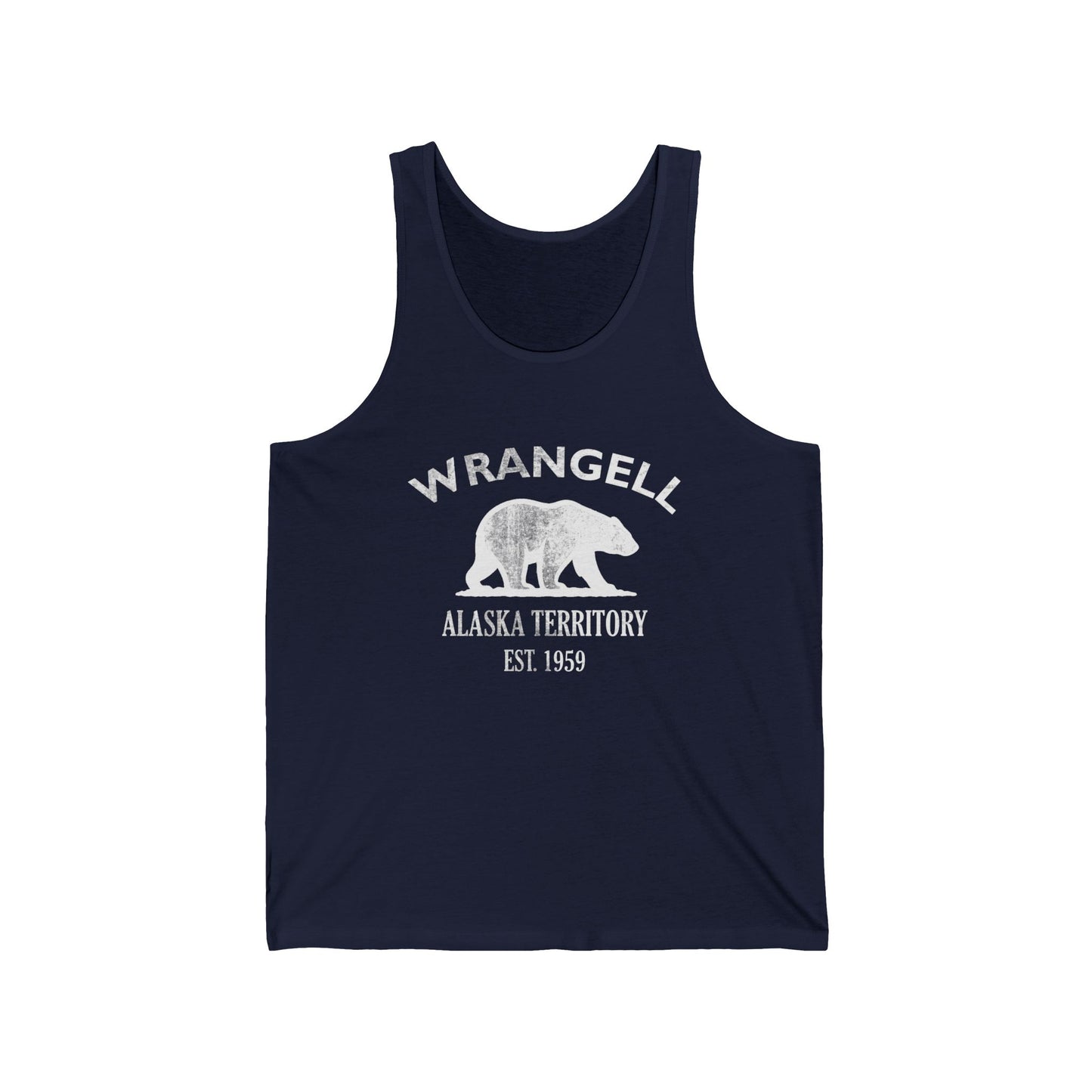
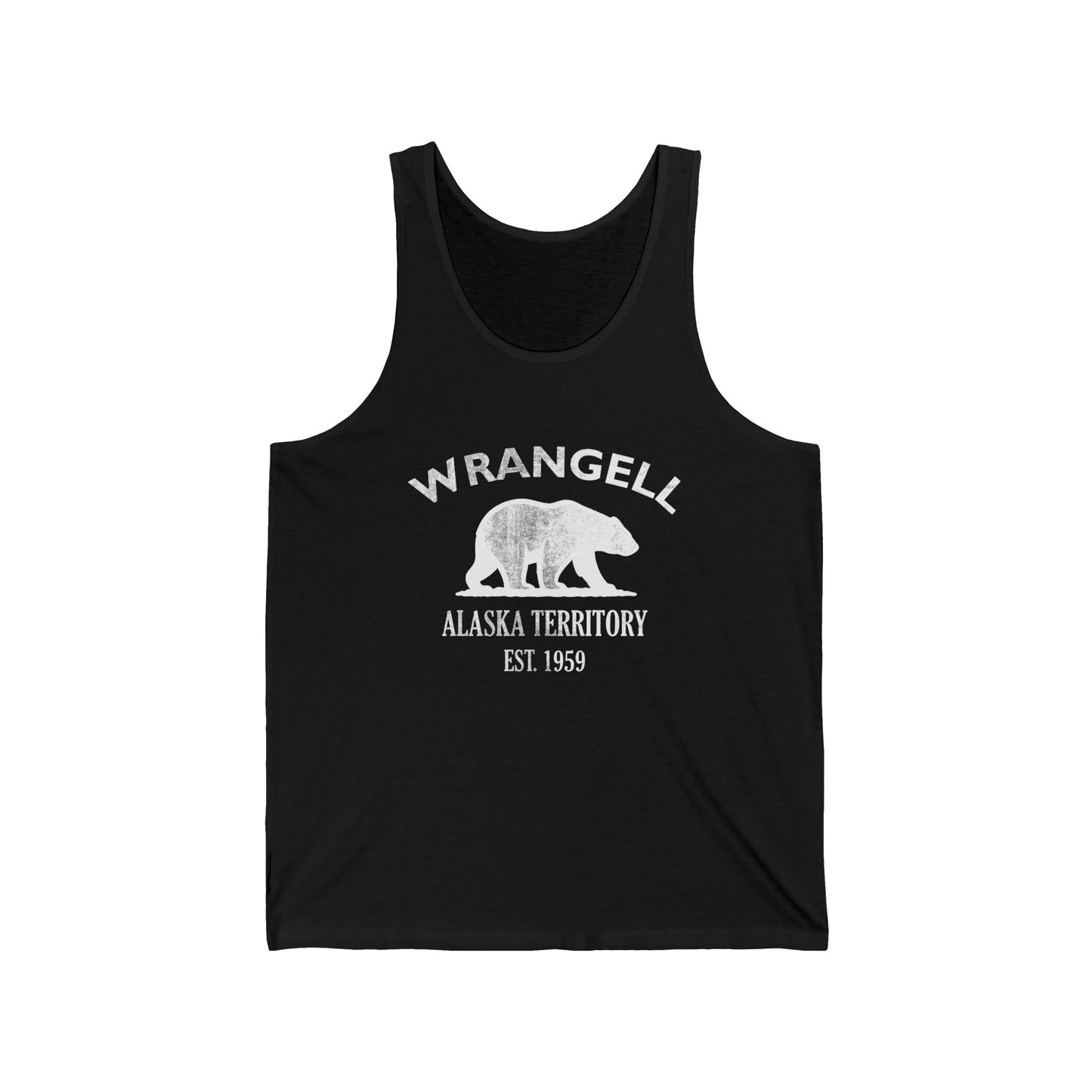
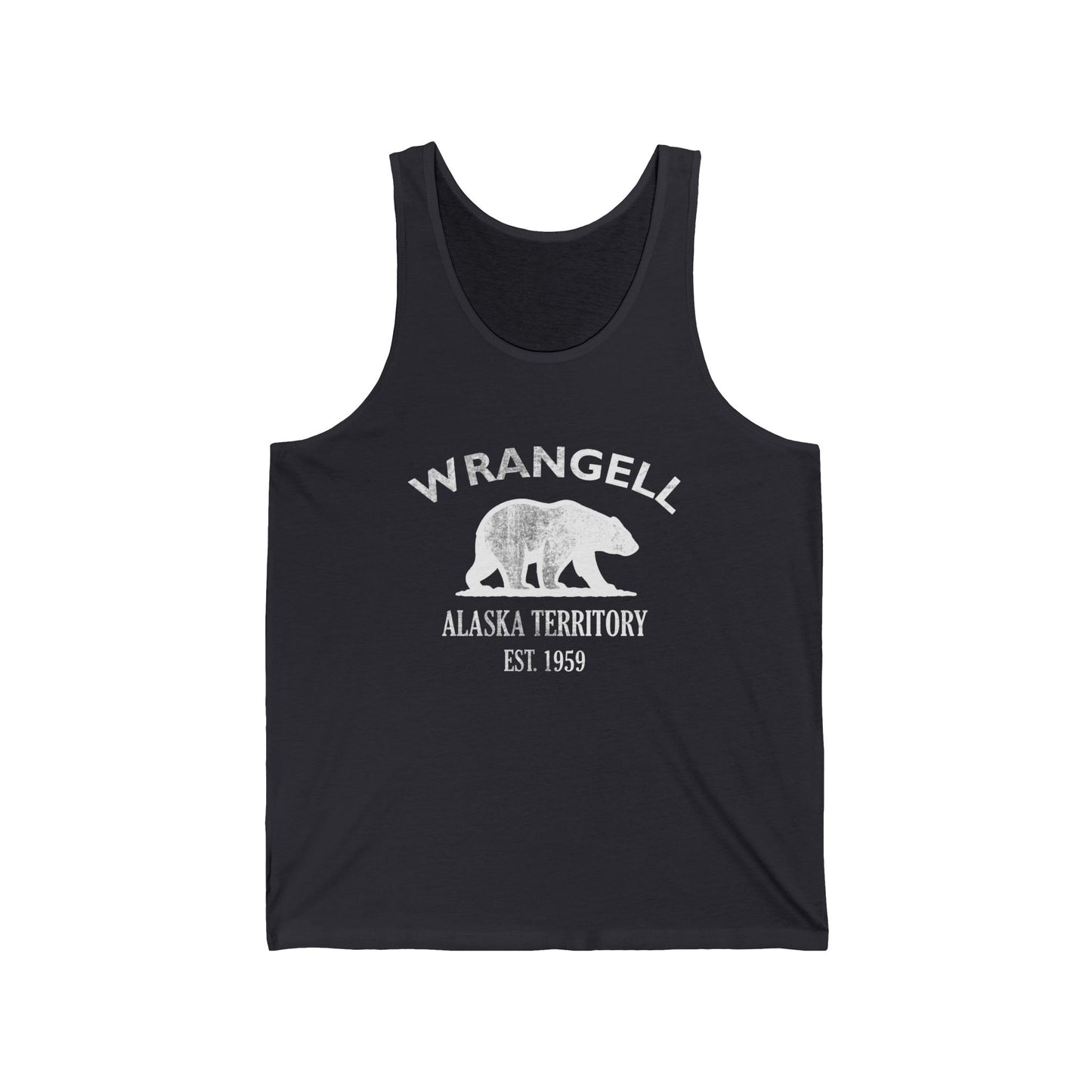
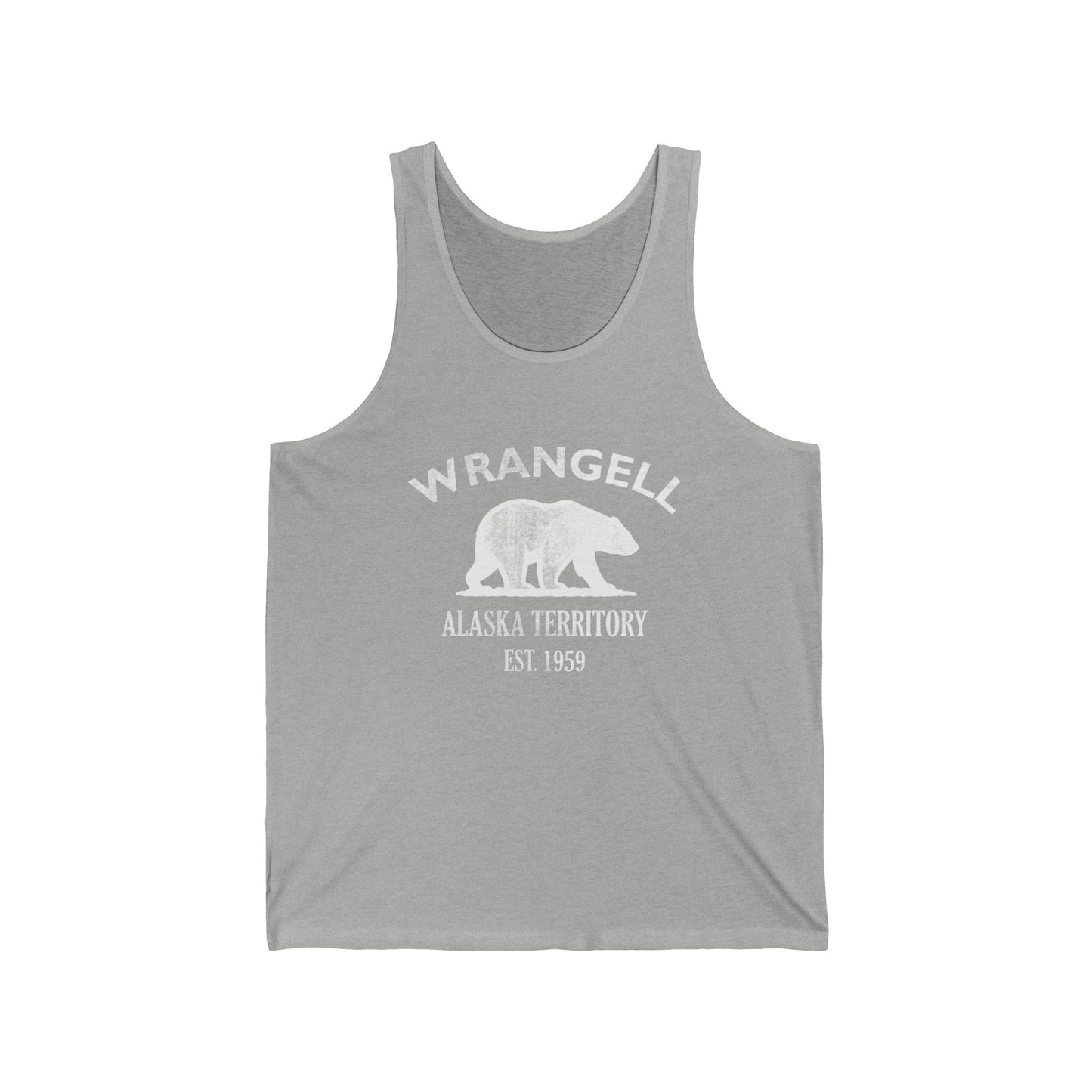
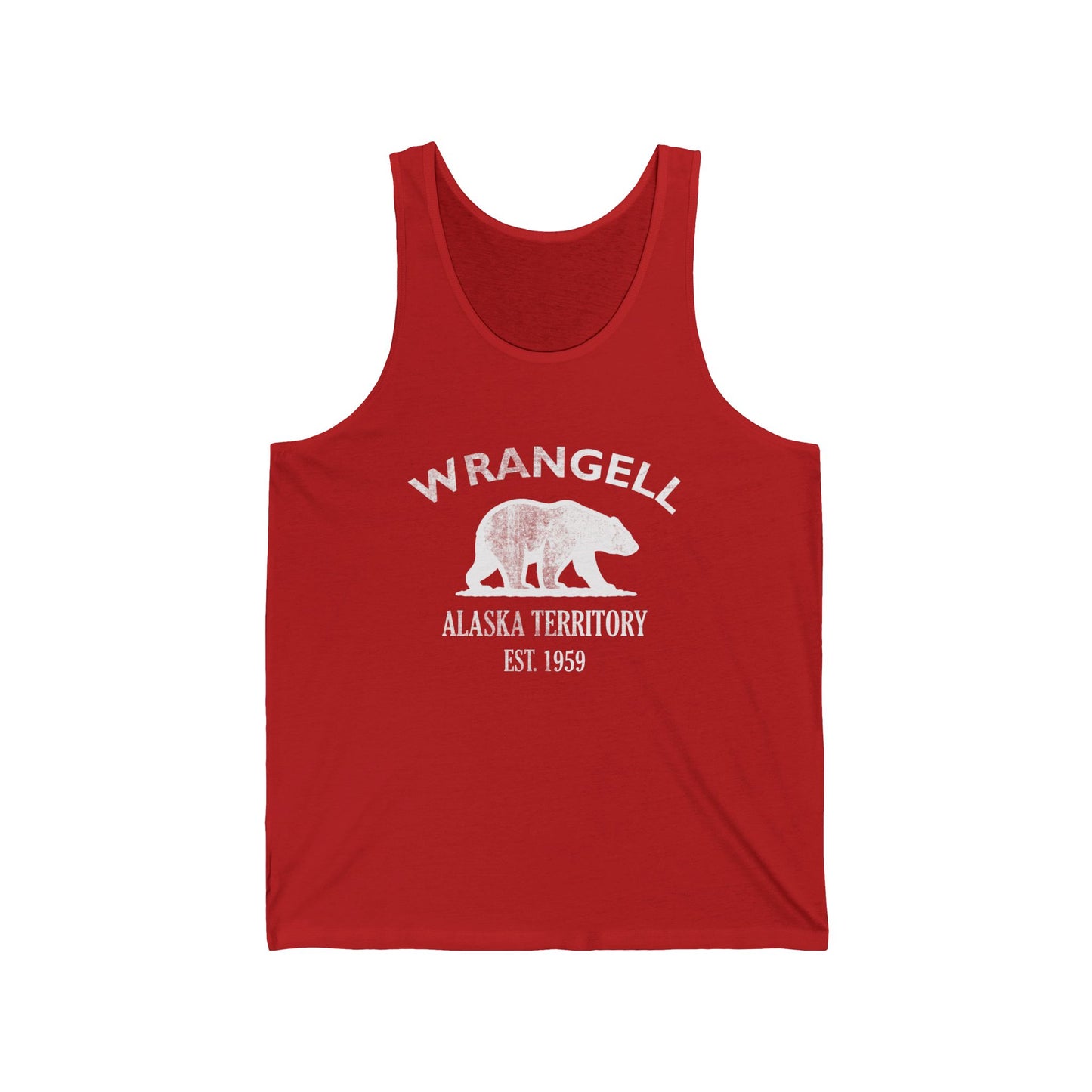
Our Wrangell logo carries Alaska's distressed bear, drawn in worn black and white above ‘Est. 1959,’ the year of statehood — the shared retro emblem of our Alaska towns. The bear stands for the wilderness and the toughness it takes to live in it, and the rugged crate-stamp styling makes the design feel like something off an old cannery label or an outfitter's crate. The bear and the date are the through-line that links Wrangell to every other Alaska town we make; what makes this one Wrangell is everything around it — the three flags, the Stikine River, the totems, and the carvings on the beach.
Through all of it the Tlingit presence never left. Out at the edge of town, Petroglyph Beach is scattered with spirals and faces pecked into the rock perhaps eight thousand years ago, easiest to read at low tide. A footbridge in the inner harbor leads to Chief Shakes Island and its tribal house, ringed by carved totems, and downriver at Anan Creek black and brown bears crowd an ancient Tlingit fishing site to take the summer salmon. The old stories and the old carvings are not behind glass here; they are part of the working town. Even the children carry a piece of it — they sell deep-red garnets at the dock, gathered from a ledge up the Stikine that was deeded long ago so Wrangell's kids could mine and sell the stones.
Why People Visit Wrangell
Wrangell rewards the off-the-path traveler. It pairs living Tlingit culture with easy reach of the Stikine and bear country, and you can see totems, petroglyphs, and a working harbor in a single walkable day. It feels authentic, green, and quietly adventurous — an Alaska town that stayed itself — with year-round appeal in its trails, parks, and waterfront.
