


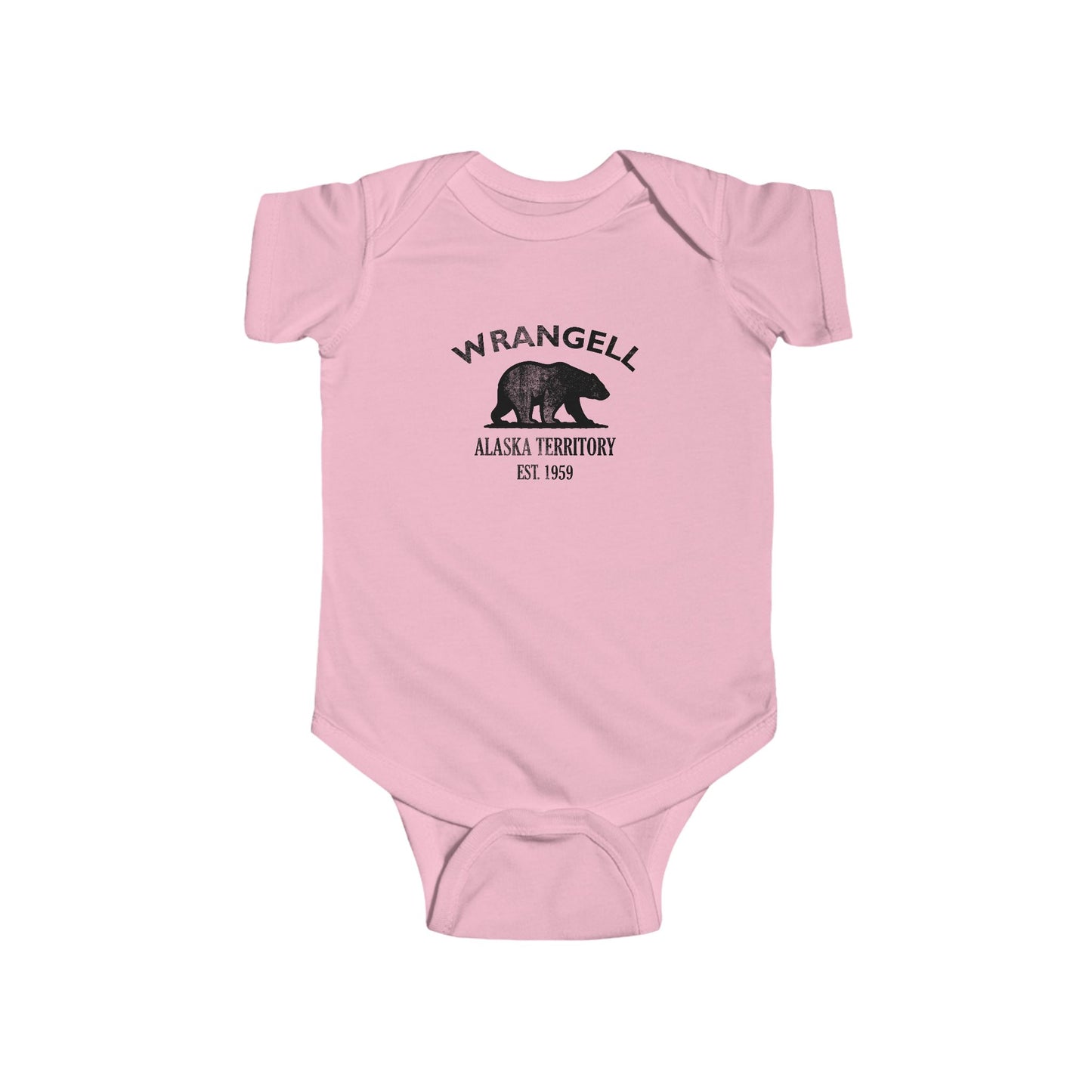
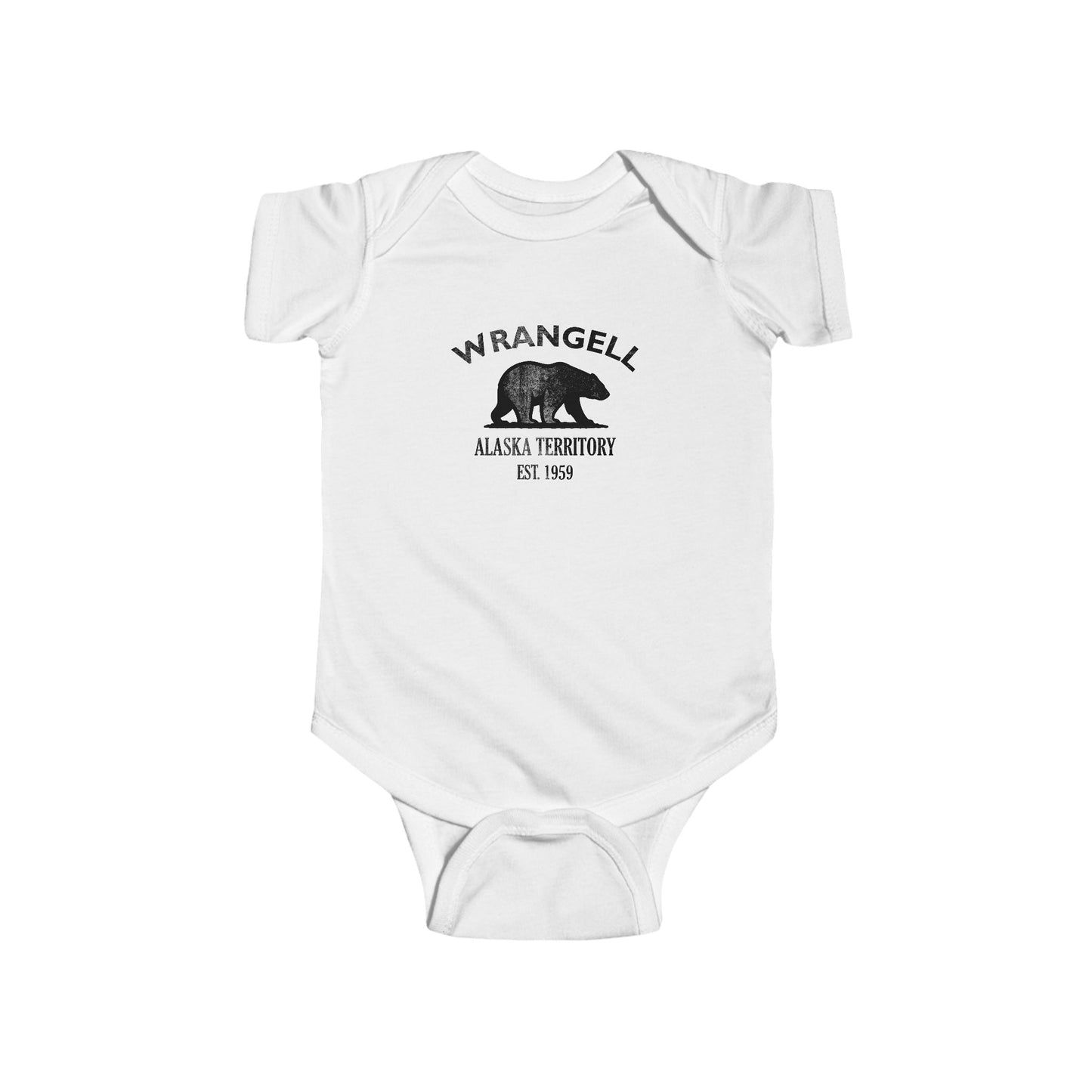
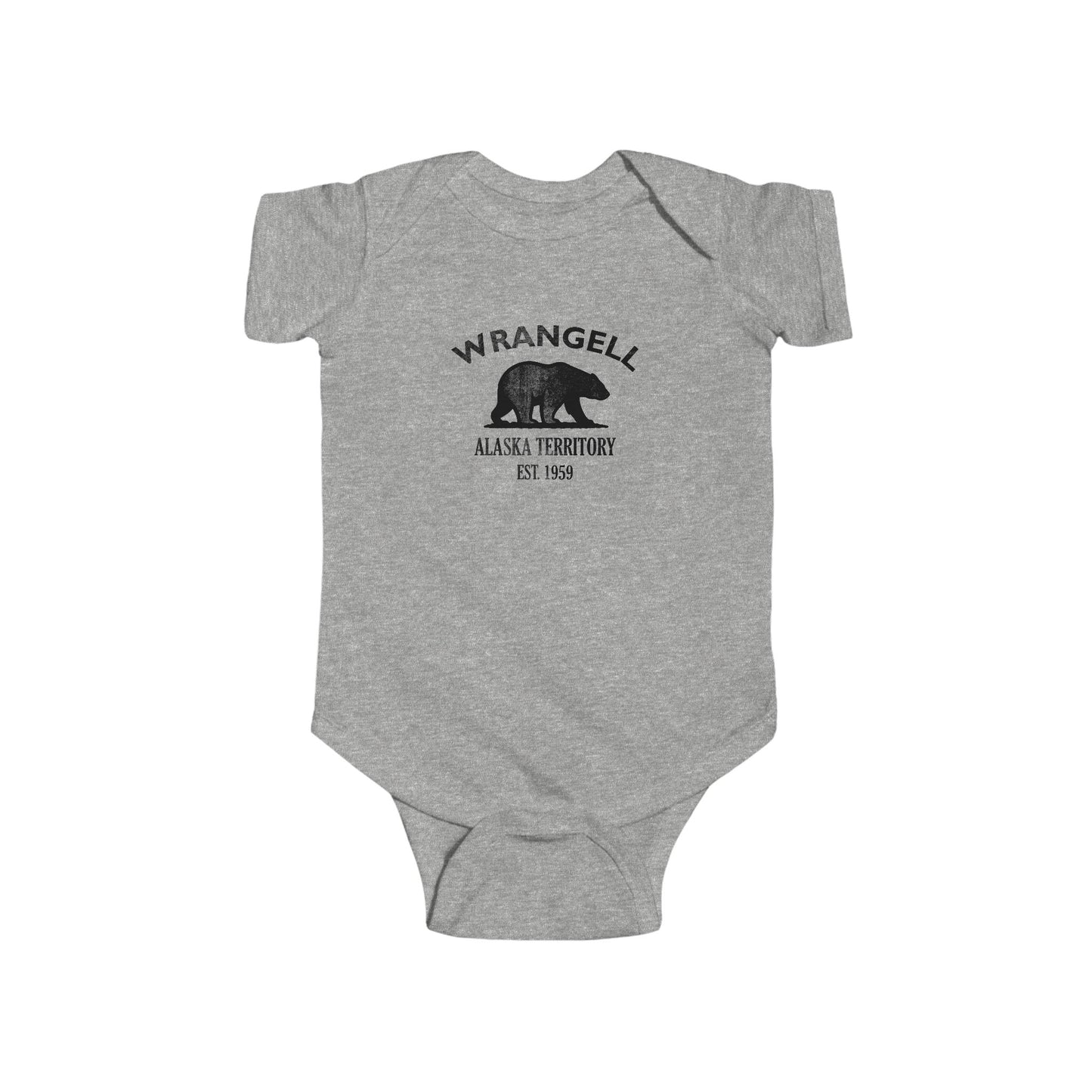
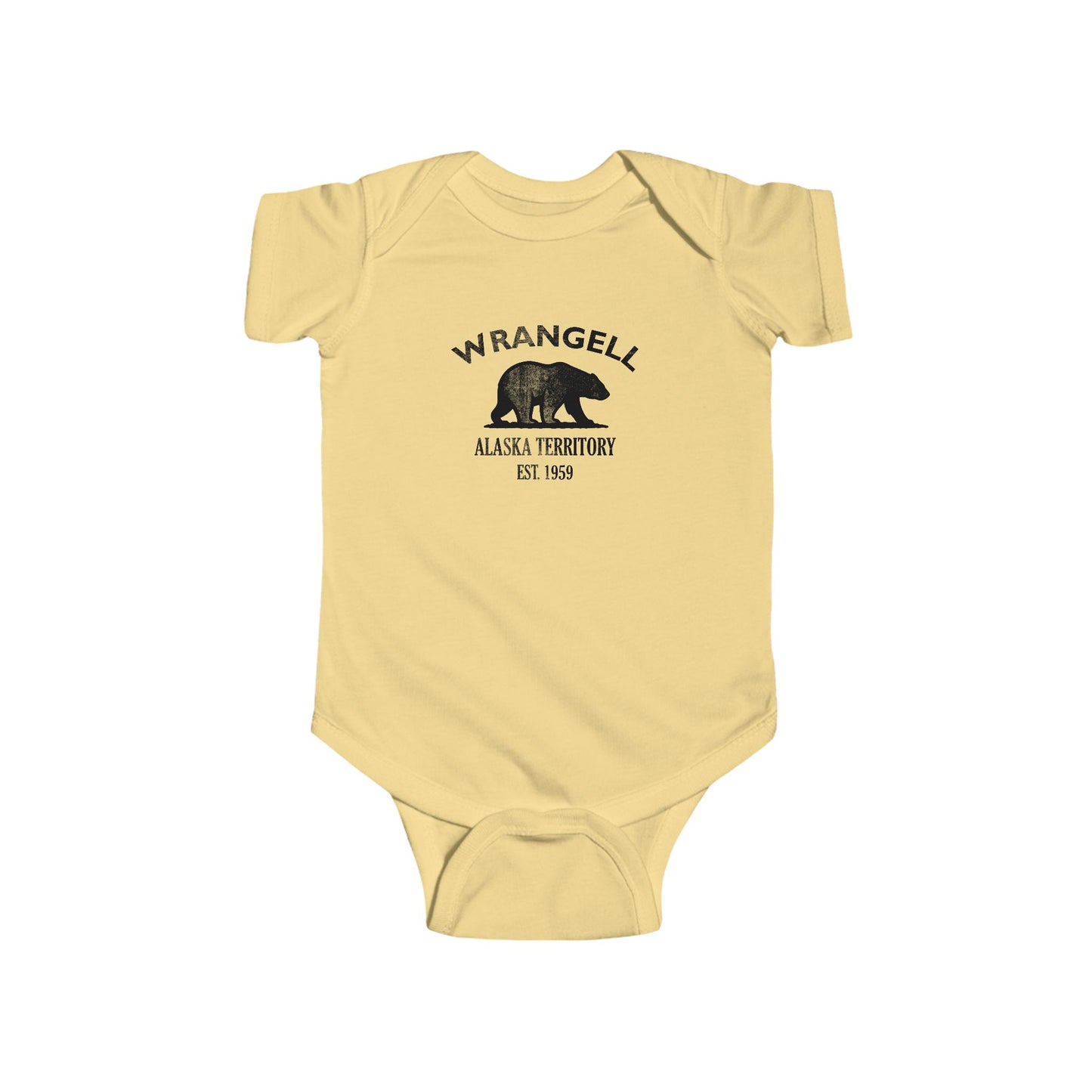
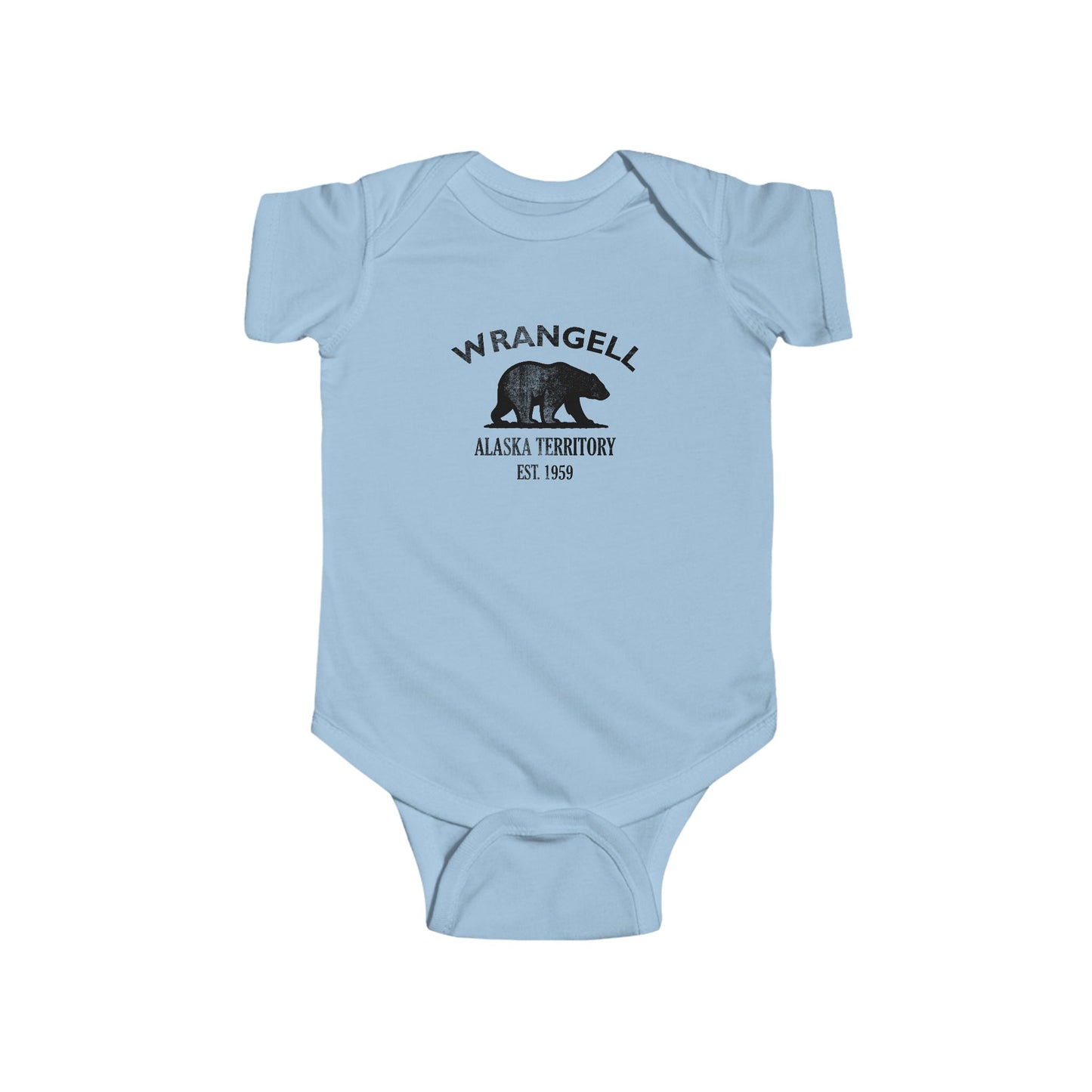
Our Wrangell logo carries Alaska's distressed bear, drawn in worn black and white above ‘Est. 1959,’ the year of statehood — the shared retro emblem of our Alaska towns. The bear stands for the wilderness and the toughness it takes to live in it, and the rugged crate-stamp styling makes the design feel like something off an old cannery label or an outfitter's crate. The bear and the date are the through-line that links Wrangell to every other Alaska town we make; what makes this one Wrangell is everything around it — the three flags, the Stikine River, the totems, and the carvings on the beach.
Between and after the rushes, Wrangell made its living from the sea and the forest. Fish traps went in at the mouth of the Stikine in the 1890s, and salmon canneries grew into the backbone of the town, packing the runs that came down the river every summer. When canning gave way in the mid-twentieth century, a lumber mill took its place, and Wrangell settled into the role it still plays — a working Inside Passage town of fishermen, loggers, and harbor hands, far quieter than the cruise ports to the north. When statehood arrived in 1959 the new state finally outlawed the fish traps that had thinned the Stikine runs, and the salmon slowly came back.
Why People Visit Wrangell
Wrangell rewards the off-the-path traveler. It pairs living Tlingit culture with easy reach of the Stikine and bear country, and you can see totems, petroglyphs, and a working harbor in a single walkable day. It feels authentic, green, and quietly adventurous — an Alaska town that stayed itself — with year-round appeal in its trails, parks, and waterfront.
