



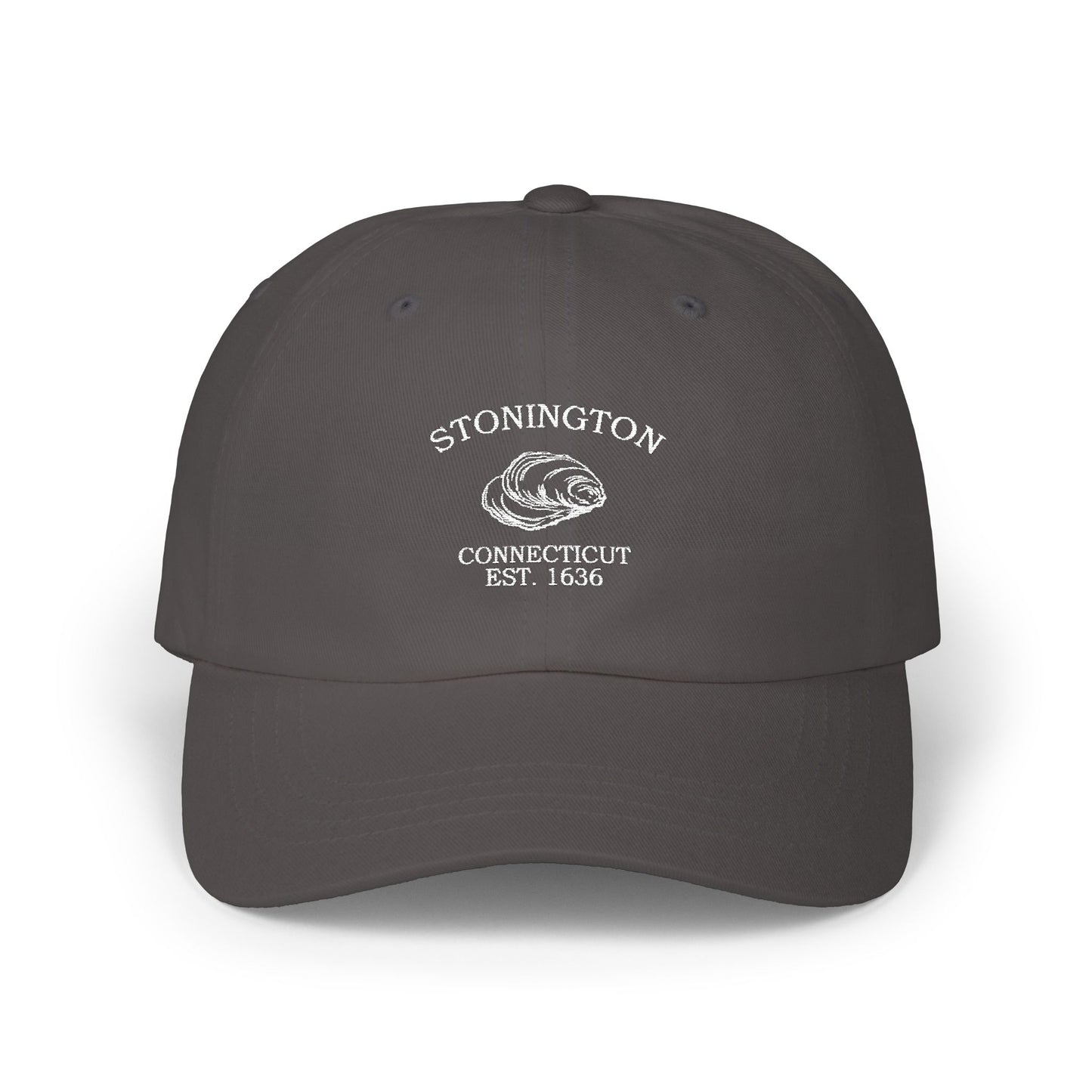
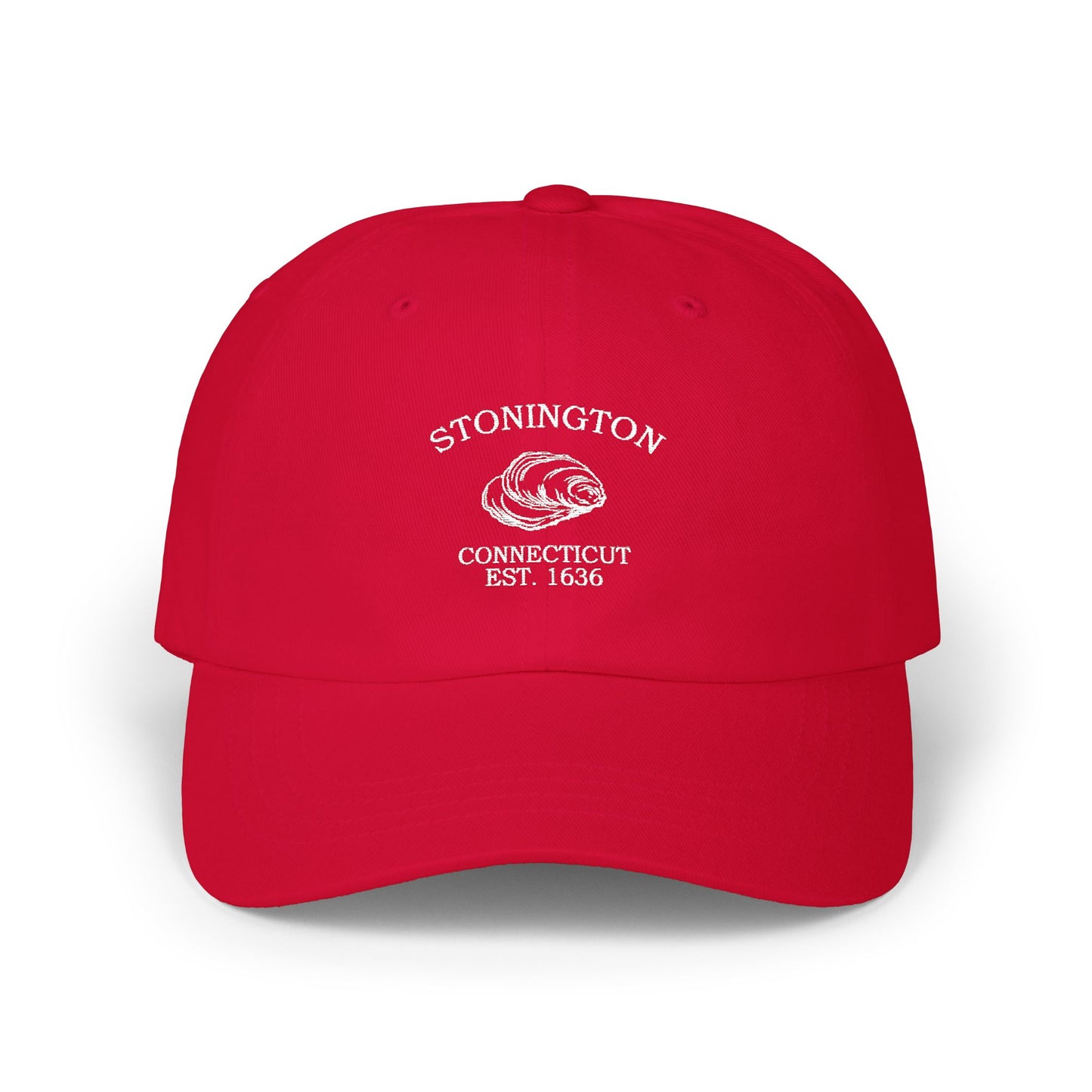
Stonington holds more history per square foot than almost any town in America: two defeated navies, a discovered continent, a woven empire of velvet, and a fishing fleet that never stopped. Our Stonington designs gather that identity — the lighthouse, the cannon, the sixteen-star spirit — into wearable form. Quietly outlasting things since 1801.
The battle that the British Navy lost. August 9, 1814. Four Royal Navy warships anchored off Stonington Point, commanded by Commodore Thomas Masterman Hardy — the man who had held the dying Nelson at Trafalgar. His message ashore gave the town one hour to evacuate. The town didn't evacuate. The town wrote back: "We shall defend the place to the last extremity. Should it be destroyed, we shall perish in its ruins." Four days later, having failed to take a village of a thousand people, the squadron weighed anchor and sailed away. The flag that flew through it all still hangs in the Old Lighthouse Museum. Most towns build monuments to the wars they win. Stonington just kept the flag flying.
Why People Visit Stonington Connecticut
Stonington balances genuine maritime history with preserved coastal village charm most New England towns have lost to tourism. Visitors come for the lighthouse climb, the harbor walks, the Federal-era architecture, the working fishing fleet, and the rare experience of a town that has been quietly itself for over two hundred years. It is photogenic, walkable, and uncrowded compared to neighboring Mystic. History, food, and the salt air sit side by side in a way that rewards a slow afternoon.
