Skip to product information
1 of 8

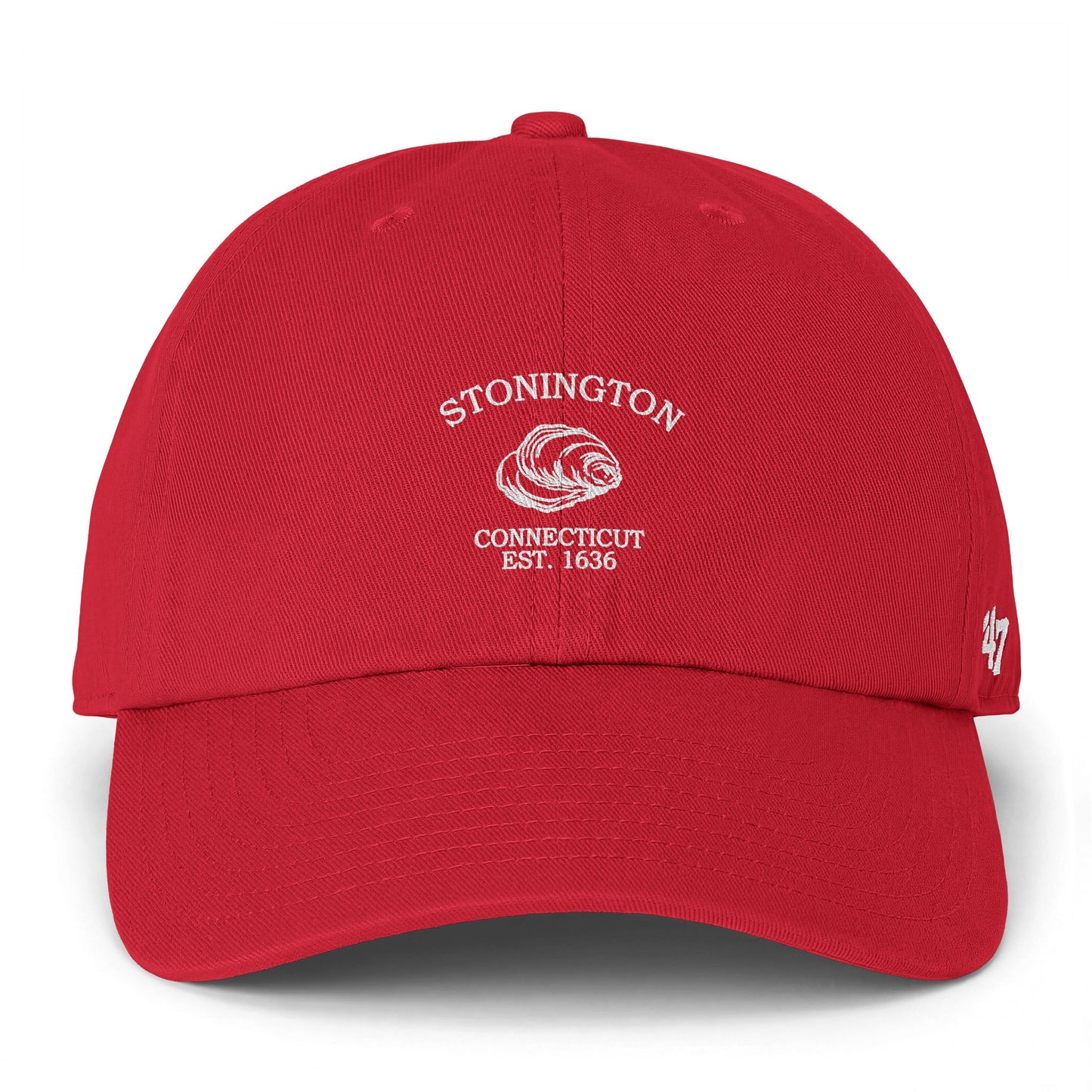
Stonington Connecticut Vintage Retro Womens Cotton Cap - Black Logo

Stonington Connecticut Vintage Retro Womens Cotton Cap - Black Logo

Regular price $32.00 USD
Regular price Sale price $32.00 USD
Sale
Shipping calculated at checkout.
Color
Size
Quantity

This relaxed, vintage-style cap brings quiet coastal charm to everyday wear. Washed cotton twill and a low-profile, unstructured silhouette make it feel lived-in from the first wear. The small embroidered crest—a stylized wave and classic lettering—whispers hometown pride without shouting. Slide the adjustable snap closure to your fit, curve the visor down for sun protection, and let the soft, broken-in feel accompany beach walks, market runs, or slow Sunday mornings. It pairs naturally with denim, an overshirt, or a light sweater and holds its shape while aging into the fabric of your routine.

Product features
- 100% garment-washed cotton twill for a soft, vintage hand
- Unstructured six-panel, low-profile dad hat silhouette
- Pre-curved visor for classic casual styling
- Adjustable snap tri-glide buckle closure for customizable fit
- Relaxed, comfortable fit made for everyday wear

Care instructions
- Spot clean the hat with mild, diluted detergent before submerging it completely in water. Let it soak for up to 15 minutes. Then, rinse the hat thoroughly in warm or cold water before gently patting it dry with a towel, reshaping it and leaving it to air dry.

View full details

The 21-year-old who found Antarctica. In the autumn of 1820, six years after the British sailed away, a 21-year-old Stonington sea captain named Nathaniel Brown Palmer sailed south out of this harbor on a 47-foot sloop called the Hero. He was hunting fur seals. The fleet had been working the South Shetland Islands off the tip of South America, and the seals there were getting scarce. Palmer was sent further — past the known maps, past where any American ship had reliably gone — to look for new rookeries. On November 17, 1820, barely past his 21st birthday, Palmer sighted a coastline that no one in his hemisphere had ever charted. He sailed close enough to see mountains rising directly out of the ice. What he was looking at would later be named Palmer Land, and the entire peninsula extending north toward South America is now the Antarctic Peninsula — the seventh continent's northernmost reach. He was the first American, and arguably the first person, to confirm Antarctica existed. He came home to Stonington. Lived the rest of his life here. His house still stands at 40 Palmer Street, two blocks from the lighthouse he sailed past on his way south. A continent named for a kid from a one-square-mile village. The borough is also home to Connecticut's last commercial fishing fleet — working boats, working harbor, working town. Yankee Magazine named it one of the Top 10 prettiest coastal towns in New England, and the borough has been quietly, stubbornly beautiful since 1801. Quietly outlasting things ever since.

The battle that the British Navy lost. August 9, 1814. Stonington, Connecticut — population roughly 1,000 — woke up to find four British Royal Navy warships anchored off the point. The squadron was commanded by Commodore Thomas Masterman Hardy, the man who had held the dying Nelson in his arms at Trafalgar nine years earlier, the most decorated British naval officer of his generation. Hardy sent a message ashore at sunset: the town had one hour to evacuate. Then he would commence firing. The town didn't evacuate. The town wrote back. "We shall defend the place to the last extremity. Should it be destroyed, we shall perish in its ruins." The reply was carried back to Hardy's flagship, the HMS Ramillies, a 74-gun ship-of-the-line that on its own carried more cannon than Stonington had ever seen. Combined, the four British ships — Ramillies, Pactolus, Dispatch, and Terror — mounted roughly 160 guns. The town had three cannons. Two 18-pounders and a smaller 4-pounder, operated by a merchant captain named Jeremiah Holmes and a handful of militia who had moved the guns to a stone breastwork at the foot of the point. Naval historian James Tertius de Kay, who lived in Stonington and spent decades researching the battle from Royal Navy correspondence and American primary sources, called it one of the strangest small-unit actions in the entire war. Over the next four days, the British fired roughly 50 tons of ammunition into the town — solid shot, Congreve rockets, and bombs from the mortar vessel Terror. Houses were hit. Cannonballs lodged in walls, and some are still there. But the Stonington gunners kept firing back, dragging their cannons from position to position under fire and working as their own fire brigade between volleys. On the third day, Holmes scored a direct hit on HMS Dispatch below the waterline. The brig was severely damaged. The flag flying over the American battery — sixteen stars, sixteen stripes — was shot through seven times and kept flying. British casualties: 21 killed, 50 wounded. American casualties: two dead (one elderly woman already mortally ill before the first shot) and two militiamen wounded. At noon on August 12, the British squadron weighed anchor and sailed away. They had fired more ordnance into Stonington than was used in any other engagement of the war on American soil, and they had failed to take a village of 1,000 people defended by three cannons. The flag still hangs in the Old Lighthouse Museum. The two surviving 18-pounders sit in Cannon Square, pointing toward the spot they defended. Most towns build monuments to the wars they win. Stonington just kept the flag flying.

Why People Visit Stonington Connecticut

  • Tour the Old Lighthouse Museum at 7 Water Street, the first lighthouse built by the federal government, completed in 1840, holding the original sixteen-star battle flag from 1814.
  • Visit Cannon Square, where the two surviving 18-pounder cannons that defended the borough in 1814 still point toward the harbor entrance.
  • See the Captain Nathaniel B. Palmer House at 40 Palmer Street, home of the 21-year-old sea captain who first sighted Antarctica in 1820.
  • Relax on DuBois Beach, sandy cove at the tip of the borough with views across Fishers Island Sound to Connecticut, Rhode Island, and New York.
  • Walk Water Street, tree-lined with white picket fences, antique shops, and historic sea captains' homes.
  • Watch the working fleet at Town Dock, Connecticut's last commercial fishing fleet, with views of the harbor and surrounding islands.
  • Explore the historic American Velvet Mill on Bayview Avenue, built in 1888 to attract new industry to the borough. The American Velvet Company opened there in 1892 and at its 1950s peak was the largest velvet producer in the United States, operating roughly 300 broad looms with around 450 workers. The company moved operations to Virginia late in the 20th century, and the building has since been repurposed as a maker space.

Stonington Connecticut Merlin Classics retro vintage logo featuring lighthouse, cannon, and Battle of Stonington heritage motif

Wear Local. Feed Local. Stay Classic.

Product FAQs

How does your sizing work?

Because items are made to order, we can’t accept returns for sizing or color choices. We do accept returns for defects, misprints, or shipping damage. Please review the detailed photos and descriptions before purchasing. Women’s fitted tees run small; if you prefer a looser fit, consider sizing up.

How do I send gifts?

All items ship without prices and include a simple packing slip for easy gifting. Enter the recipient’s shipping address and your billing address at checkout. Use your contact info to receive tracking updates. Orders typically arrive within 6–11 business days—please allow extra time for time-sensitive gifts.

How do I care for my item?

For apparel: wash cold, inside-out, with like colors; avoid bleach and high heat; tumble dry low or hang dry. For embroidery, iron inside-out to protect the stitching. See specific care instructions in product descriptions and also follow general best practices in caring for your items for long term enjoyment.

How are items made and when will they arrive?

We make each item on demand using premium blanks, embroidery, and soft-hand prints. Production usually takes 2–5 business days (excluding weekends and holidays). You’ll receive tracking once shipped. We currently ship to U.S. addresses via USPS, UPS, or FedEx. Most orders arrive within 6–11 business days.

What’s the return/exchange policy?

We accept returns for defects, misprints, or damage on arrival. Report issues within 14 days with photos and your order number, and we’ll replace or refund. Size or color changes aren’t supported after purchase, so please consult size charts before ordering if you are at all unsure.

Who are we?

Merlin Classics is a volunteer-run, AI-assisted apparel project celebrating timeless local style. Every item is made to order, and profits (revenue minus external product/marketing cost) support hunger-relief programs in the communities our collections spotlight. Classic looks, real local impact—every purchase helps.