


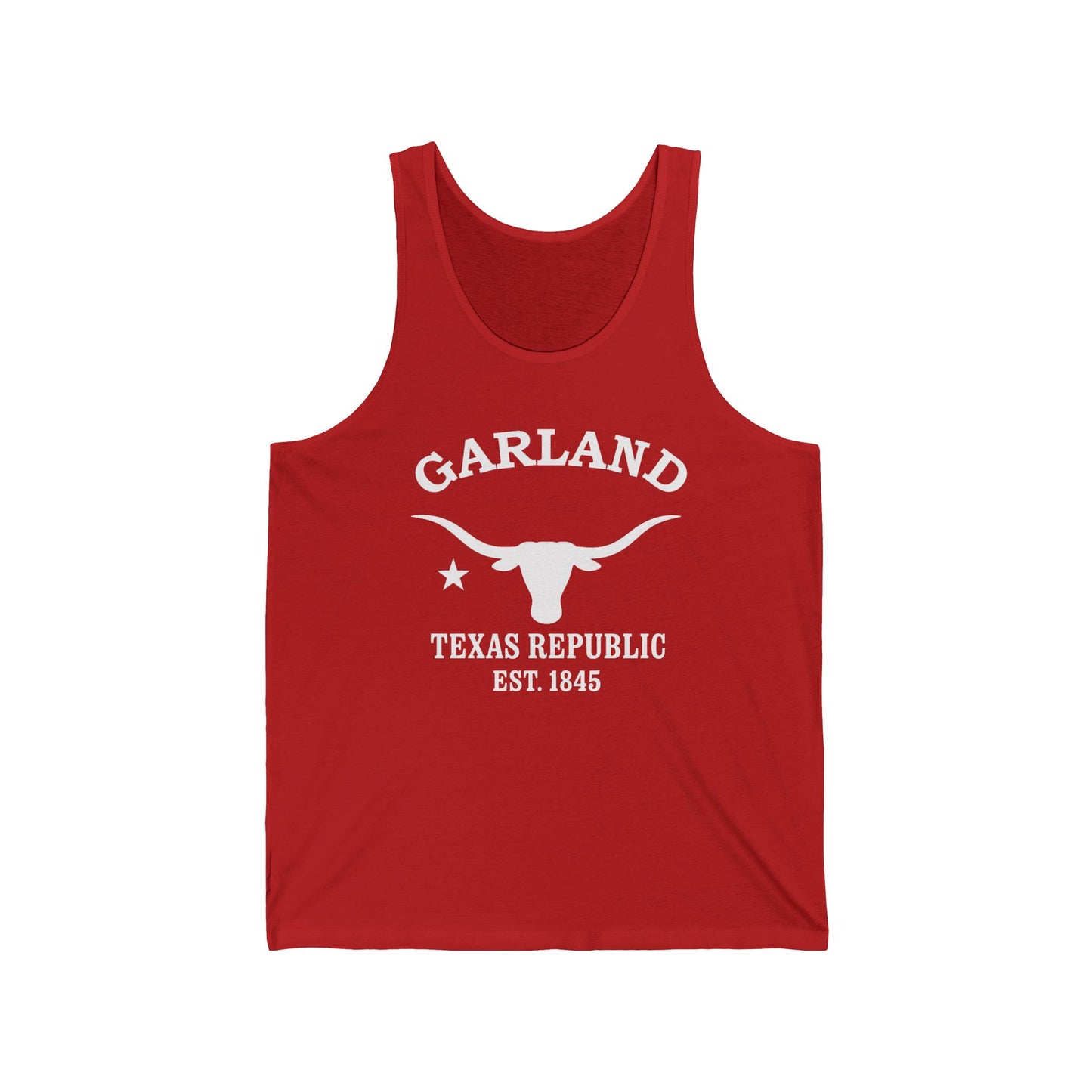
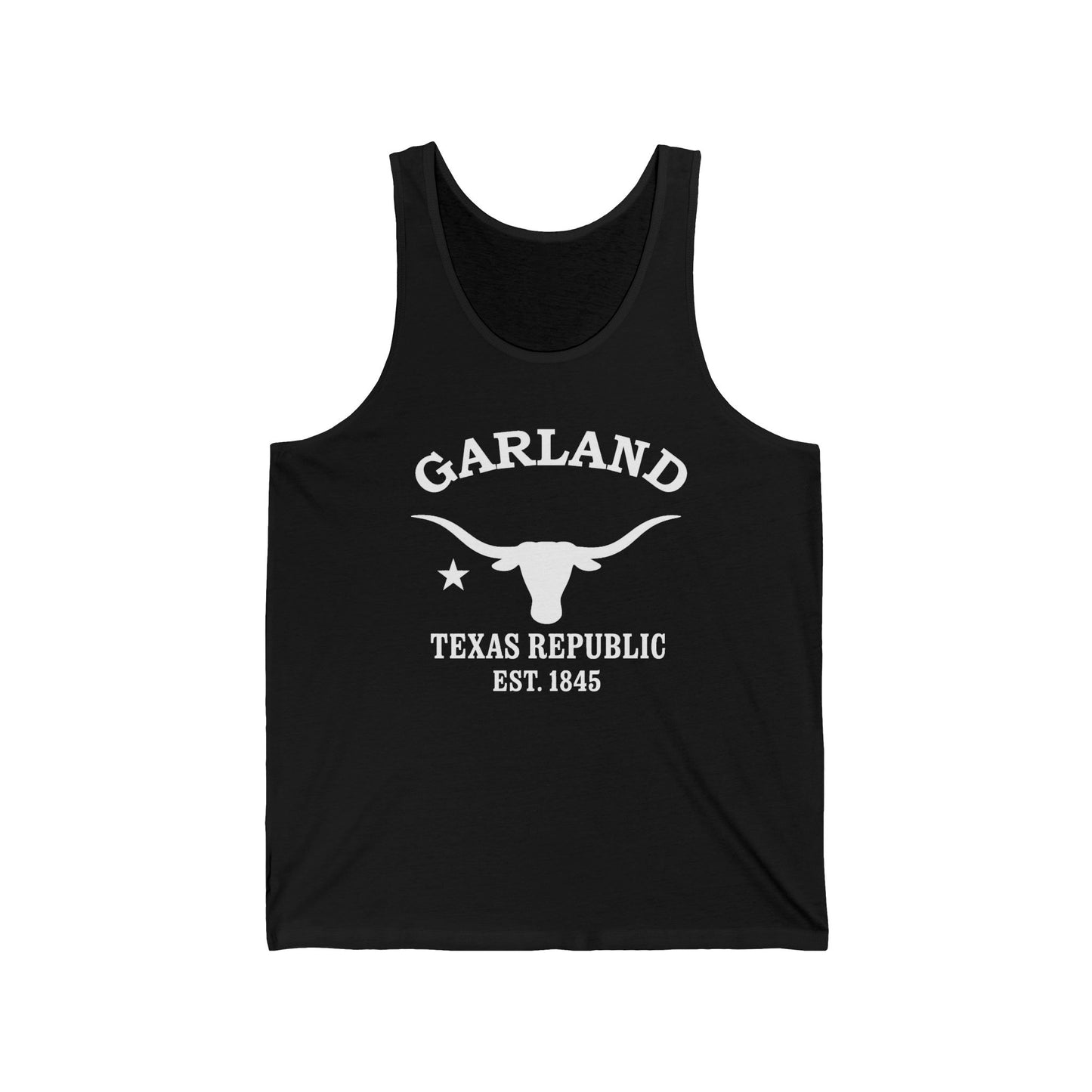
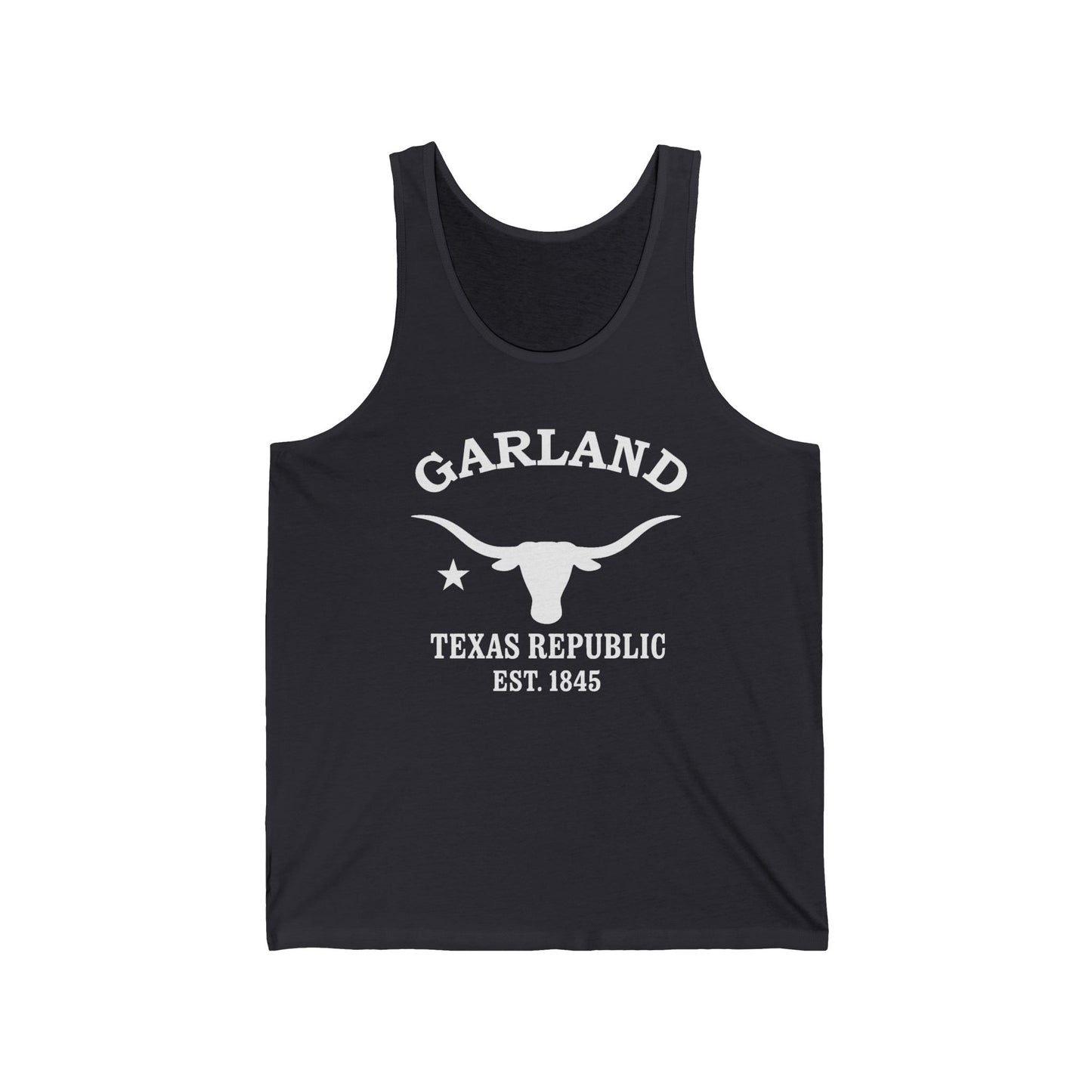
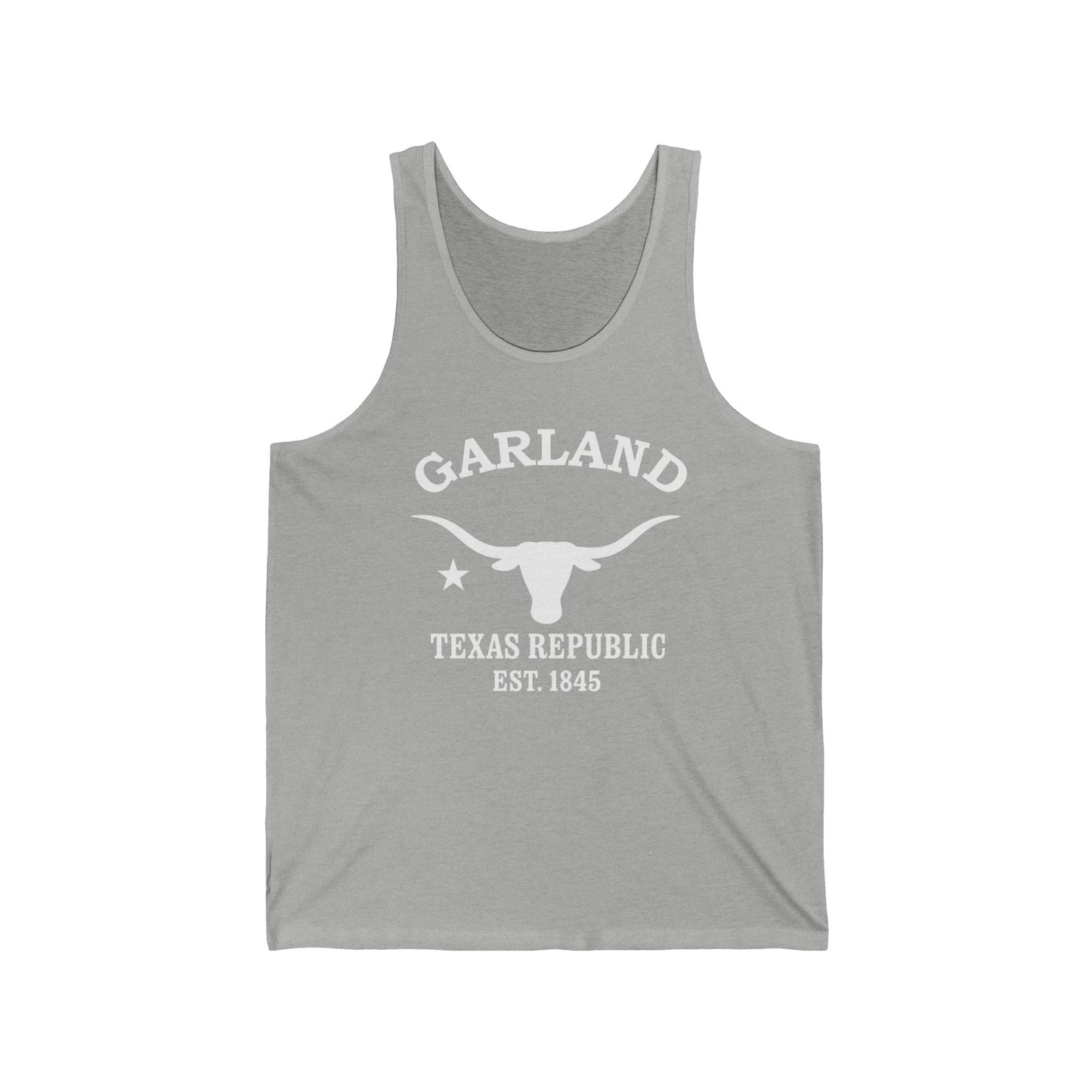
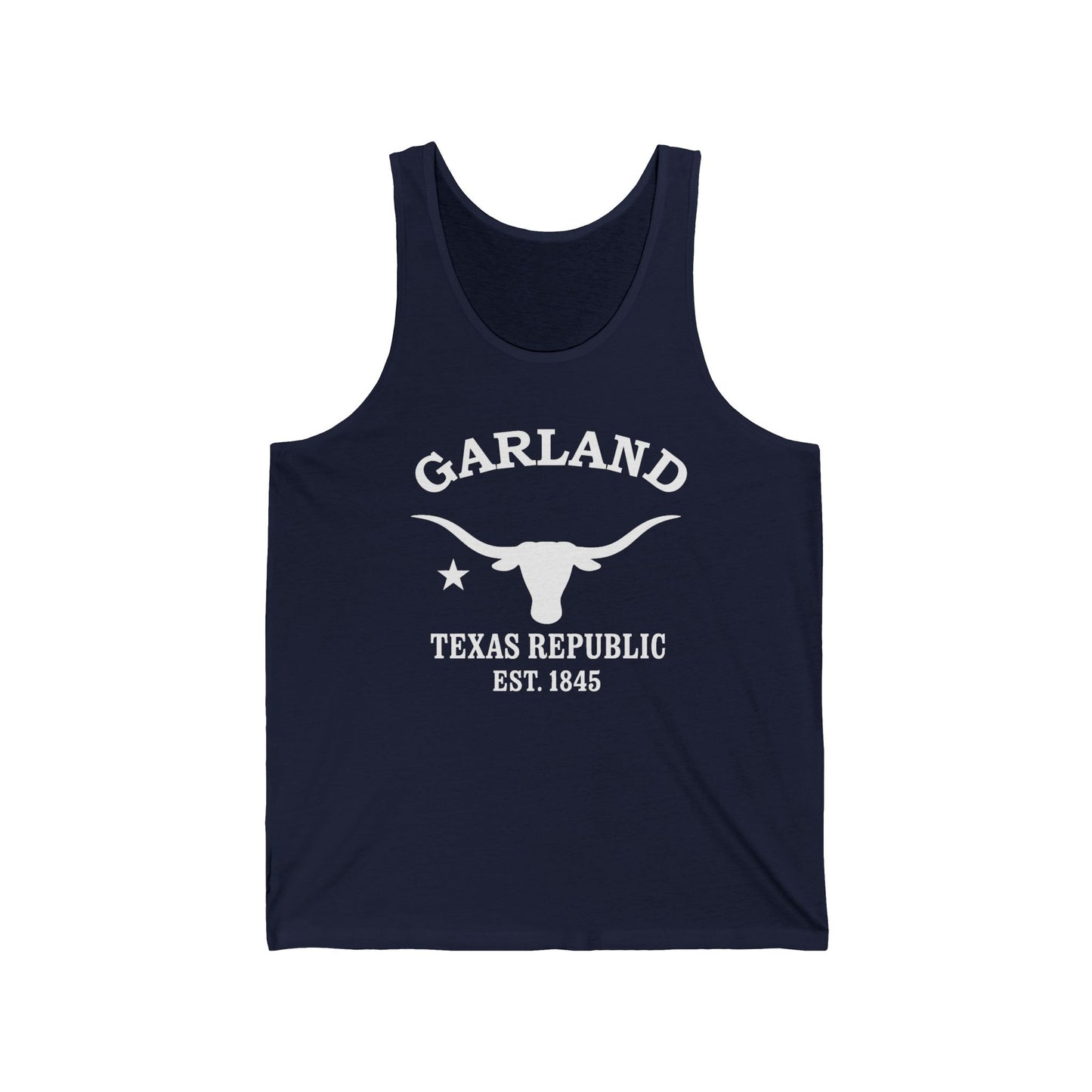
Our Garland logo carries the Texas longhorn and Lone Star over "Texas Republic, Est. 1845," the same emblem every Merlin Classics Texas place wears. The longhorn and star are the Lone Star State's shorthand — toughness, independence, the open range — printed black-and-white with the worn look of an old barn brand or a rodeo poster. What makes this one Garland is the place behind it: the two railroad towns, the Blackland cotton, the Texas hats. On a tee or a cap it reads less like a souvenir and more like a piece of North Texas — Est. 1845, worn plain.
Garland keeps its founding contradiction in plain sight. The creek and the old name Duck Creek are still on the map; the rail lines that started the fight still run through town; and the downtown square sits roughly where the compromise put it, between where the two depots stood. It's a city built by burying the hatchet — cotton money and onion-rail traffic in its early decades, hat-making and manufacturing later, and the long northeast sprawl of the Dallas Metroplex around it in the twentieth century. For a place named after a stranger, Garland made the name its own.
Why People Visit Garland Texas
People come to Garland for its easy place in the Metroplex — a historic square and a real founding story, lake recreation on Ray Hubbard, and green preserves — all minutes northeast of Dallas. It's practical, green, and neighborly: the town that two railroads accidentally built.
