


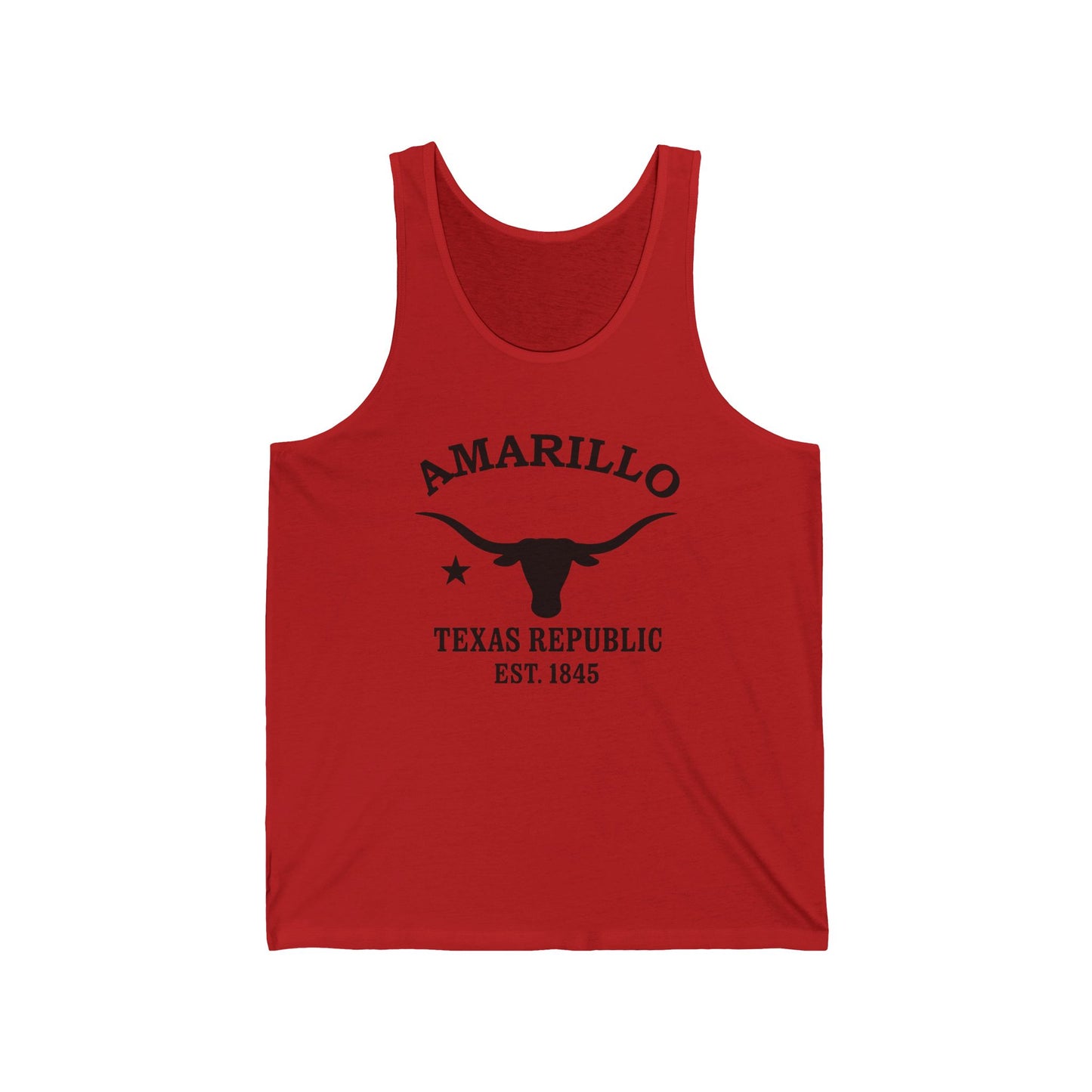
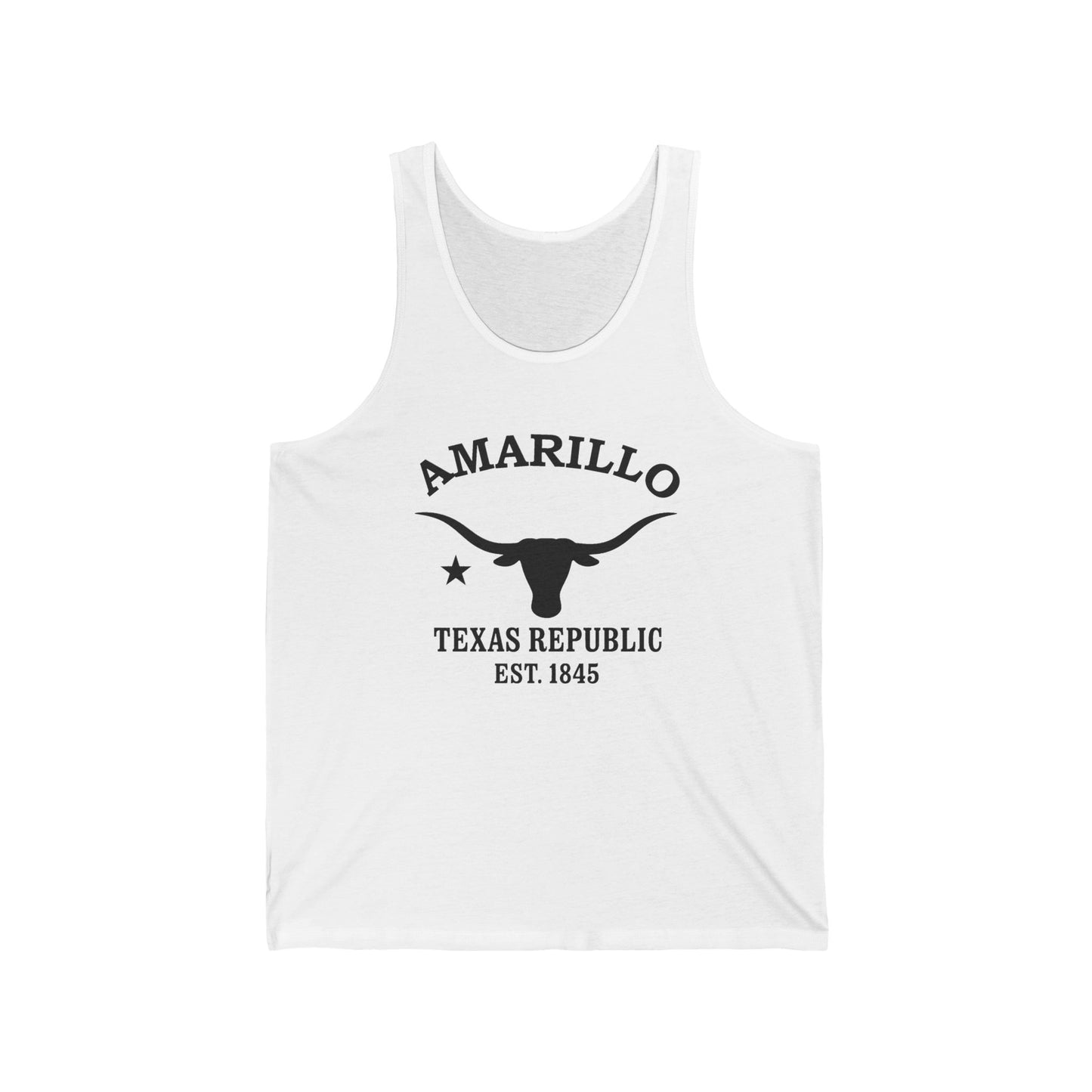
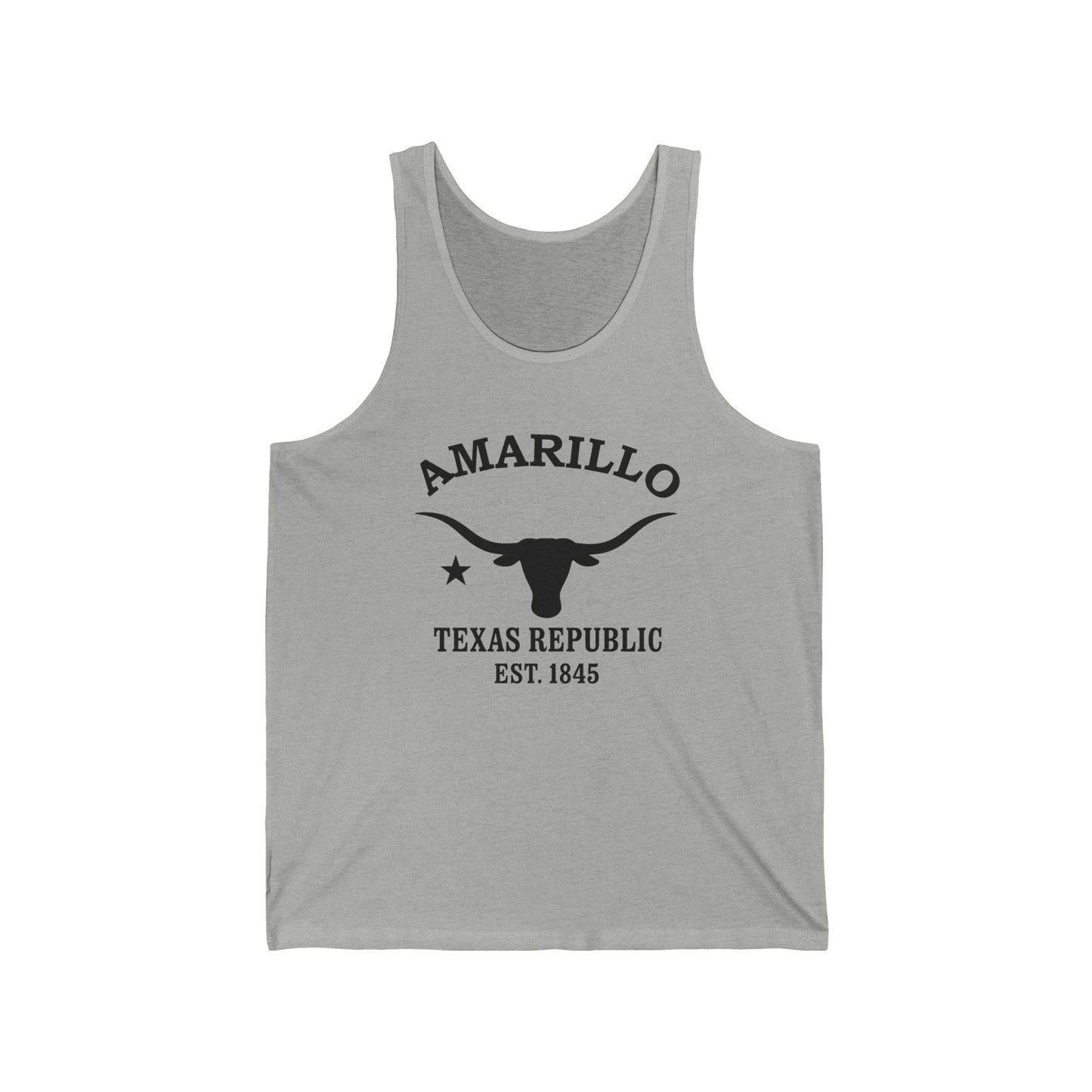
This stretch of the Llano Estacado — the high, flat, treeless caprock that the Spanish called the "staked plains" — was Comanche, Kiowa, and Apache country, crossed by Coronado's expedition as early as 1541 in search of the cities of Cibola. For centuries it was open range: bison herds, then the great cattle drives. The town itself begins in 1887, when the railroad arrived and surveyors laid out a settlement near Amarillo Lake. It was called Oneida at first, then renamed; two years later the rancher Henry B. Sanborn — the "Father of Amarillo" — moved the whole town to higher ground, where it stuck.
Our Amarillo logo carries a Texas longhorn — the cattle breed that built the open range — and a Lone Star over "1845," the year of statehood and the shared emblem of every Merlin Classics Texas place. Printed black-and-white with the worn look of a branding iron or an old highway shield, the longhorn and star read as Texas in shorthand: cattle country, the Lone Star, the wide Panhandle horizon. What makes this one Amarillo is the place behind it — the Yellow City, the cattle trains, the Quarter-Horse country, and the Mother Road running through the middle of it all.
Why People Visit Amarillo Texas
- Drive a stretch of historic Route 66 through the Sixth Street Historic District, with vintage storefronts, antiques, and diners.
- Visit Palo Duro Canyon State Park, the "Grand Canyon of Texas" and the second-largest canyon in the country.
- Tour the American Quarter Horse Hall of Fame and Museum, honoring the West's working horse.
- See Cadillac Ranch, the famous row of nose-down Cadillacs along Interstate 40.
- Stop at the Big Texan Steak Ranch, a Route 66 icon of Panhandle cattle country.
