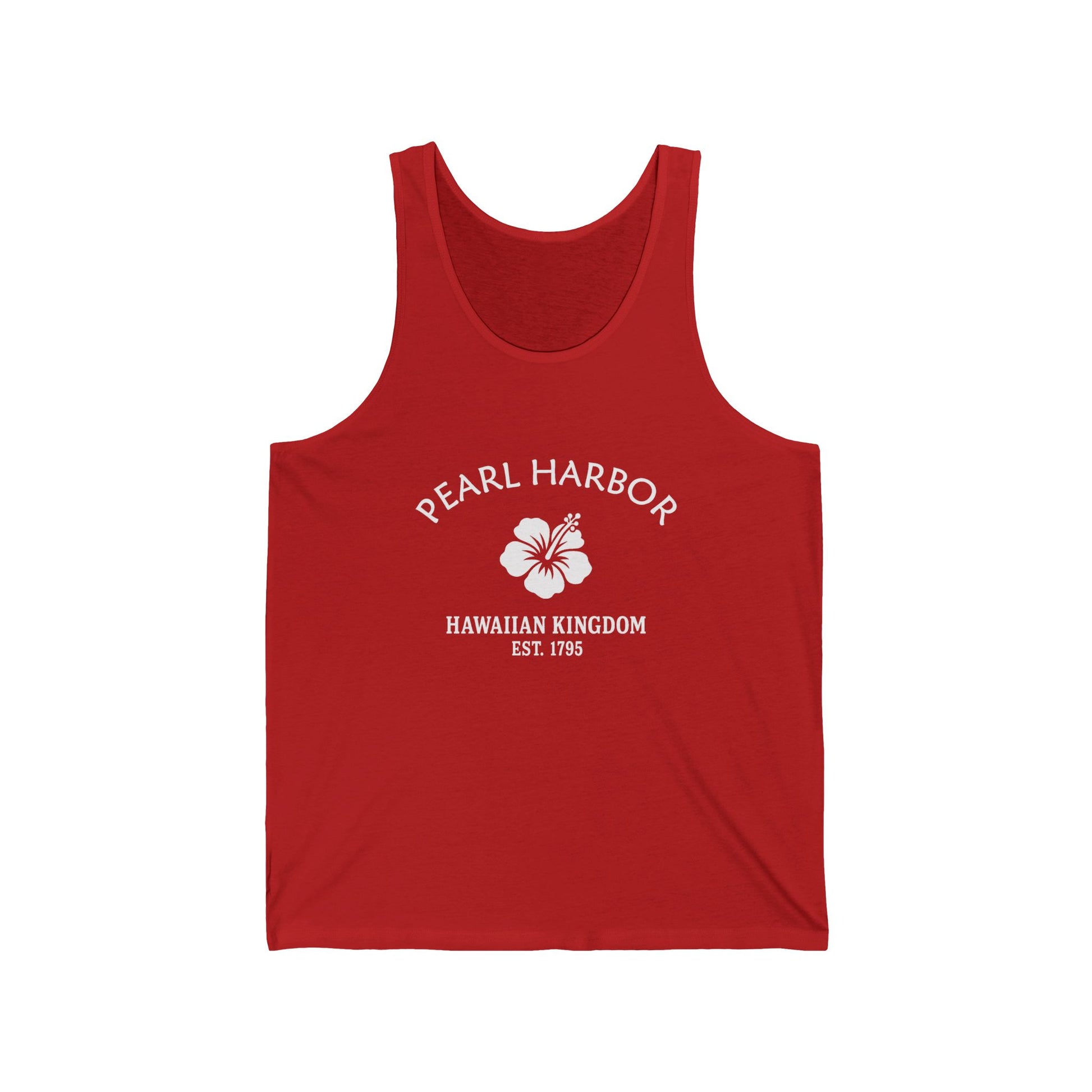
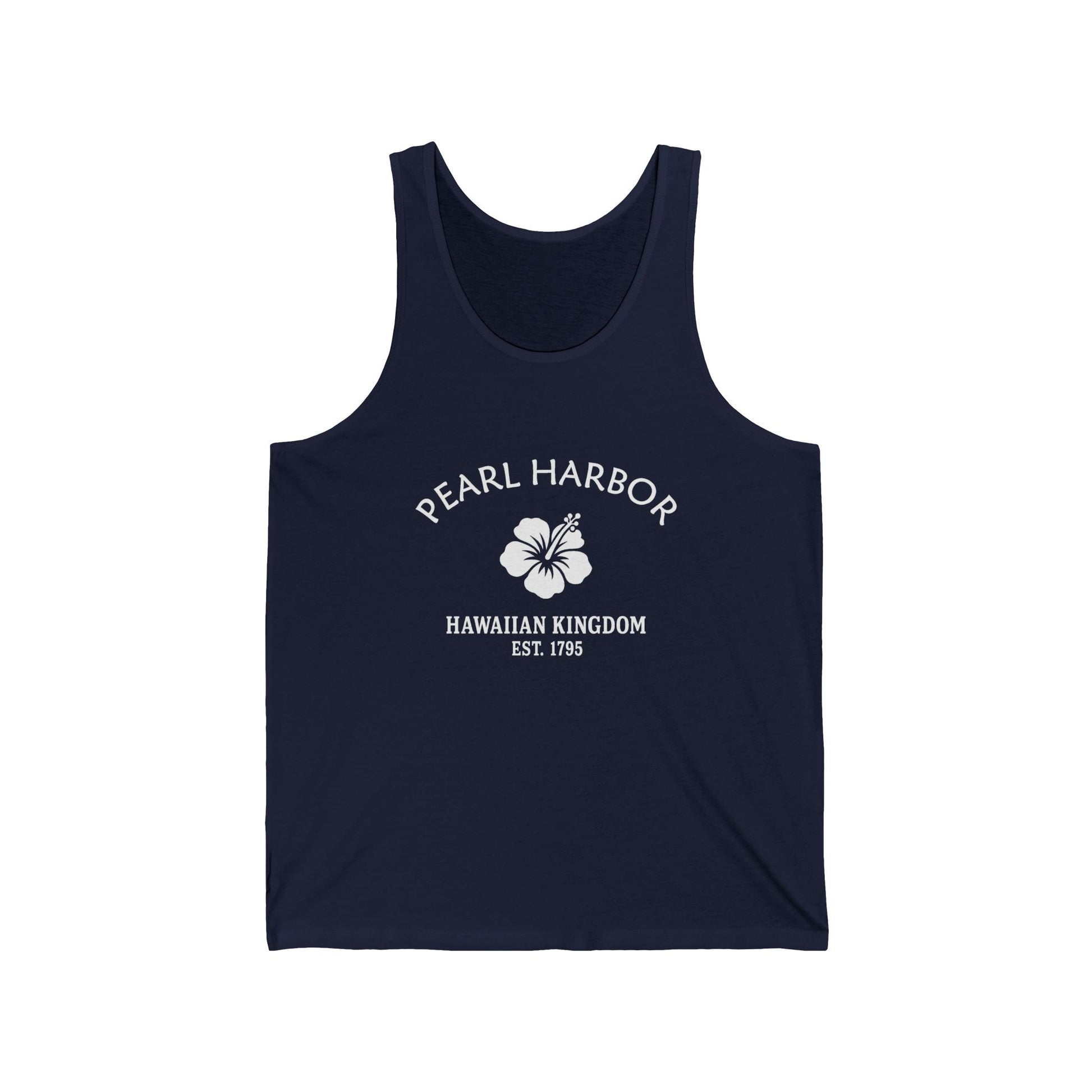
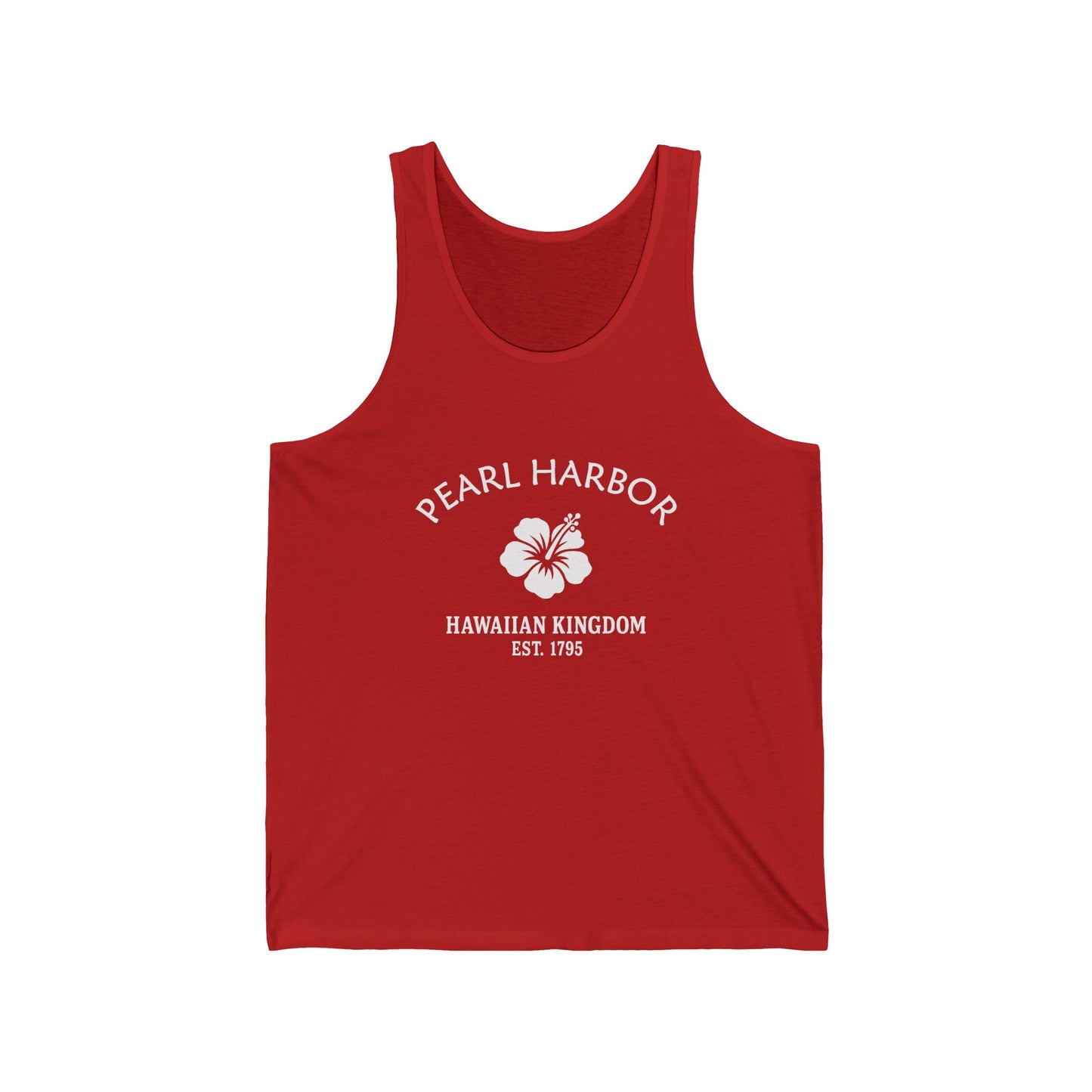
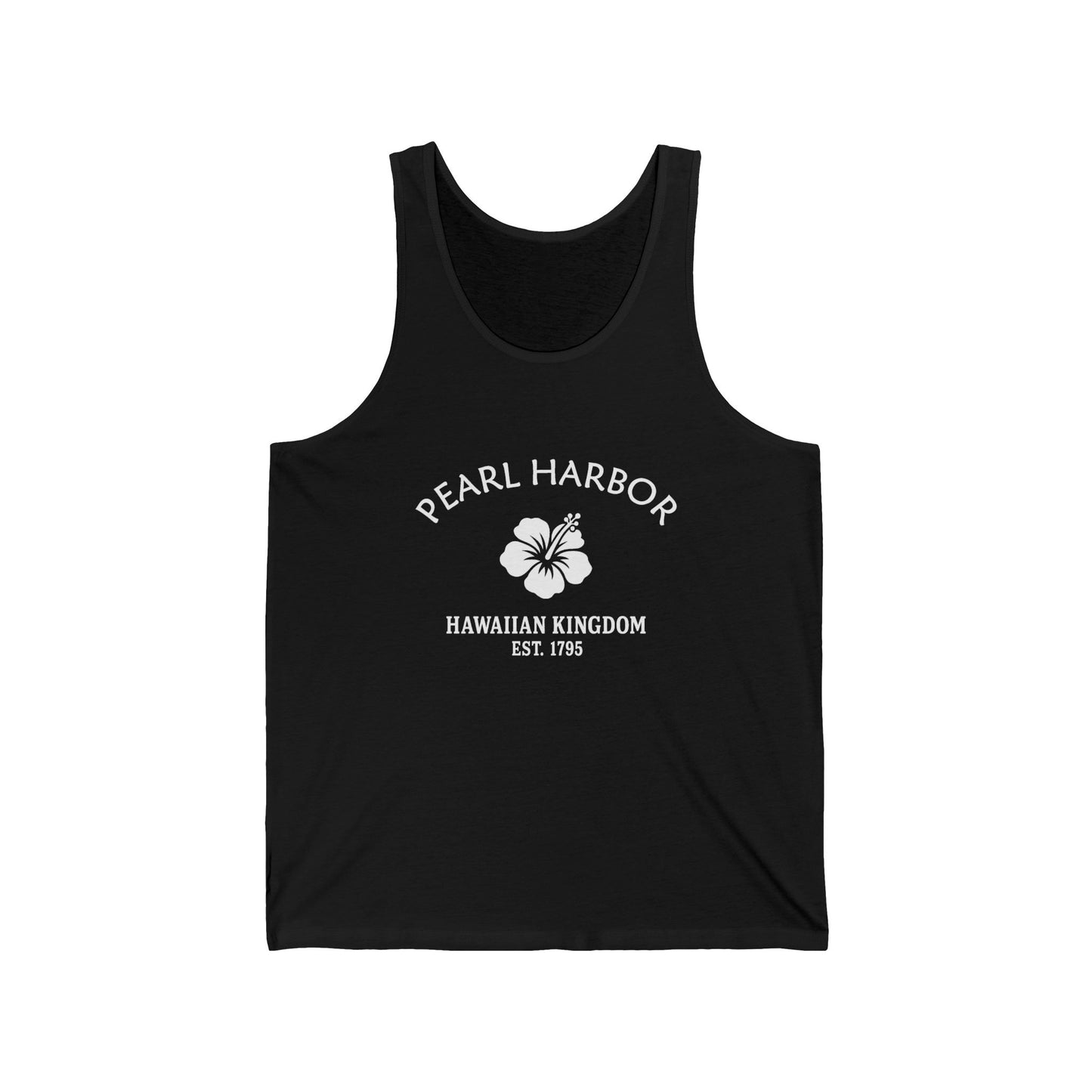
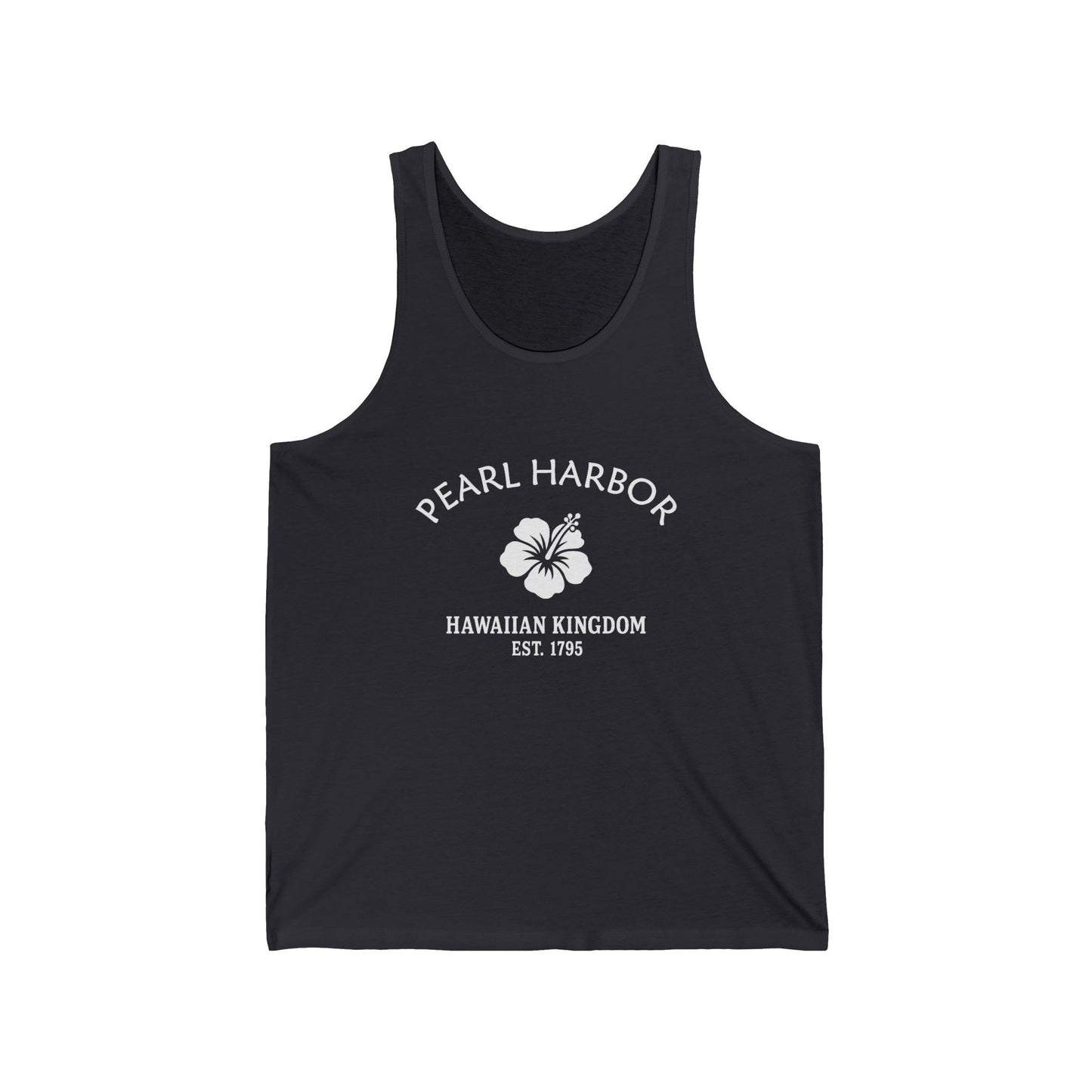
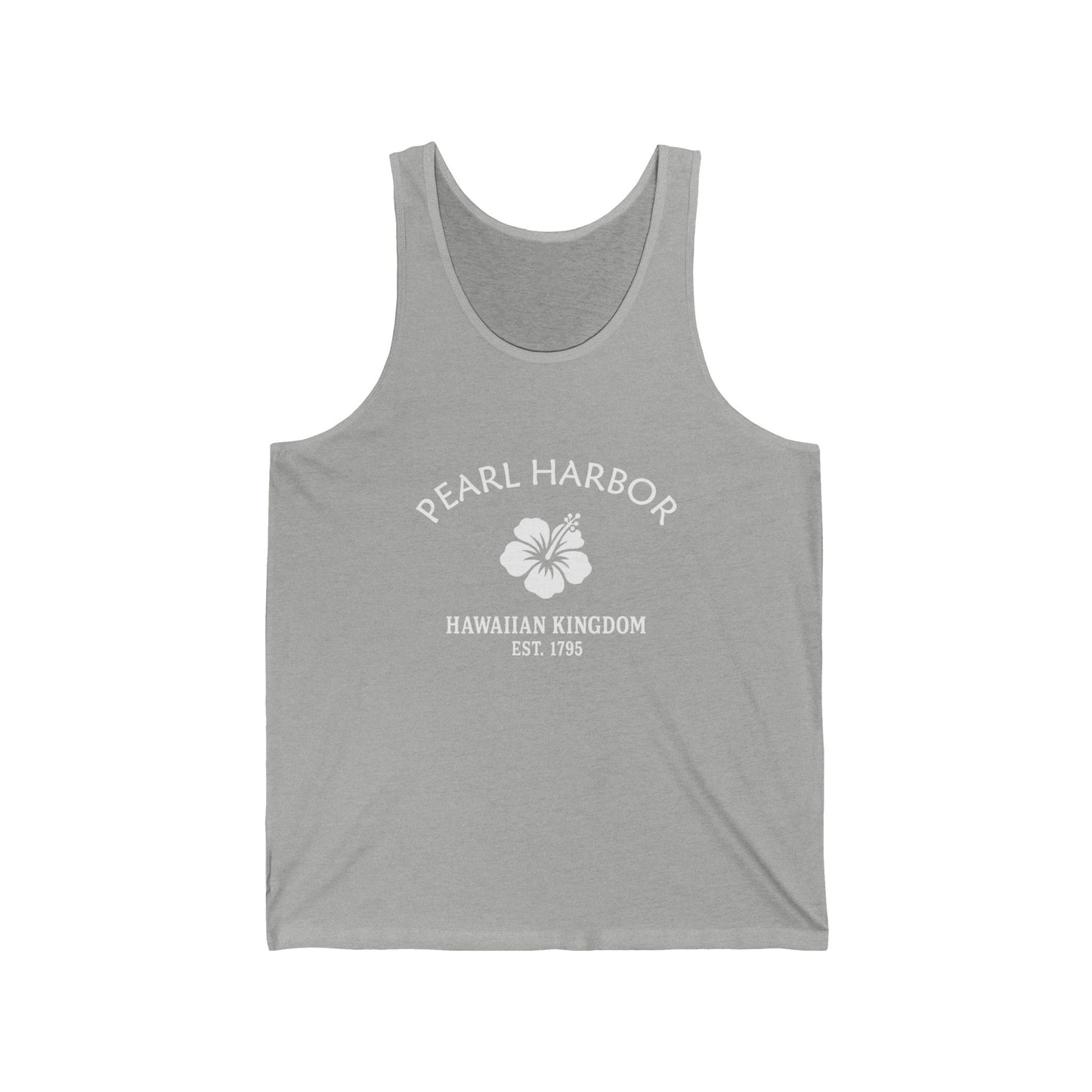
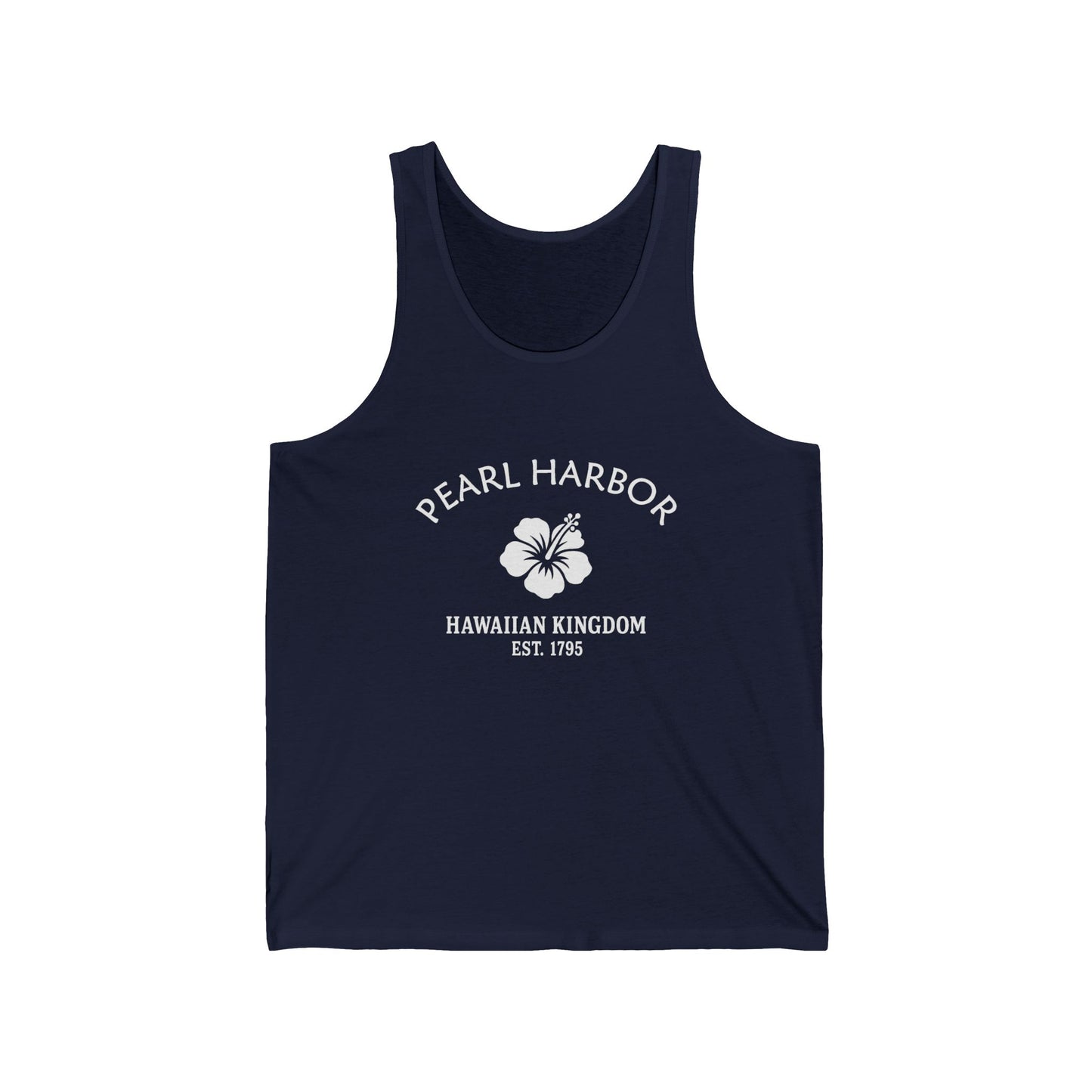
Our Pearl Harbor design wears the hibiscus, Hawaiʻi's flower, beneath the words “Hawaiian Kingdom — Est. 1795,” marking the year Kamehameha's victory on Oʻahu drew the islands into one realm. Rendered in clean black and white, like an old travel decal or crate label, it is a heritage mark — a nod to the islands' own story and to the deep Hawaiian identity of Puʻuloa, the waters of pearl. It is worn for the place and its people, not for any single chapter of its past.
That name carries one of the heaviest mornings in American memory. On December 7, 1941, Pearl Harbor was attacked, and the United States entered the Second World War. Today the Pearl Harbor National Memorial keeps the day with quiet care: the USS Arizona Memorial rests above the sunken battleship, where more than eleven hundred sailors and Marines remain, and the more than two thousand four hundred service members and civilians lost that morning are honored together. Nearby, the Battleship Missouri — where the war ended in 1945 — closes the arc from the conflict's beginning to its end. It is a place of reflection and remembrance, and of the peace that former enemies have since chosen to keep.
