Every design is set in hand-lettered vintage type for that old-school, crate-label look. One sample color shown — black and white logo options on every piece. Recently in the national press. Enjoy!
-
Madison Connecticut Vintage Retro Premium Crewneck Sweatshirt - Black Logo
Regular price $48.00 USDRegular price -
Madison Connecticut Vintage Retro Premium Crewneck Sweatshirt - White Logo
Regular price $48.00 USDRegular price -
Madison Connecticut Vintage Retro Vinyl Sticker - Black Logo
Regular price From $6.00 USDRegular price -
Madison Connecticut Vintage Retro Ceramic Mug - Black Logo
Regular price From $16.00 USDRegular price -
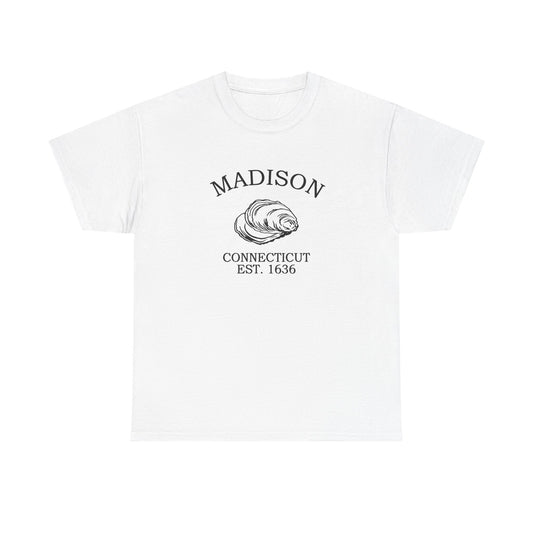
Madison Connecticut Vintage Retro Unisex Heavy Cotton Tee - Black Logo
Regular price $22.00 USDRegular price -
Madison Connecticut Vintage Retro Unisex Heavy Cotton Tee - White Logo
Regular price $22.00 USDRegular price -
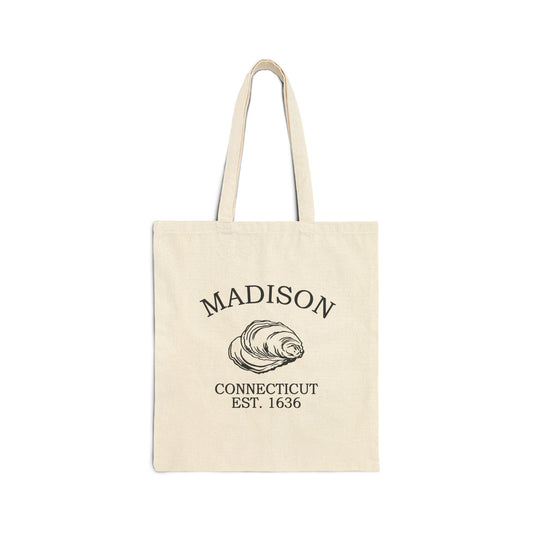
Madison Connecticut Vintage Retro Cotton Canvas Tote Bag - White Logo
Regular price $25.00 USDRegular price -
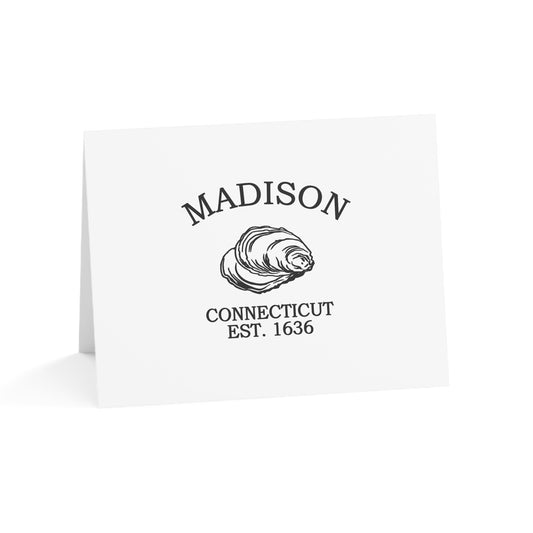
Madison Connecticut Vintage Retro Thank You Card Set - Black Logo
Regular price From $25.00 USDRegular price -
Madison Connecticut Vintage Retro Cotton Canvas Tote Bag - Black Logo
Regular price $25.00 USDRegular price -
Madison Connecticut Vintage Retro Cotton Jersey Baby Bodysuit - Black Logo
Regular price $26.00 USDRegular price -
Madison Connecticut Vintage Retro Unisex Cotton Jersey Tank Top - Black Logo
Regular price $28.00 USDRegular price -
Madison Connecticut Vintage Retro Unisex Cotton Jersey Tank Top - White Logo
Regular price $28.00 USDRegular price -
-
Madison Connecticut Vintage Retro Womens Fitted Ringspun Cotton Tee - Black Logo
Regular price $28.00 USDRegular price -
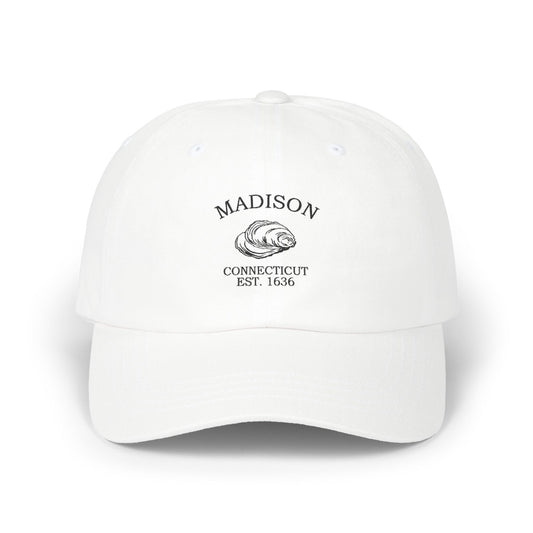
Madison Connecticut Vintage Retro Embroidered Cotton Cap - White Logo
Regular price $32.00 USDRegular price -
Madison Connecticut Vintage Retro Embroidered Cotton Cap - Black Logo
Regular price $32.00 USDRegular price -
Madison Connecticut Vintage Retro Back Printed Art Series Cotton Tee - Black Logo
Regular price $32.00 USDRegular price -
Madison Connecticut Vintage Retro Unisex Heavy Crewneck Sweatshirt - White Logo
Regular price $44.00 USDRegular price -
Madison Connecticut Vintage Retro Unisex Heavy Crewneck Sweatshirt - Black Logo
Regular price $44.00 USDRegular price -
Madison Connecticut Vintage Retro Giclée Print Art Series Poster
Regular price From $38.00 USDRegular price -
Madison Connecticut Vintage Retro Unisex Heavy Cotton Hoodie - White Logo
Regular price $56.00 USDRegular price -
Madison Connecticut Vintage Retro Unisex Heavy Cotton Hoodie - Black Logo
Regular price $56.00 USDRegular price -
Madison Connecticut Vintage Retro Unisex Embroidered Cotton Polo - Black Logo
Regular price $48.00 USDRegular price -
Madison Connecticut Vintage Retro Unisex Embroidered Fleece Jacket - White Logo
Regular price $98.00 USDRegular price
















Madison Connecticut — Retro Vintage History
What's with the Eighteenth of July? Madison has its own Independence Day. July 18, 1920 — a Sunday — was the day Hammonasset Beach State Park first opened to the public on the peninsula at the eastern edge of town, after the state's Park and Forest Commission had quietly assembled seventy-five parcels of farmland into five hundred sixty-five acres of shore. Seventy-five thousand people came that first summer to walk the two miles of sand between the Hammonasset River and Long Island Sound, and more than a century later it is still the largest shoreline state park in Connecticut — the beach every Connecticut kid means when they say "the beach." (Spell it "Maddison" and the gate attendant will still wave you through.) Some towns celebrate a founding. Madison also gets to celebrate an opening day.
Wear the HistoryWhere you're from. Where you love. Where you explored. Where you belong.
The peninsula came first, and the name came with it. The Hammonassett people of the Eastern Woodland farmed and fished the peninsula for centuries before contact — the name means "where we dig holes in the ground," a reference to their agricultural way of life on the broad flat above the marsh and the sand. The first English colonists arrived in 1639. By 1641 the eastern half of the new town of Guilford had been settled as East Guilford and the land that would become Madison was farmed and fished for the next 185 years under its old name. In 1826 East Guilford incorporated as a town in its own right and took the name of the man who had been the fourth President of the United States — James Madison — and on the Town Green at the center of the village, one of the oldest in Connecticut, the white-clapboard houses of the planters and the 1838 Greek Revival First Congregational Church set the shape of the village that is still there today. The Deacon John Grave House on the Boston Post Road, built in 1685 and now operated as a museum by the Deacon John Grave Foundation, is one of the oldest houses in Connecticut and stayed in the Grave family for nine generations until 1978. The Allis-Bushnell House is a few doors down, the 1838 church faces the green, and Scranton Library sits on Boston Post Road. Then, in 1989, a former tax accountant named Roxanne Coady opened an independent bookstore on the same Boston Post Road, named it R.J. Julia after her grandmother, and over the next thirty-five years built it into one of the most-cited independent bookstores in the country — three hundred author events a year, Publishers Weekly Bookseller of the Year 1995-96, a national reputation for putting the right book in the right hand. The town green, the 1685 saltbox, the church, the library, the bookstore, and the two miles of sand on the Sound — that's Madison. On Hammonasset shore since 1641, on the green since 1641, on the Sound since long before that, and a public beach since 1920.
QUICK FACTS — MADISON, CT
Hammonasset Beach State Park — Connecticut's largest shoreline state park, two miles of sand on Long Island Sound — opened July 18, 1920, and drew 75,000 visitors its first season.
The peninsula is named for the Hammonassett people, who farmed and fished it for centuries before contact; the name means "where we dig holes in the ground."
Madison was settled as East Guilford in 1641 and incorporated under its own name in 1826, honoring James Madison, fourth President of the United States.
The Madison Town Green is one of the oldest in Connecticut, faced by the 1838 Greek Revival First Congregational Church.
The Deacon John Grave House (1685) on the Boston Post Road is one of the oldest houses in Connecticut — home to the Grave family for nine generations, until 1978.
A nationally cited independent bookstore has anchored the Boston Post Road since 1989 — three hundred author events a year on a colonial-era main street.
The shoreline runs river to river — the Hammonasset, the East, and the Neck — with Tuxis Pond behind the village center.
Population 17,691 (2020), ZIP 06443, southern New Haven County, between Guilford and Clinton on the Boston Post Road.
The town earned its shoreline reputation the long way. Shipbuilding and oystering worked the rivers through the eighteenth and nineteenth centuries, and by the early twentieth the cottages had begun spreading along the shore — summer people discovering what the farmers had always known about the light on the Sound. When the Park and Forest Commission opened Hammonasset in 1920, Madison became the town whose beach belonged to everybody, and the summer rhythm that followed — cottages filling, the campground at the park, the village green in its shade — has run every year since, interrupted only by the Second World War, when the park served as an Army reservation and the beach trained soldiers instead of swimmers.

The village center held its shape while the century moved around it. The 1950s and 1960s brought suburban growth from New Haven and Hartford, but the compact colonial street plan — green, church, saltbox, library, shops along the Post Road — absorbed it without losing the town's character, and when the bookstore arrived in 1989 it slotted into a main street that had been built for exactly that kind of small, serious commerce since the stagecoach era — the same road where the 1685 saltbox had watched every era of traffic pass, from post riders to Model Ts to summer station wagons headed for the park gate. Madison today is what the shoreline towns all aspire to be: a working village center a mile from a two-mile public beach, with a green that has held the middle of it for nearly four hundred years.
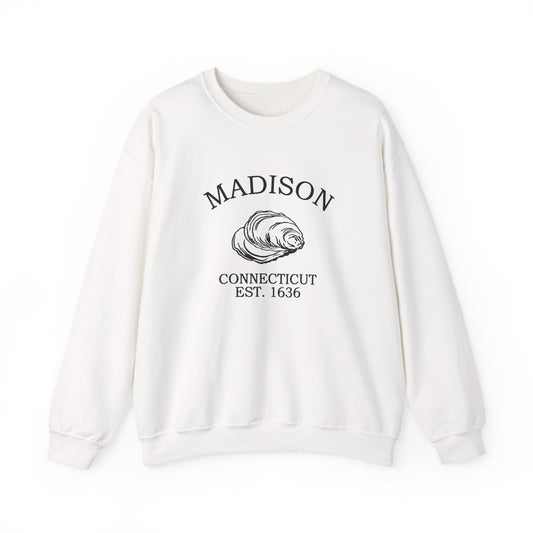
Our Madison retro logo uses the Connecticut oyster-shell motif over "Connecticut - Est. 1636," emphasizing coastal identity and the colonial founding of the state. Black-and-white styling mirrors oyster crate labels and maritime signage — rugged, timeless, retro in style — bridging Madison's layered heritage: the Hammonassett people's land and sea, colonial endurance, and the summer-town century. On merchandise it reads authentic and vintage — an emblem of Connecticut shoreline pride.
So Madison gathers the state's biggest beach, one of its oldest greens, a 1685 saltbox, and a main street with a nationally loved bookstore onto one stretch of Sound shore — and our Madison designs gather that into wearable form. Whether Madison is your hometown, your beach, the green you crossed a thousand times, or the town you still mean to come back to, wear the history. On Hammonasset shore since 1641.

Madison Connecticut — Travel Guide
Visiting Madison Connecticut Today
Madison is a Long Island Sound shoreline town in southern New Haven County, between Guilford and Clinton on the Boston Post Road, anchored by the Town Green, the Hammonassett peninsula and Hammonasset Beach State Park at the eastern edge of town, and a walkable village center with a 17th-century house museum, an 1838 Greek Revival church, the Scranton Library, and a nationally-cited independent bookstore. The summer beach season at Hammonasset runs Memorial Day through Columbus Day; the shoulder seasons (May and September-October) are quieter and the bookstore drives year-round event traffic.
Connecticut's Longest Shoreline Beach, the 1685 Saltbox, and the Green in Madison
For visitors searching for things to do in Madison Connecticut:
- Spend a day at Hammonasset Beach State Park — two miles of sandy beach on Long Island Sound, the largest shoreline state park in Connecticut, open to the public since July 18, 1920, with a boardwalk, campground, and picnic groves.
- Walk out to Meigs Point at the eastern end of the park — rocky headland views over the Sound — and visit the Meigs Point Nature Center for tide-pool touch tanks and salt-marsh exhibits.
- Stroll the Madison Town Green, one of the oldest in Connecticut, with the 1838 Greek Revival First Congregational Church facing it.
- Tour the Deacon John Grave House on the Boston Post Road — the 1685 saltbox that is one of the oldest houses in Connecticut, home to nine generations of the Grave family and now a museum.
- Visit the Allis-Bushnell House, the Madison Historical Society's museum a few doors down the Post Road.
- Browse the independent bookstore on the Boston Post Road that draws readers and authors from across the region — hundreds of author events a year on a colonial-era main street.
- Walk Madison Center — clapboard shops, cafes, and an art-house cinema along the Boston Post Road, built for window-shopping and ice cream.
- Paddle or birdwatch the lower Hammonasset River estuary and the salt marshes behind the beach.
- Fish or watch the boats along the East River and Neck River town shorelines.
- Circle Tuxis Pond on the walking path just behind the village center.
Why People Visit Madison Connecticut
Madison offers the longest shoreline beach park in Connecticut on a peninsula named for the Hammonassett people who farmed it for centuries, a Town Green that has been the center of the village since 1641, a 17th-century saltbox house museum a few doors off the green, an 1838 Greek Revival church, a long-running town library, and a nationally-cited independent bookstore on the same Boston Post Road that has run through town since the colonial era. Visitors come for the beach, the green, the architecture, the bookstore, the marshes, the lower-Hammonasset estuary, the author events, and the simple shoreline rhythm of a New England town that has been holding the same compact center for nearly four hundred years. On Hammonasset shore since 1641.
Wear the History
Where you're from. Where you love. Where you explored. Where you belong.
Kindred Cities
A warm welcome to visitors from Honfleur (bienvenue), France and Niagara-on-the-Lake, Canada — fellow towns of picture-postcard charm and an easy waterfront.
Madison has the cultivated, strollable charm that draws people to Honfleur and Niagara-on-the-Lake. Honfleur is the painted Normandy harbour that has enchanted visitors for centuries; Niagara-on-the-Lake is Ontario's genteel town of verandas and lakeside theatre; Madison answers on the Connecticut shore, with a graceful Boston Post Road of clapboard shops and bookstores and Hammonasset — the state's largest beach — at the edge of town. Pretty towns made for a long, slow afternoon.
Madison rewards the easygoing visitor: an independent bookshop that draws readers from across the region, two miles of state-park beach on the Sound, and a village main street built for window-shopping and ice cream. Come and visit us soon.
When you plan the trip, the Town of Madison and the Connecticut Office of Tourism are the place to start.
Wear the History
Where you're from. Where you love. Where you explored. Where you belong.

For deeper reading on Madison, Connecticut history described here — the Hammonassett presence on the Eastern Woodland peninsula for centuries before contact and the place name meaning where we dig holes in the ground, the 1639 arrival of the first English colonists and the 1641 settlement of East Guilford under the original parent town, the 1685 building of the Deacon John Grave House on the Boston Post Road as one of the oldest houses in Connecticut and the home of the Grave family for nine generations until 1978, the 1826 incorporation of Madison as a town in its own right and the renaming for the fourth President of the United States James Madison, the 1838 construction of the Greek Revival First Congregational Church on the Madison Town Green, the 1919-1920 Connecticut Park and Forest Commission assembly of 75 parcels and 565 acres at the eastern edge of town, the July 18, 1920 opening of Hammonasset Beach State Park to the public as Connecticut's largest shoreline state park drawing more than 75,000 visitors in its first summer, the 1972 founding of the Meigs Point Nature Center at the eastern end of the park, the 1983 founding of the Deacon John Grave Foundation to preserve the 1685 house as a museum, and the 1989 founding of R.J. Julia Booksellers by Roxanne J. Coady at 768 Boston Post Road as one of the most-cited independent bookstores in the United States — it may be useful to consult (1) the Madison Historical Society and the Allis-Bushnell House on Boston Post Road, the primary scholarly repository for Madison town history with the East Guilford settlement-era archive, the 1826 incorporation records, and the long-running local-history collection, (2) the Deacon John Grave Foundation at 581 Boston Post Road for the 1685 saltbox archive, the Grave family seventeenth- through twentieth-century account books (originals in the Connecticut State Library), and the colonial Madison architectural and family-history record, (3) the Scranton Memorial Library local-history room on Boston Post Road for the Madison newspaper archives, Sanborn maps, city directories, and the genealogy collection, (4) the Connecticut State Library and the Connecticut Museum of Culture and History in Hartford for Connecticut Colony land records, the 1641 East Guilford settlement records, the 1826 Madison incorporation documents, the Grave family account books, the 1919-1920 Connecticut Park and Forest Commission Hammonasset acquisition records, and the broader state-level holdings, (5) the Connecticut Department of Energy and Environmental Protection and the Friends of Hammonasset for the Hammonasset Beach State Park founding archive and the long-running stewardship record, (6) the Yale University Beinecke Library and the Sterling Memorial Library for the New Haven Colony and Guilford colony-era manuscript holdings, and (7) the Connecticut Humanities Council connecticuthistory.org project for accessible scholarly essays on Madison and the Connecticut shoreline. For deeper local Madison research, it may be useful to reach out to (1) the Madison Historical Society, (2) the Deacon John Grave Foundation, (3) the Friends of Hammonasset, (4) the Scranton Memorial Library, (5) the Town of Madison Town Clerk's office for colonial and 19th-century land records, (6) the Connecticut State Historic Preservation Office for the Madison Town Green Historic District and the Deacon John Grave House National Register documentation, and (7) the Connecticut Department of Energy and Environmental Protection for the Hammonasset Beach State Park stewardship records. For travel and visitor information in Madison, it may be useful to contact (1) Visit Connecticut and Visit New Haven for regional tourism information, (2) the Madison Chamber of Commerce for current event schedules, (3) the Town of Madison Beach and Recreation Department for Hammonasset Beach State Park seasonal information, (4) the Connecticut Department of Energy and Environmental Protection for the Hammonasset campground reservation system and the Meigs Point Nature Center seasonal program schedule, and (5) the Madison Historical Society and the Deacon John Grave Foundation for the historic-house museum hours and the Allis-Bushnell House tour schedule.