


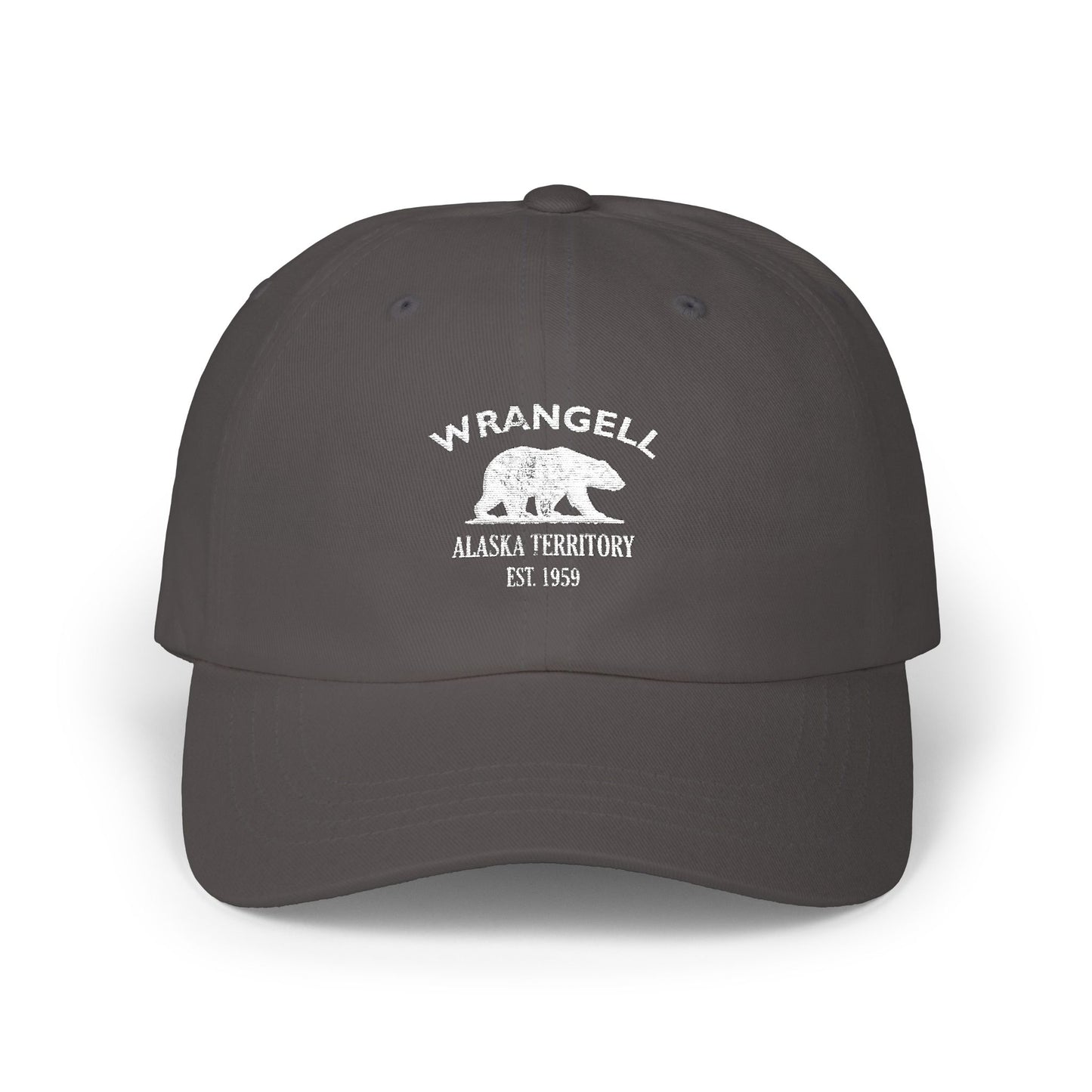
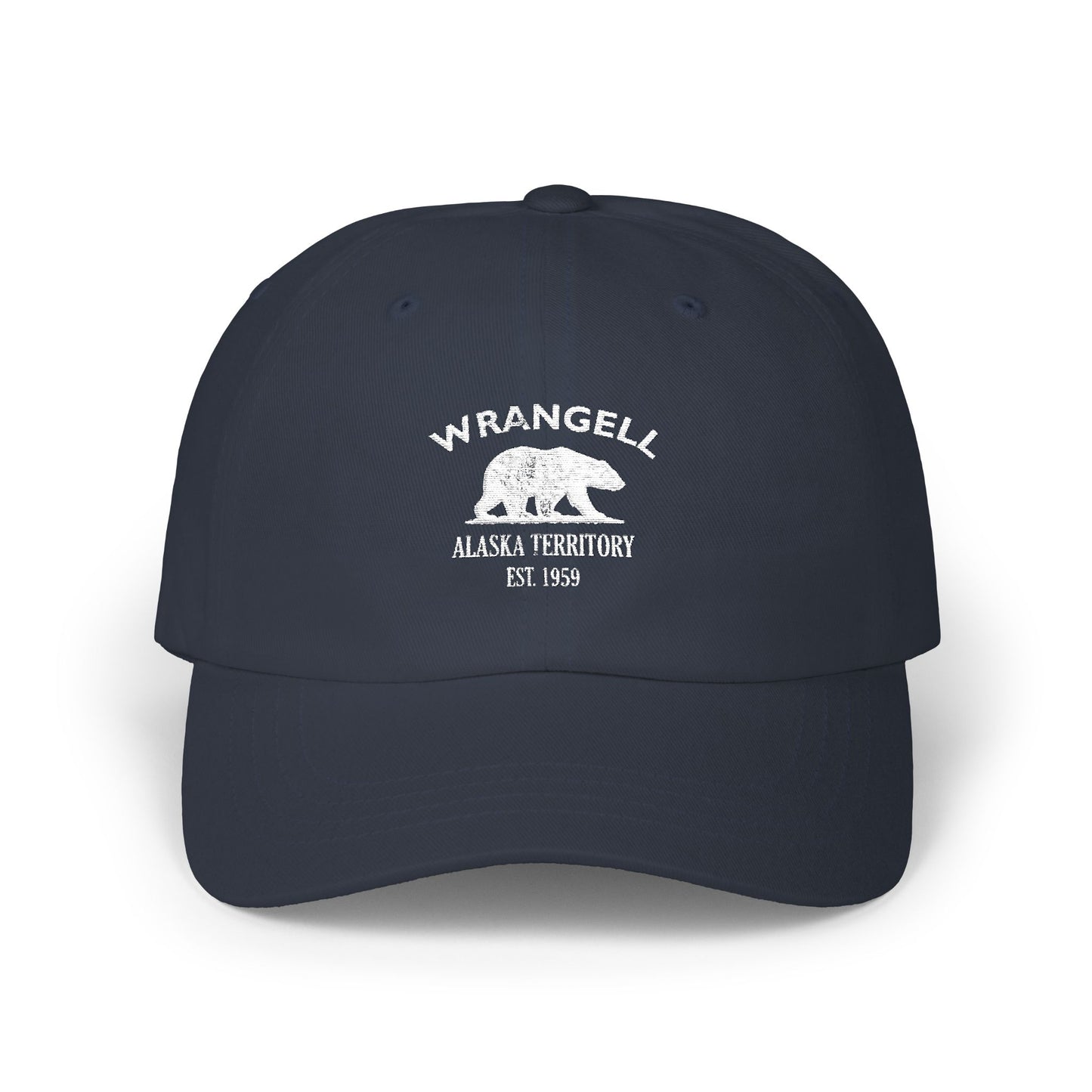
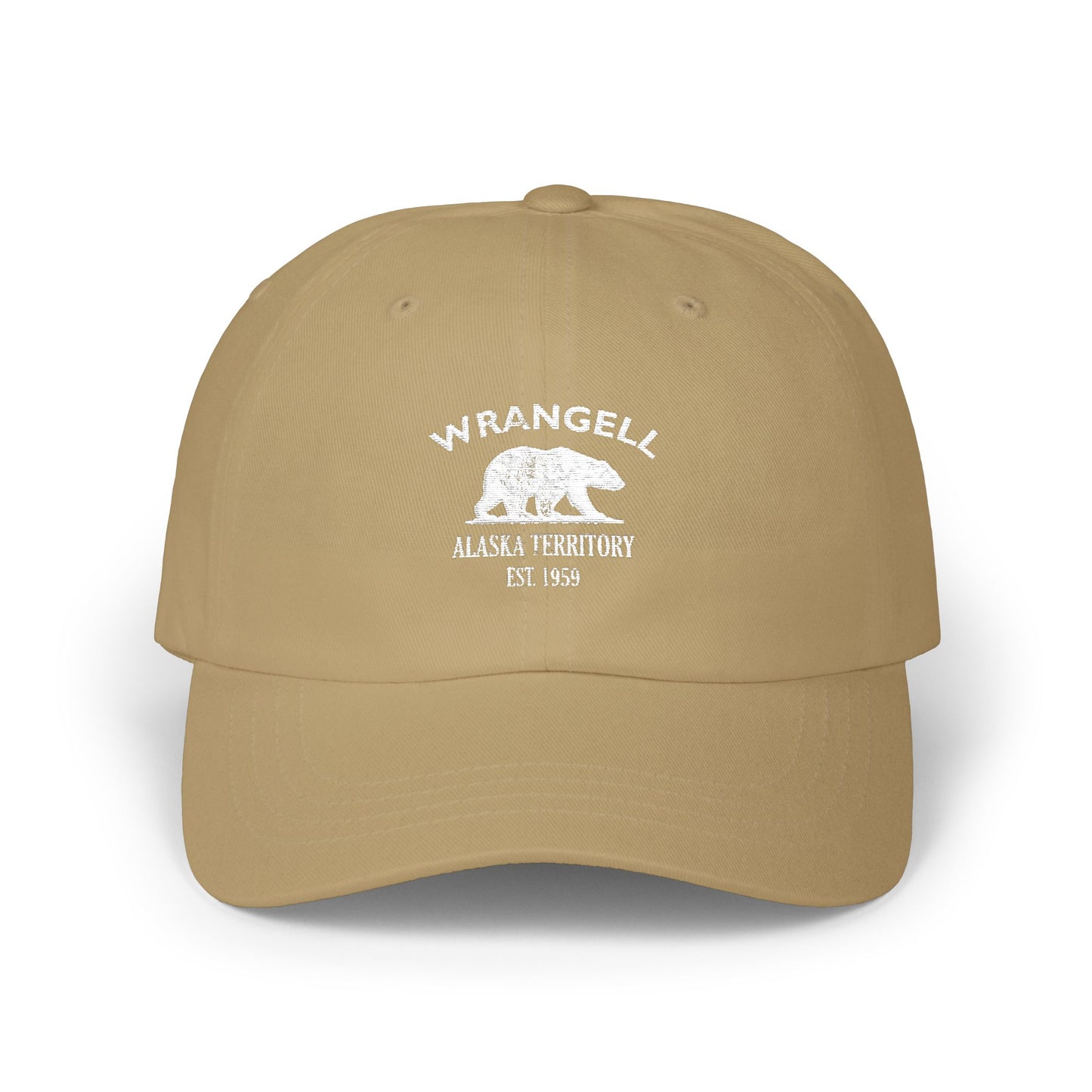
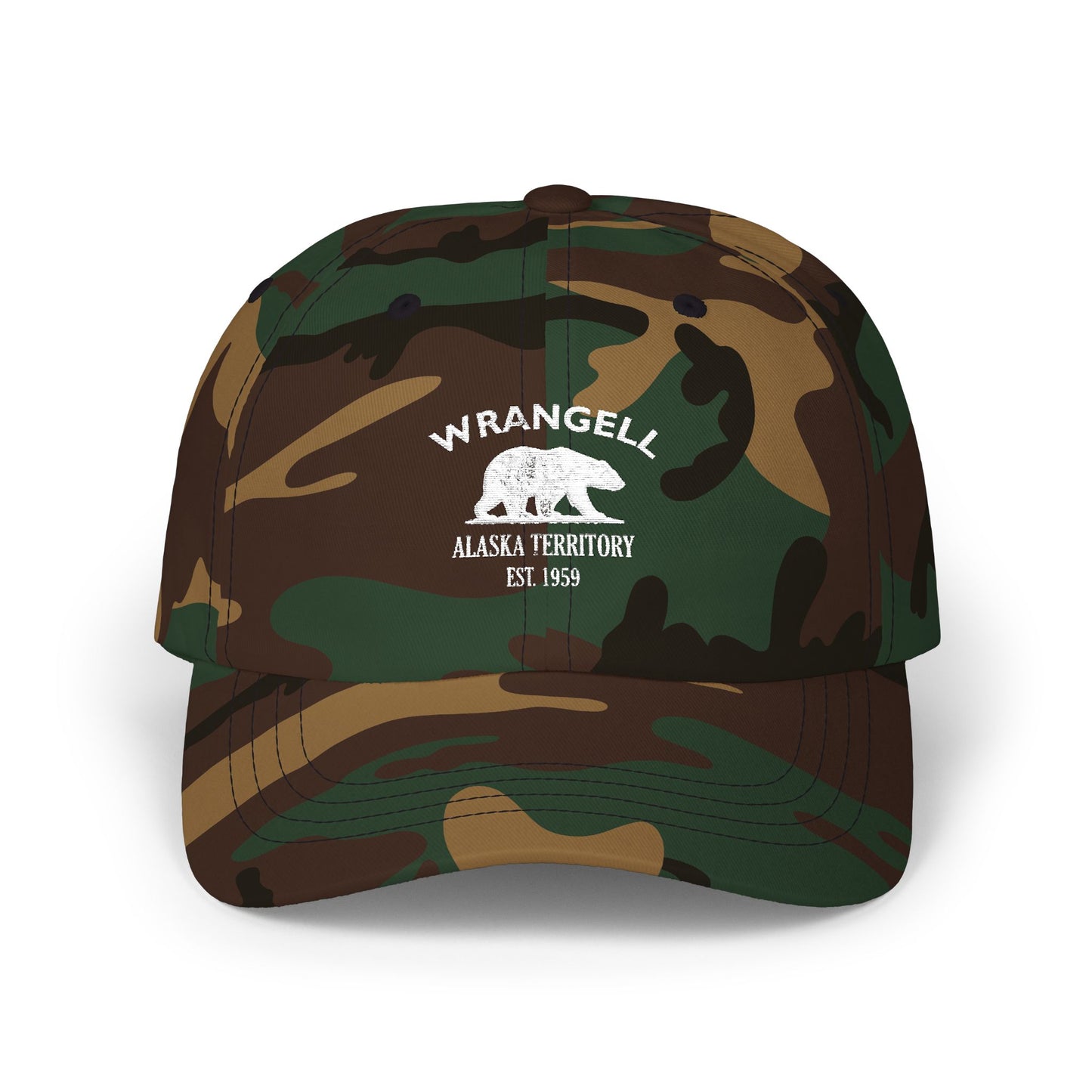
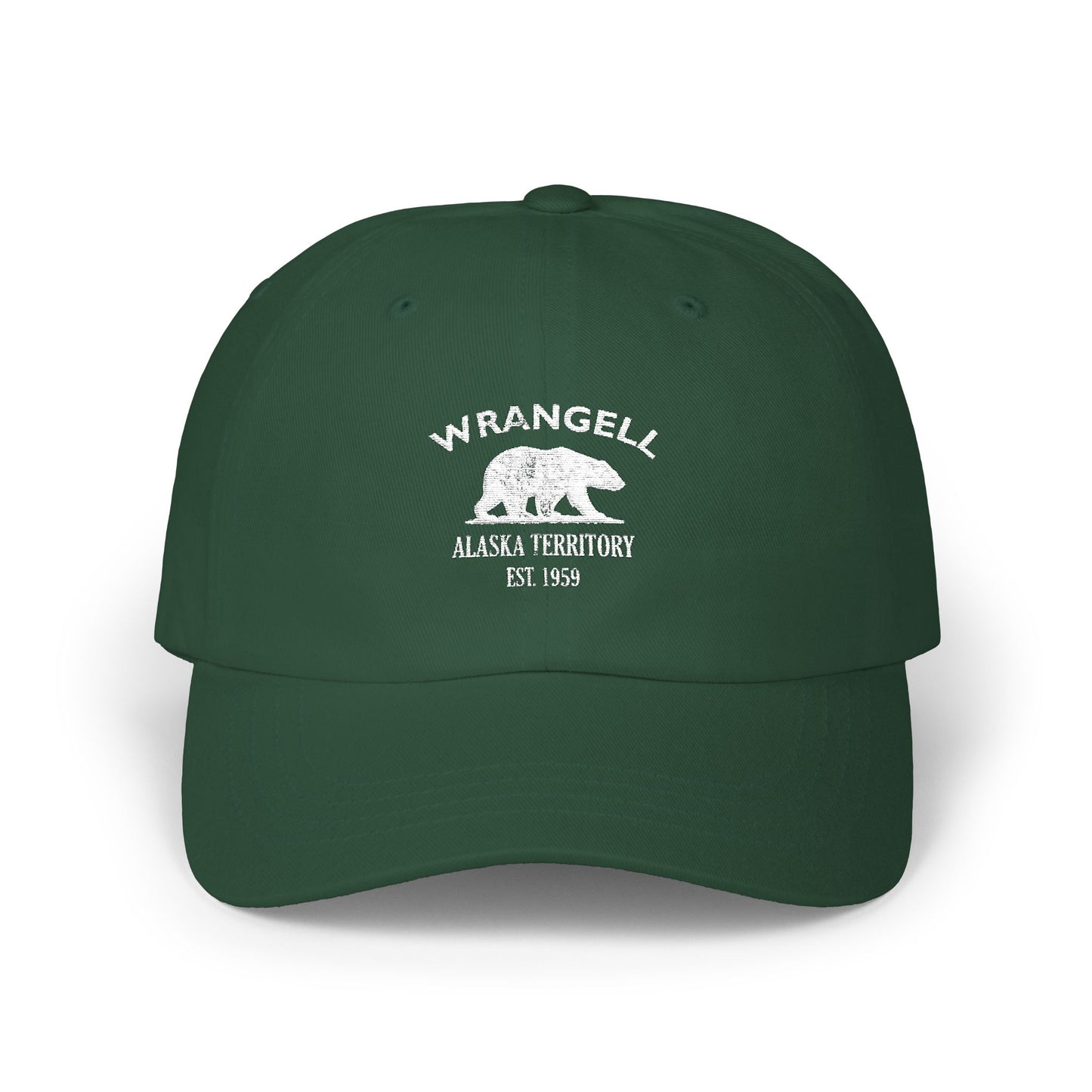
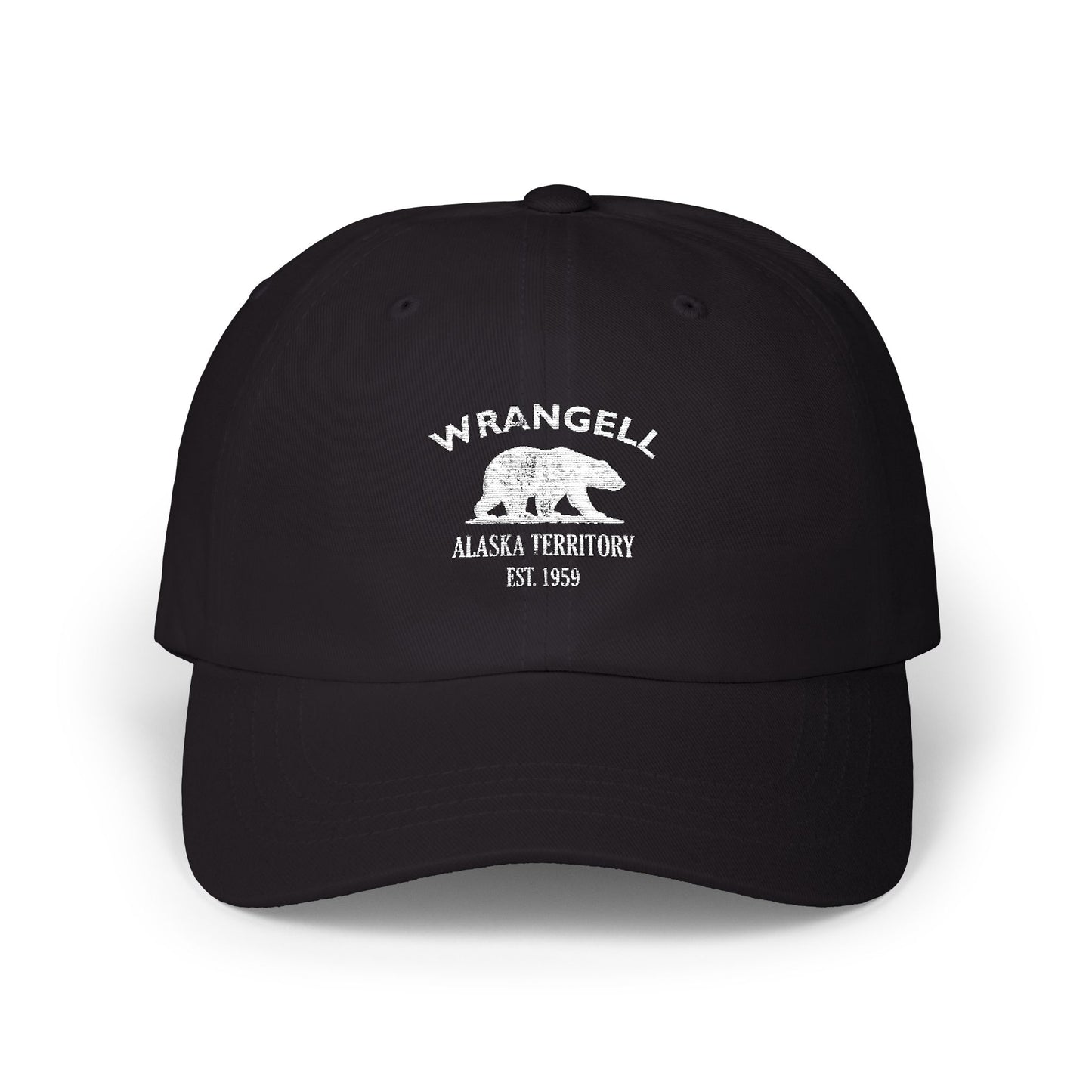
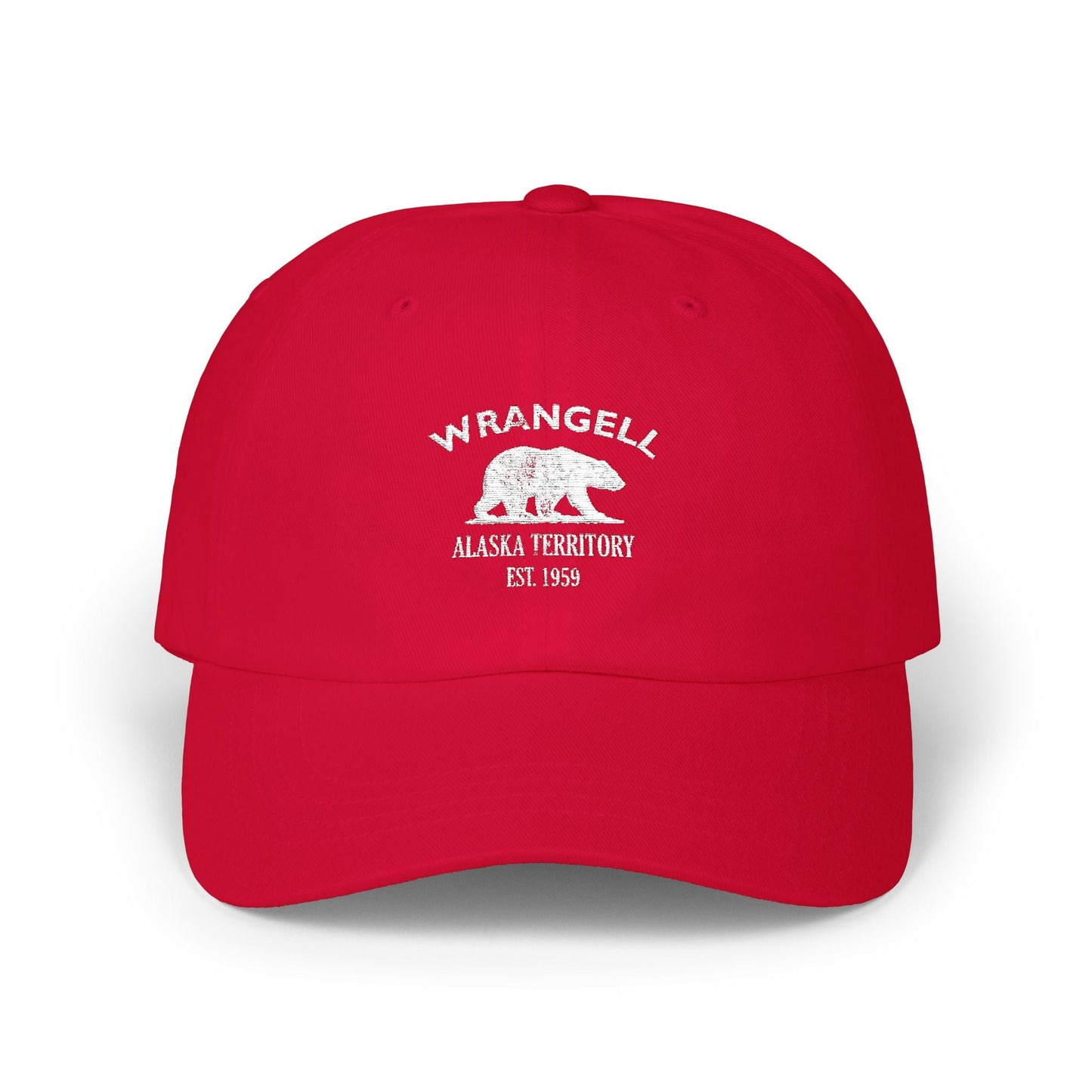
Today Wrangell is the quiet one — a working Alaska town the big ships mostly pass by, which is exactly its charm. Its days run on tides and salmon: jet-boat trips up the wild Stikine, low-tide walks among the petroglyphs, totems on Shakes Island, and bears at Anan in season. Our Wrangell designs gather that into wearable form. Wear the history. Three flags, one river town.
Between and after the rushes, Wrangell made its living from the sea and the forest. Fish traps went in at the mouth of the Stikine in the 1890s, and salmon canneries grew into the backbone of the town, packing the runs that came down the river every summer. When canning gave way in the mid-twentieth century, a lumber mill took its place, and Wrangell settled into the role it still plays — a working Inside Passage town of fishermen, loggers, and harbor hands, far quieter than the cruise ports to the north. When statehood arrived in 1959 the new state finally outlawed the fish traps that had thinned the Stikine runs, and the salmon slowly came back.
Why People Visit Wrangell
Wrangell rewards the off-the-path traveler. It pairs living Tlingit culture with easy reach of the Stikine and bear country, and you can see totems, petroglyphs, and a working harbor in a single walkable day. It feels authentic, green, and quietly adventurous — an Alaska town that stayed itself — with year-round appeal in its trails, parks, and waterfront.
