


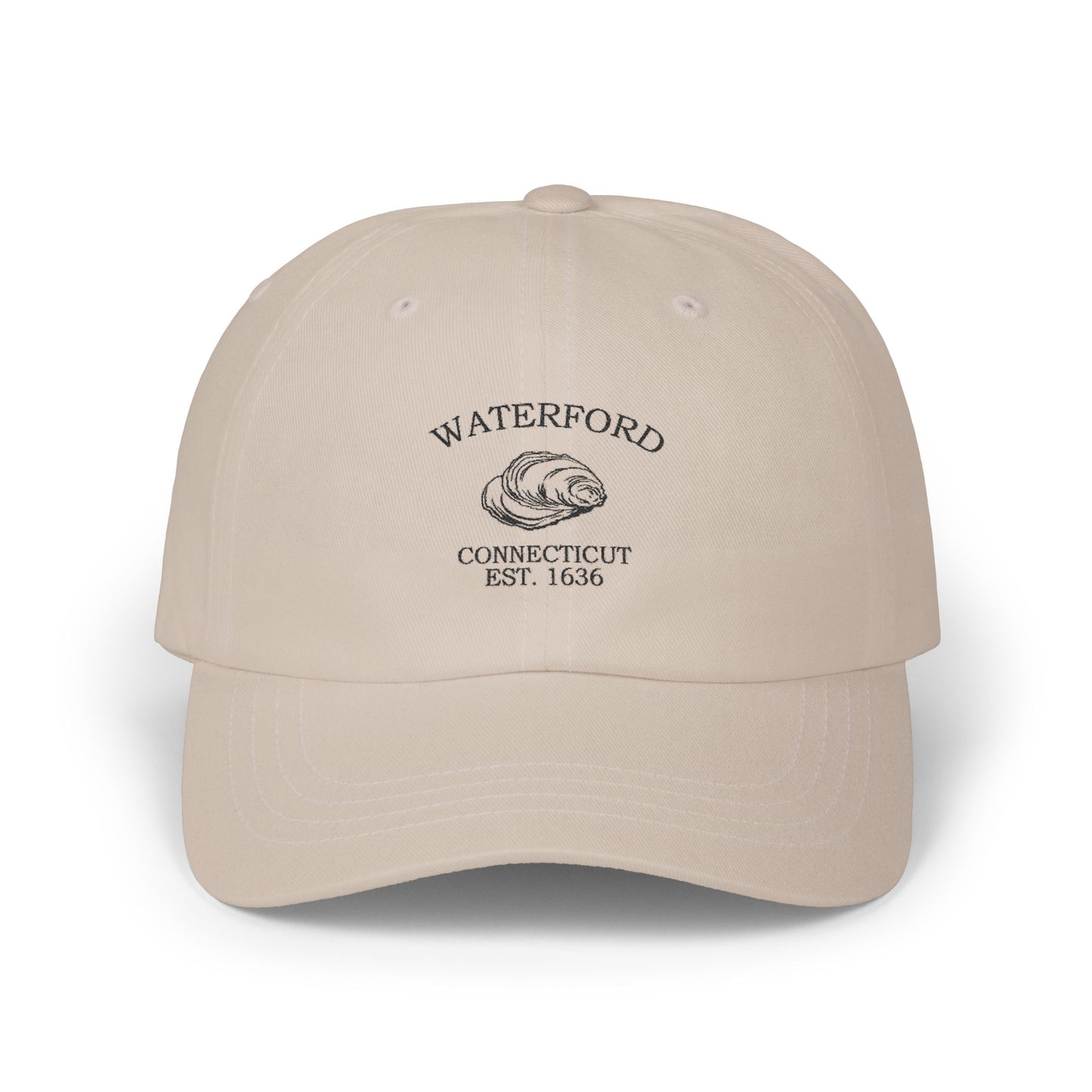
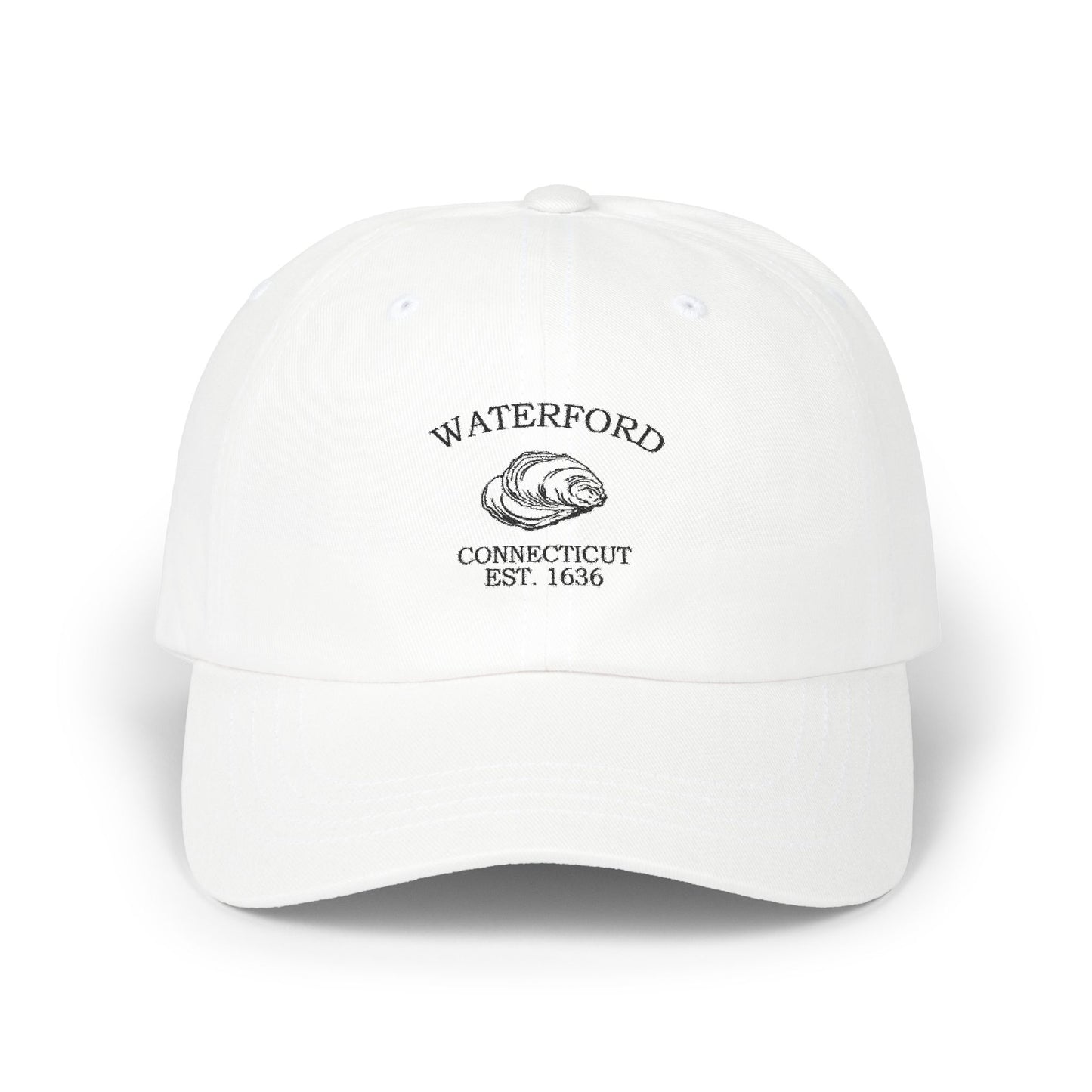
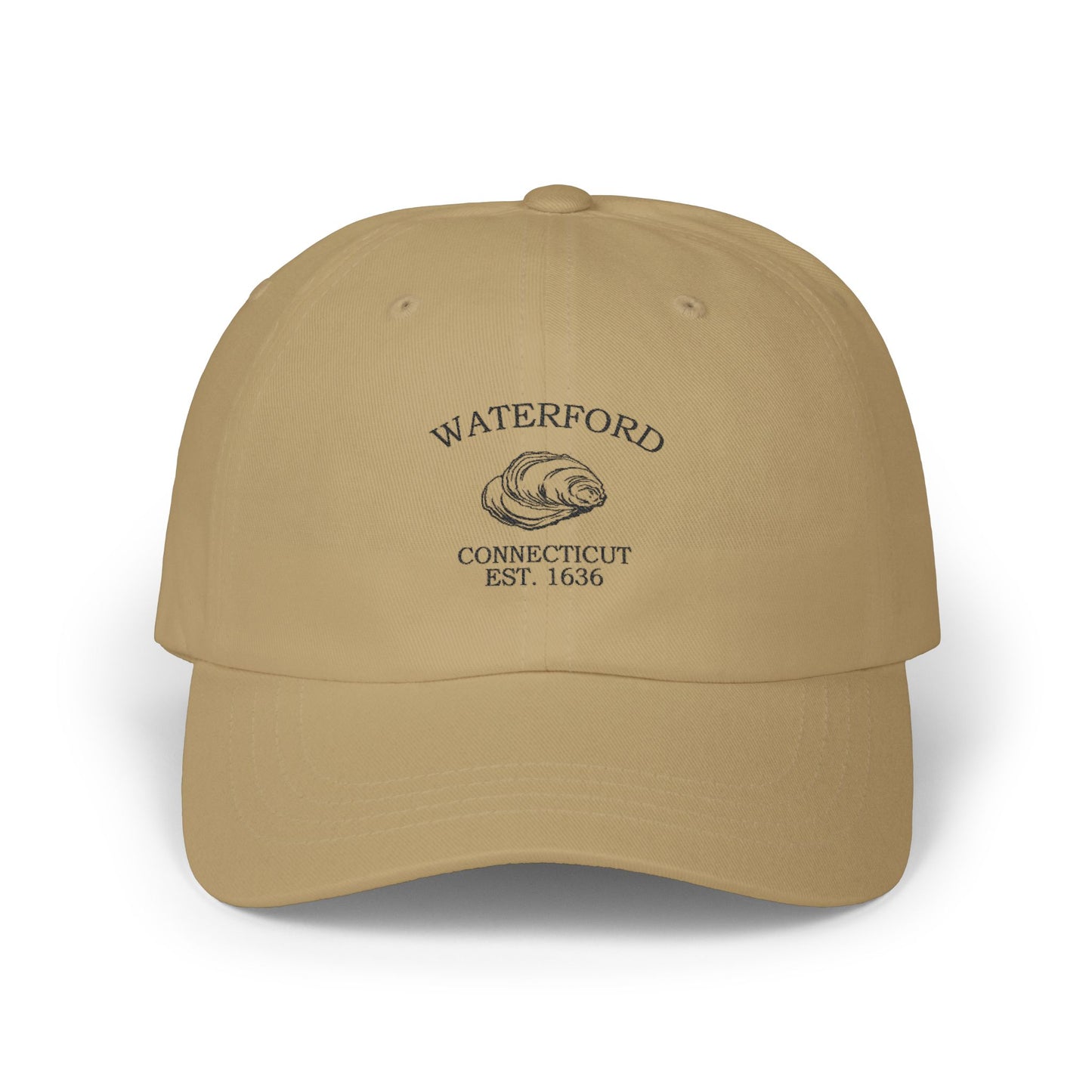
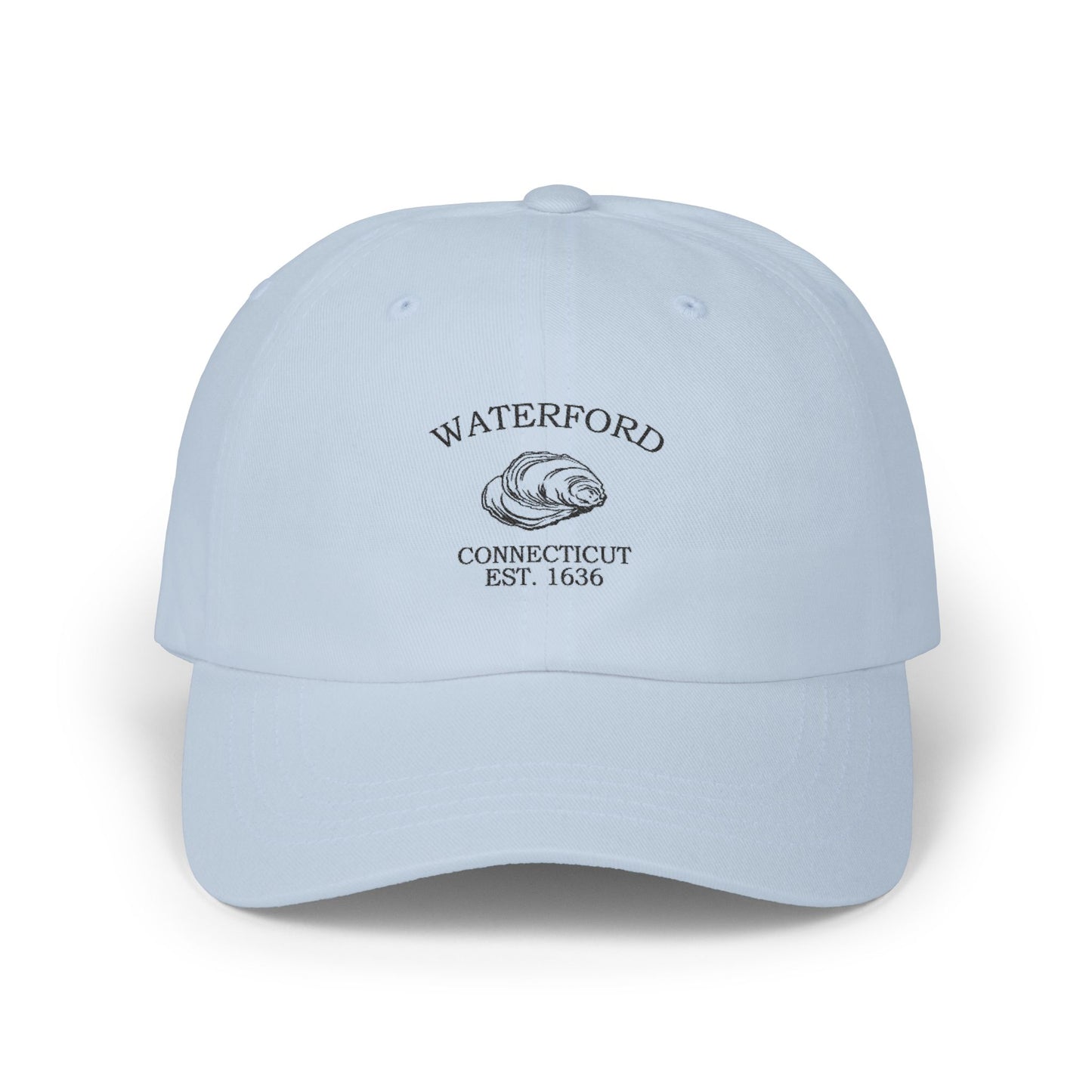
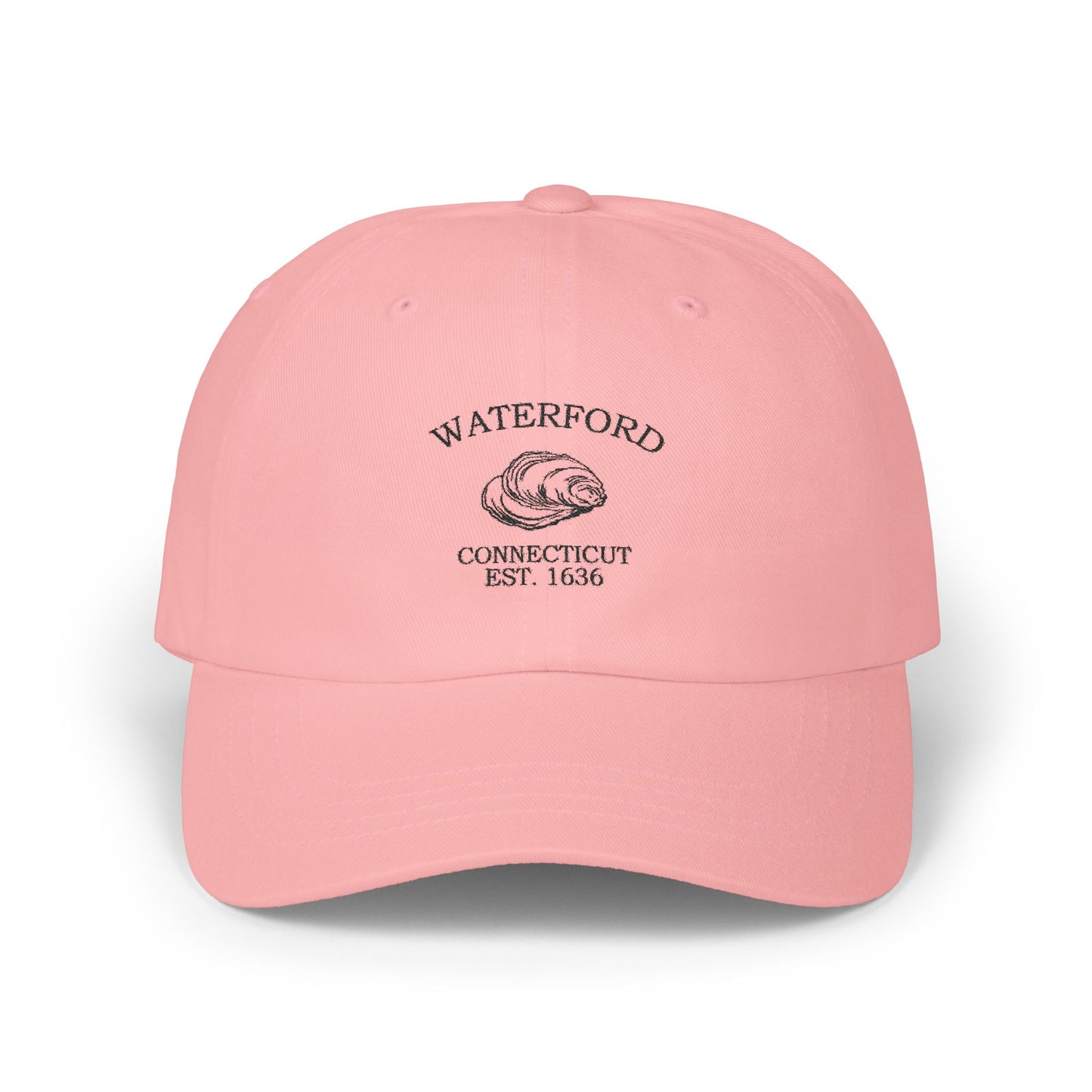
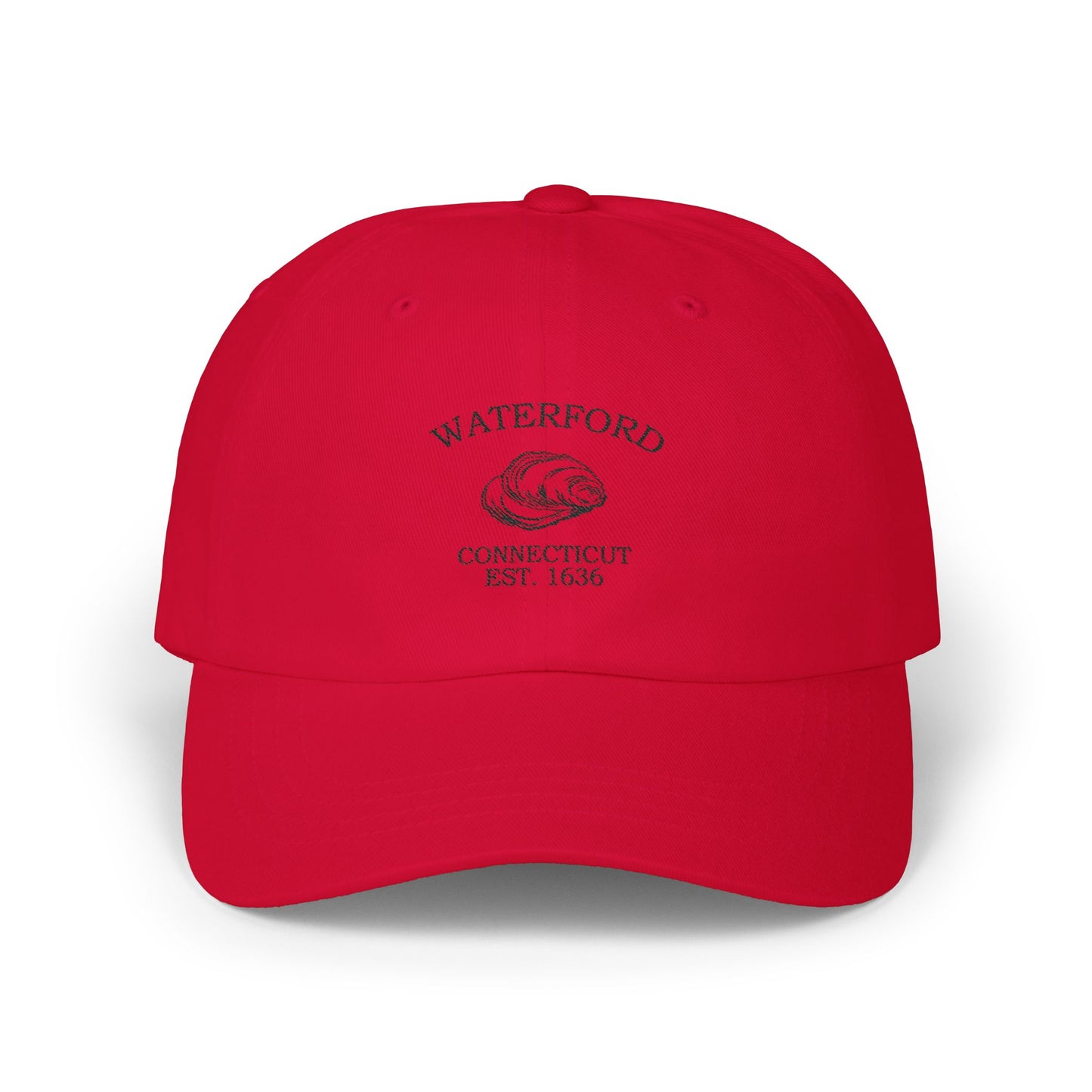
Our Waterford logo carries Connecticut's clam shell above "Connecticut — Est. 1636," the shared retro emblem of our Connecticut towns; the shell speaks to the shoreline, and 1636 marks the founding of the Connecticut Colony itself — not the town, which came much later, in 1801. Rendered in worn black-and-white, like an old oyster-crate label or seaside signage, it ties Waterford to every other Connecticut town we make. What makes this one Waterford is the story behind it — the granite, the gardens of Harkness, and the long light off the Sound.
Waterford's quiet coast drew artists as well as gardeners. In 1964 the Eugene O'Neill Theater Center opened here, named for the Nobel-laureate playwright who had grown up just down the shore in New London. Its summer playwriting workshops — the National Playwrights Conference — have launched a remarkable share of the American stage, and the O'Neill is now woven into the town's identity as deeply as its beaches. Nearby, the landmark buildings of Seaside State Park stand on their own green point, a striking piece of early-twentieth-century shoreline architecture preserved as open space.
Why People Visit Waterford
Visitors come to Waterford for an unspoiled stretch of the Connecticut coast: the gardens and mansion at Harkness, a famous playwriting center, granite-walled woods, and rocky beaches on Long Island Sound. It sits minutes from New London and the Mystic shoreline, with two state parks holding long reaches of open coast. Equal parts heritage and easy beach time, Waterford rewards anyone who likes the shore quiet and the history close at hand.
