


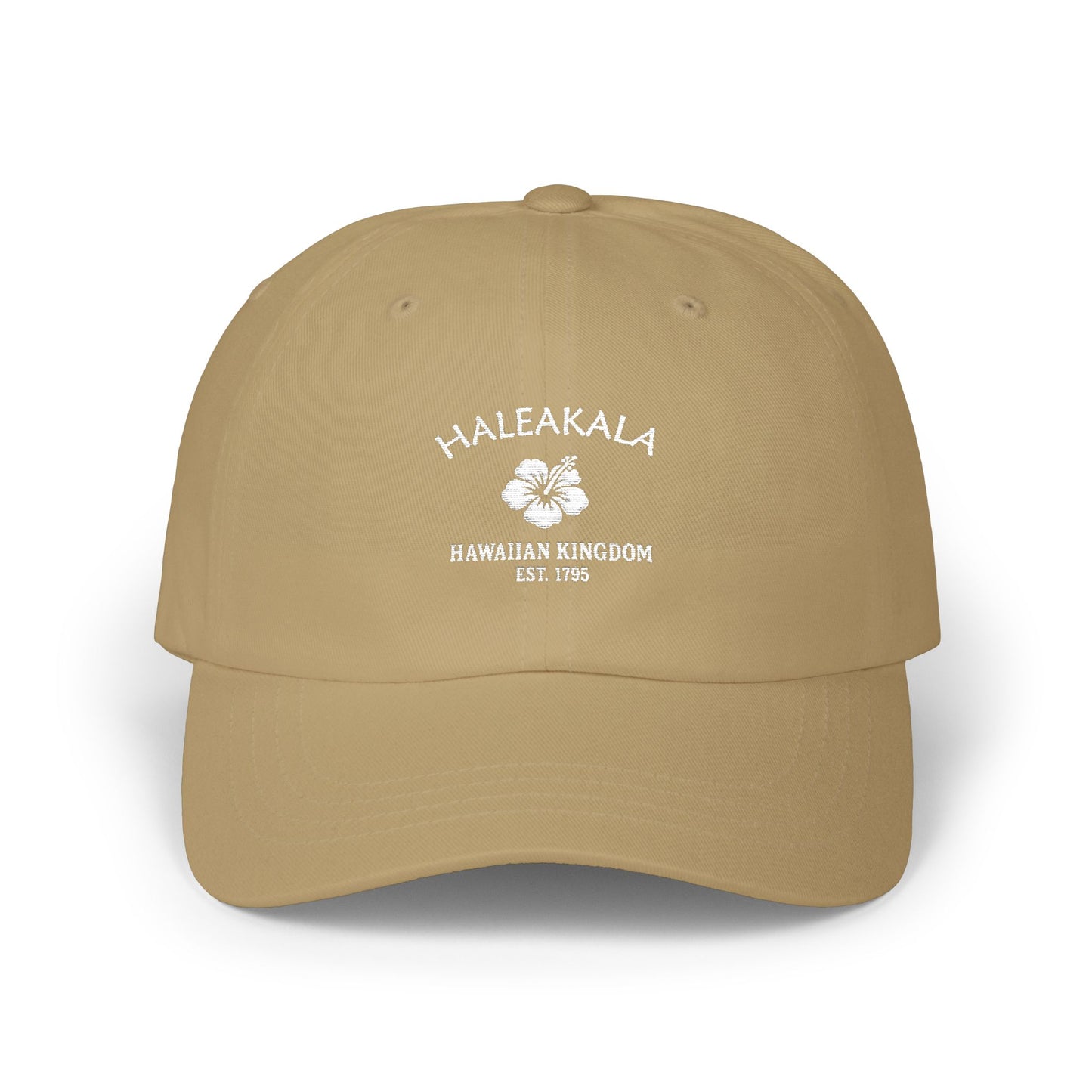
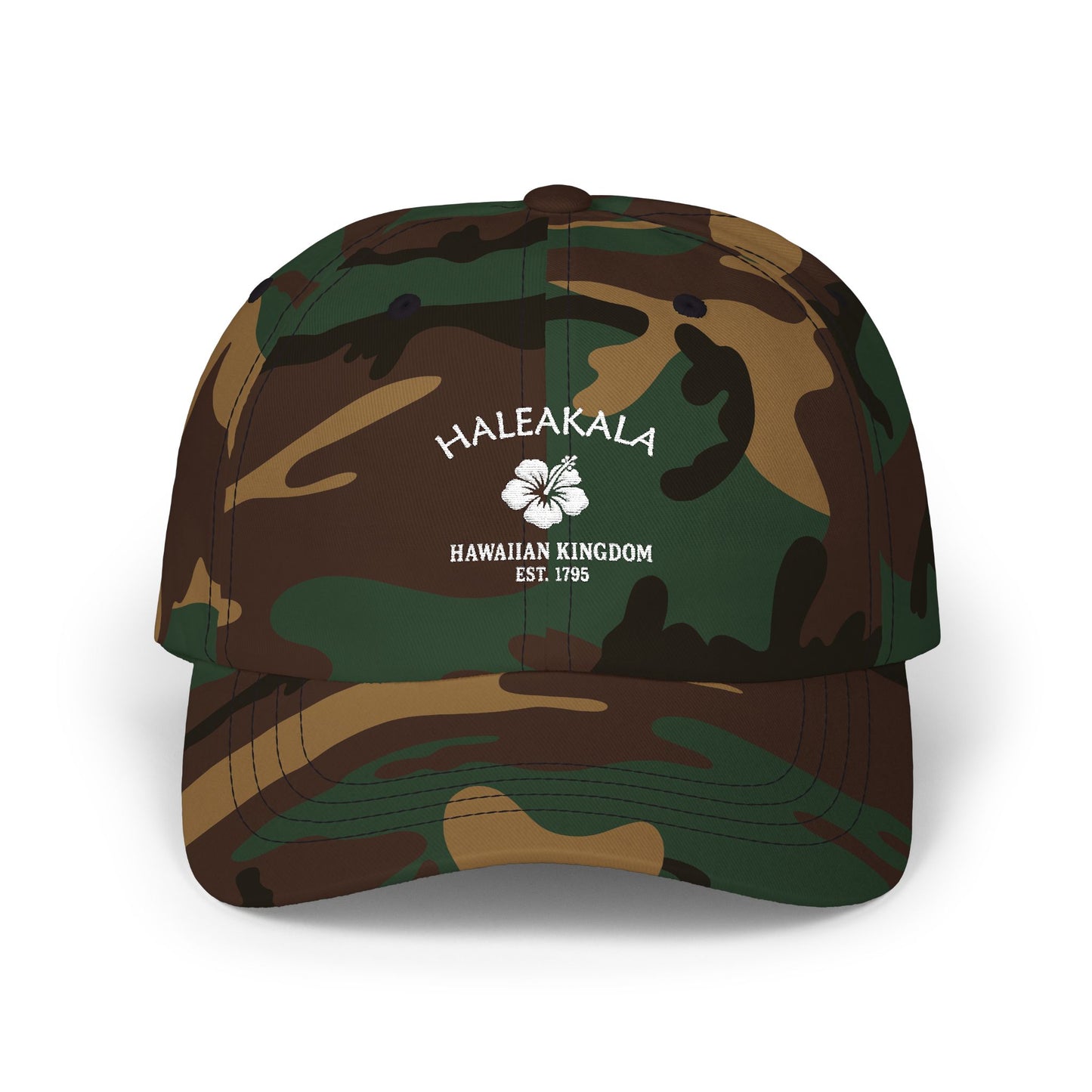
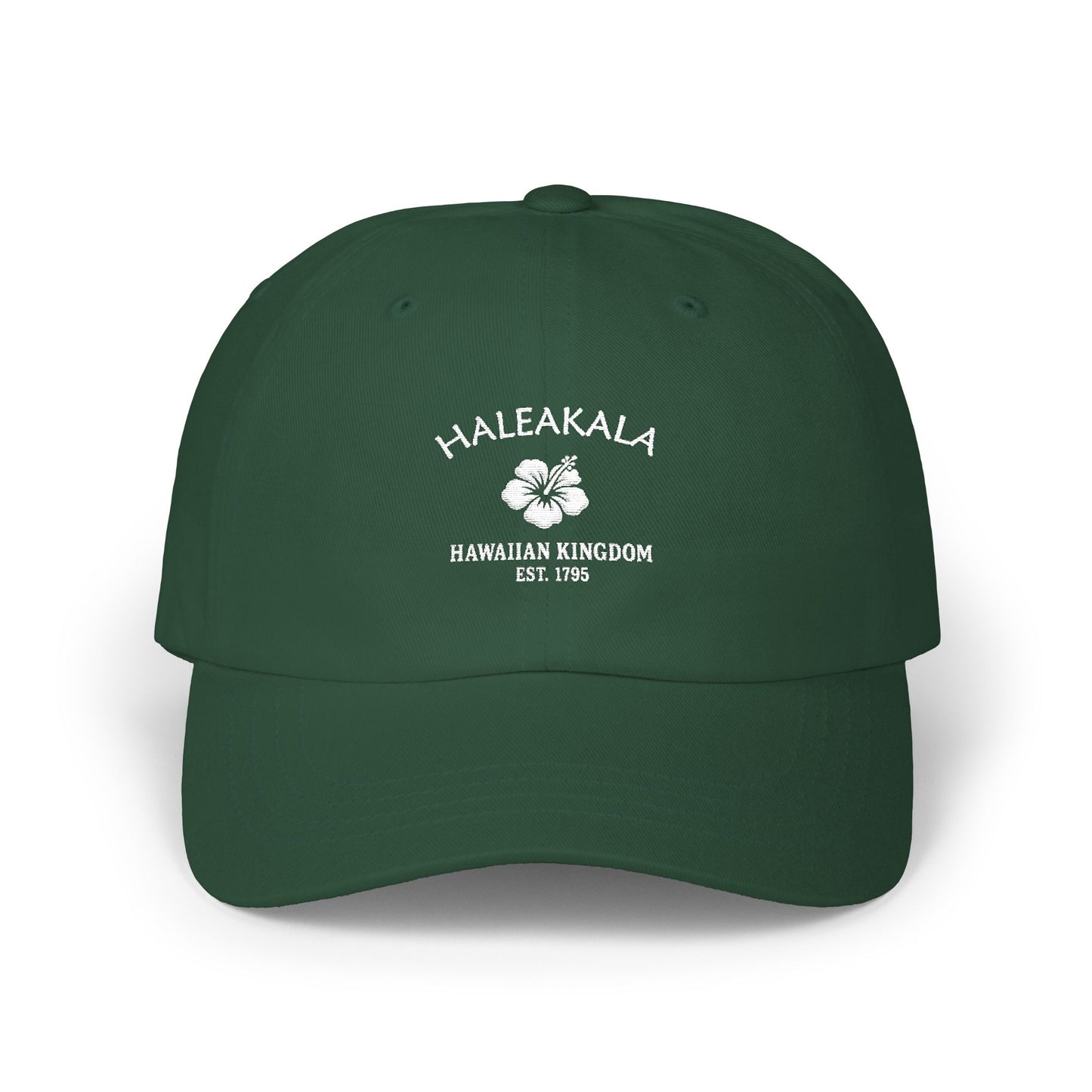


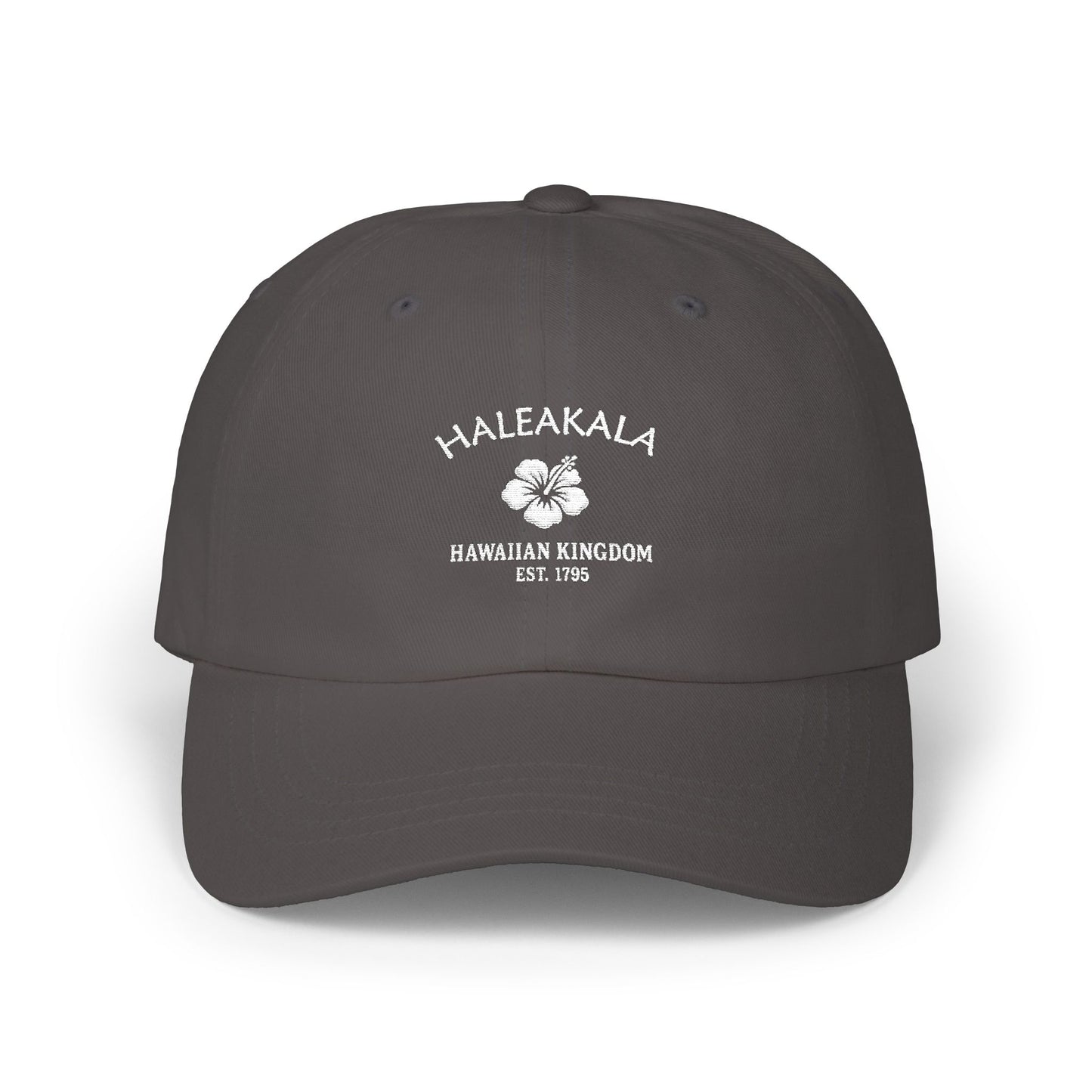

Our Haleakalā retro logo uses the Hawaiian hibiscus motif, the brand-wide flower of every Merlin Classics Hawaiʻi town, paired with the inscription "Hawaiian Kingdom — Est. 1795," referencing the unification of the islands under Kamehameha I at the Battle of Nuʻuanu. The black-and-white styling is retro, resembling vintage travel decals or crate labels. The motif honors Haleakalā's place inside the broader Hawaiʻi heritage frame, and pairs the kingdom-era anchor with the mountain that has been here since long before any flag flew over the islands. On merchandise the emblem conveys reverence, pride, and continuity, retro in tone, and connects Haleakalā to the family of Merlin Classics Hawaiʻi pages with one shared design language.
In 1916, Haleakalā became part of Hawaiʻi National Park, preserving its summit and landscapes. The 1950s and 1960s brought improved roads, lodges, and tourism infrastructure, making the mountain more accessible to visitors. Local traditions persisted, with chants, festivals, and cultural practices continuing alongside park tourism. Its timeline reflects Hawaiʻi's broader duality: sacred heritage preserved while tourism expanded. Haleakalā's mid-century identity emphasized cultural continuity and modern growth, blending reverence with economic opportunity. The site became both a natural landmark and a cultural treasure, embodying Hawaiʻi's story of tradition, resilience, and adaptability during decades of transformation and growth.
Why People Visit Haleakalā
Haleakalā offers a different Hawaiʻi — above the clouds, where the air is thin, the silence carries, and the sun rises over an ocean of mist at six in the morning. Travelers come for the sunrise at Puʻu ʻUlaʻula, the silversword on the upper slopes, the long hike down into the crater on Sliding Sands, the bamboo-forest walk to Waimoku Falls at Kīpahulu, the Pools of ʻOheʻo cascading down to the sea, and the dark-sky stargazing from the summit at night. It is contemplative, otherworldly, and unforgettable — a sacred mountain that has been holding sky over east Hawaiʻi for as long as anyone has counted.
