


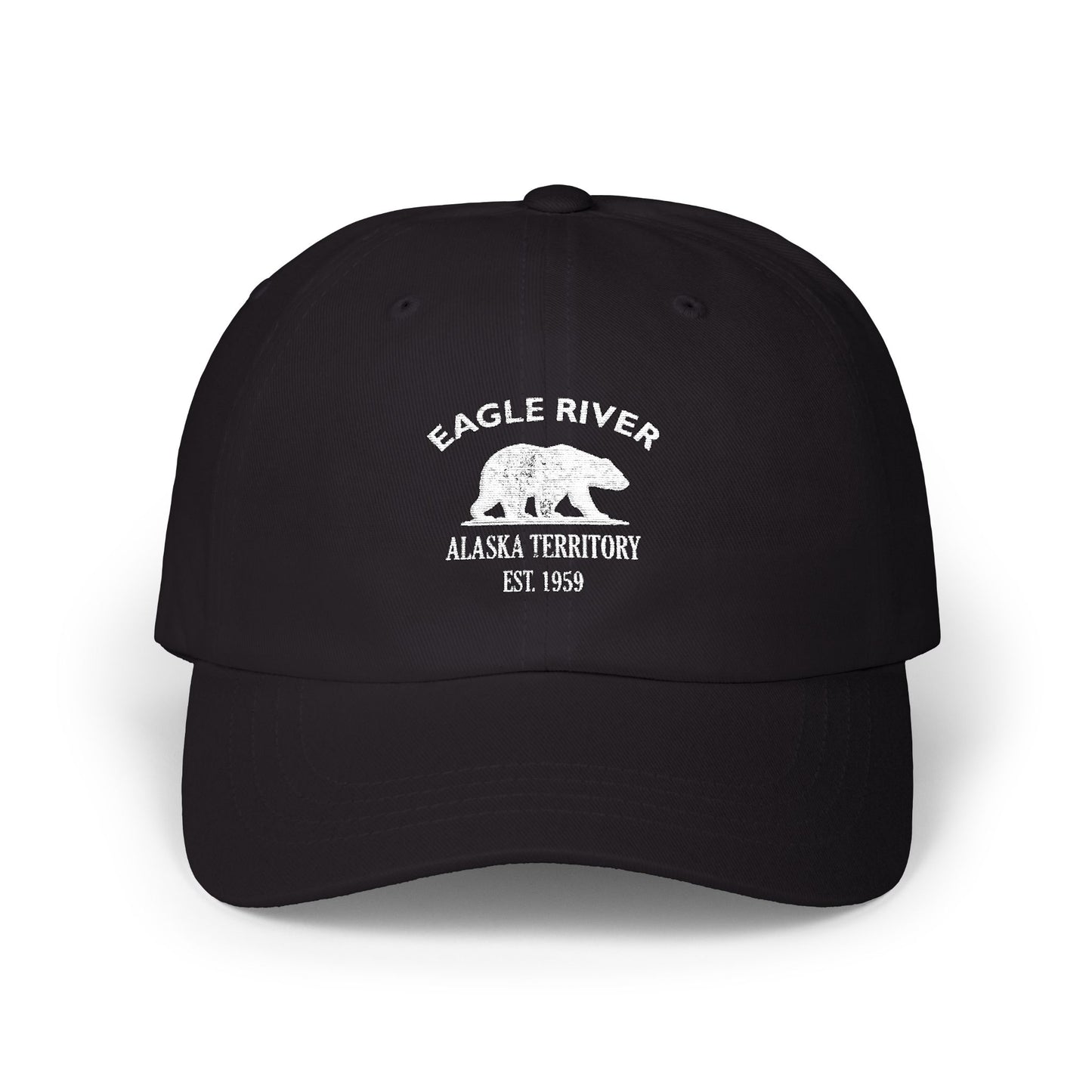
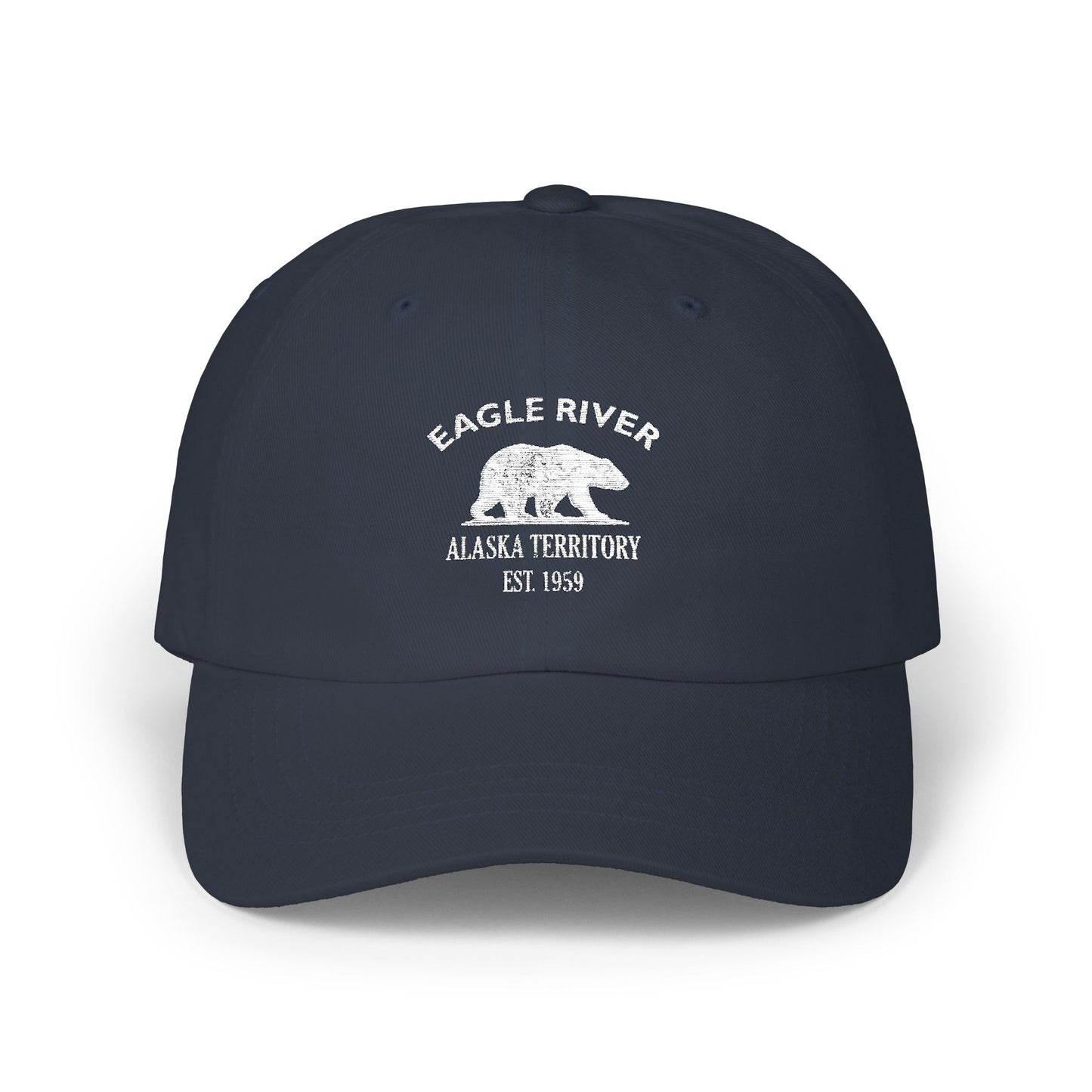
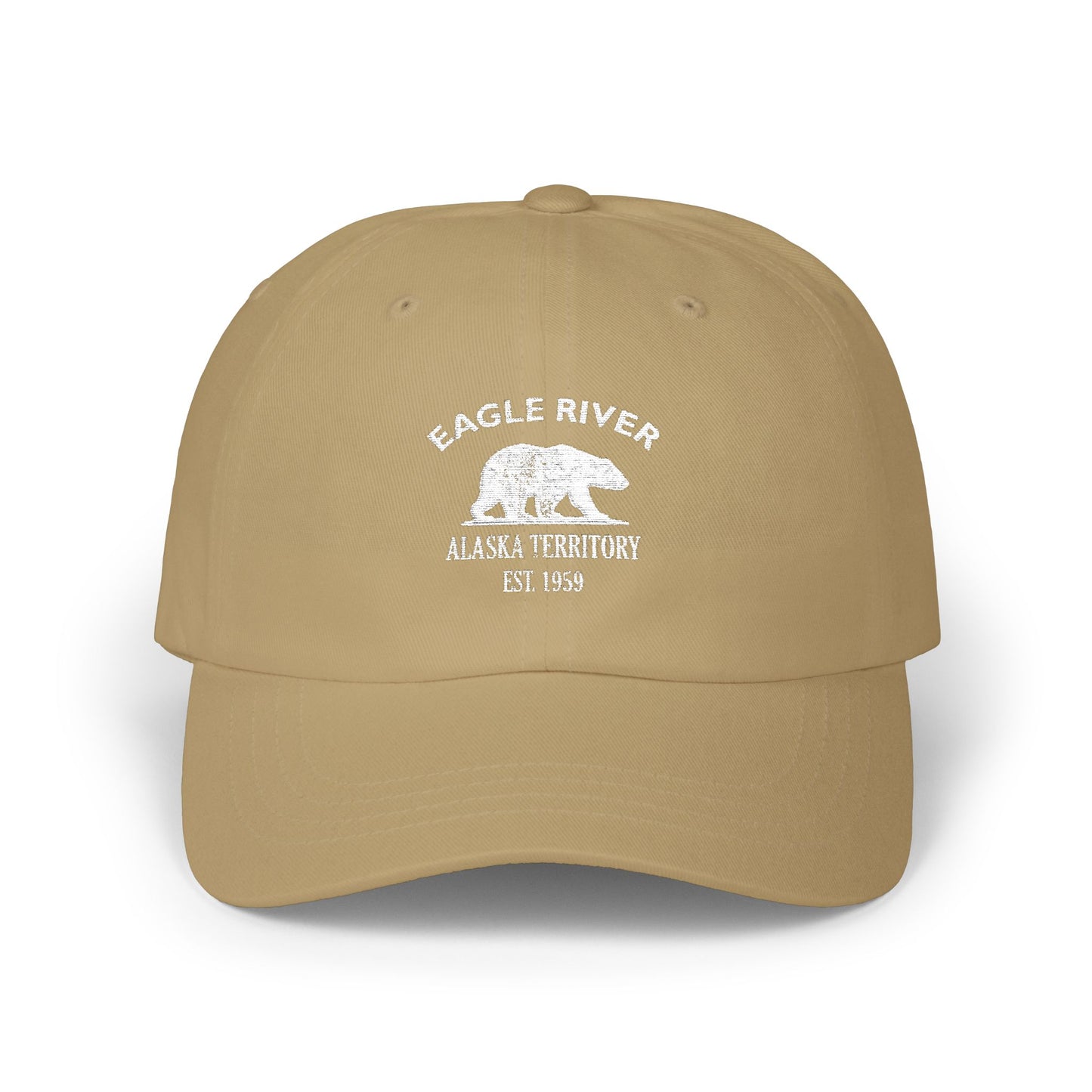
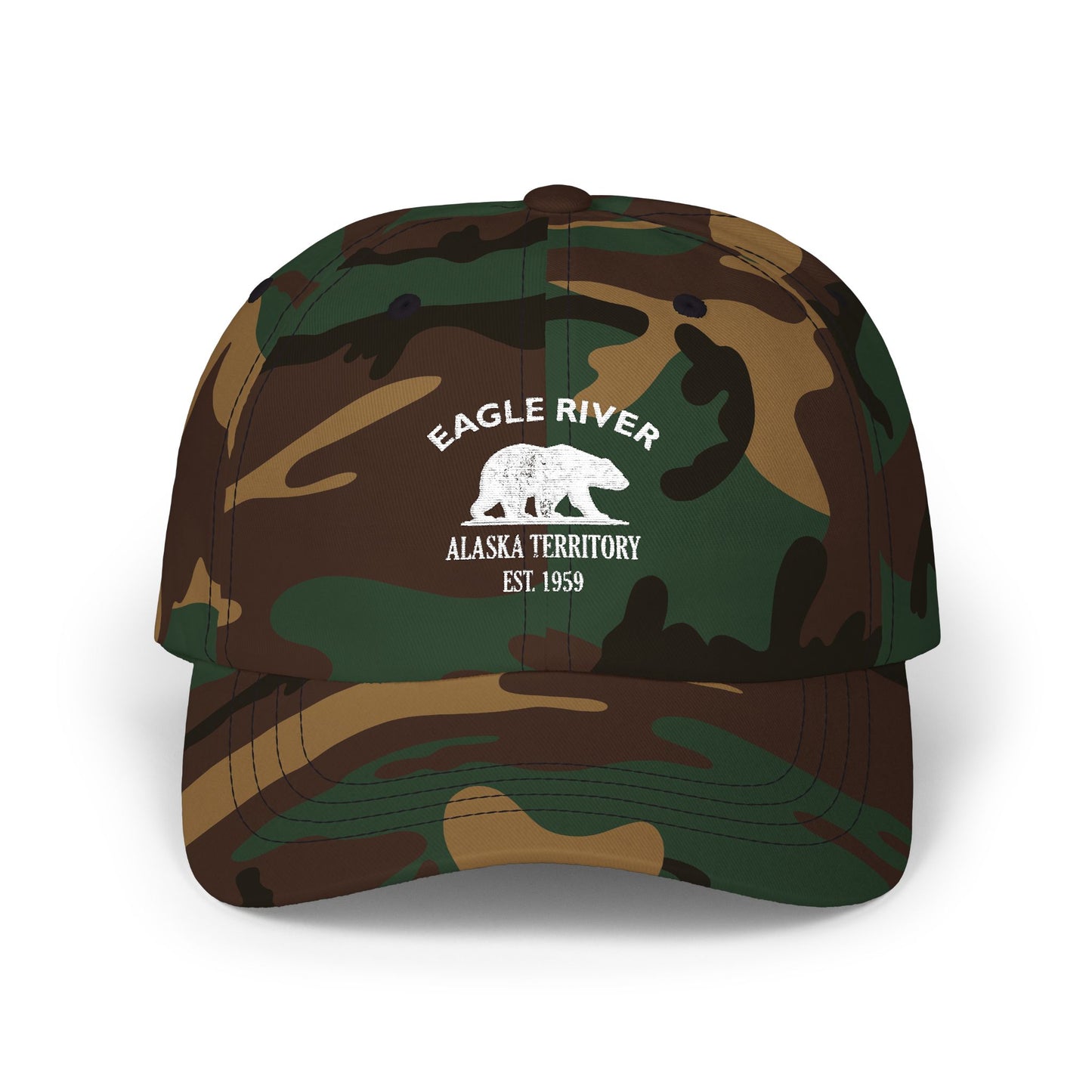
Today Eagle River is the gateway community of the Chugach — a valley town set between Alaska's biggest city and its third-largest state park, with a glacier-fed river running through the middle of it and the mountains right out the back door. Its story runs from a Dena'ina homeland through a post-war homestead valley to a modern military-and-mountain town that never lost its wilderness edge. Our Eagle River designs gather that identity into wearable form — the bear-and-1959 emblem, the Chugach, and the gateway spirit. Eagle River, Alaska: where the city ends and the mountains begin.
The modern town is a post-war story. After the Second World War, returning servicemembers took up homesteads in the Chugiak–Eagle River valley, and the community grew up alongside the great Anchorage military posts — Elmendorf Air Force Base and Fort Richardson, today joined as Joint Base Elmendorf-Richardson, or JBER, just to the south. As Anchorage expanded outward, Eagle River became its mountain-side bedroom community, and in 1975 the valley was folded into the unified Municipality of Anchorage. It has carried a double identity ever since: fifteen minutes from a downtown, fifteen minutes from genuine wilderness.
Why People Visit Eagle River
Eagle River offers a rare balance: easy access to a real Alaskan city paired with immediate, serious wilderness. Visitors come for the Chugach trailheads, the glacier-fed river, and the big mountain scenery, all minutes from town, and they stay for how unhurried it feels compared with the highway towns. It is a genuine four-season valley — hiking and fishing in the long summer light, skiing and snow on the peaks deep into spring.
