


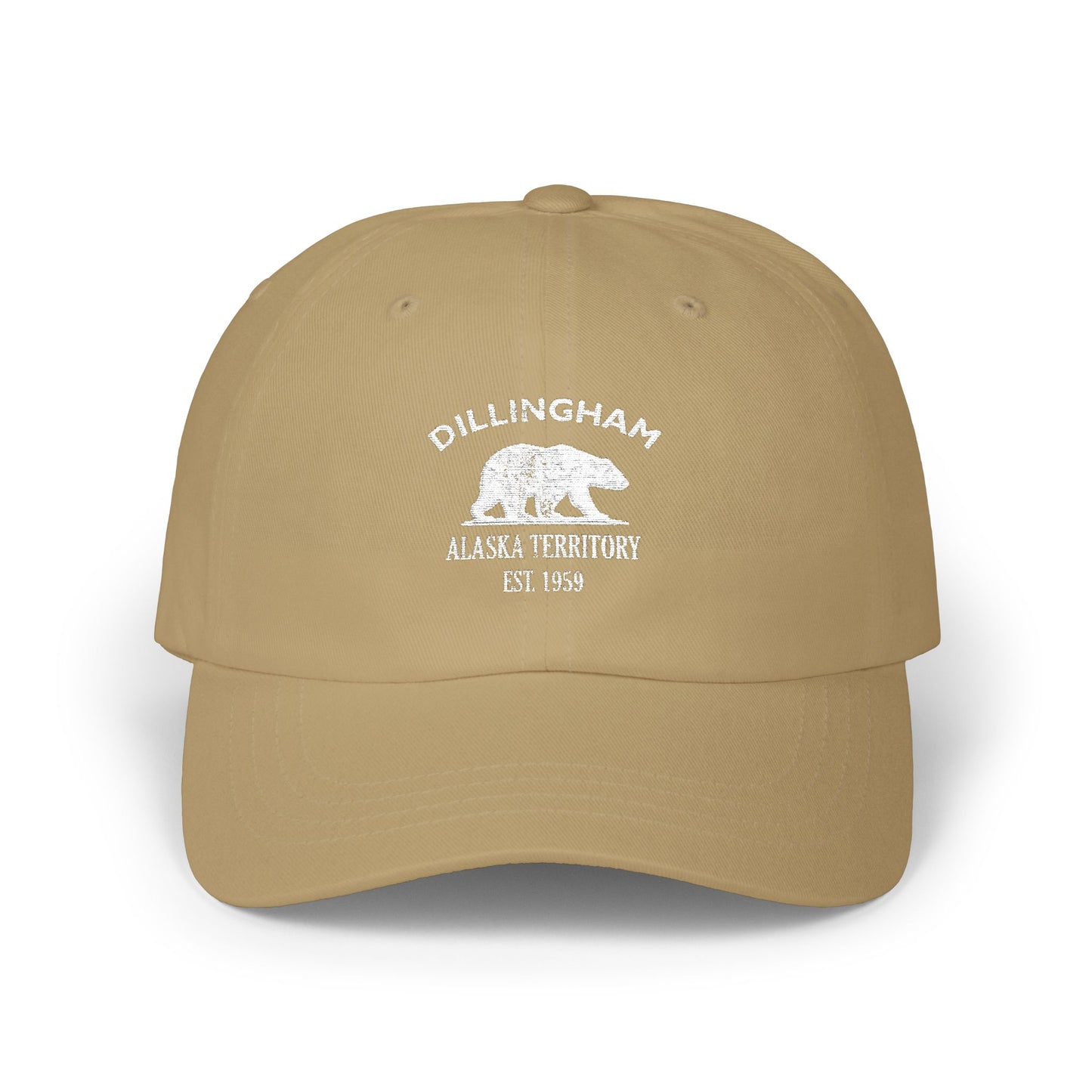
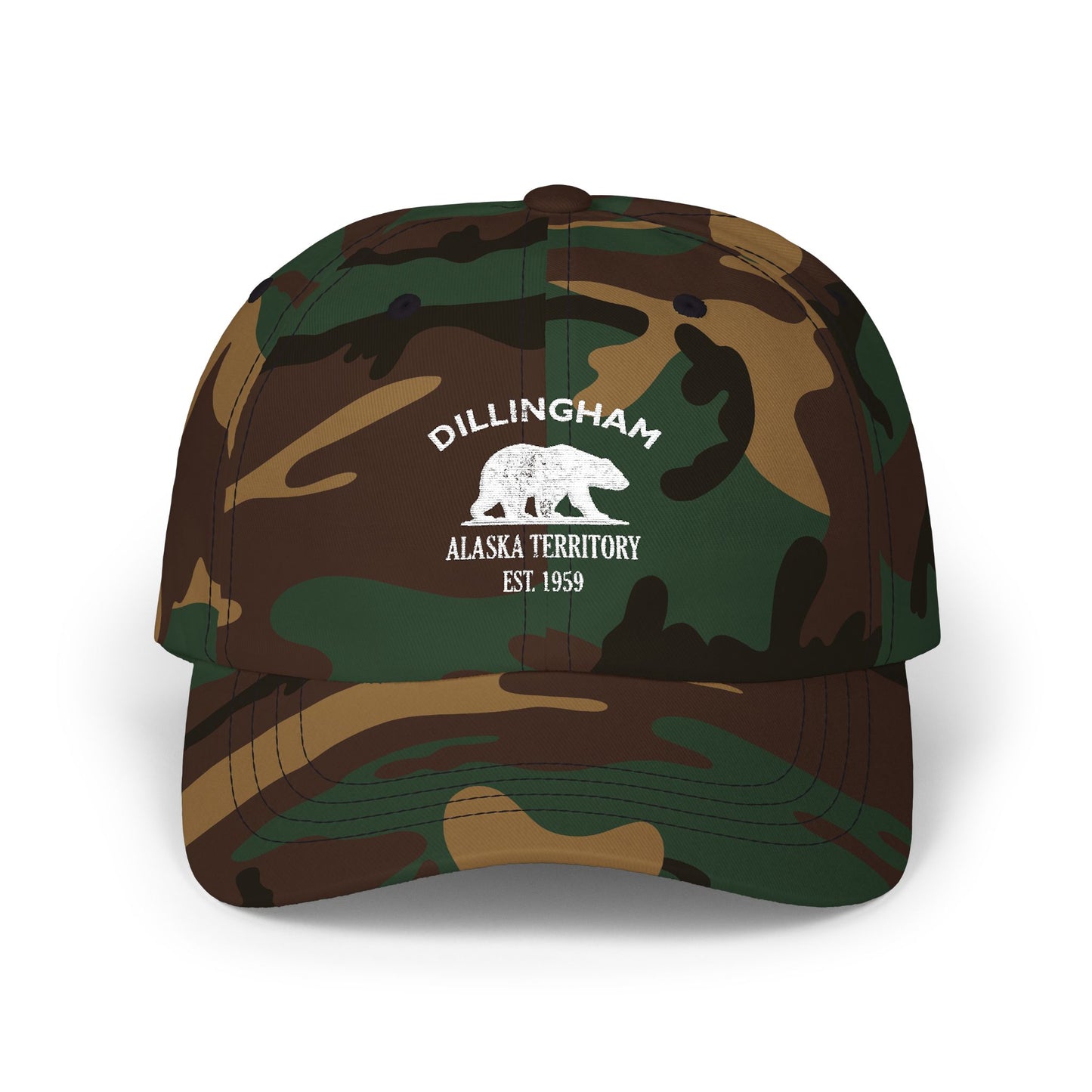
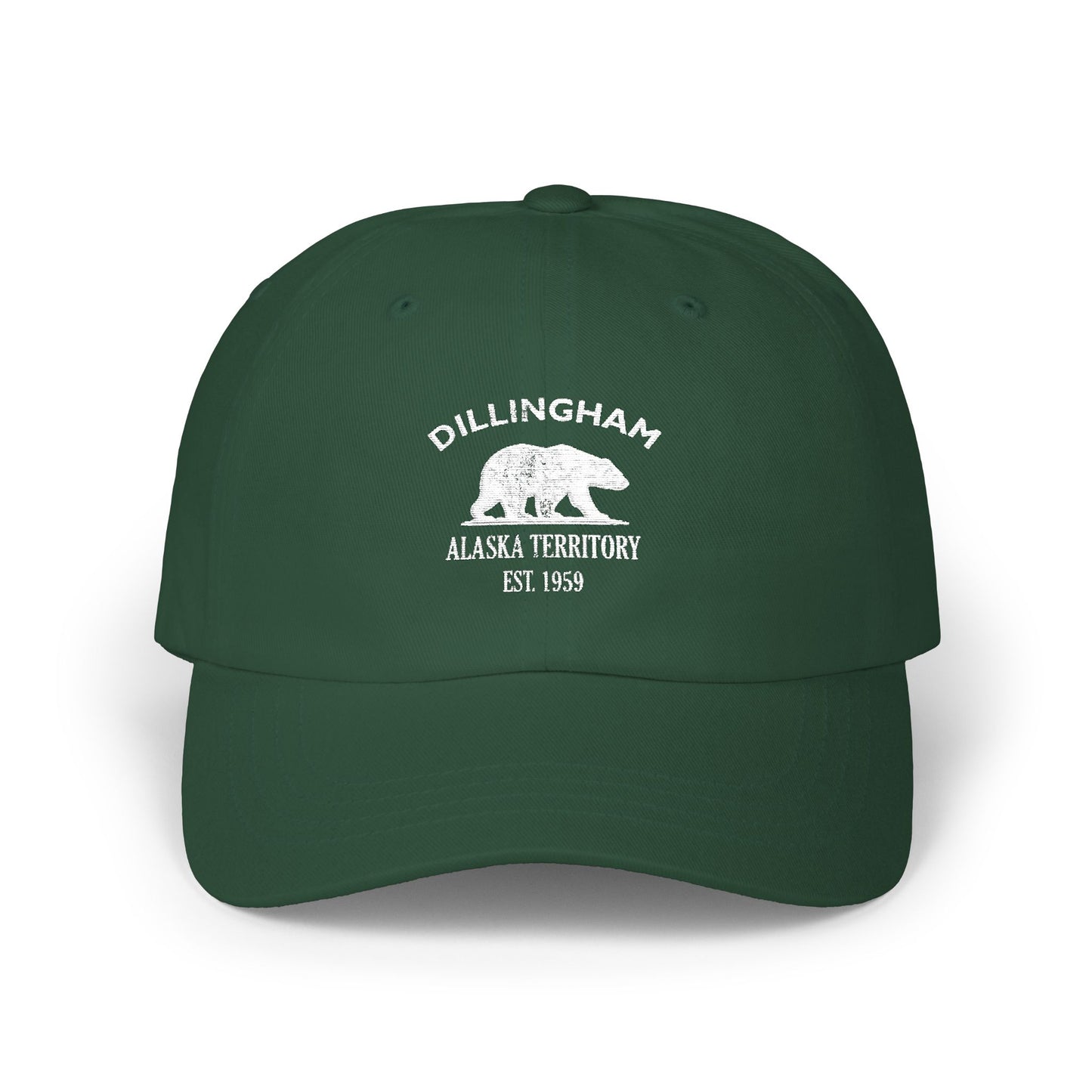
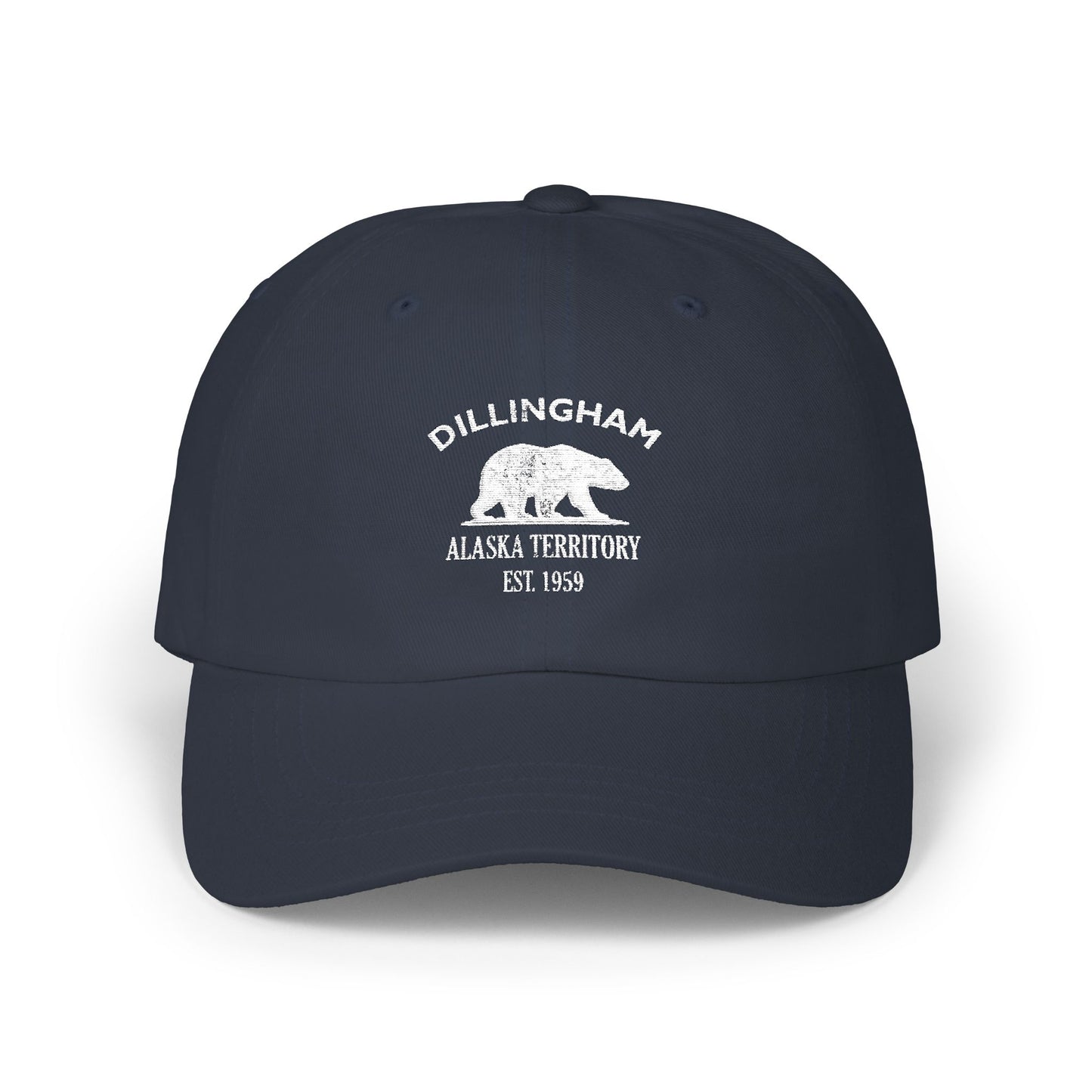
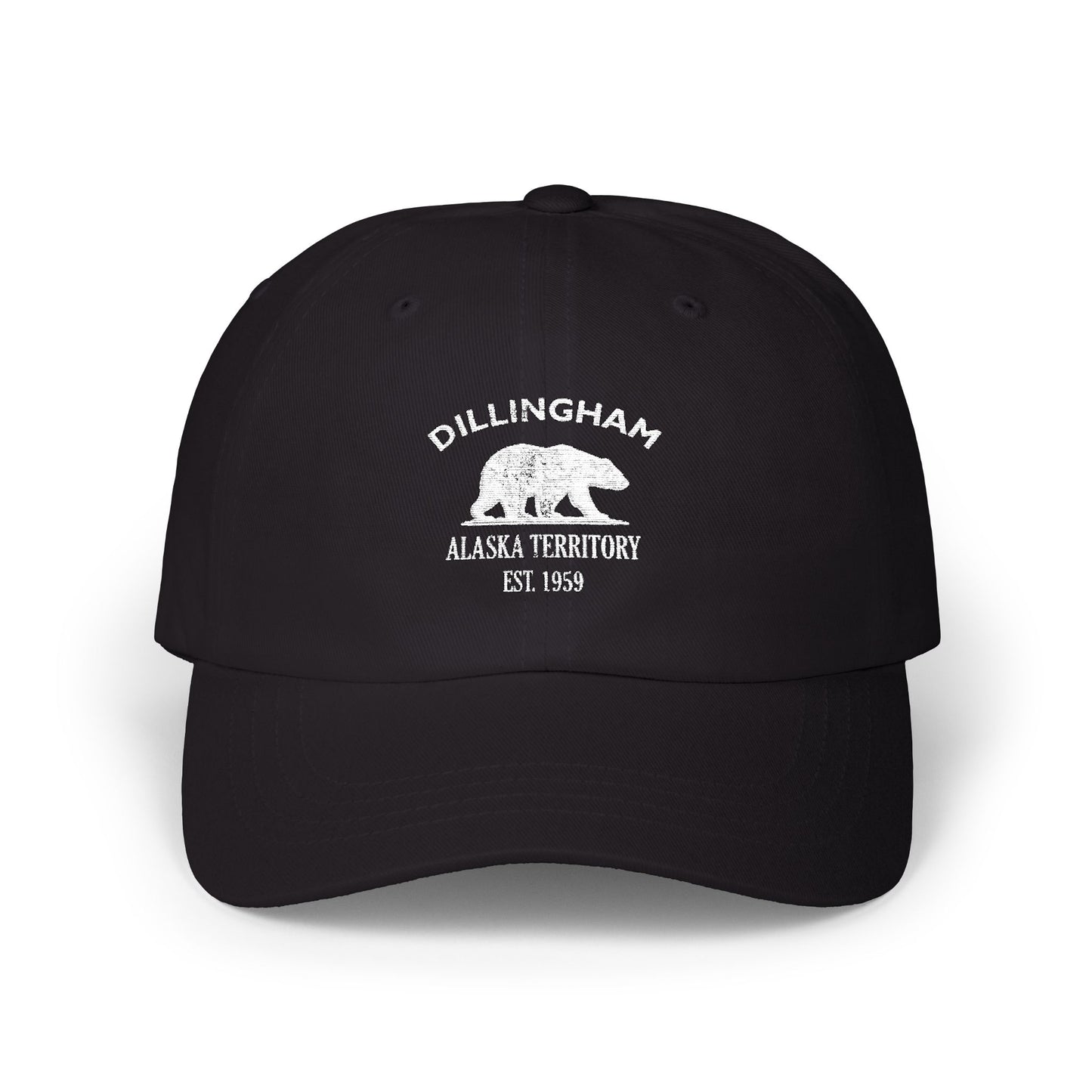
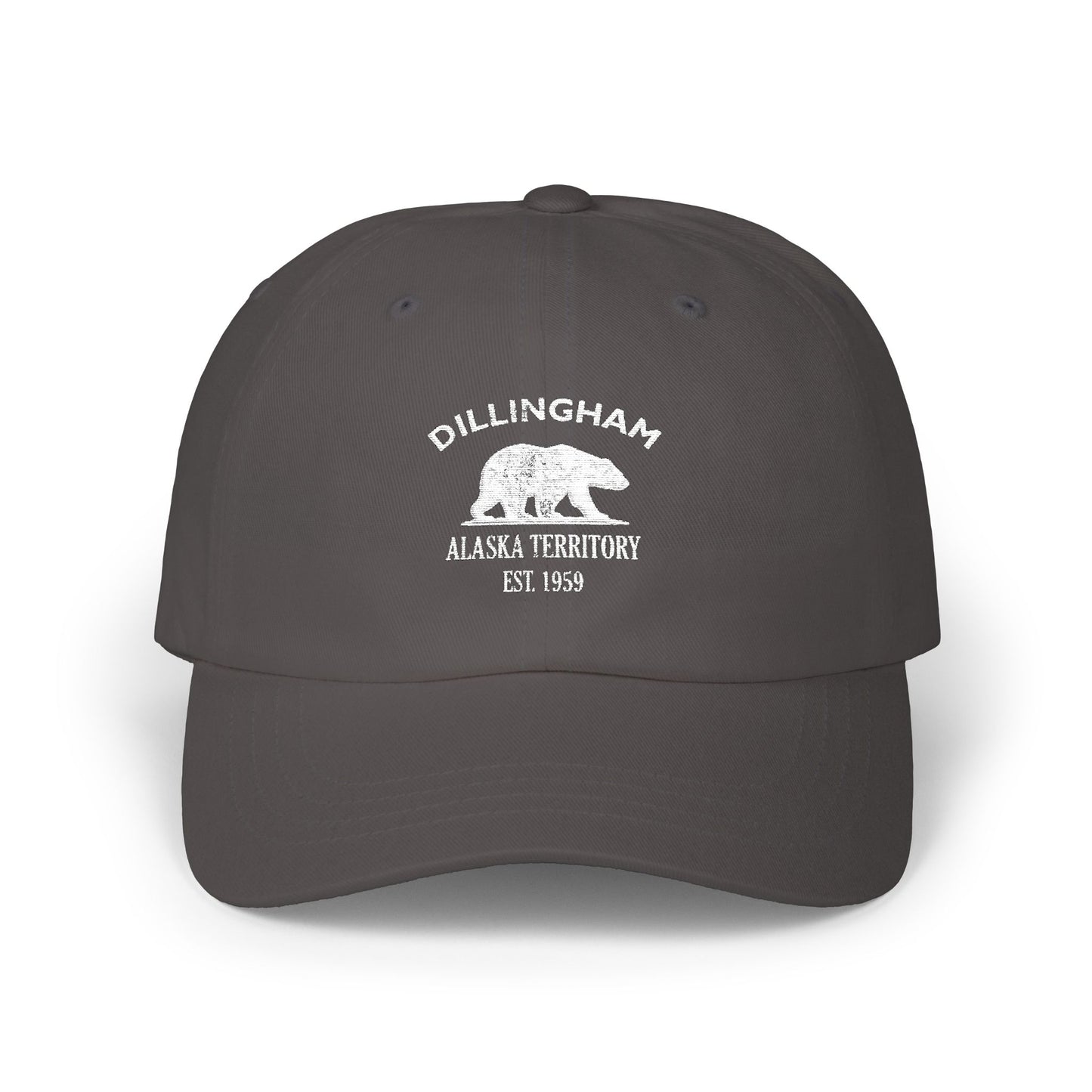
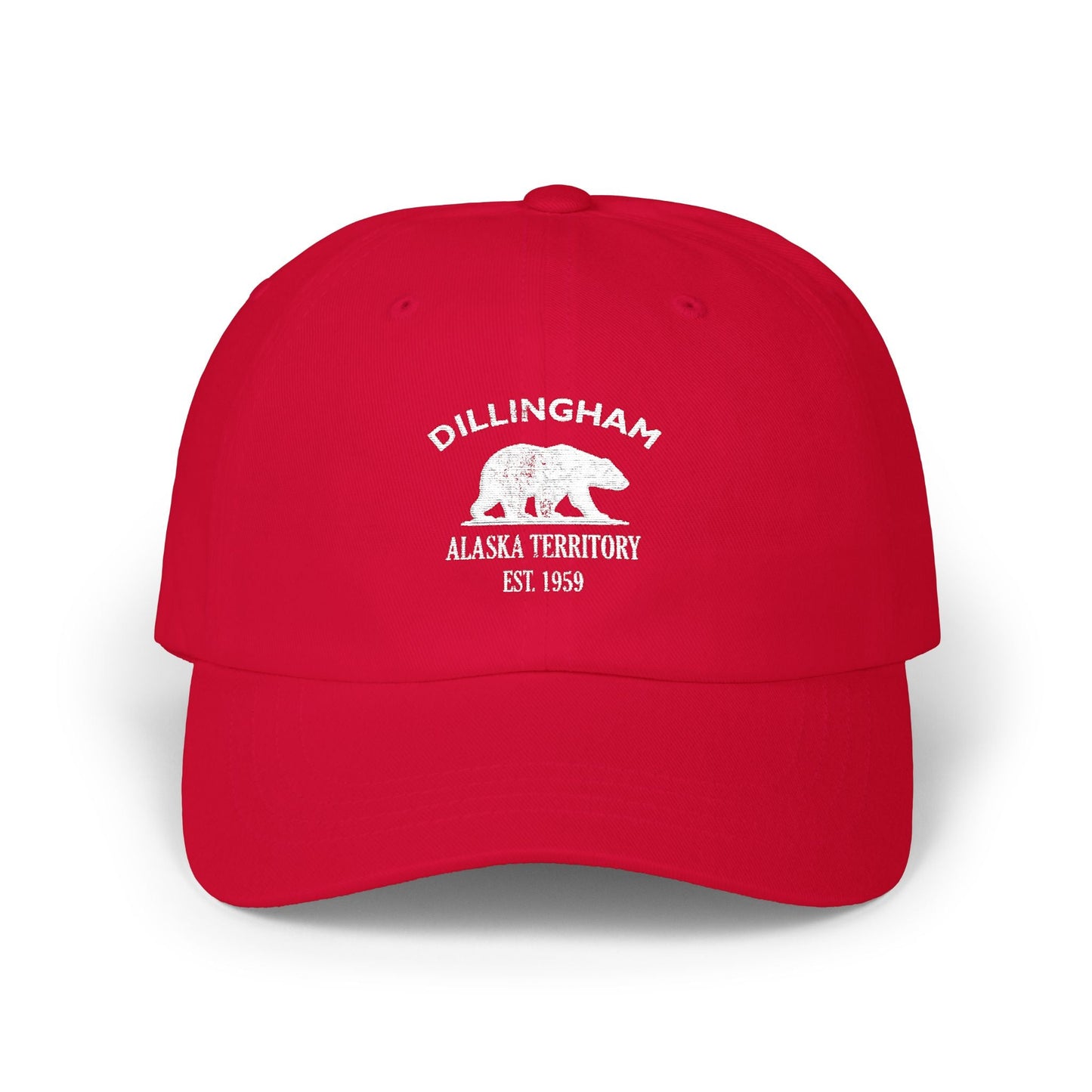
Our Dillingham retro logo uses Alaska’s distressed bear motif, representing strength, resilience, and wilderness identity. The bear reflects both Indigenous reverence and frontier endurance, while “1959” grounds the motif in Alaska’s statehood. Its black-and-white styling is rugged and vintage, resembling crate labels or outfitter branding. The motif bridges Dillingham’s dual identity: Native subsistence and modern fishing industry. On merchandise, it conveys authenticity, pride, and toughness, retro in tone. The bear emblem honors Dillingham’s story: resilience, heritage, and fishing pride. Retro in style, it is a vintage emblem of Alaska’s maritime and frontier endurance.
Dillingham developed into a major salmon fishing and canning center in the twentieth century. By the 1950s and 1960s, canneries dominated its economy, with residents balancing subsistence traditions and commercial work. Schools, churches, and civic buildings anchored the community. Its timeline reflects continuity: Indigenous heritage and modern industry coexisting. The mid-century decades highlighted resilience, as residents rebuilt after storms and economic swings. Dillingham’s growth showed adaptability and endurance, ensuring fishing remained central. Its story mirrors Alaska’s larger identity: resilience, subsistence, and pride, rooted in both Native tradition and modern industry.
Why People Visit Dillingham Alaska
Dillingham offers the rare combination of a genuine working fishery and an unmatched wilderness backyard: the regional hub of Bristol Bay, set where the clear Wood River meets the muddy Nushagak at the Yup'ik place called Curyung, the service center of the largest wild sockeye salmon run on Earth, the gateway to Wood-Tikchik State Park — the largest state park in the United States — and the headquarters of the 4.7-million-acre Togiak National Wildlife Refuge. There is no road in; the town is reached by plane or boat, which keeps it unhurried and close to the water. Working town. Working harbor. Salmon country at the edge of the largest state park in the nation.
