


What's with Charro Days? Every winter, just before Lent, Brownsville and its sister city Matamoros throw a four-day party across the river called Charro Days, and for that long weekend the border all but disappears. Since 1938 the two downtowns have traded mariachi and conjunto music, folklorico dancers, charro riders in their wide sombreros, and a Grand International Parade — the mayors meeting mid-bridge to shake hands while children swap the American and Mexican flags. Charro Days is Brownsville in miniature: a city that has always treated two countries as one neighborhood, where the Rio Grande reads less like a boundary than a seam.
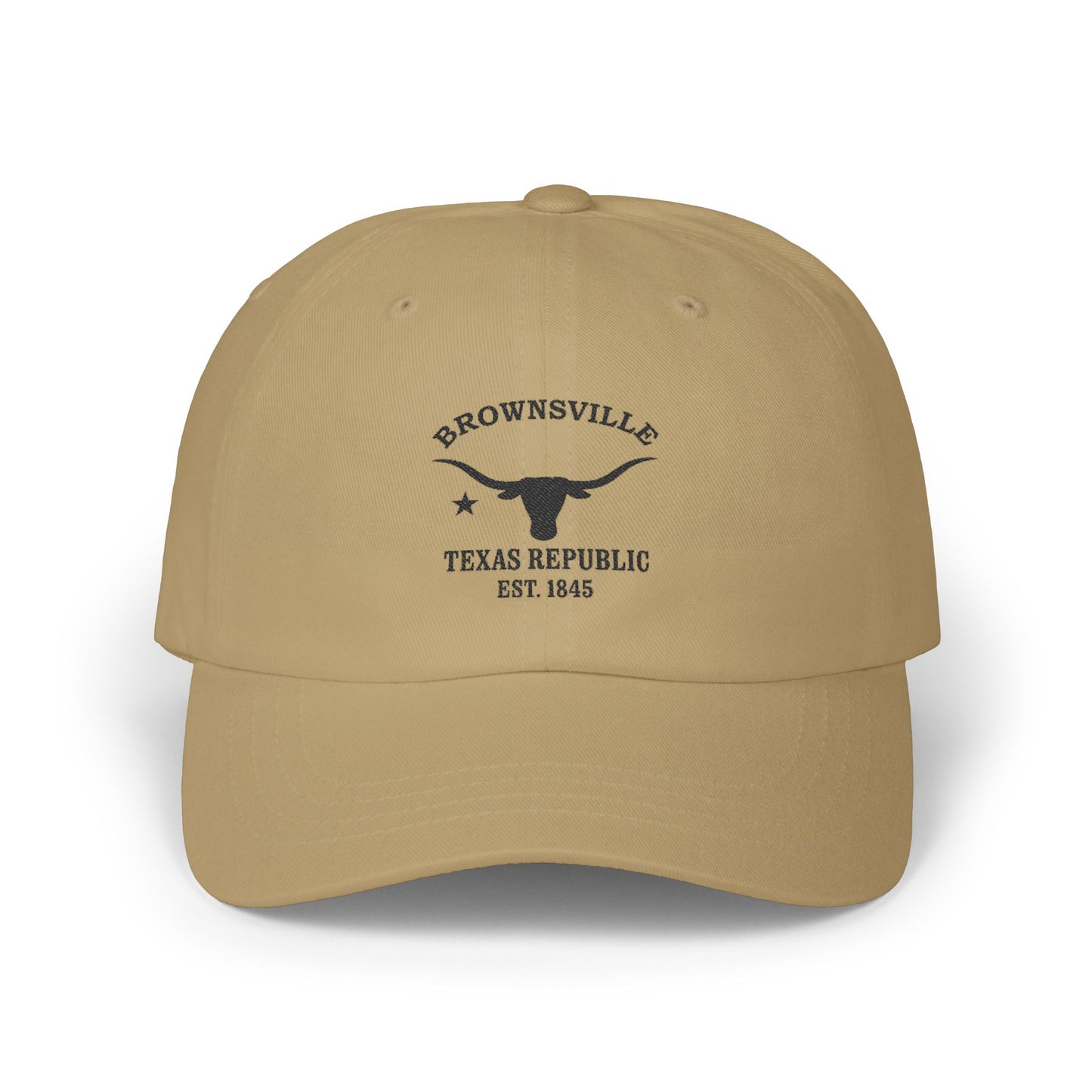
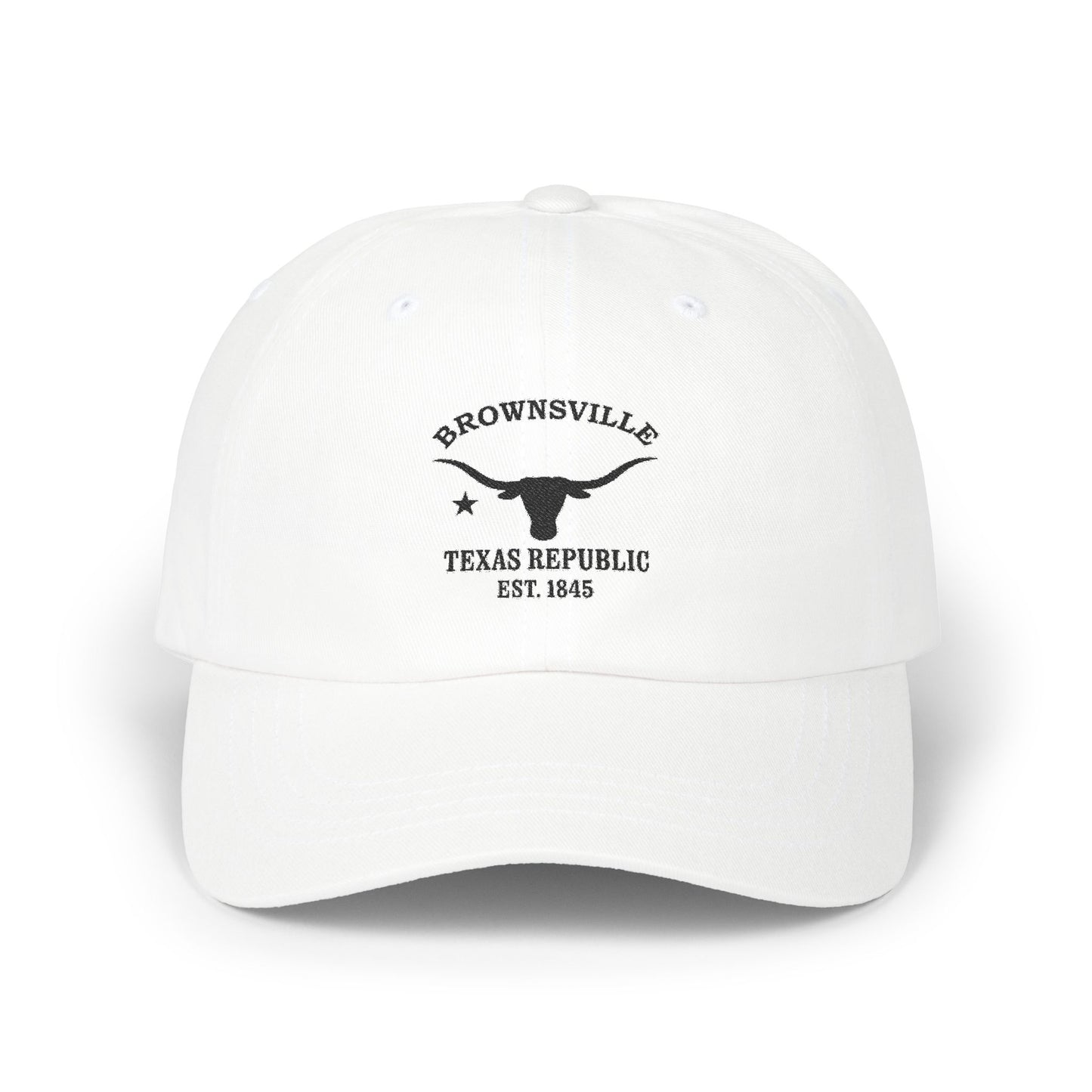
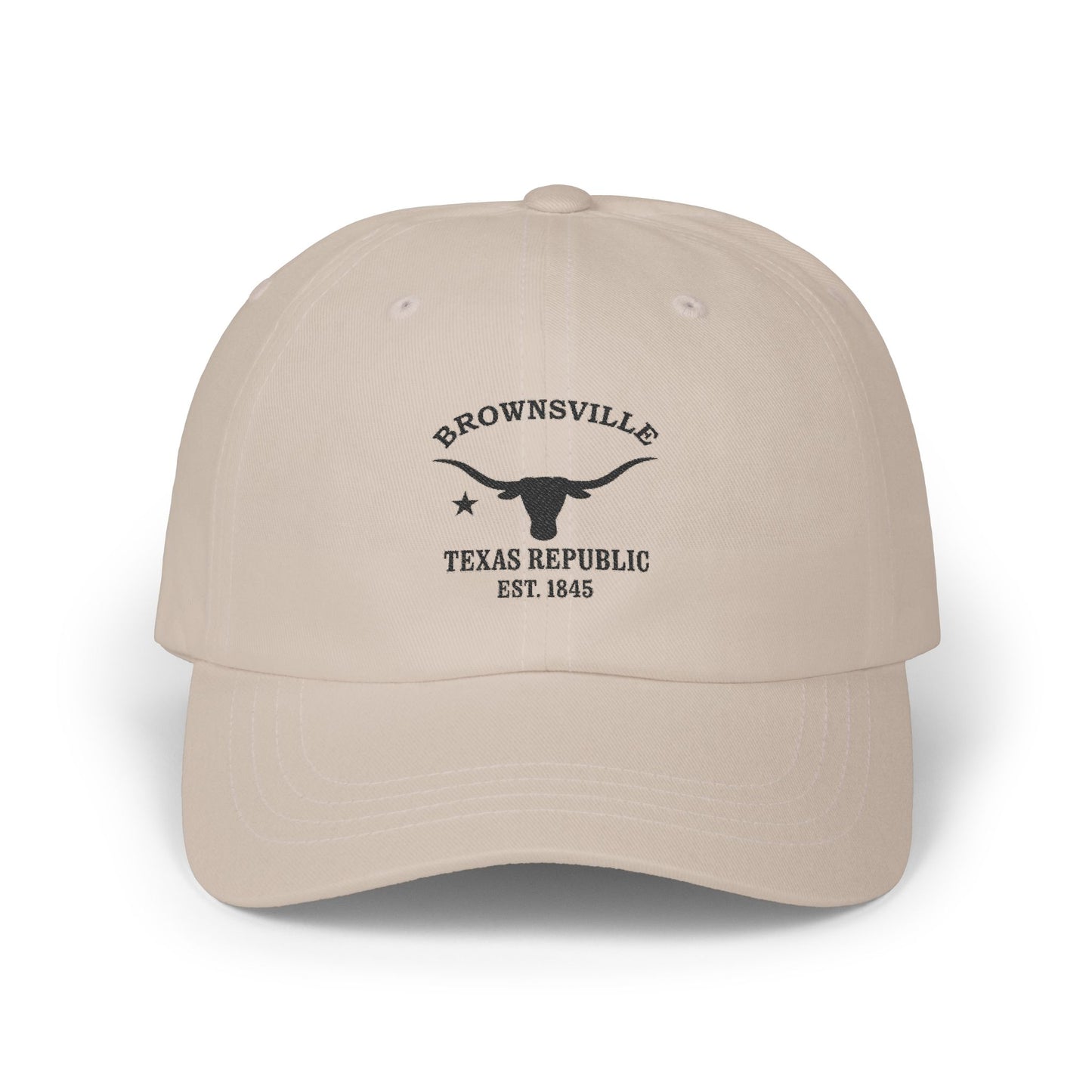
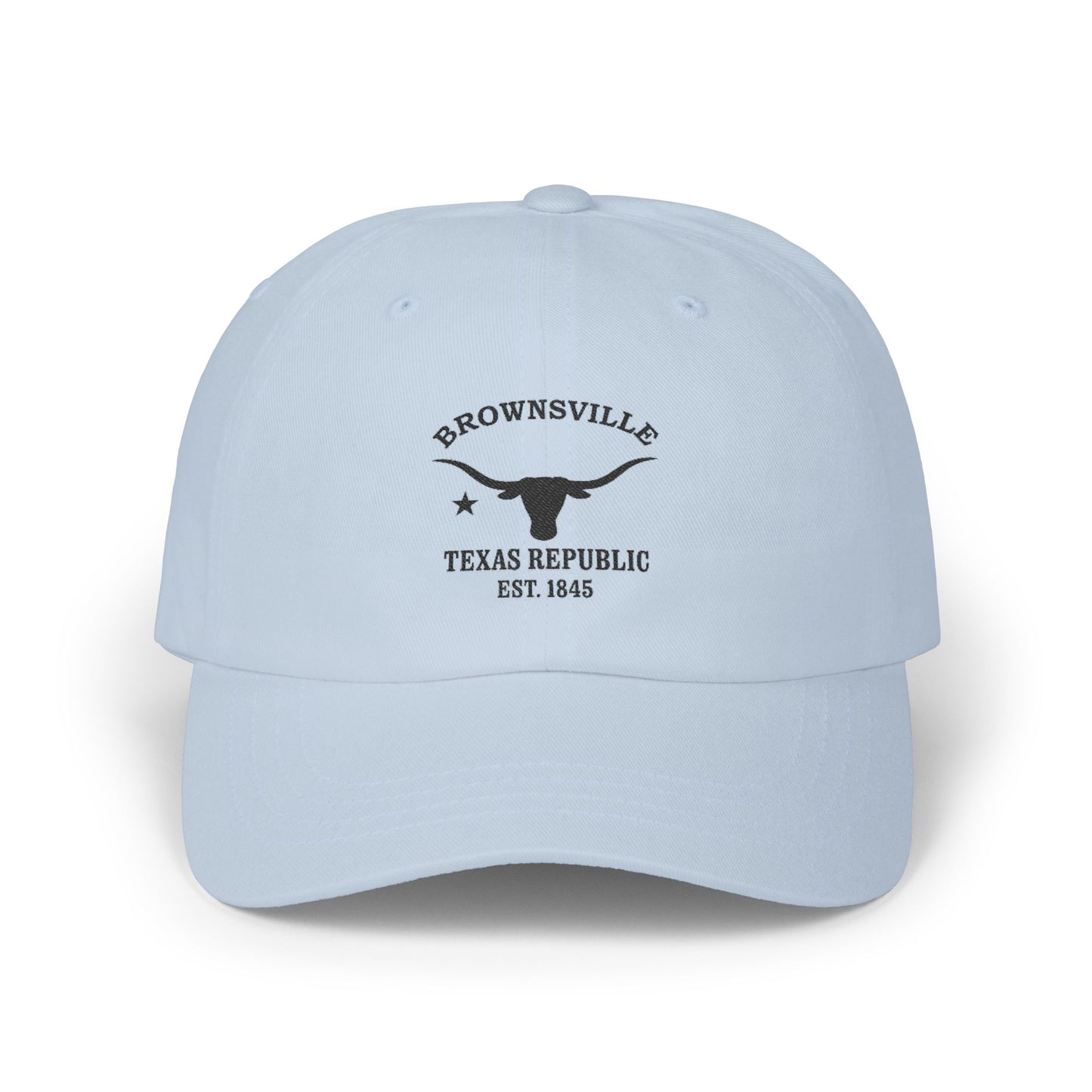
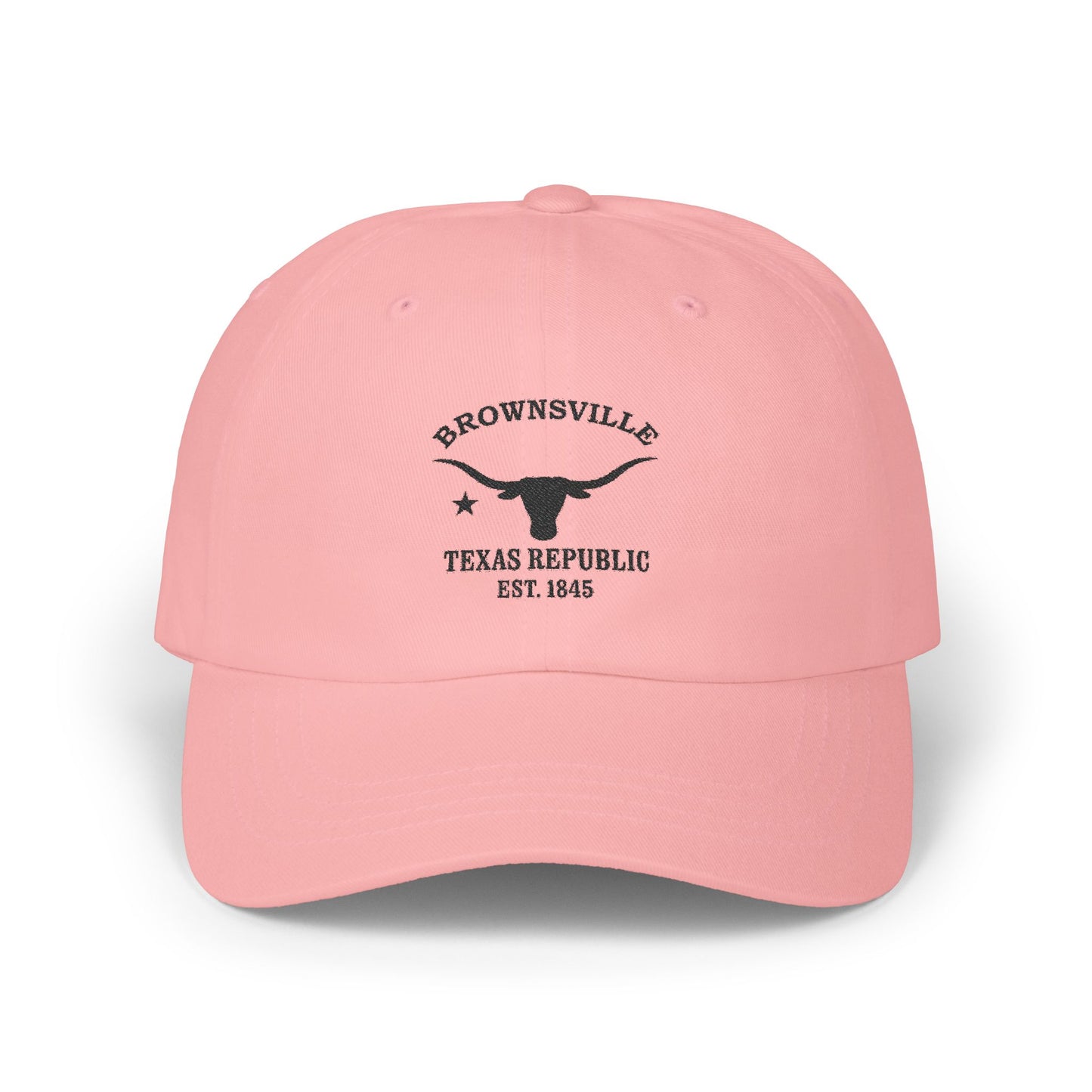
Our Brownsville logo carries the Texas longhorn and the Lone Star above "Texas Republic — Est. 1845," the shared retro emblem of our Texas towns; the longhorn stands for the ranching country the lower valley grew out of, and the star for the independent Texas that joined the Union in 1845. Rendered in worn black-and-white, like a brand burned into a trade crate or a fiesta poster, it ties Brownsville to every other Texas town we make. What makes this one Brownsville is the story behind it — first shots and last stands, a Connecticut merchant's river town, and a two-nation fiesta on the Rio Grande.
Why People Visit Brownsville
Visitors come to Brownsville for a mix found nowhere else: battlefield and border history, world-class birding among the resacas and palms, and a living binational culture of music, food, and festival. The Gulf beaches are a short drive, Matamoros a few blocks across the river, and the Charro Days fiesta turns late winter into a two-nation celebration. Equal parts Texas heritage and Rio Grande Valley warmth, Brownsville rewards anyone drawn to the place where the river meets the Gulf.
