







Branford itself is much older than the quarry. English settlers from Wethersfield laid out the town in 1644, under the New Haven Colony, on land bought from the Mattabesech in 1638; they first called it Totoket and later renamed it for Brentford in England. It sits on Long Island Sound about eight miles east of New Haven, roughly midway between New York and Boston, around the mouth of the Branford River — the only deep harbor between New Haven and New London.
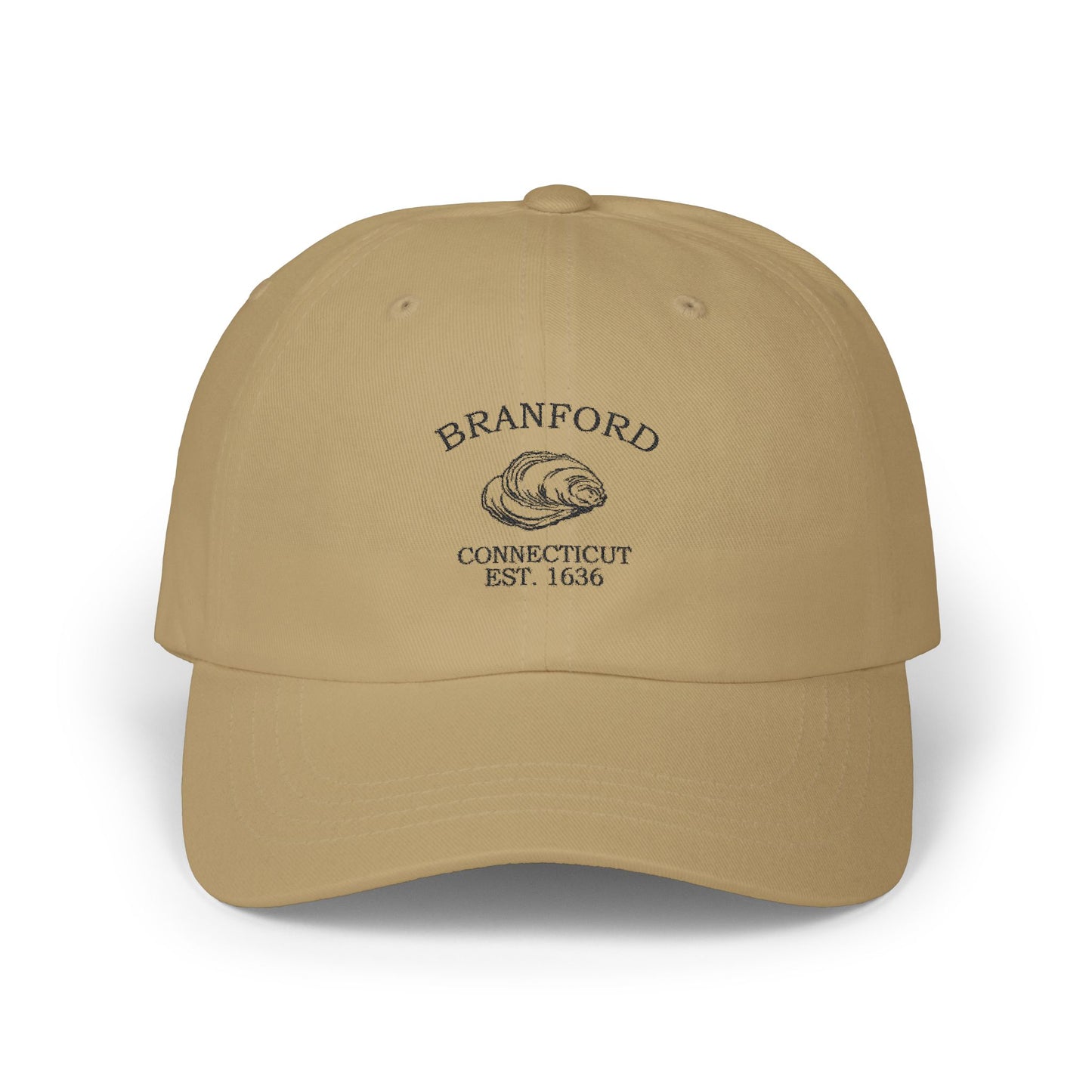
Our Branford logo carries Connecticut's oyster above ‘Connecticut — Est. 1636,’ the shared retro emblem of our Connecticut towns, with 1636 marking the colony's founding. The oyster stands for the shoreline that fed Branford and built it — the beds of the Sound that made the early town. Rendered in the black-and-white of an old oyster-crate label, it ties Branford to every other Connecticut town we make. What makes this one Branford is the granite and the islands behind the oyster.
Why People Visit Branford
Branford blends village greens with island-dotted coves. Visitors mix easy boat rides with libraries, beaches, and shoreline paths, all on Long Island Sound. It is peaceful, nautical, and neighborly, with year-round appeal in its parks, paths, and public spaces. Colonial shoreline history and everyday Connecticut life sit side by side here in a welcoming way, from the Town Green to the granite docks at Stony Creek.
