Skip to product information
1 of 5

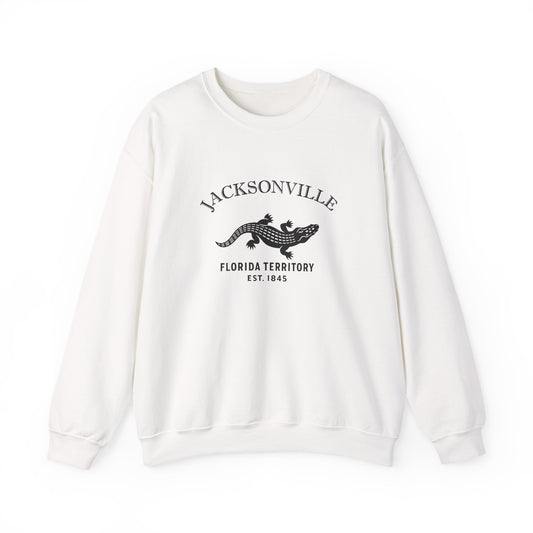
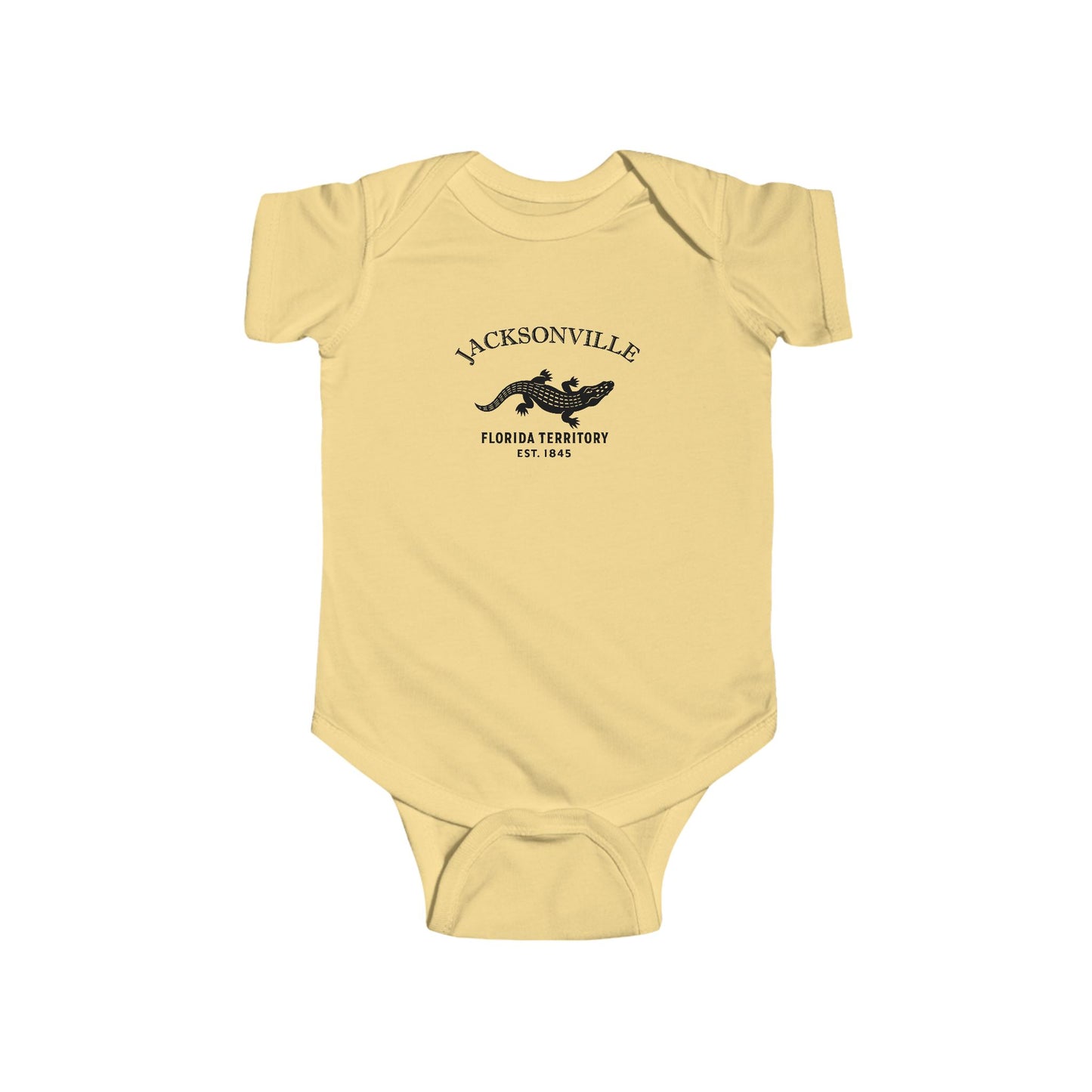
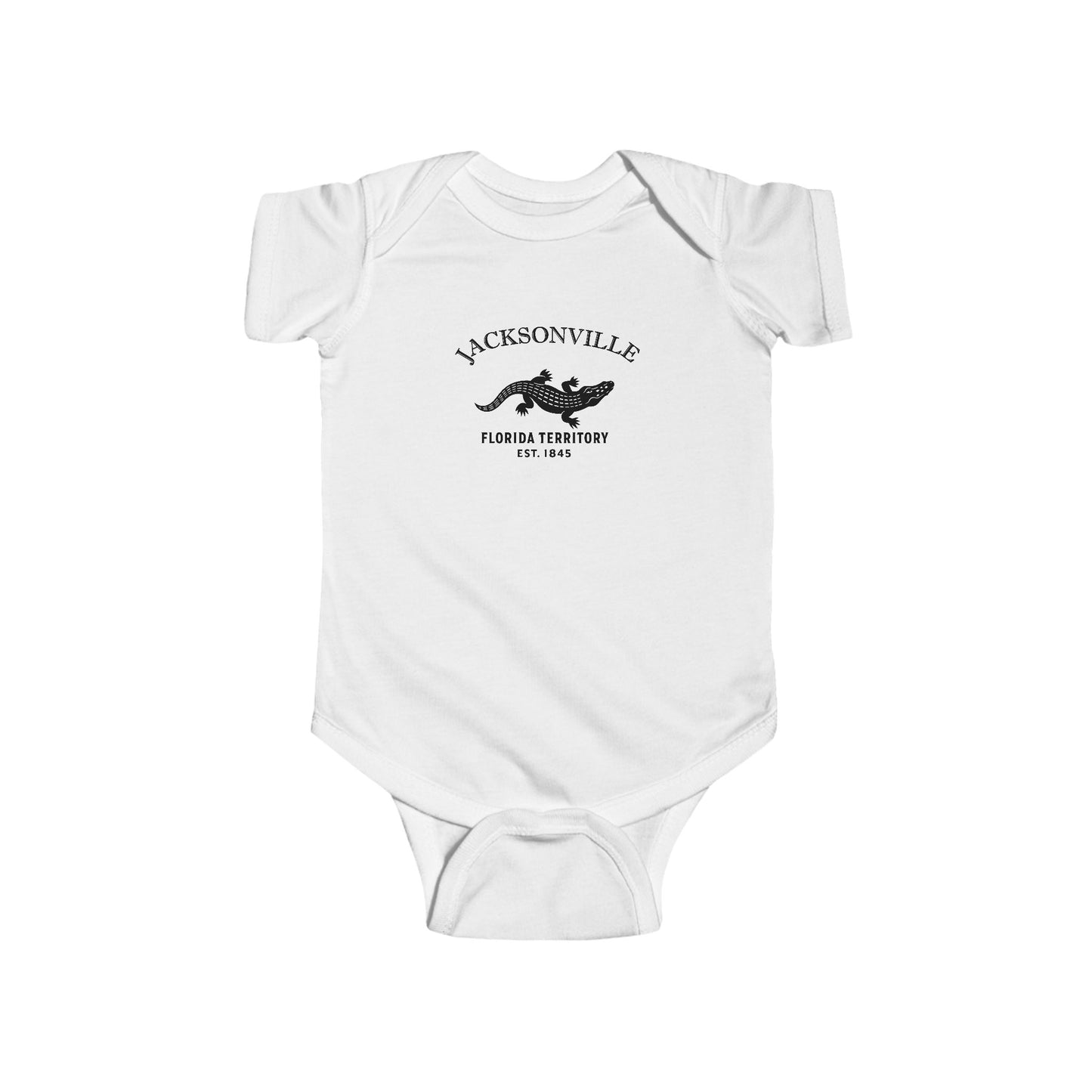
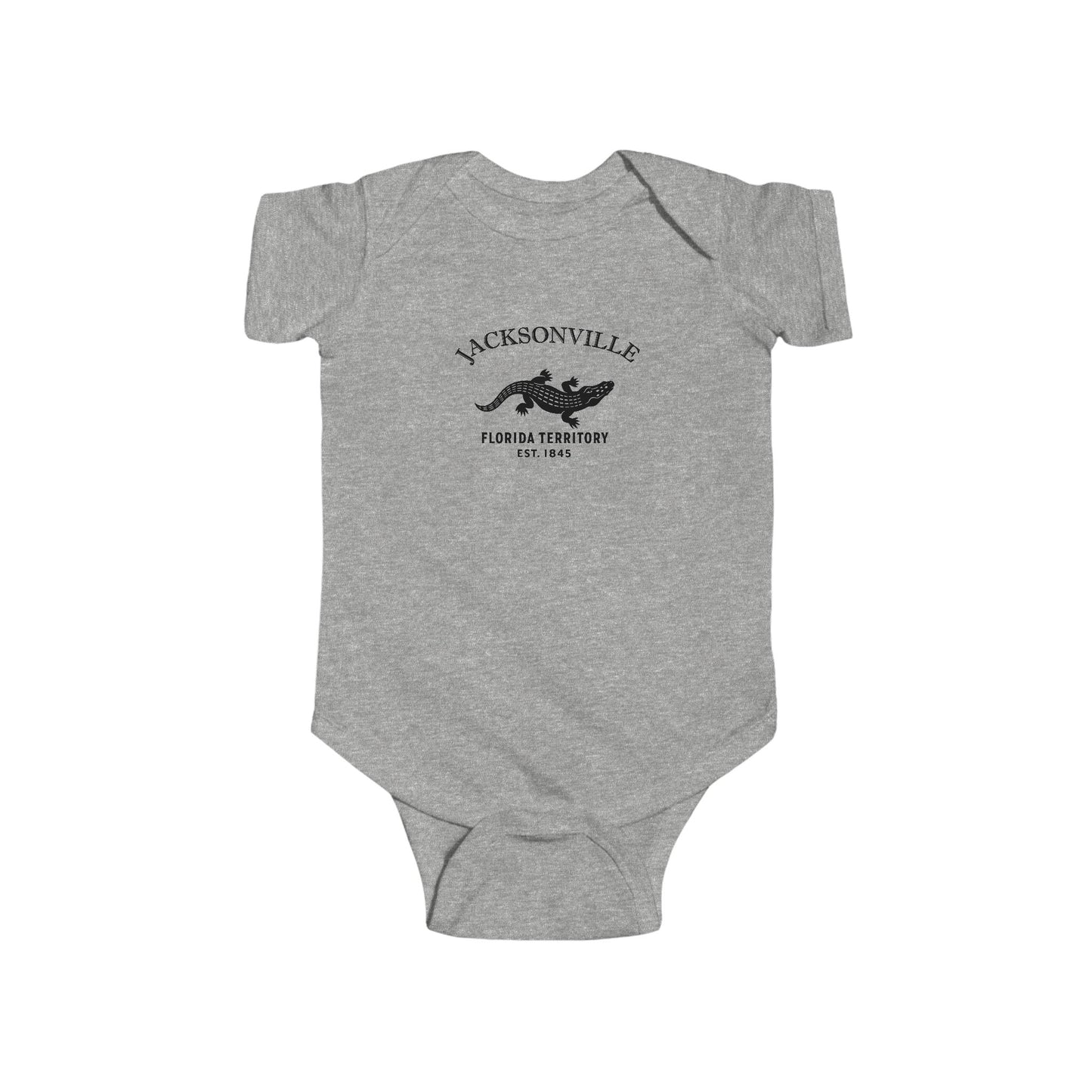
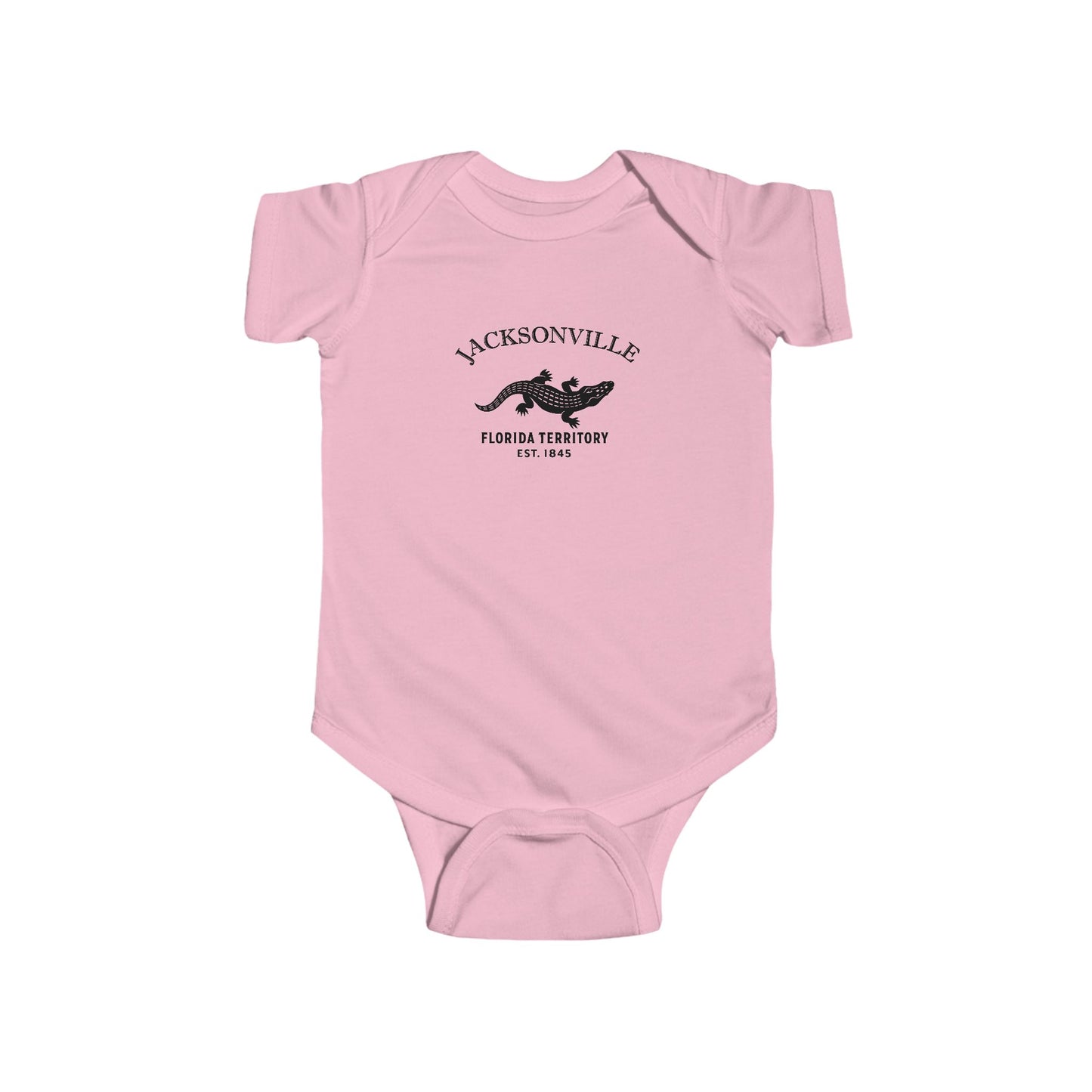
Jacksonville Florida Vintage Retro Cotton Jersey Baby Bodysuit - Black Logo

Jacksonville Florida Vintage Retro Cotton Jersey Baby Bodysuit - Black Logo

Regular price $26.00 USD
Regular price Sale price $26.00 USD
Sale
Free U.S. Shipping
Color
Size
Quantity


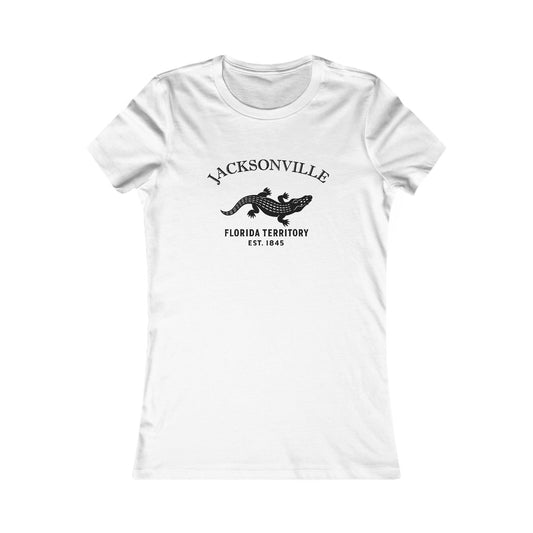
The Jacksonville baby bodysuit, for the town that rebuilt in Prairie School lines after the Great Fire of 1901. Soft fine jersey with the Jacksonville vintage retro logo on the front in black, newborn to 24 months.

This is the new-baby gift from the hometown: light, soft, with a snap crotch that makes changes easy and a logo the parents will photograph. Order it as soon as the news arrives; it is the Jacksonville piece most often bought for someone else.

Soft, breathable, and easy to change: an infant bodysuit in light 4.5 oz (153 g/m²) fine jersey with a secure snap crotch, ribbed binding, and side seams for durability. Solids are 100% combed ringspun cotton; heather shades include a cotton–polyester blend.

Platted in 1822 and named for Andrew Jackson, the city on the north-flowing St. Johns River burned on May 3, 1901, in the largest urban fire the Southeast has seen: 146 blocks and more than 2,300 buildings in a single day, the glow visible from Savannah. Henry John Klutho rebuilt it in Prairie School lines, the largest collection outside the Midwest.

More than thirty silent-film studios made Jacksonville the Winter Film Capital in the 1910s, the 1968 consolidation with Duval County made it the largest city by land area in the contiguous U.S., and its 80,000 acres of parks are the largest urban park system in the nation. River City is the mark on this piece.


QUICK FACTS — JACKSONVILLE FL COTTON JERSEY BABY BODYSUIT

Town: Jacksonville, Florida

Founded: 1822; chartered 1832

Known for: River City; rebuilt after the Great Fire of 1901; the St. Johns River; the largest urban park system in the U.S.

Art: Jacksonville vintage retro logo, black (printed)

Blank: Unisex infant bodysuit, ribbed binding, side seams, snap crotch

Fabric: 4.5 oz (153 g/m²) fine jersey; solids 100% combed ringspun cotton, heathers cotton–polyester

Made to order in the USA


Made to order and shipped free in the U.S. More Jacksonville pieces, and the rest of Florida, are one button away.


View full details

Wear Local. Feed Local. Stay Classic.

Product FAQs

How does your sizing work?

Every item is made to order, so please check the size chart on this page before you buy. Women's fitted tees run small; size up for a looser fit. Caps are one size with an adjustable strap.

How are items made and when will they arrive?

We make each item to order using premium blanks, embroidery and soft-hand prints. Production takes 2-5 business days (weekends and holidays excluded), then 4-10 days in transit via USPS, UPS or FedEx to U.S. addresses; most orders arrive within 6-15 business days. You'll get a tracking link the moment it ships. Any current shipping offer is shown in the bar at the top of every page and applies automatically at checkout, no code needed.

How do I send a gift?

Enter the recipient's address as the shipping address and your own as the billing address at checkout. Nothing ships with a price; the package includes a plain packing slip. Tracking goes to your email, not theirs. For birthdays and holidays, order two weeks ahead to be safe.

What's the return policy?

Made-to-order items can't be returned or exchanged for size or color, so please use the size chart and photos before ordering. If anything arrives defective, misprinted or damaged, send a photo and your order number within 30 days and we'll replace it or refund you.

How do I care for my item?

Apparel: wash cold, inside out, with like colors; no bleach; tumble dry low or hang dry. Embroidered pieces: iron inside out to protect the stitching. Caps: spot clean. Printed glasses and water bottles: hand wash only, no dishwasher, so the artwork lasts. Mugs and engraved glasses are dishwasher safe. Any item-specific care notes are in the description above.

Who makes this?

Merlin Classics is a small Connecticut brand making original retro designs for the towns people love. Every piece is printed, embroidered or engraved to order in the USA, and the business supports hunger relief in the communities our collections celebrate.

The river carried every earlier chapter. The Timucua lived along the lower St. Johns for thousands of years, in villages among the marshes and live oaks. Jean Ribault’s French expedition entered the river’s mouth on May 1, 1562 and raised a stone column; two years later René de Laudonnière founded Fort Caroline on the bluff — a French Huguenot colony a year older than St. Augustine, and among the first European settlements in what is now the United States. The colonists marked their landing with a feast of thanksgiving in June 1564 — a fair claim to the first Thanksgiving on American soil. Spain took the colony by force in 1565, and the contact era devastated the Timucua — losses the river’s story owes its first honesty to. Under the British the shallow crossing became Cow Ford — Wacca Pilatka to the Seminole — and in 1822 Isaiah Hart platted a town there, named for Andrew Jackson, first military governor of the Florida Territory. It was chartered as a city in 1832. Union forces occupied the young city four times during the Civil War — the Olustee campaign of 1864 marched west from here — before the peace brought the steamboats.

The Navy settled the river in the 1940s — Naval Air Station Jacksonville in 1940, Naval Station Mayport at the river’s mouth in 1942 — and shipyards worked around the clock through the war; the carriers and the naval air overhead have been part of the city’s weather ever since. In 1968 Jacksonville and Duval County consolidated into a single government, and the city woke up the largest by land area in the contiguous United States: room enough inside the limits for the Atlantic beaches — off which the North Atlantic right whale, the most endangered of the great whales, comes to calve each winter — 80,000 acres of parks, the centuries-old Treaty Oak on the Southbank, Friendship Fountain facing the skyline, and the cable-stayed sweep of the Dames Point Bridge downriver.

Why People Visit Jacksonville Florida

  • Look up at the Laura Street Trio and the St. James Building downtown — the Prairie School rebuild of 1901 standing in straight modern lines.
  • Walk both Riverwalks past Friendship Fountain, with the skyline across the north-flowing St. Johns.
  • Stand under the Treaty Oak on the Southbank — a live oak centuries older than the city around it.
  • Spend a beach day at Jacksonville Beach, Neptune Beach, or Atlantic Beach — the barrier islands are inside the city limits.
  • Visit Fort Caroline National Memorial and the Timucuan Preserve for the French colony of 1564, the river marshes the Timucua knew, and the preserved, sobering history at Kingsley Plantation.
  • Photograph the fallen giants of Boneyard Beach on Big Talbot Island, and swim at Little Talbot or Hanna Park.
  • Ride the tiny St. Johns River Ferry at Mayport and eat local shrimp where the boats come in.
  • Browse the historic districts — San Marco’s 1920s square, Five Points, Riverside-Avondale’s leafy streets, Springfield’s restored blocks, and Mandarin on the river — where Harriet Beecher Stowe wintered and wrote.
  • Catch the LaVilla story downtown, where the Harlem of the South once rang with jazz and blues.