


The village made it official on December 31, 1995, when Wellington incorporated — today Florida's most populous village — and in 2002 it did something rarer than growing: it protected the reason it mattered, creating the Equestrian Preserve Overlay District over roughly nine thousand acres of horse country. Dozens of miles of public bridle trails thread the preserve, horses have their own crossings on the village's roads, and the neighborhoods around Lake Wellington, the wetland parks, and some of the state's best-regarded schools give the place its second identity: a green, planned family village on the Everglades' doorstep.
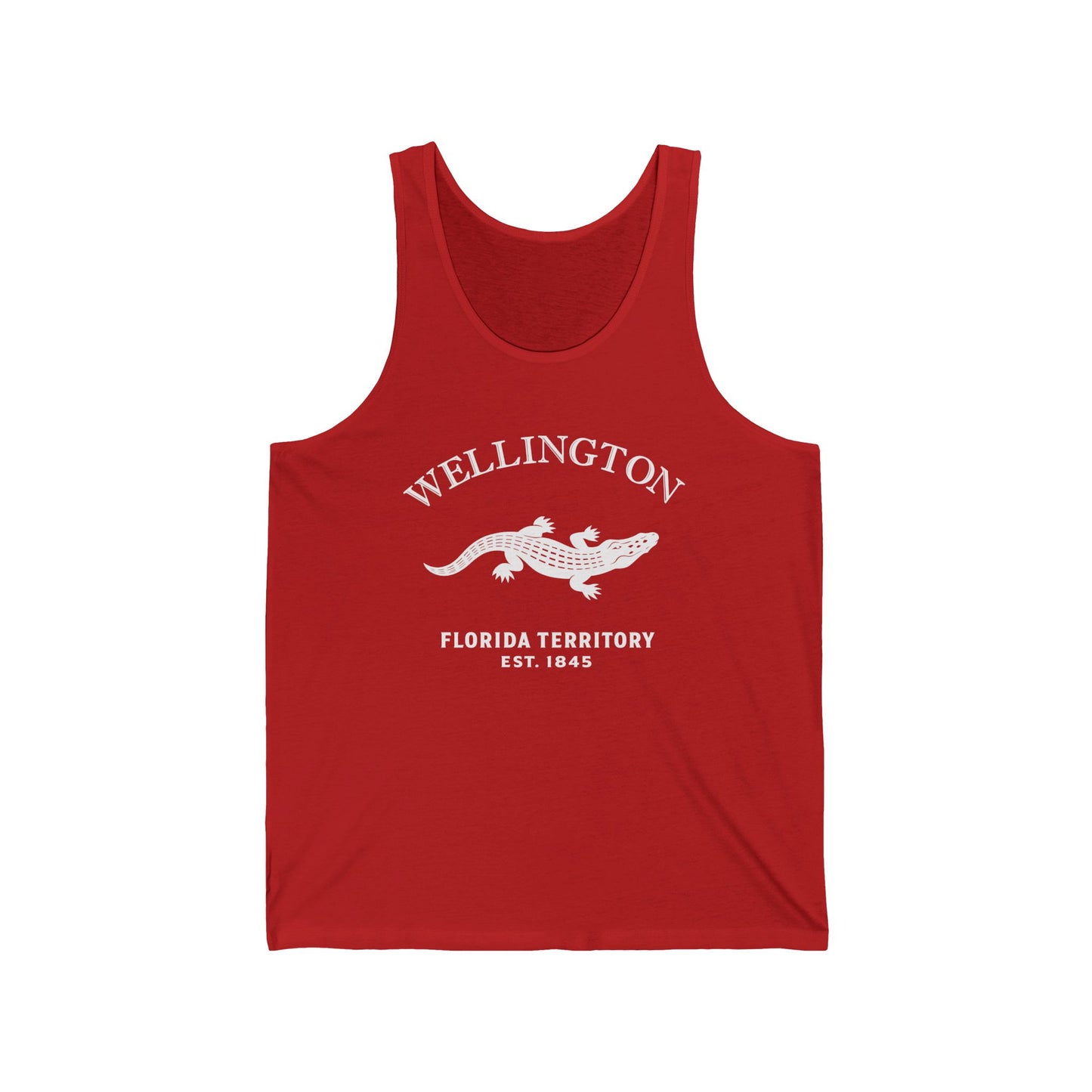
Our Wellington retro logo uses a Florida alligator motif, representing toughness, adaptability, and connection to Florida's wild heritage. The alligator reflects both literal wildlife in the reclaimed swamps and symbolic resilience against storms. The "EST. 1845" date marks Florida statehood — Florida was admitted to the Union as the twenty-seventh state on March 3, 1845. Its black-and-white styling resembles crate labels or woodcut stamps, authentic and retro rather than glossy. The motif bridges Wellington's dual identity: reclaimed marshland turned village, and equestrian capital rooted in resilience. On merchandise, it feels vintage and rugged, honoring Wellington's layered story while celebrating its Florida heritage of toughness and adaptability.
Why People Visit Wellington Florida
- Take in the winter equestrian season — show jumping, dressage, and international polo draw riders from around the world to Wellington's rings and polo fields each January through April.
- Ride or walk part of the Equestrian Preserve's bridle-trail network — dozens of miles of public horse trails threading the village's horse country.
- Walk the Wellington Environmental Preserve at the Marjory Stoneman Douglas Everglades Habitat — a 365-acre public park with trails and birdwatching towers on the Everglades edge.
- Explore Peaceful Waters Sanctuary — a 30-acre wetlands park with boardwalks across marsh and wetland habitats.
- Relax along Lake Wellington and the village's neighborhood parks and ball fields.
- Drive the horse-themed street grid of the equestrian neighborhoods, where barns and rings sit beside the canals of the old Acme Drainage District.
