





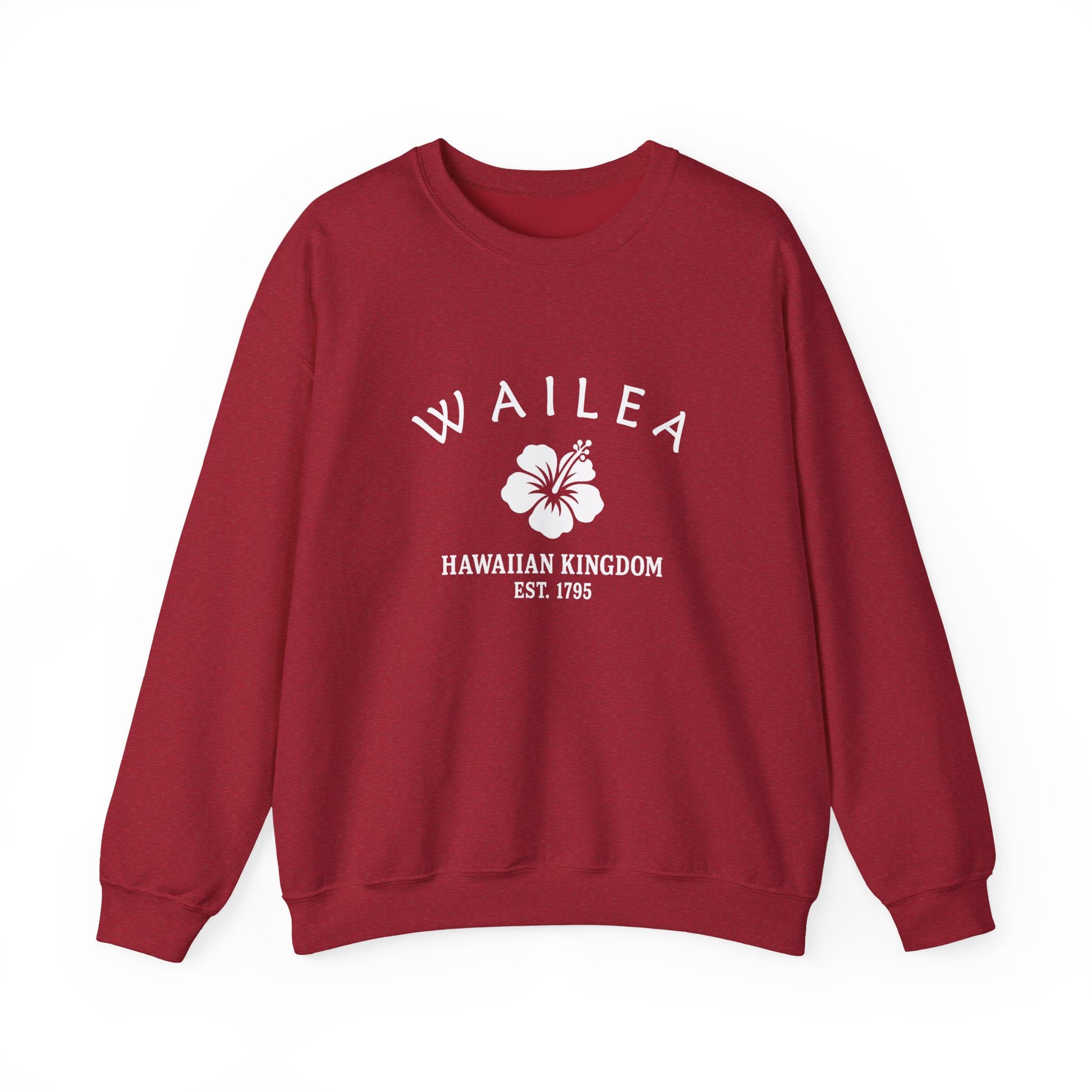






Our Wailea design wears the hibiscus, Hawaiʻi’s flower, beneath the words “Hawaiian Kingdom · Est. 1795” — the kingdom-era mark Merlin carries across every island town, printed black-and-white like an old luggage decal or a crate stamp. It is less a claim about Wailea’s founding than a nod to the islands it belongs to: a small, durable emblem of place, stamped on a tee the way a stevedore once stamped a shipping case bound out of the harbor — retro in tone, and meant to last.
The outside world arrived from the south. In 1786 the French navigator La Pérouse became the first European known to set foot on Maui, stepping ashore at Keoneʻōʻio — the lava bay just below Wailea that still carries his name. Across the ʻAlalakeiki channel lay Kahoʻolawe, and behind it the dry Honuaʻula coast watched the first foreign sails pass. For a while little changed: the fishing shore stayed a fishing shore, and the goddess’s water kept running to the same reef.
Why People Visit Wailea, Hawaiʻi
Wailea offers a seamless beach-and-path experience: swimming, snorkeling, strolling, and light shopping between coves. It is sunny, refined, and family friendly, with year-round appeal in its beaches, walkways, and public access. Natural beauty and easy comfort sit side by side, and a deep Hawaiian past — the goddess Lea, the fishing shore of Kahamanini, the Marines’ “Little Tarawa” — runs quietly beneath the polish.
