

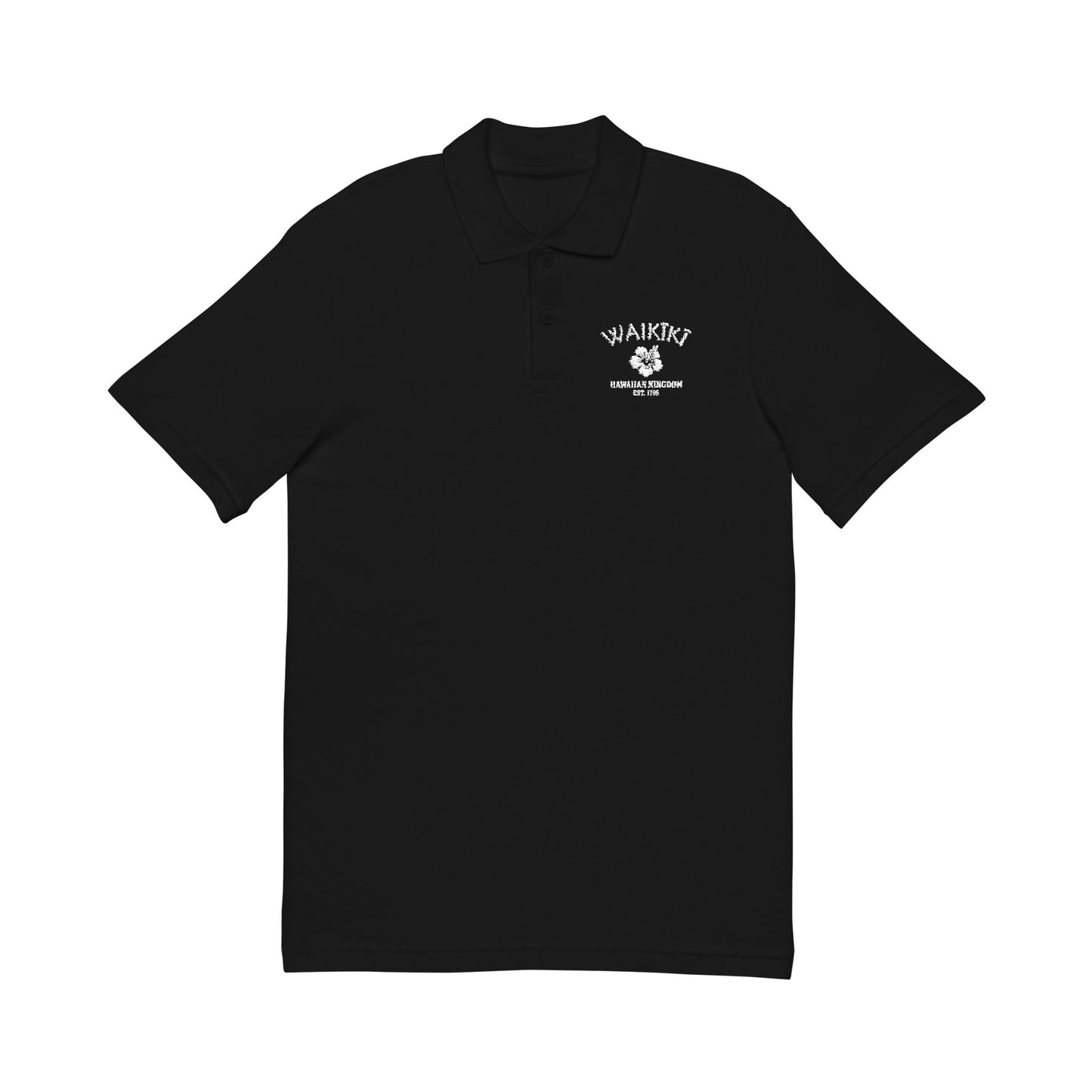
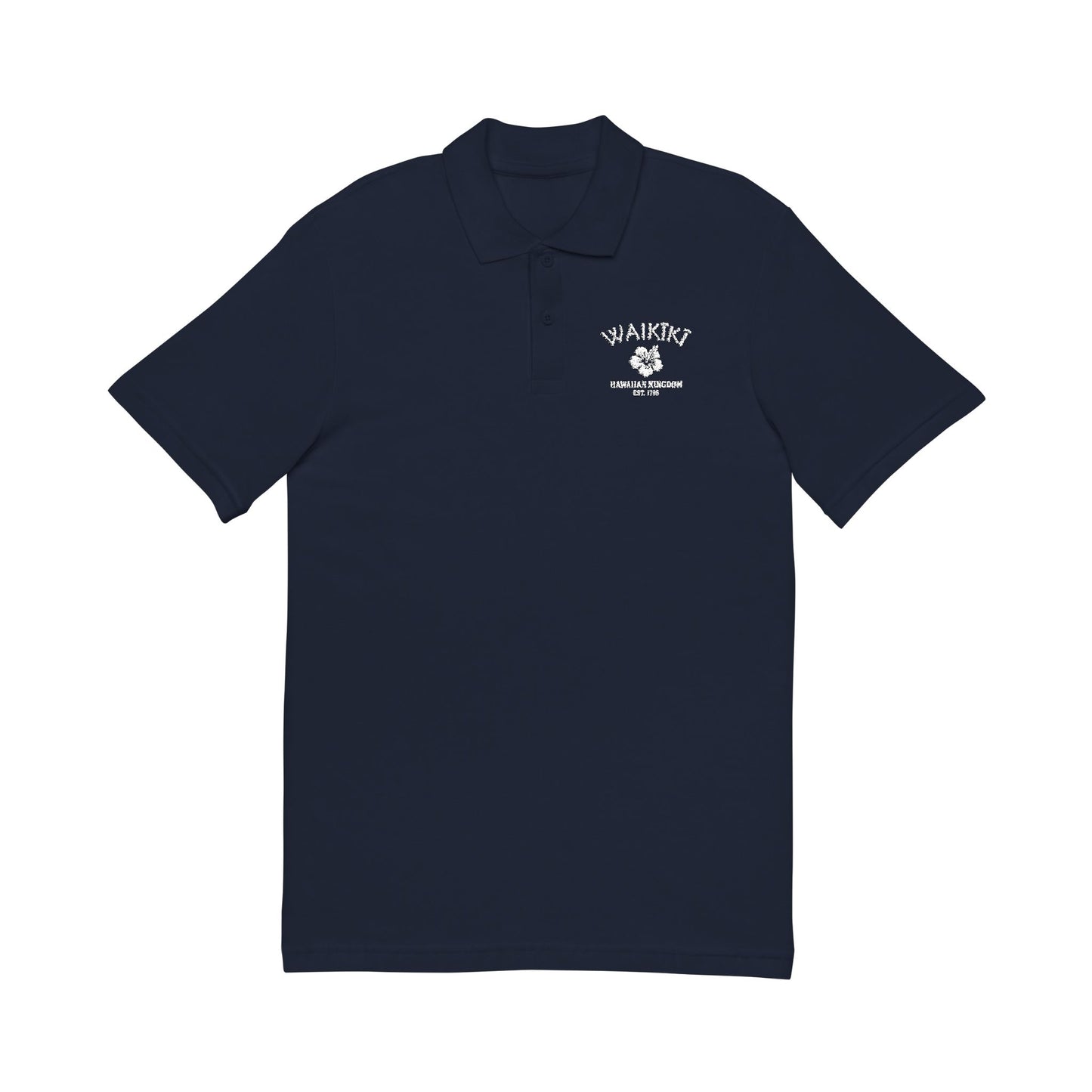
Waikiki expanded rapidly in the twentieth century, with hotels, shops, and tourism reshaping the area. By the 1950s and 1960s, Waikiki was Hawaii’s tourist capital, filled with neon lights, surf contests, and parades. Suburban growth supported workers, while cultural pride endured. Its timeline reflects resilience: Hawaiian traditions maintained despite commercial pressures. Waikiki’s mid-century decades emphasized optimism, celebration, and cultural pride. The town balanced tourism and heritage, showing Hawaii’s adaptability. Waikiki’s growth demonstrated both continuity and change, reflecting Indigenous presence and global influence, making it one of Hawaii’s most famous and resilient cultural icons.
Today Waikiki is celebrated as Hawaii’s tourist capital and cultural landmark. Its story reflects Indigenous traditions, tourism growth, and resilience. Our Waikiki designs celebrate this layered identity, pairing the hibiscus motif with vintage styling. They invite you to explore the Waikiki collection and carry forward a reminder of Hawaiian pride. Retro in tone, the logo reflects resilience, endurance, and authenticity. Waikiki’s emblem honors both cultural roots and tourist identity, making it a vintage symbol of Hawaii. Explore the collection and share in Waikiki’s story of heritage, continuity, and resilience across centuries of cultural tradition.
Why People Visit Waikiki Hawaii
- Swim or paddle at Waikiki Beach, gentle waves and long sandy reaches.
- Hike Diamond Head, switchbacks to a crater rim with sweeping views.
- Visit the Honolulu Zoo, tropical habitats beside the park and shoreline.
- Stroll Kalakaua Avenue, palms, street musicians, and evening window shopping.
- Relax in Kapiolani Park, banyan shade, open fields, and ocean vistas.
