
What turned the frontier town into a city was Ybor City. Martinez Ybor, his partner Eduardo Manrara, rival manufacturer Ignacio Haya, and the engineer Gavino Gutierrez laid out a planned cigar town that quickly became one of the most distinctive immigrant communities in the South. The tabaqueros rolled at long benches while a lector read aloud from newspapers and novels to the whole gallery. Cuban, Spanish, Sicilian, and Afro-Cuban families built mutual-aid clubs — El Centro Espanol, the Centro Asturiano — that ran their own clinics and ballrooms. The Cuban sandwich and cafe con leche are Ybor inventions. At its peak Ybor and neighboring West Tampa held scores of brick factories employing thousands of rollers. It was, and is, a true Latin Quarter.
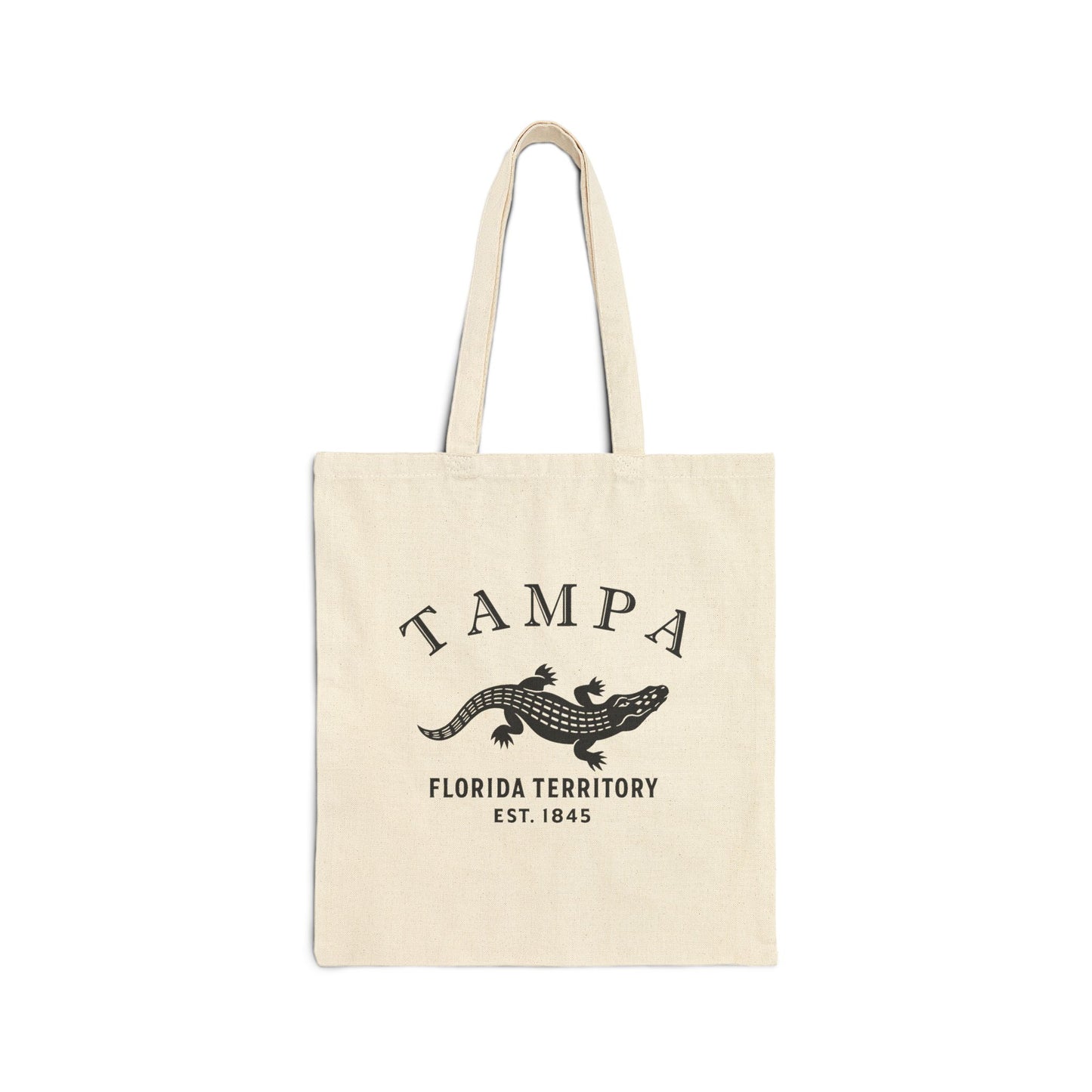
Our Tampa logo carries the Florida alligator above "Florida Territory — Est. 1845," the shared retro emblem of our Florida towns, drawn in worn black-and-white like an old cigar-box label or crate stamp. The 1845 date marks Florida statehood, and the alligator is the through-line that links Tampa to every other Florida town we make. The detail that makes this one Tampa is Cigar City itself — Ybor's brick factories, the Latin Quarter, Plant's minarets, and the pirates who storm the bay each January.
Why People Visit Tampa
Tampa draws travelers who want real heritage with Gulf sunshine — the brick-and-cigar history of Ybor's Latin Quarter, the fairy-tale minarets of Plant's hotel, the bay and the Riverwalk, and a pirate festival unlike anywhere else. It is a city that wears its immigrant, working-waterfront story openly, an easy gateway to the Gulf beaches just across the bay.
