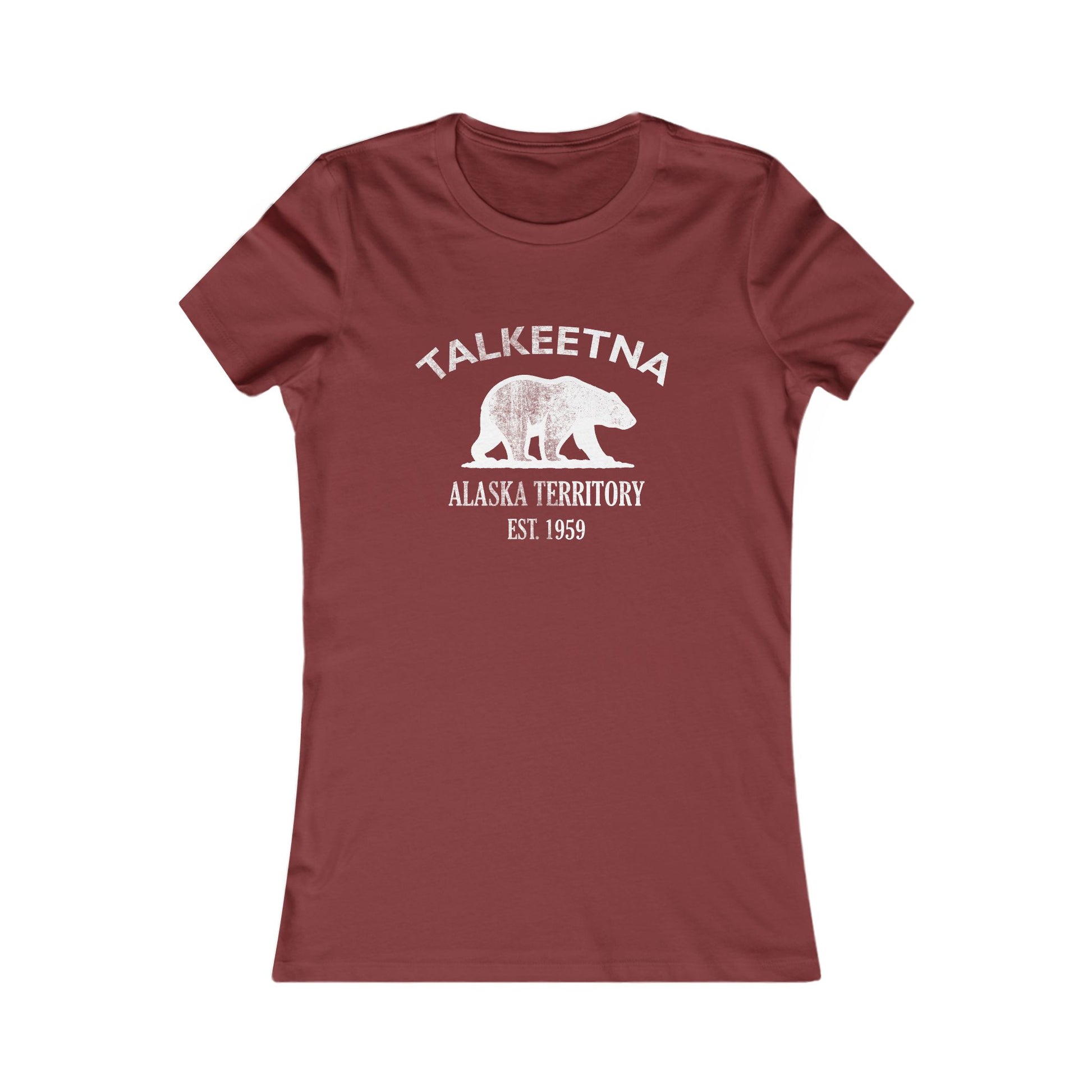
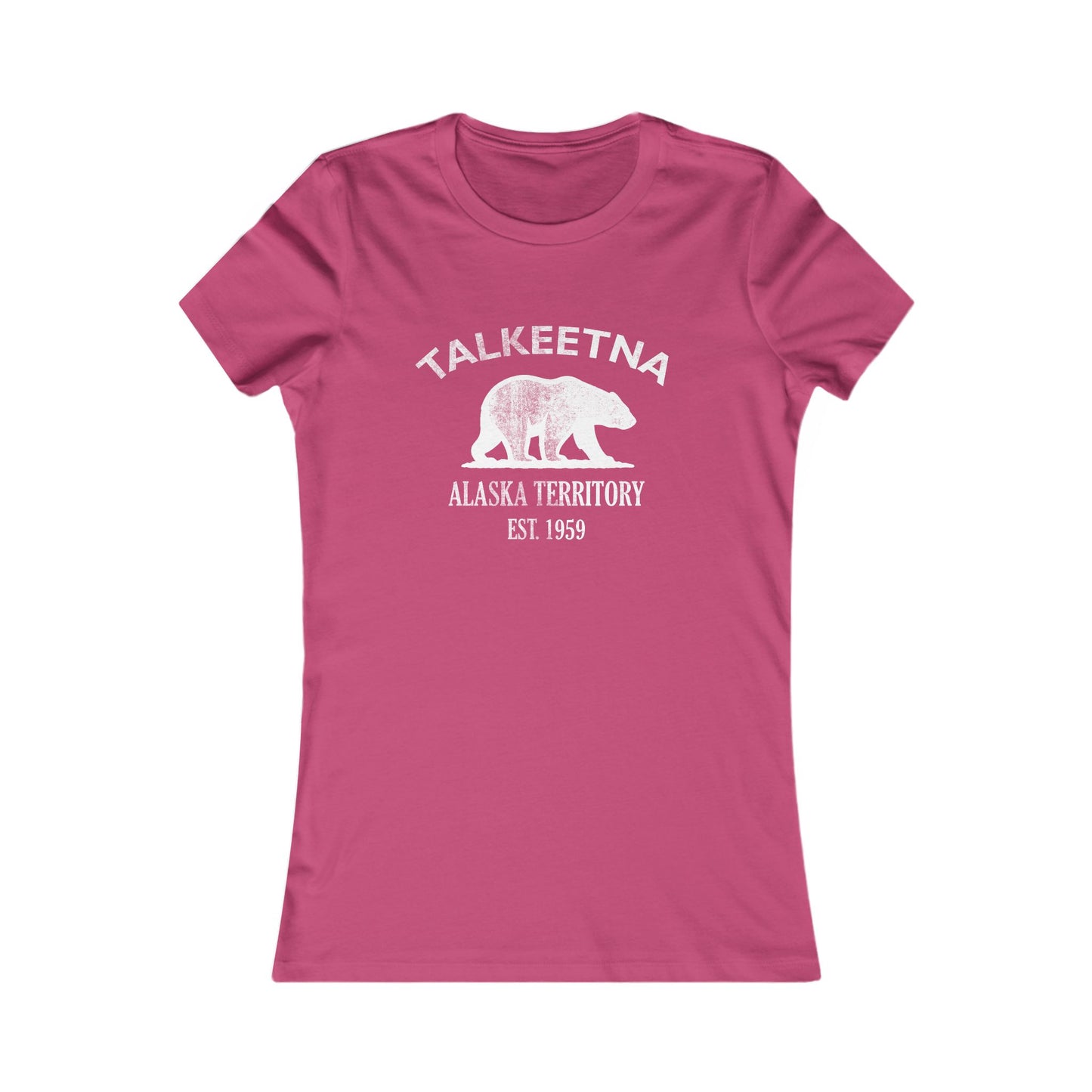
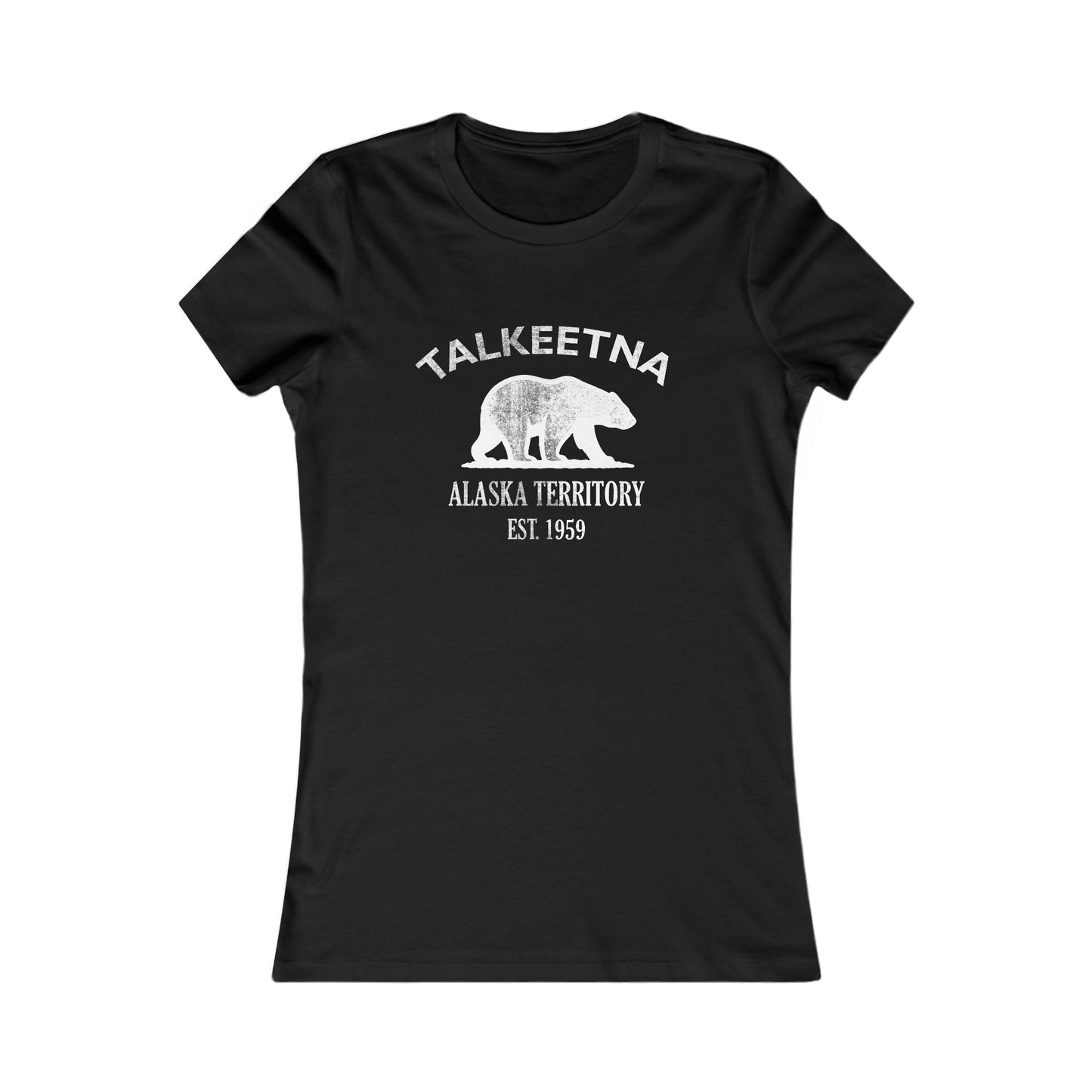
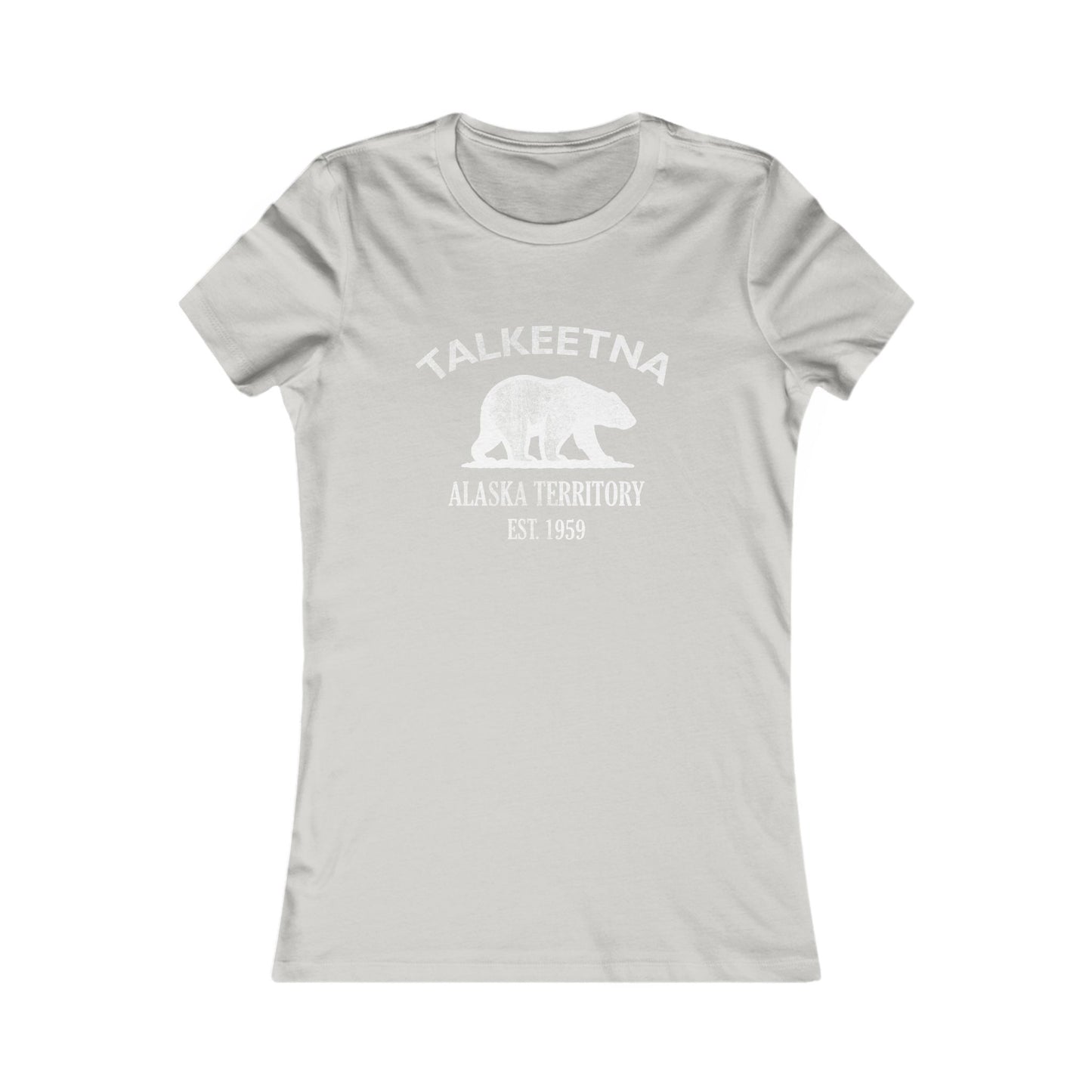
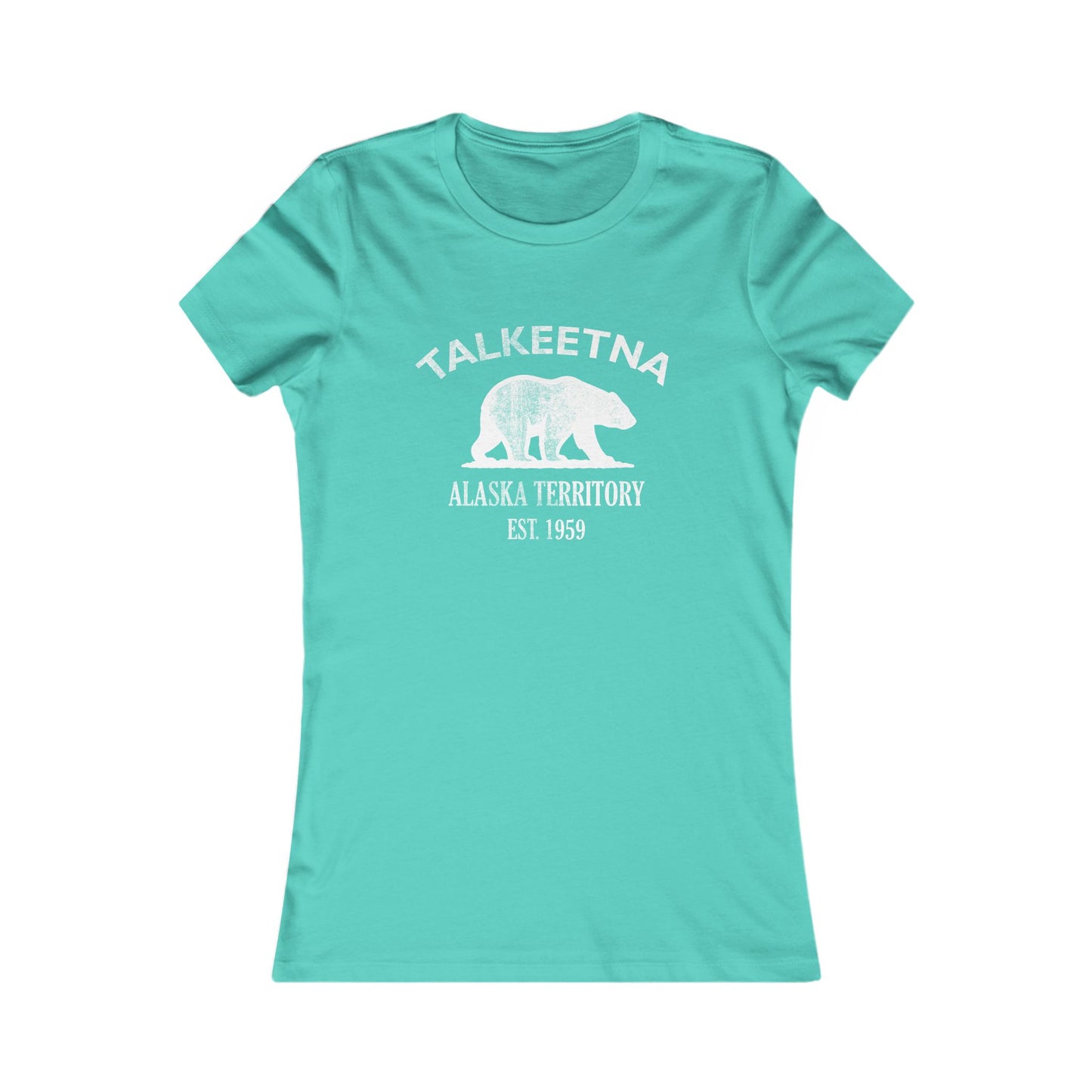
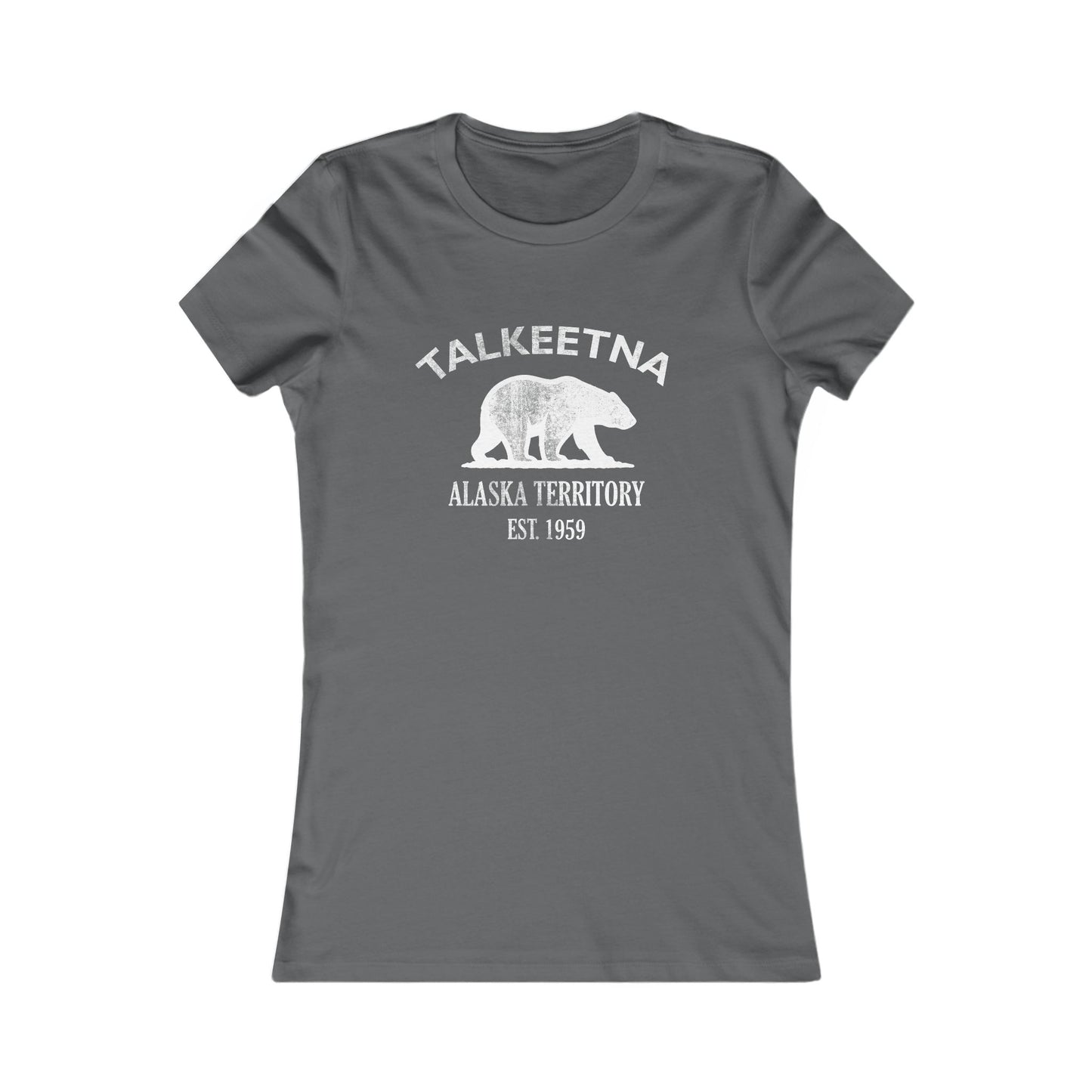
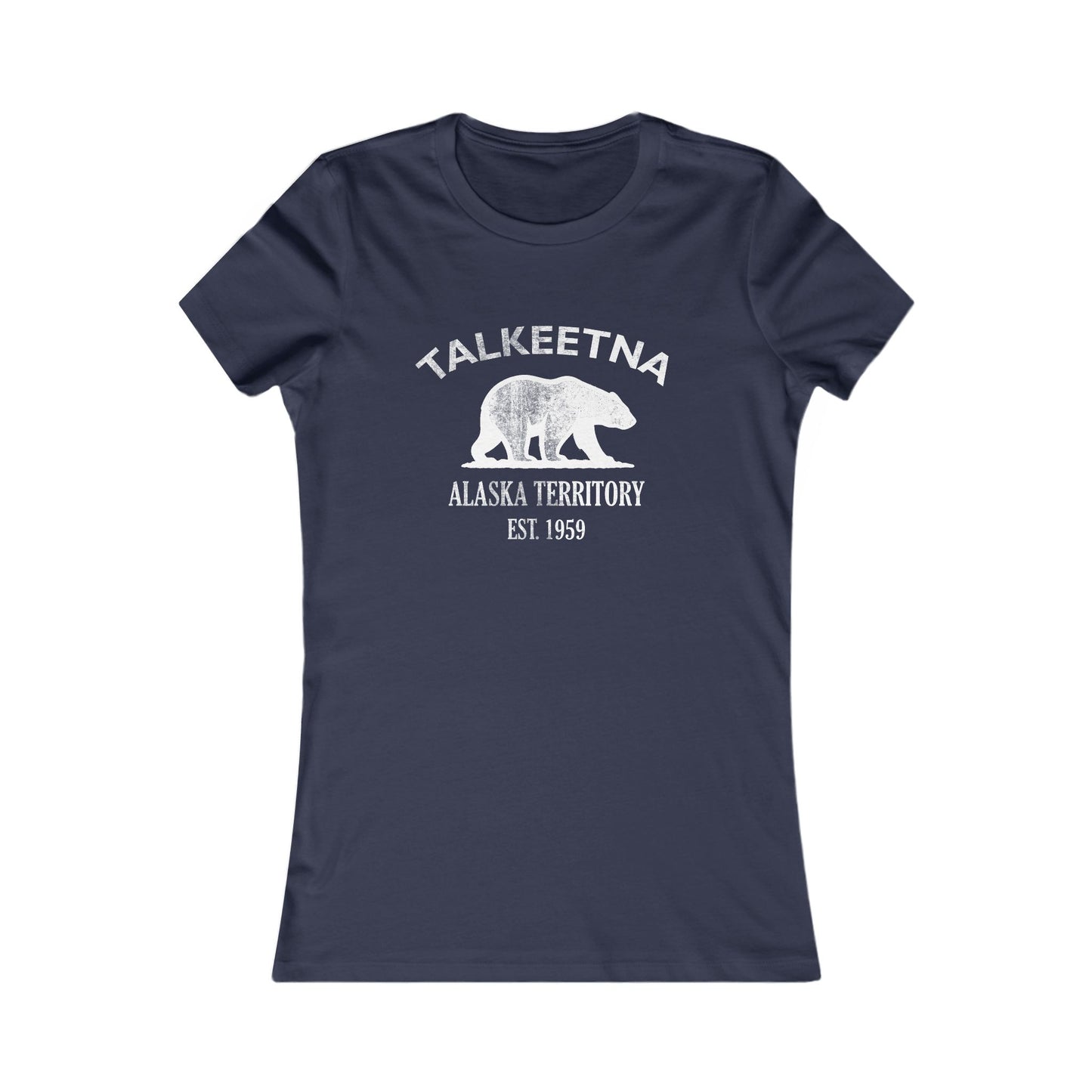
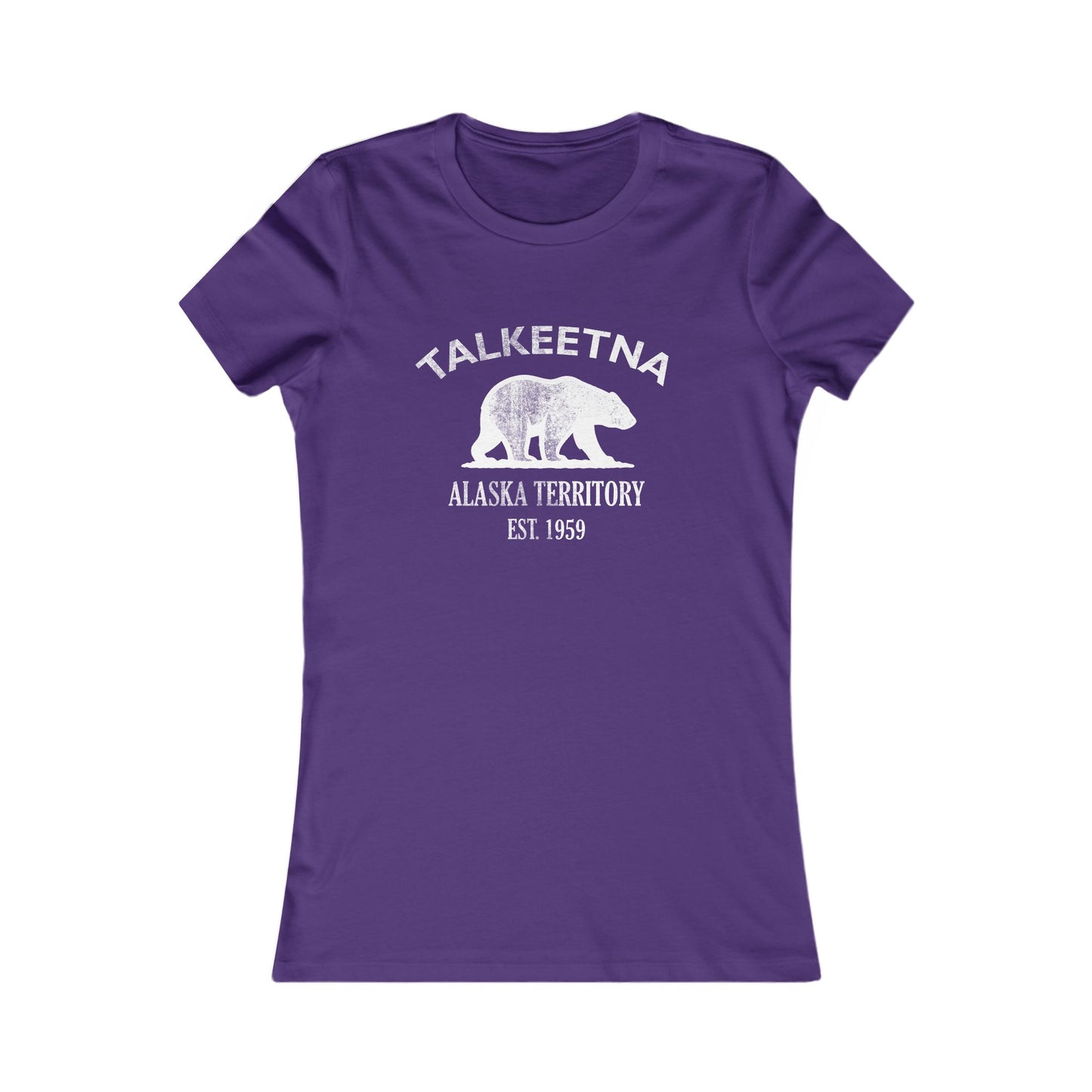
More From Talkeetna Alaska
-
Talkeetna Alaska Vintage Retro Unisex Heavy Cotton Tee - Black Logo
Regular price $28.00 USDRegular price -
Talkeetna Alaska Vintage Retro Premium Crewneck Sweatshirt - Black Logo
Regular price $48.00 USDRegular price -
Talkeetna Alaska Vintage Retro Giclée Print Art Series Poster
Regular price From $38.00 USDRegular price -
Talkeetna Alaska Vintage Retro Vinyl Sticker - Black Logo
Regular price From $6.00 USDRegular price


The railroad made it a town: in 1915 the Alaska Railroad’s builders chose Talkeetna as a district headquarters, and by 1916 there was a post office, a sawmill, and even a cigar shop on the new Main Street. In 1919 the surveyors auctioned eighty lots, and the town that stands today took shape — a downtown of log buildings now listed, in its entirety, on the National Register of Historic Places: the 1917 roadhouse still serving breakfast at communal tables, the 1921 general store, the 1923 frontier inn, and the 1936–37 territorial schoolhouse that houses the town museum. Trains still stop; upriver, the flag-stop line still picks up anyone who waves.
And Talkeetna is the door to the mountain. Denali — 20,310 feet, the highest peak in North America, long mapped as Mount McKinley — fills the northern horizon on a clear day, flanked by Mount Hunter and Mount Foraker. Every climber who attempts Denali registers here, at the ranger station named for Walter Harper — the Alaska Native climber who, on June 7, 1913, became the first person to stand on the summit. In the 1940s and ’50s a Talkeetna bush pilot named Don Sheldon helped pioneer glacier landings, and ski-planes still lift off the village airstrip each spring for the Kahiltna Glacier base camp at 7,200 feet, carrying more than a thousand climbers a season from every continent on earth.
Why People Visit Talkeetna Alaska
- Walk the Talkeetna Historic District on Main Street, the entire downtown of log buildings dating from the 1910s-1930s, listed on the National Register of Historic Places.
- Visit the Talkeetna Historical Society Museum, housed in the 1936-37 Territory of Alaska schoolhouse, for the bush-pilot, climbing, and Alaska Railroad archives — including Bradford Washburn's twelve-by-twelve-foot scale model of Denali on the floor of the main gallery.
- Walk to the Walter Harper Talkeetna Ranger Station at the south end of Main Street, the Denali National Park climbing-registration office where every Denali expedition still checks in before flying to Kahiltna Glacier Base Camp — and where the rangers' interpretive program runs through the summer climbing season.
- Walk down to the Talkeetna riverfront at the end of Main Street, the gravel beach where the Susitna, Chulitna, and Talkeetna rivers meet — the three-rivers confluence the Dena'ina name K'dalkitnu describes — with the Alaska Range visible north on a clear day.
- See the 1917 Talkeetna Roadhouse on Main Street, the log roadhouse that has been continuously serving climbers, miners, railroad workers, and travelers since the year it opened — one of the last original gold-rush-era Alaska roadhouses still operating.
- See the 1921 Nagley's General Store, the original log-cabin trading post on the corner of Main and C Street, still operating as the town's general store.
- See the 1923 Fairview Inn on Main Street, the Prohibition-era frontier bar still anchoring the downtown's evening rhythm.
- Catch the Alaska Railroad's Denali Star train at the Talkeetna Depot — the year-round Anchorage-to-Fairbanks service stops here daily; the Hurricane Turn flag-stop service still picks up homesteaders north of town.
- Drive to Denali Viewpoint South, twenty minutes north on the Parks Highway, for the long view of Denali, Mount Hunter, and Mount Foraker rising above the Susitna lowlands.
- Plan a clear-weather day in May, June, or July to watch the bush planes leave the Talkeetna Airstrip for the Kahiltna Glacier and the Ruth Glacier — the small-plane glacier landings the Talkeetna pilots pioneered in the 1940s and still fly today.
- Time a winter visit for the aurora on clear nights September through March — or ride the flag-stop train upriver, waving it down from the trackside the way homesteaders here have for a century.
