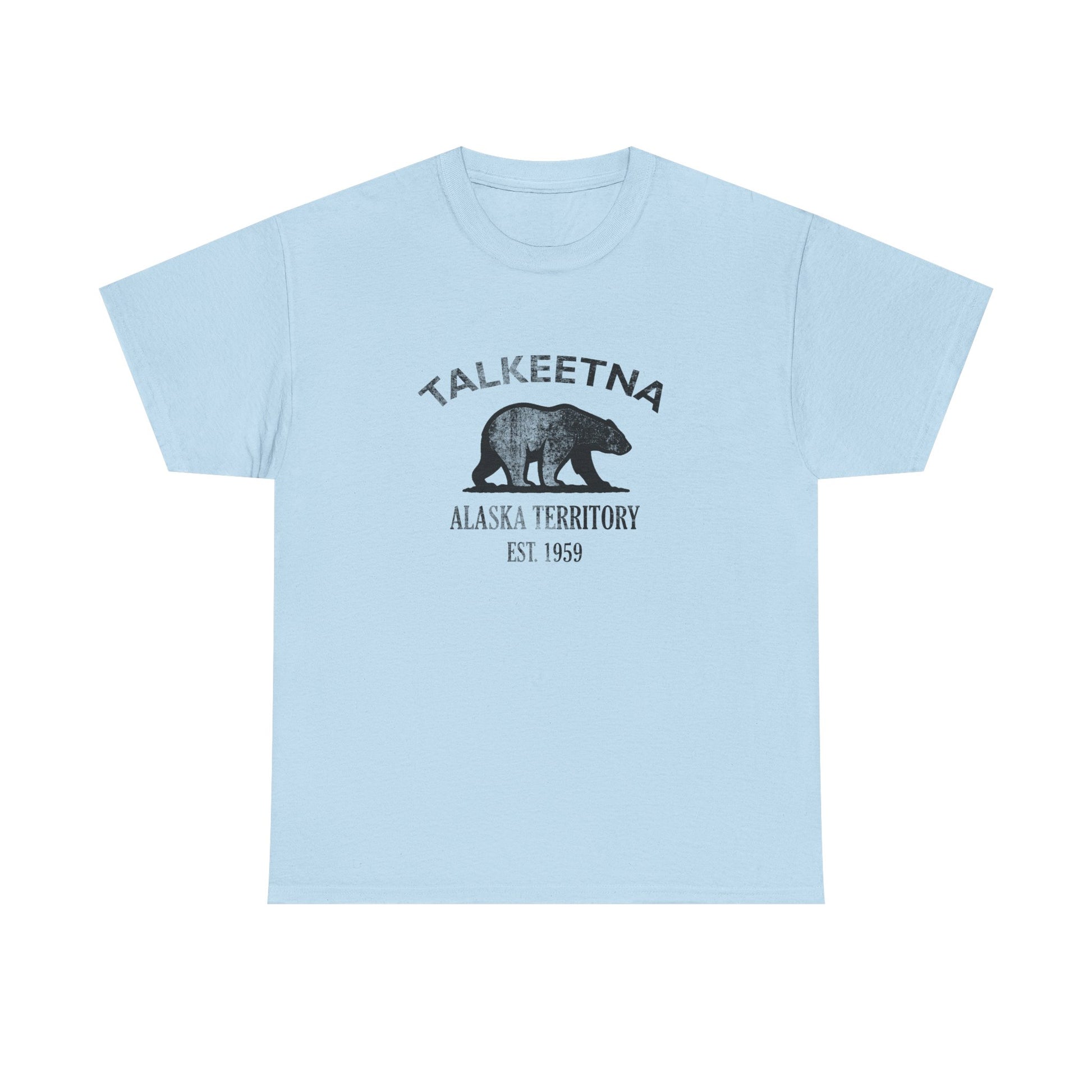
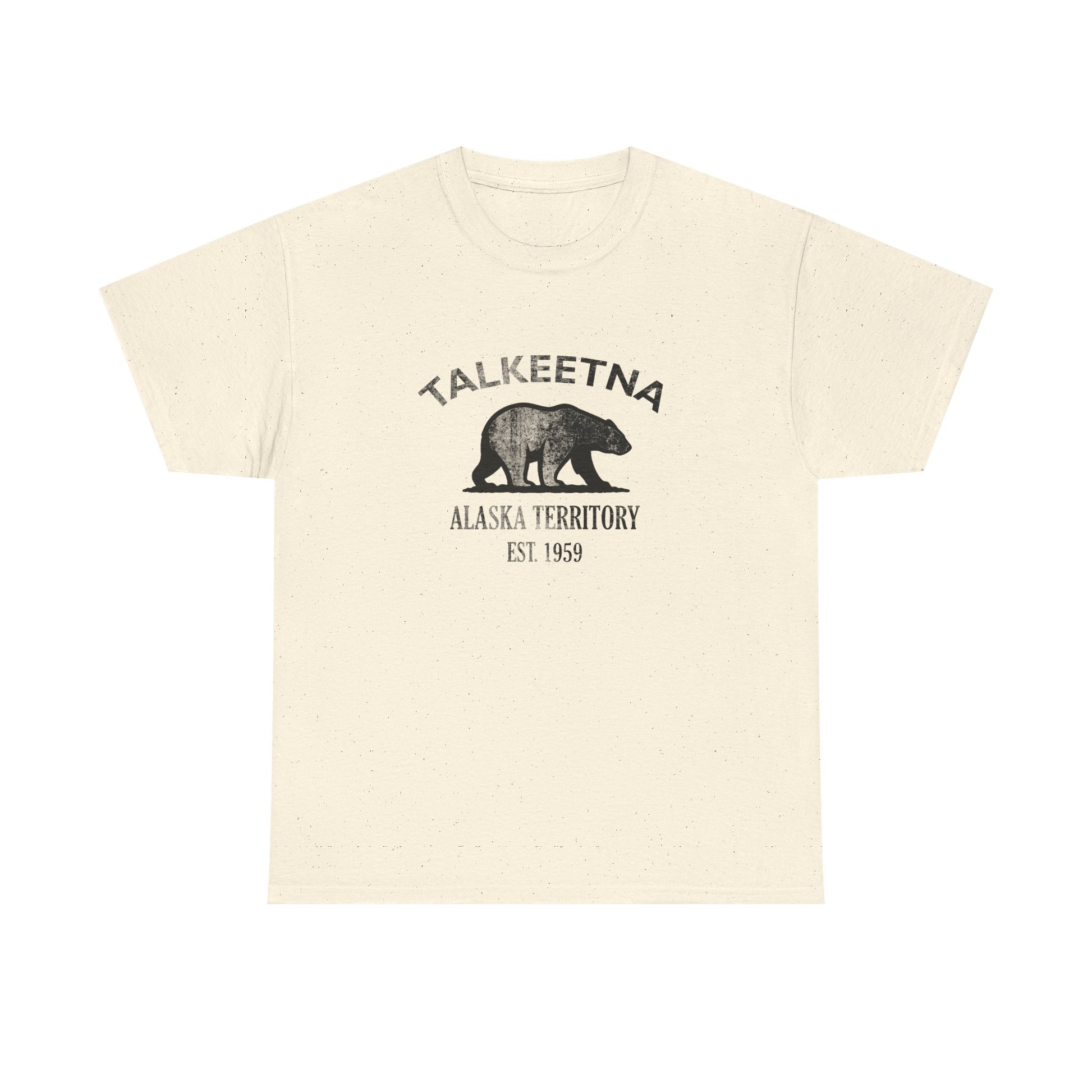
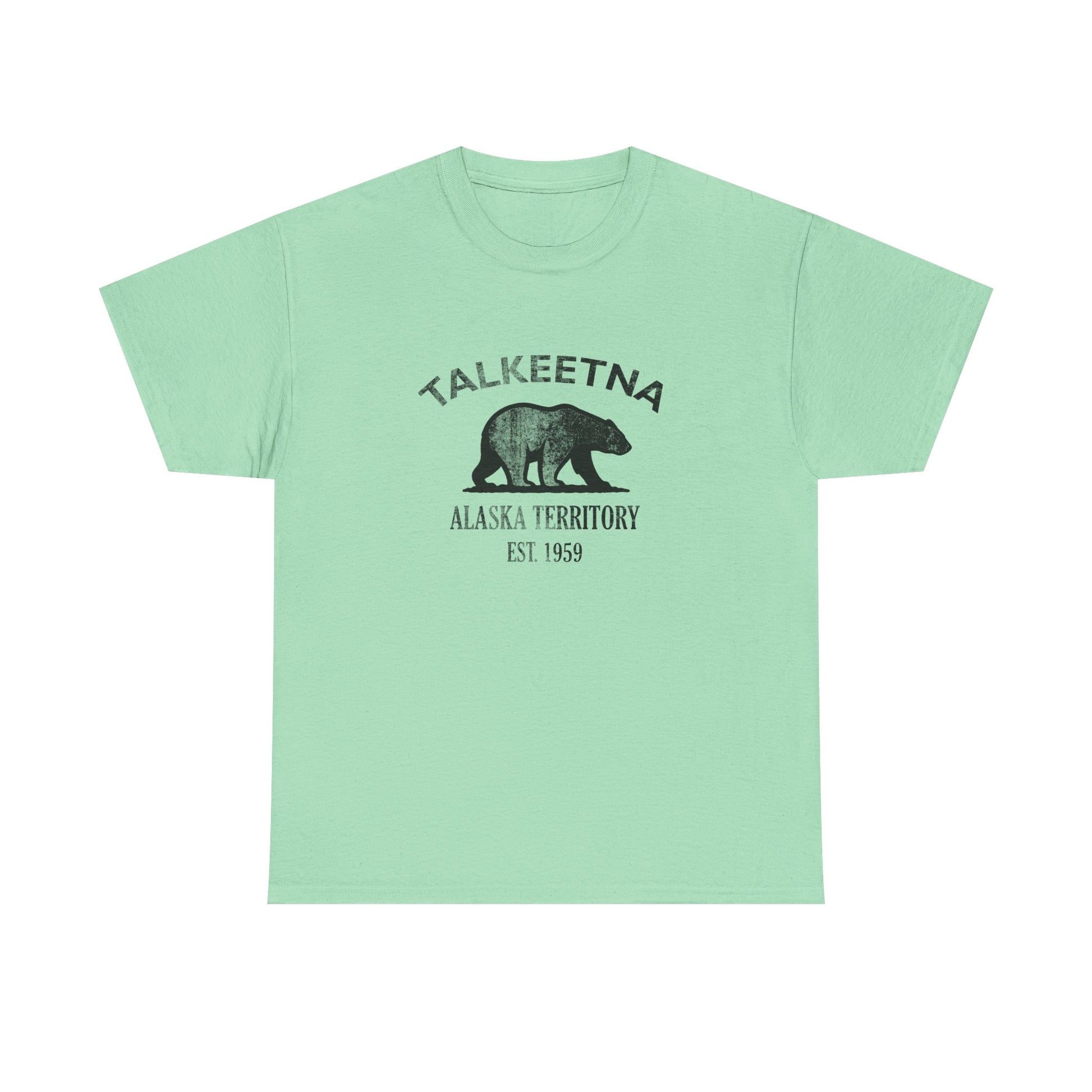
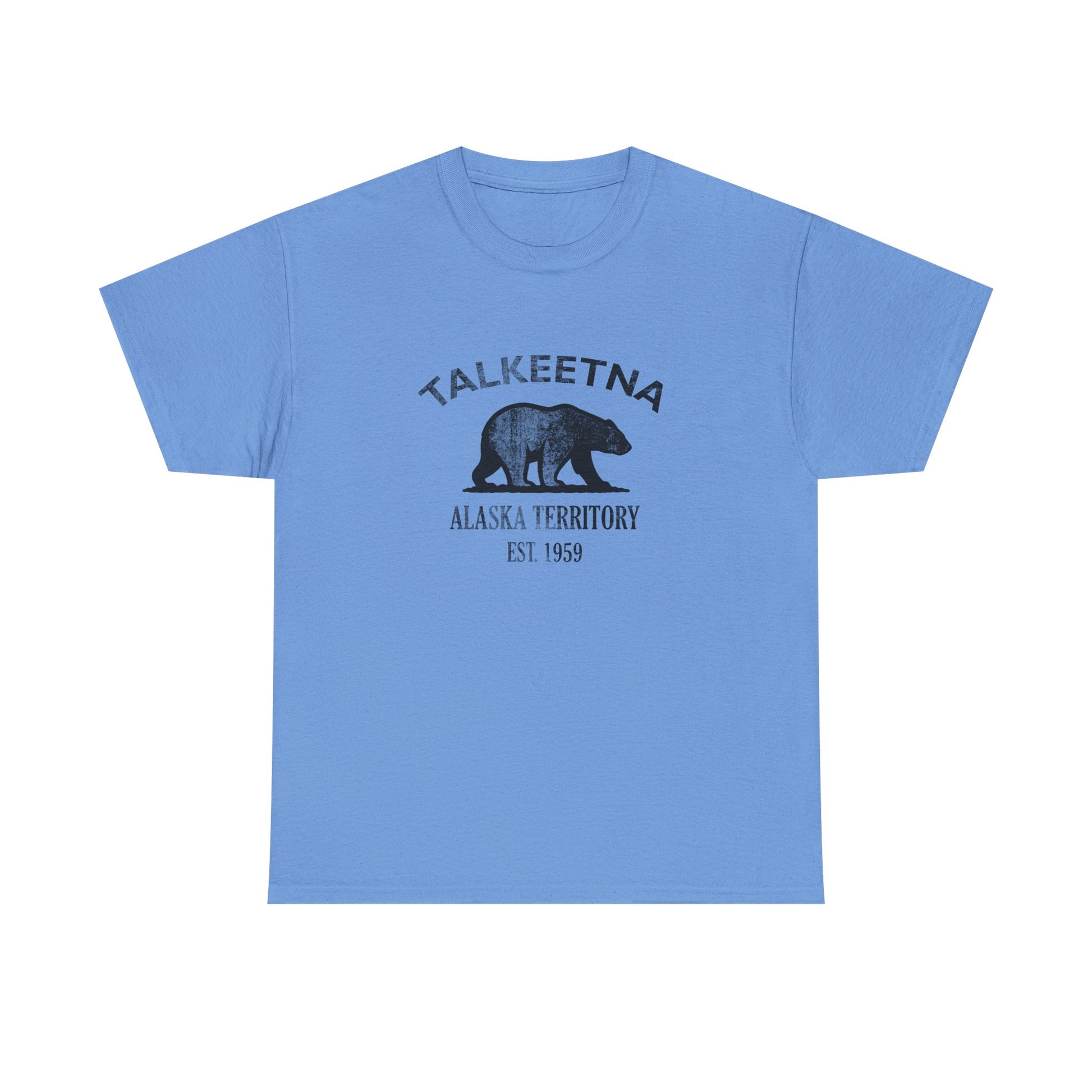
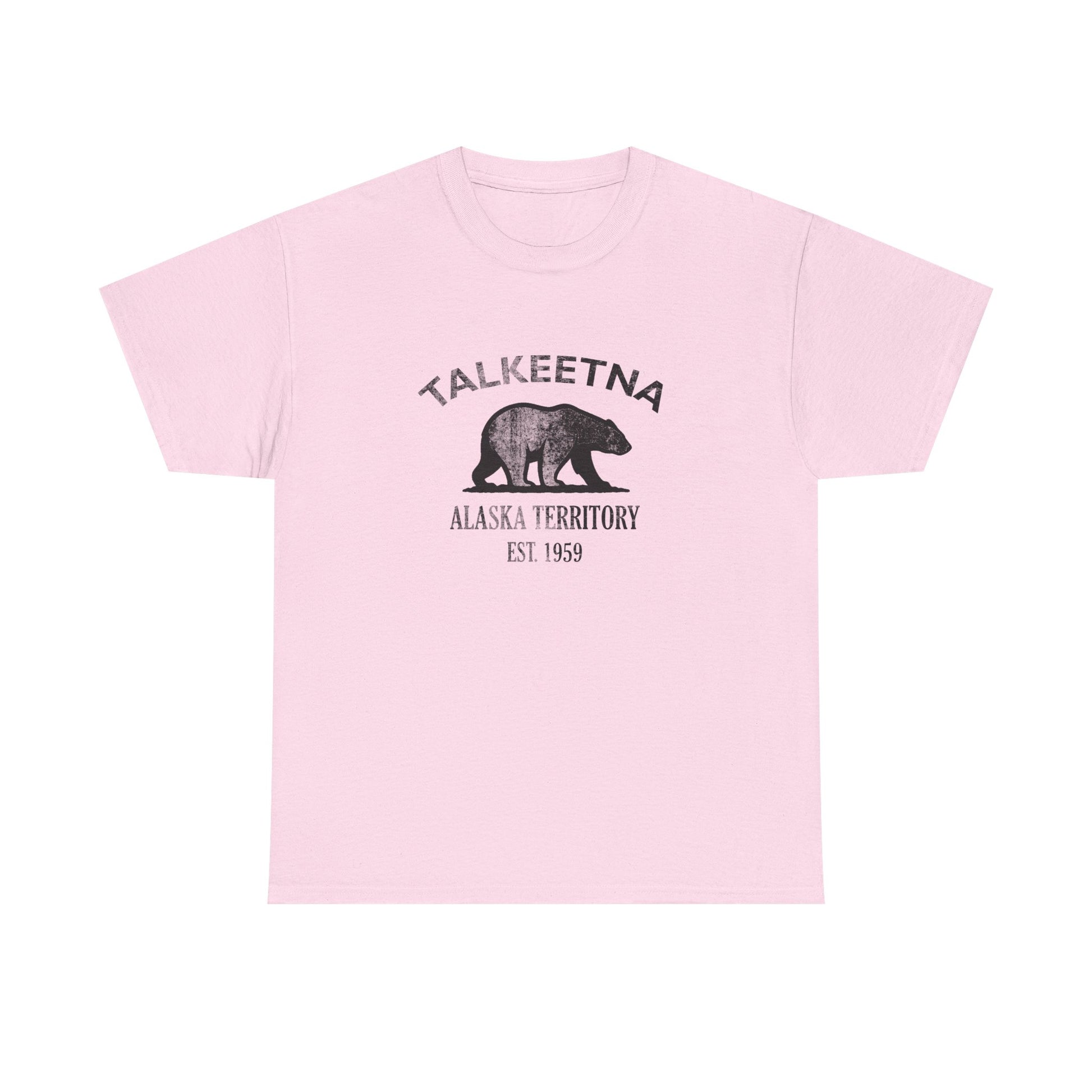
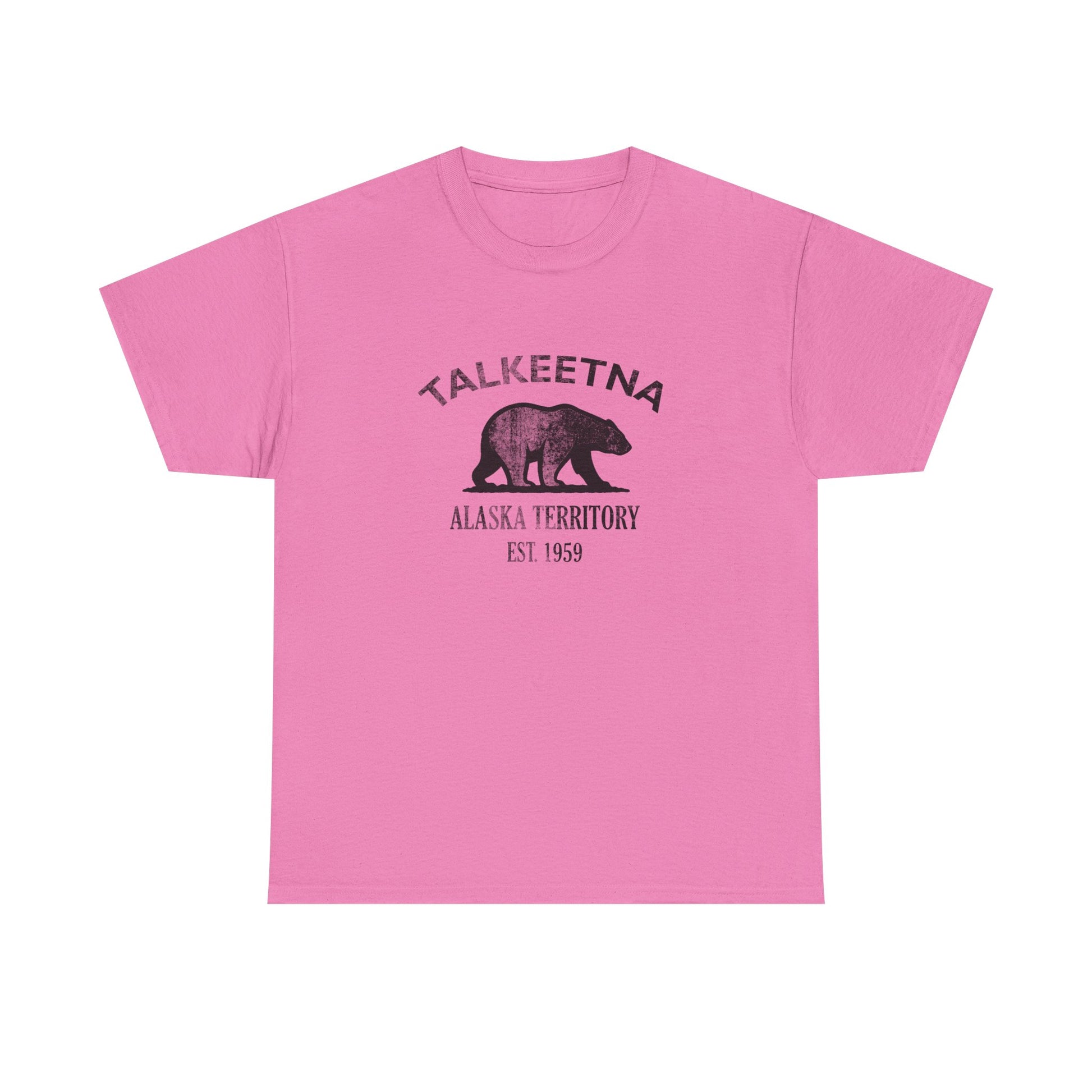
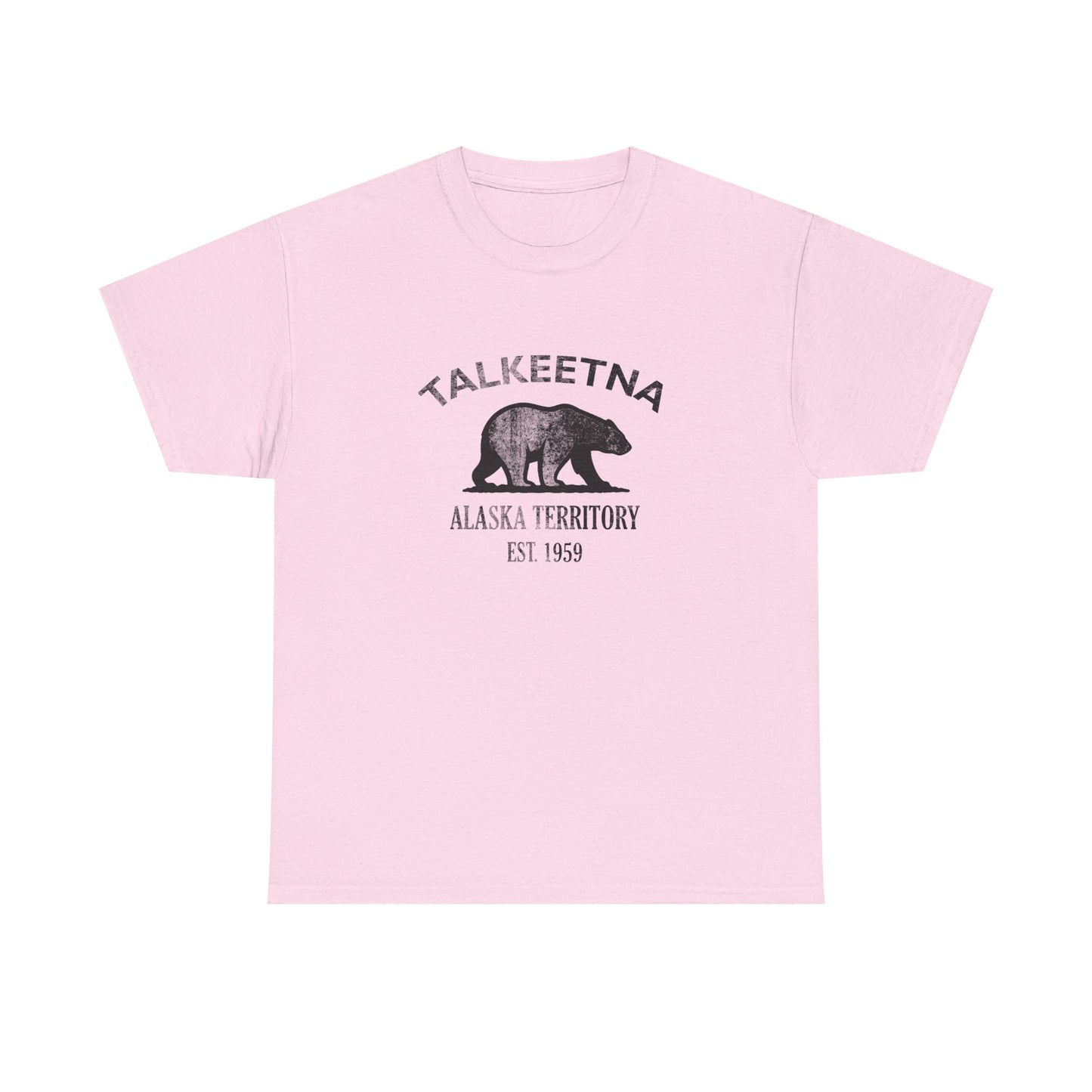
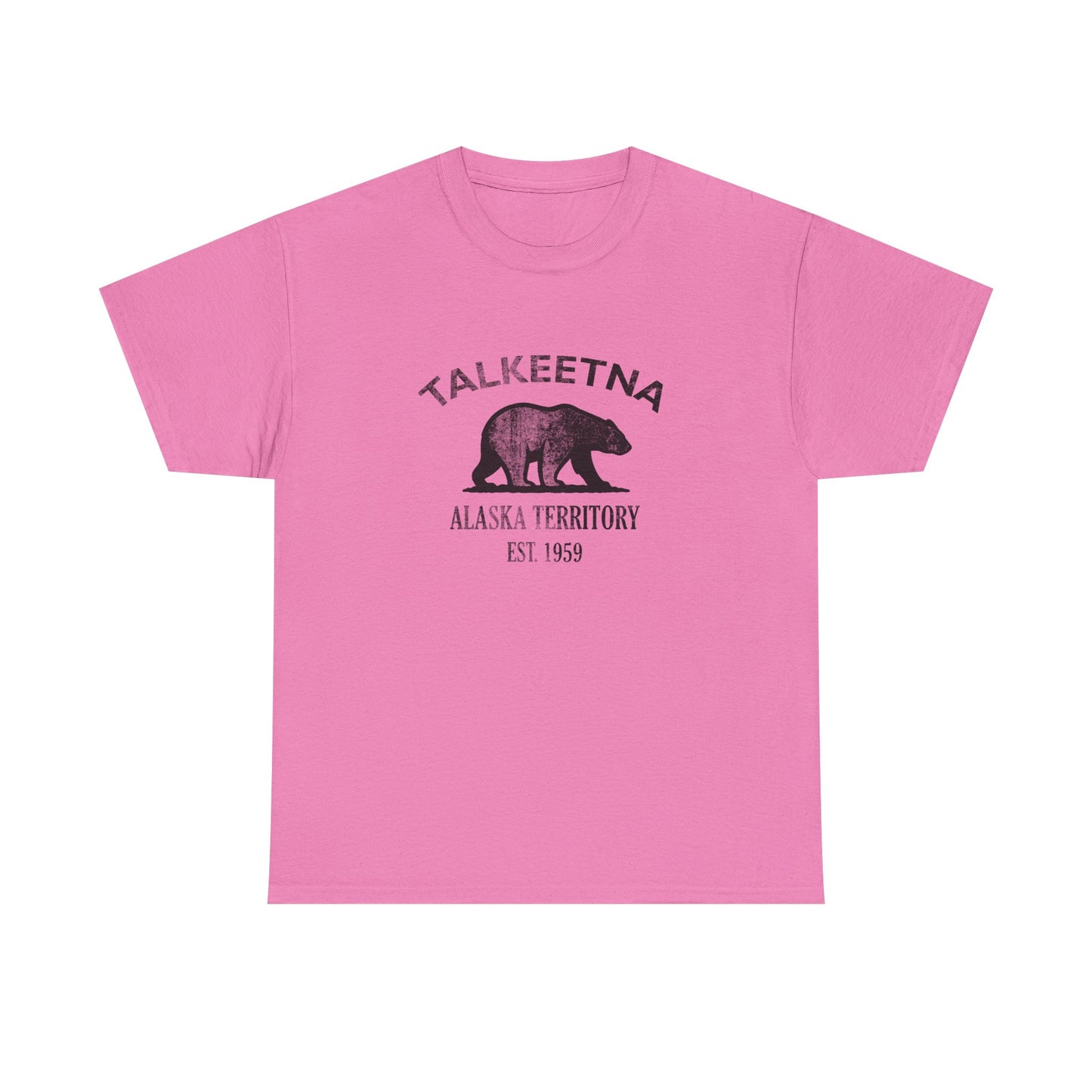
Talkeetna's lore includes myths of spirits guiding hunters along rivers and mountains. Residents recall parades, fishing festivals, and subsistence traditions. Mid-century tales highlight mountain climbers passing through en route to Denali, inspiring local legends. Myths describe gold dust hidden in riverbanks, blending fact and folklore. Families remembered harsh winters endured with community strength. These stories highlight Talkeetna's layered identity: subsistence heritage, frontier endurance, and climbing culture. Lore reflects both myth and memory, showing how resilience and pride carried communities. Talkeetna's stories demonstrate Alaska's character: survival, community, and cultural continuity across wilderness landscapes.
Today Talkeetna is celebrated for its charm, festivals, and role as a Denali gateway. Its story blends Indigenous tradition, frontier heritage, and tourism. Our Talkeetna designs embody this layered identity, pairing the bear motif with vintage styling. They invite you to explore the Talkeetna collection and carry forward a reminder of Alaska's resilience. Retro in tone, the logo reflects toughness and cultural pride. Talkeetna's emblem honors both heritage and progress, making it a vintage symbol of Alaska's frontier endurance. Explore the collection and share in the story of a town where wilderness and tradition meet.
Why People Visit Talkeetna Alaska
Talkeetna offers the three-rivers confluence the Dena'ina have gathered at for centuries, the National Register downtown with the Roadhouse and Nagley's and the Fairview Inn intact and operating, the Walter Harper Ranger Station that every Denali climber walks through, the long view of the highest mountain in North America rising at the head of the Susitna Valley, the Alaska Railroad Denali Star at the depot daily, and the small-plane glacier-landing tradition that opened the mountain to the world. It is a small town at the end of a fourteen-mile spur road, and almost every climber on Denali has stood on its one main street first. Below Denali since 1896.
