


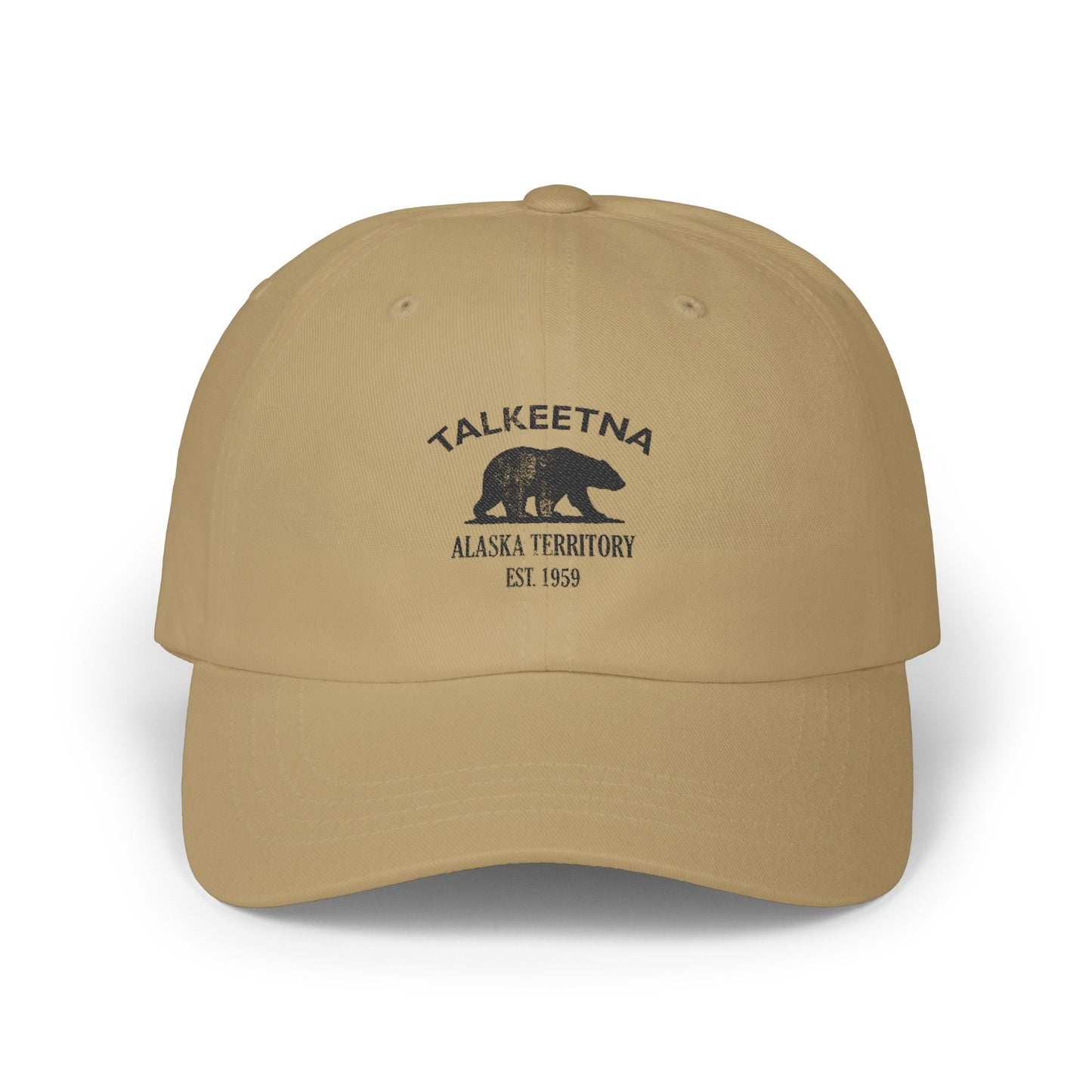
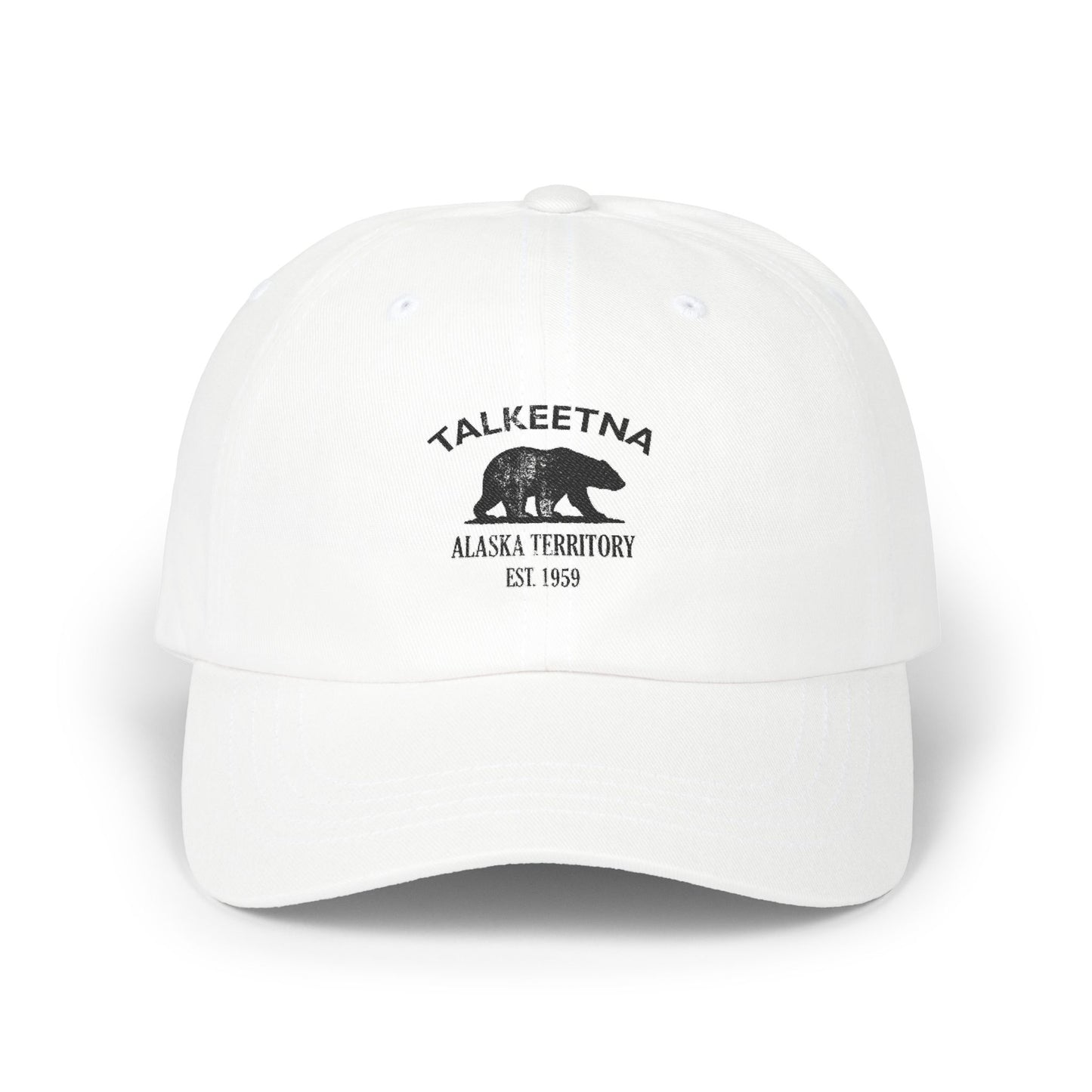
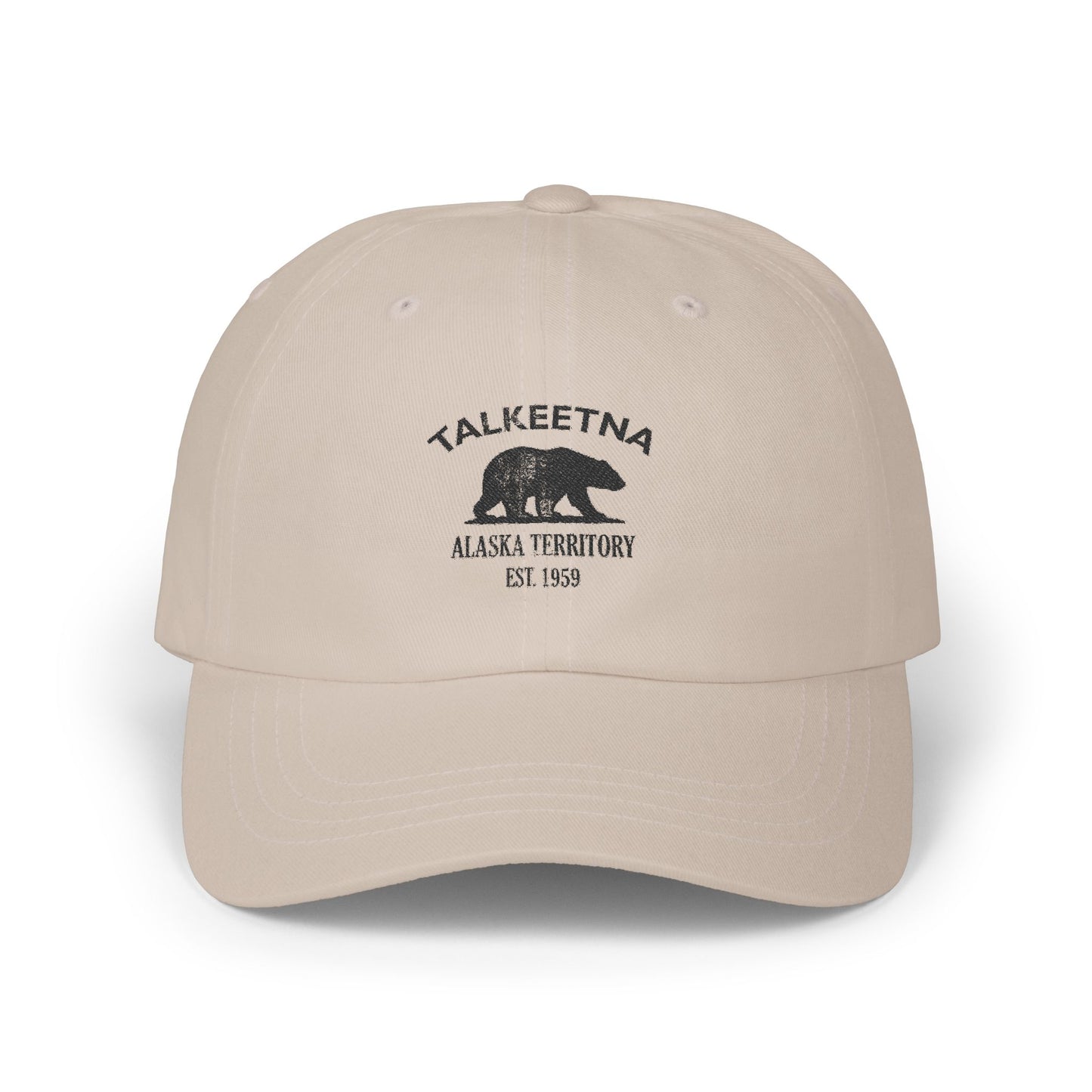
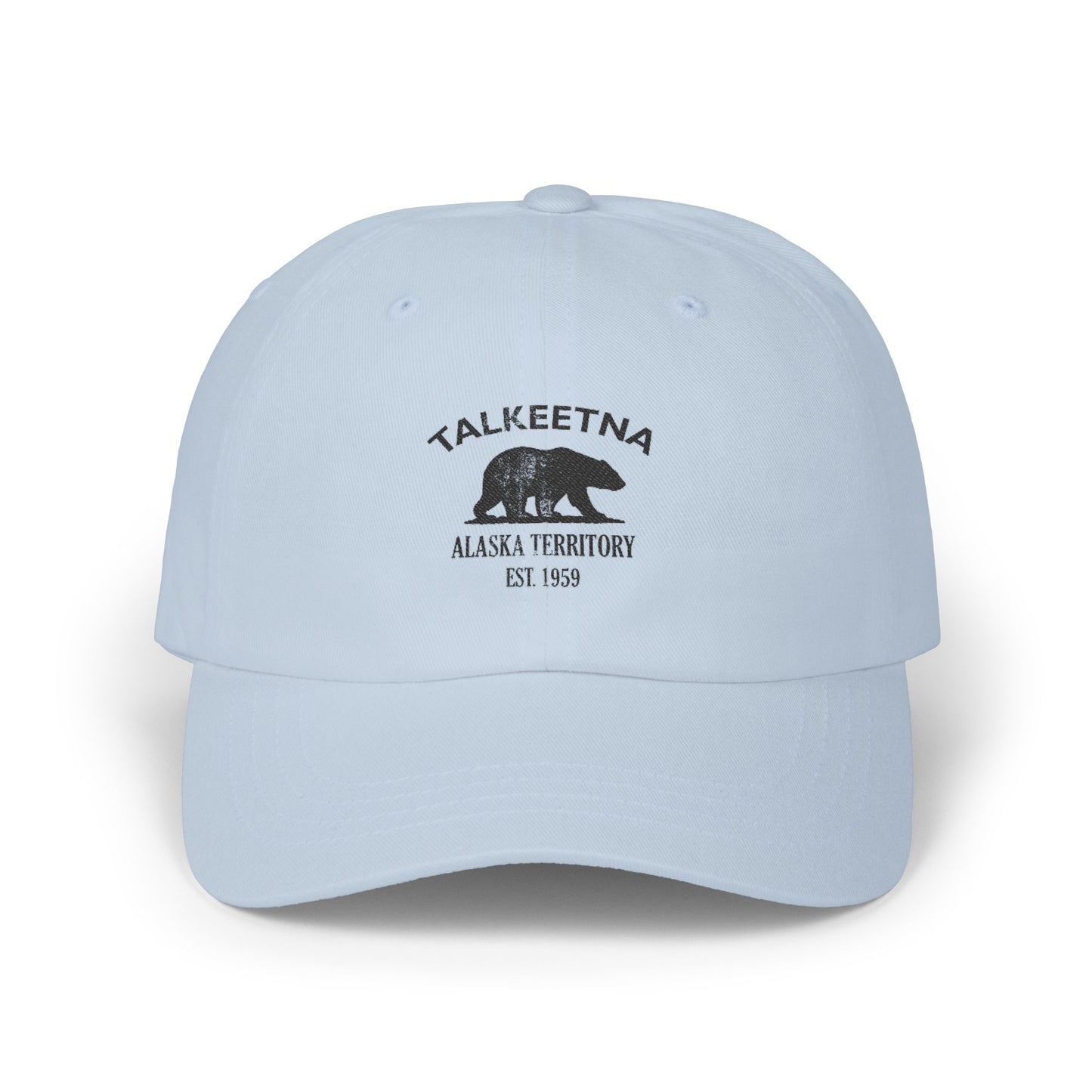
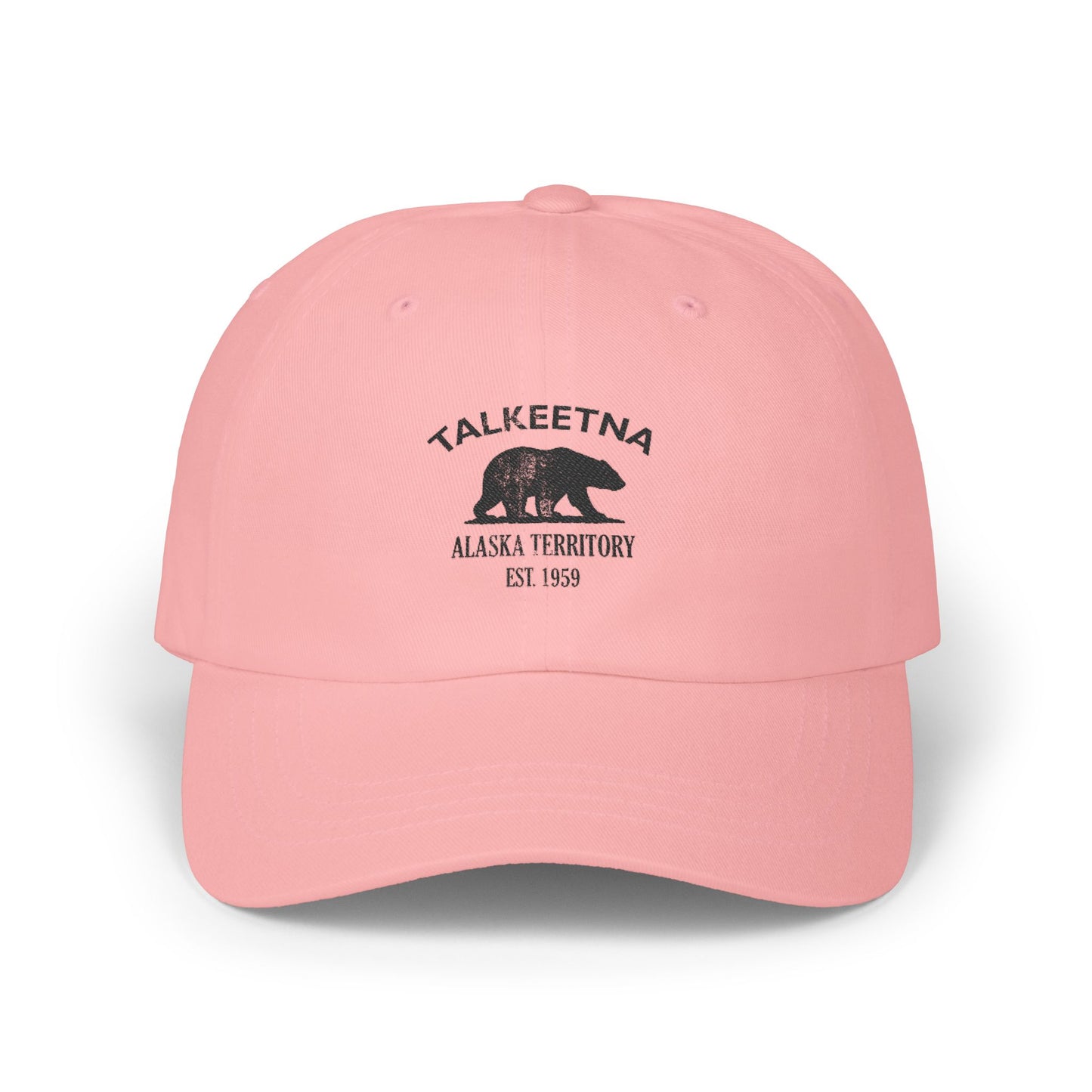
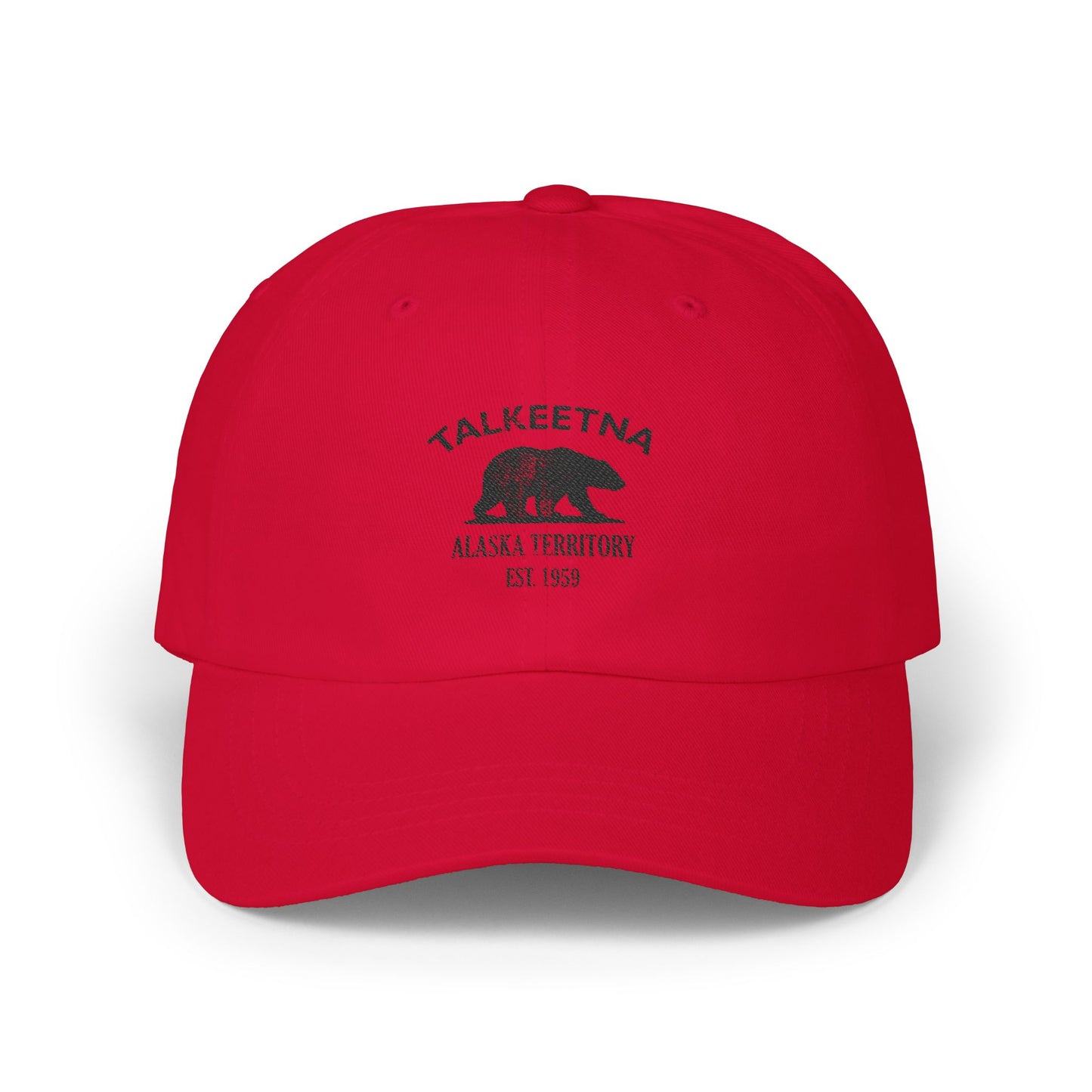
Our Talkeetna retro logo uses Alaska's distressed bear motif, representing toughness, wilderness, and endurance. The bear reflects both Indigenous reverence and frontier survival, while "1959" ties the design to Alaska's statehood. Its black-and-white styling is rugged and retro, resembling crate stamps or outfitter branding. The motif bridges Talkeetna's dual identity: Native heritage and frontier railroad town. On merchandise, it conveys authenticity and pride, retro vintage in tone. The bear emblem honors Talkeetna's layered story, making it a vintage symbol of Alaska resilience. It reflects survival, community, and heritage, capturing Alaska's story of continuity and pride.
Talkeetna is the door to the mountain. Every spring, before flying onto the Kahiltna Glacier to attempt the highest peak in North America, every climber on Denali walks into a one-story log building at the south end of Main Street, signs in, picks up a Clean Mountain Can, and listens to a ranger explain how not to die at 20,310 feet. The building is named the Walter Harper Talkeetna Ranger Station, and Walter Harper himself — a Native Alaskan Athabascan from the lower Yukon and a member of the Hudson Stuck climbing party — was the first person to stand on the summit, on June 7, 1913, a fact that Alaska, the National Park Service, and the mountain itself never quite stop telling you. Long before that, the Dena'ina Athabascan people gathered seasonally where the Susitna, the Chulitna, and the Talkeetna rivers meet — three big braided glacier-fed channels arriving at the same gravel flat — and the place name K'dalkitnu in Dena'ina means river of plenty, or simply where the rivers join. The Susitna gold rush brought a trading post in 1896 and a settlement boom by 1910. In 1915 the Alaska Railroad chose the confluence as a district headquarters. The 1917 Talkeetna Roadhouse opened to feed the railroad workers and the miners. In 1919 surveyors auctioned off 80 lots and Talkeetna became a permanent town. Nagley's General Store opened in 1921, the Fairview Inn was built in 1923, and the territorial schoolhouse — now the Talkeetna Historical Society Museum, with Bradford Washburn's twelve-by-twelve-foot scale model of Denali on the floor — was built in 1936-37. The entire downtown is on the National Register of Historic Places. Then, in the late 1940s, two bush pilots from Talkeetna named Don Sheldon and Cliff Hudson did something nobody had done before — they worked out how to land a small plane on a glacier on Denali, and they kept doing it for thirty years. Before them, climbers walked sixty miles through bear country and willow thicket and crevasse-laced moraine to get to the foot of the mountain. After them, anybody who could pay for a Cessna seat and could survive the cold could climb the highest mountain on the continent. The mountain itself is named Denali again — the Athabascan word for "the high one," restored as the official US name in 2015 — and the town is what it has always been: a junction of three rivers below the high one, at the end of the road, where the door to the mountain happens to be a log cabin.
Why People Visit Talkeetna Alaska
- Walk the Talkeetna Historic District on Main Street, the entire downtown of log buildings dating from the 1910s-1930s, listed on the National Register of Historic Places.
- Visit the Talkeetna Historical Society Museum, housed in the 1936-37 Territory of Alaska schoolhouse, for the bush-pilot, climbing, and Alaska Railroad archives — including Bradford Washburn's twelve-by-twelve-foot scale model of Denali on the floor of the main gallery.
- Walk to the Walter Harper Talkeetna Ranger Station at the south end of Main Street, the Denali National Park climbing-registration office where every Denali expedition still checks in before flying to Kahiltna Glacier Base Camp — and where the rangers' interpretive program runs through the summer climbing season.
- Walk down to the Talkeetna riverfront at the end of Main Street, the gravel beach where the Susitna, Chulitna, and Talkeetna rivers meet — the three-rivers confluence the Dena'ina name K'dalkitnu describes — with the Alaska Range visible north on a clear day.
- See the 1917 Talkeetna Roadhouse on Main Street, the log roadhouse that has been continuously serving climbers, miners, railroad workers, and travelers since the year it opened — one of the last original gold-rush-era Alaska roadhouses still operating.
- See the 1921 Nagley's General Store, the original log-cabin trading post on the corner of Main and C Street, still operating as the town's general store.
- See the 1923 Fairview Inn on Main Street, the Prohibition-era frontier bar still anchoring the downtown's evening rhythm.
- Catch the Alaska Railroad's Denali Star train at the Talkeetna Depot — the year-round Anchorage-to-Fairbanks service stops here daily; the Hurricane Turn flag-stop service still picks up homesteaders north of town.
- Drive to Denali Viewpoint South, twenty minutes north on the Parks Highway, for the long view of Denali, Mount Hunter, and Mount Foraker rising above the Susitna lowlands.
- Plan a clear-weather day in May, June, or July to watch the bush planes leave the Talkeetna Airstrip for the Kahiltna Glacier and the Ruth Glacier — the small-plane glacier landings the Talkeetna pilots pioneered in the 1940s and still fly today.
- Time a winter visit to catch the Iditarod Trail Sled Dog Race when it passes near Talkeetna in early March, or the aurora borealis on a clear cold night between September and March.
