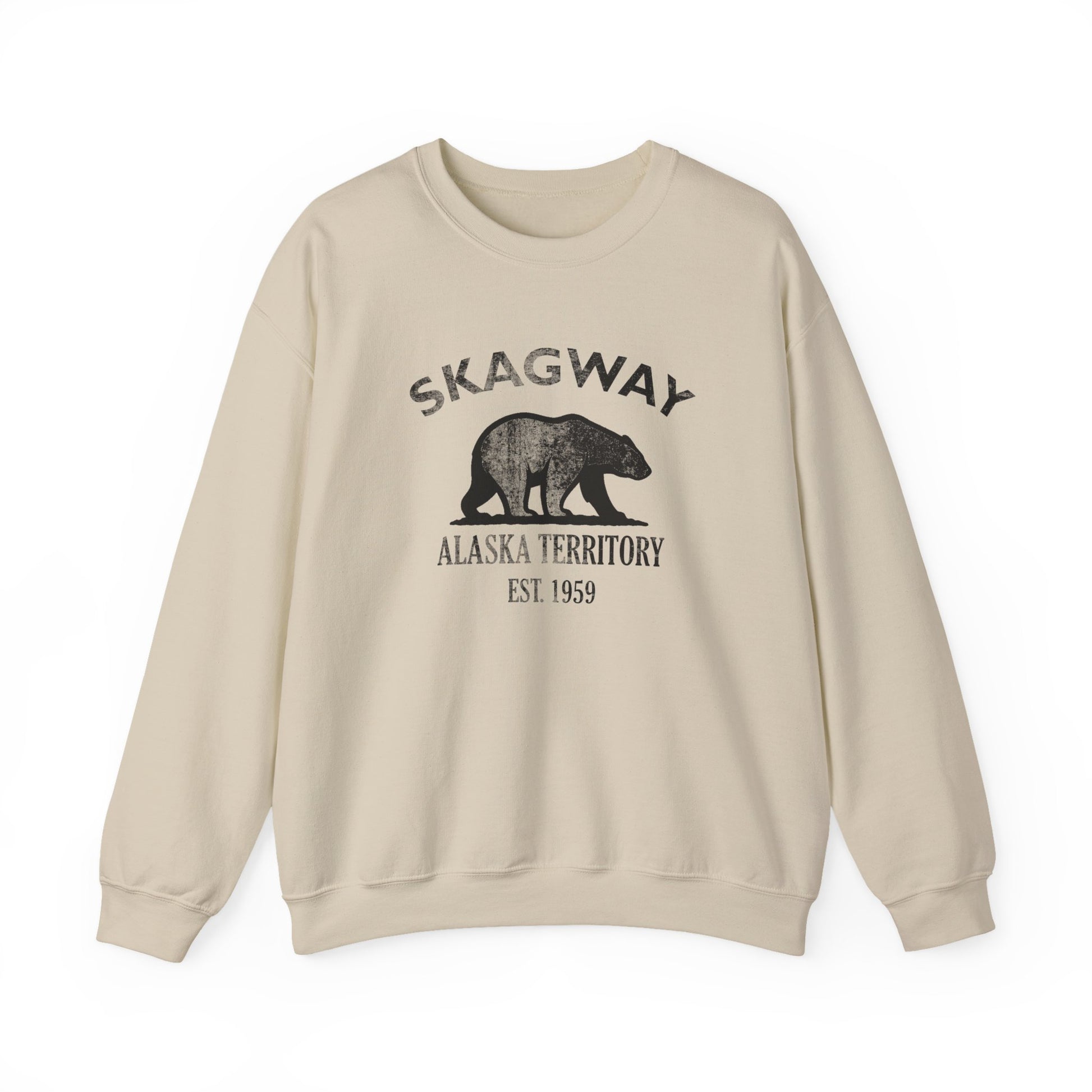
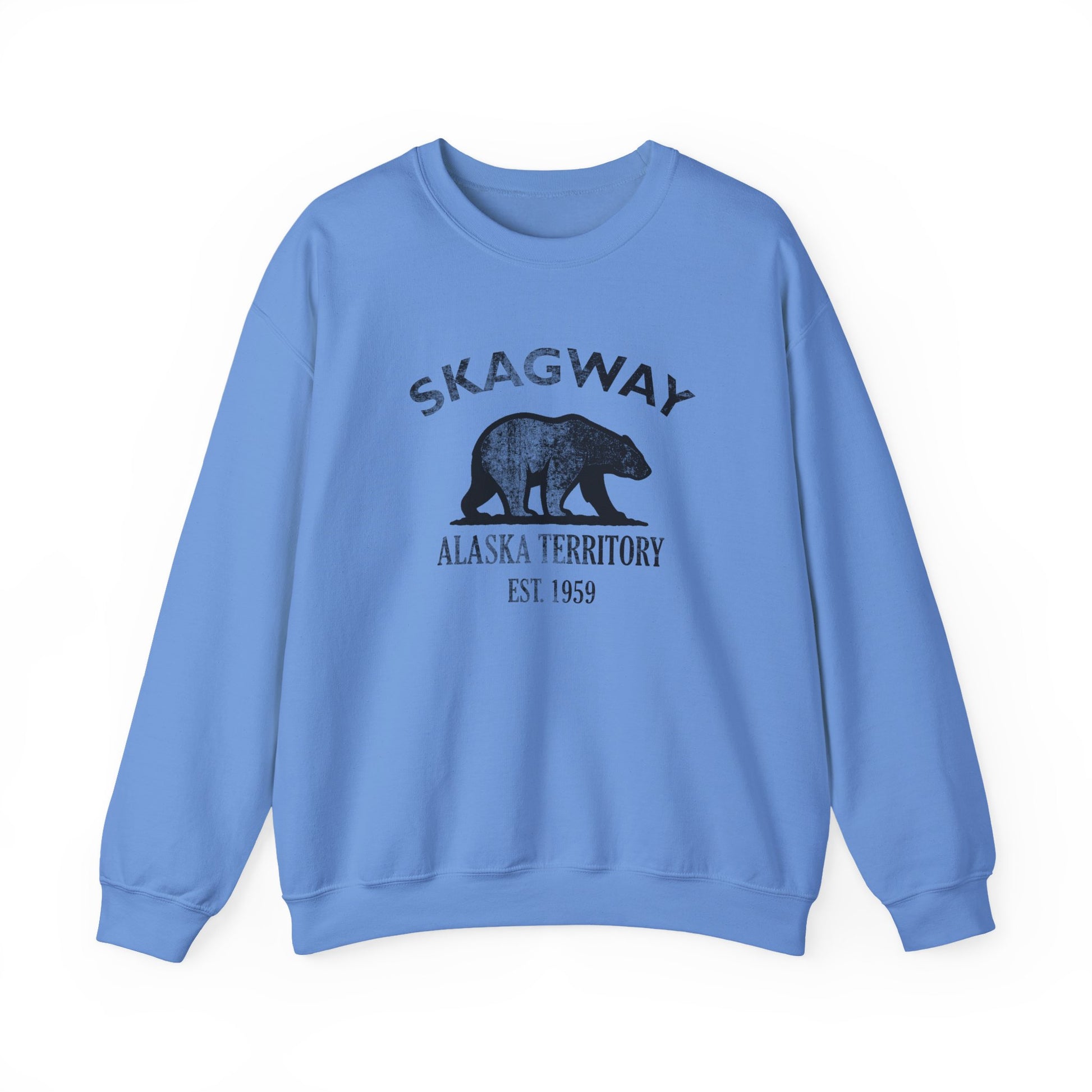
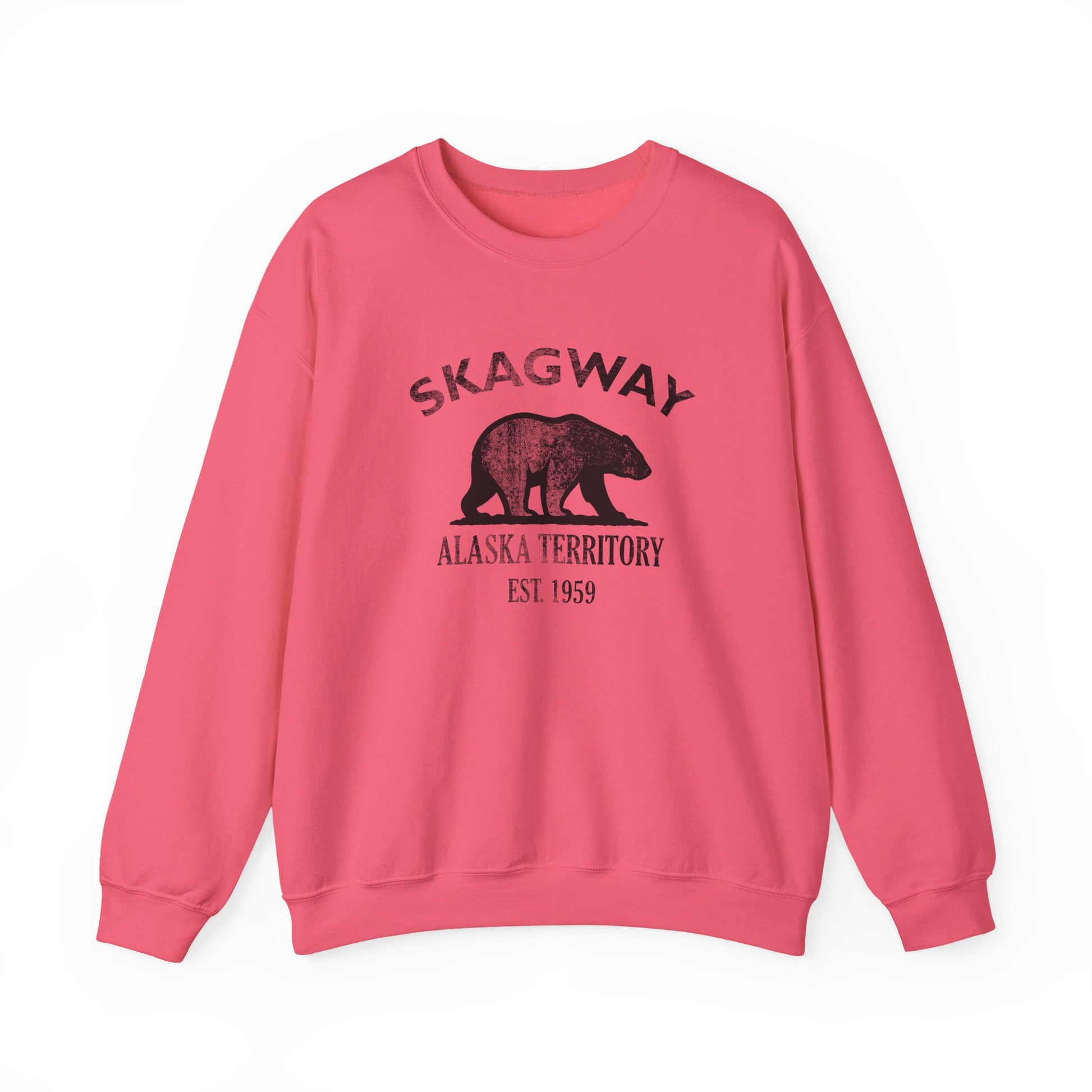
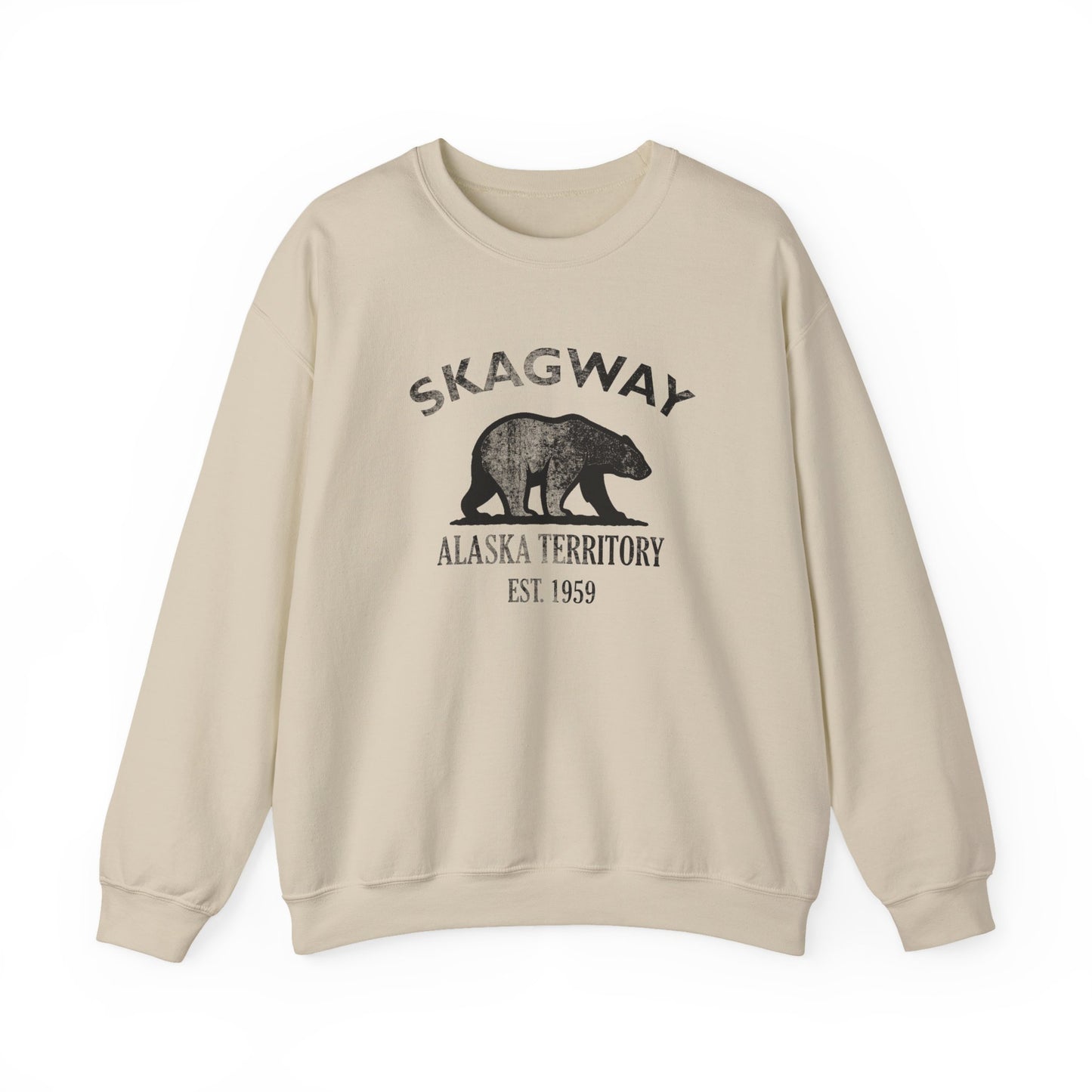
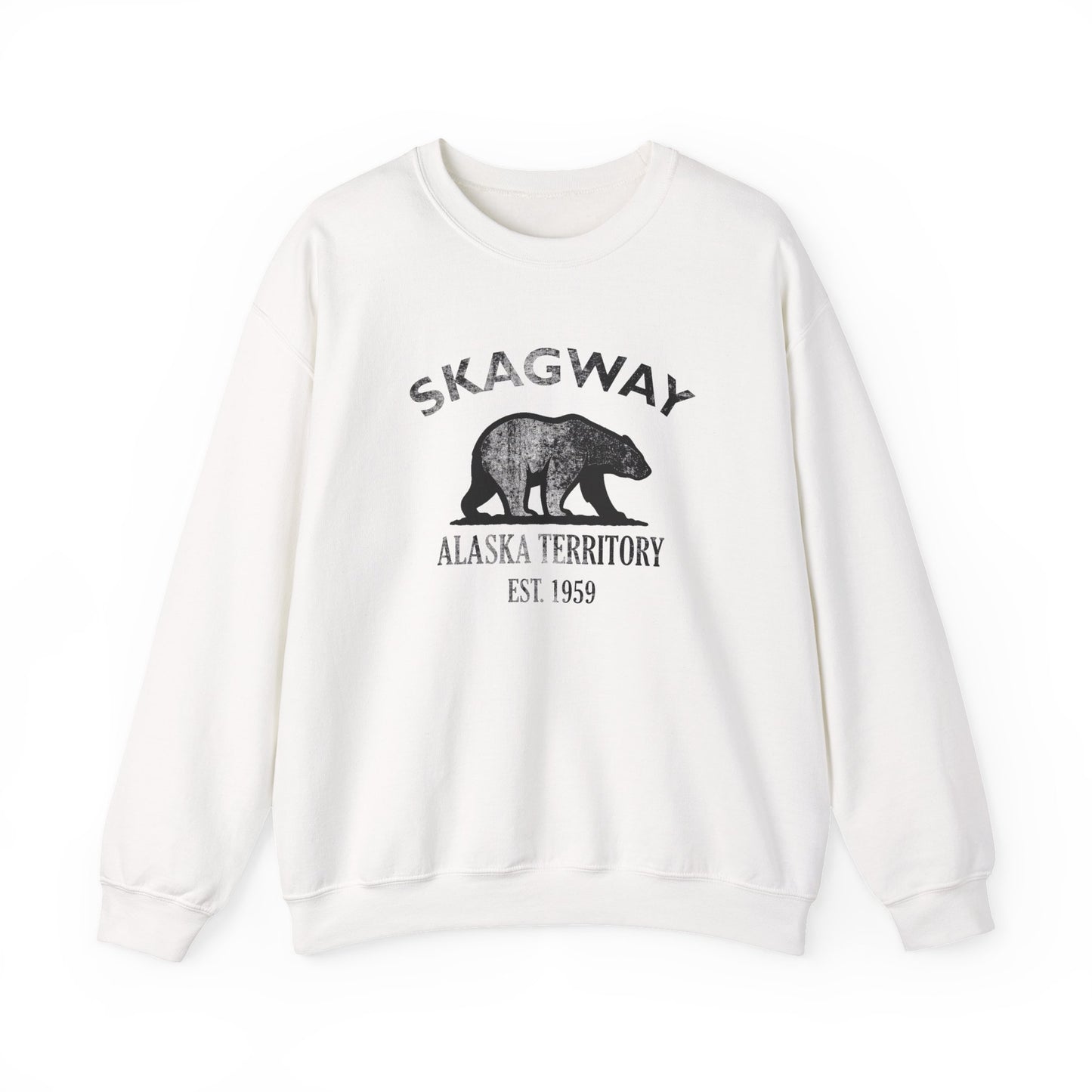
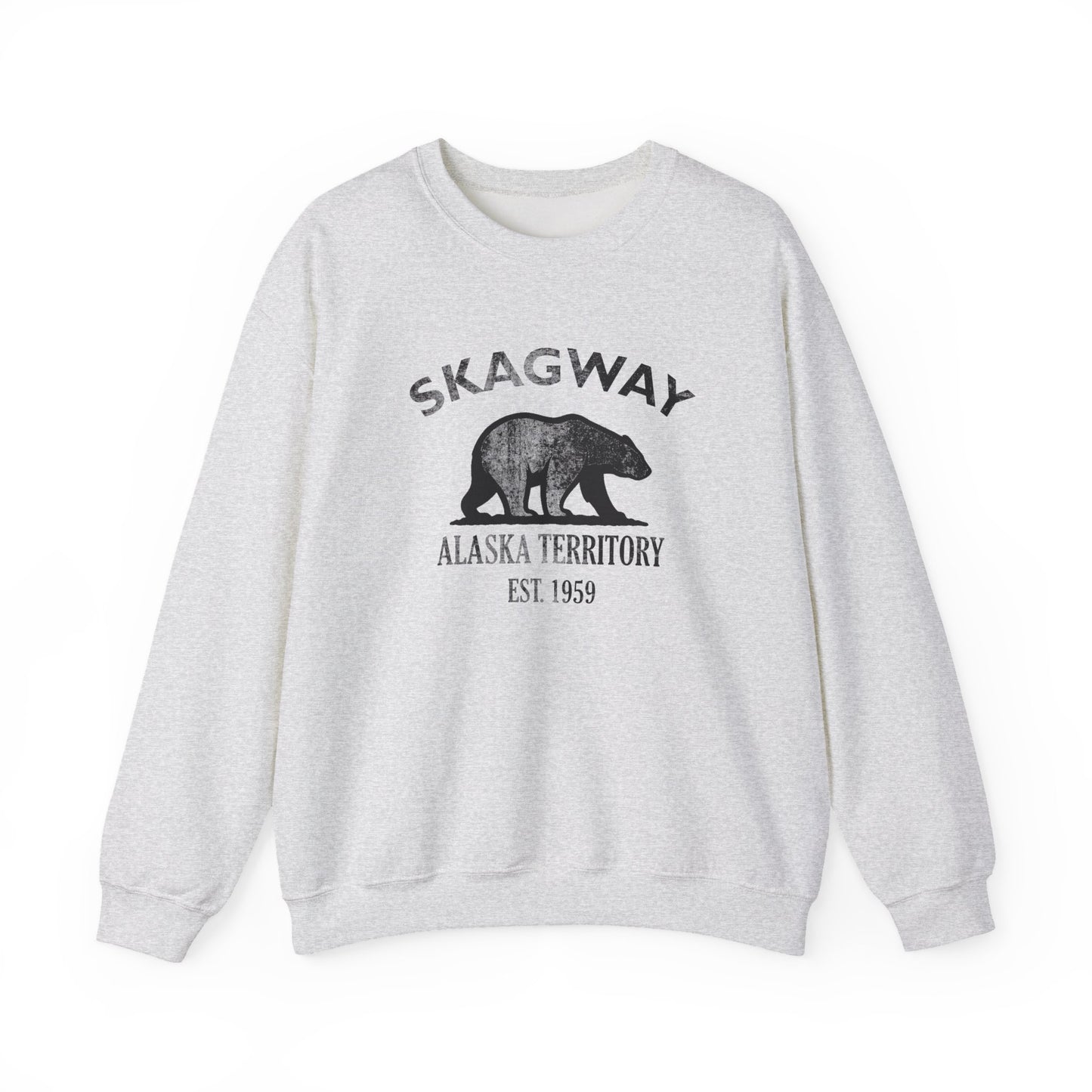
So Skagway gathers a gold rush, a railway, and a street frozen in 1898 onto a narrow shelf at the top of the Inside Passage. Our Skagway designs gather that into wearable form. Wear the history. Gateway to the Klondike — Skagway, Alaska.
The man who saw it coming was Captain William Moore. A riverboat pilot and pack-trail veteran, Moore staked a 160-acre homestead at the mouth of the Skagway River in 1887 — a full decade early — convinced that gold in the Canadian interior would one day send a flood of people past his door looking for a way over the mountains. He built a sawmill, a wharf, and a rough trail toward the White Pass summit. When the stampede finally arrived in 1897, it simply overran him: newcomers re-platted his claim into a gridded boomtown almost overnight, and the quiet homestead became the busiest place in Alaska.
Why People Visit Skagway
Visitors come to Skagway for the most intact Gold-Rush town in Alaska — a real boomtown you can walk through — and for the railway that climbs straight out of it into the mountains. It is compact, dramatic, and easy to explore on foot, with the harbor, the historic district, and the trailheads all close together. Equal parts living history and big northern scenery, Skagway rewards anyone who wants to stand at the starting line of the Klondike stampede.
