


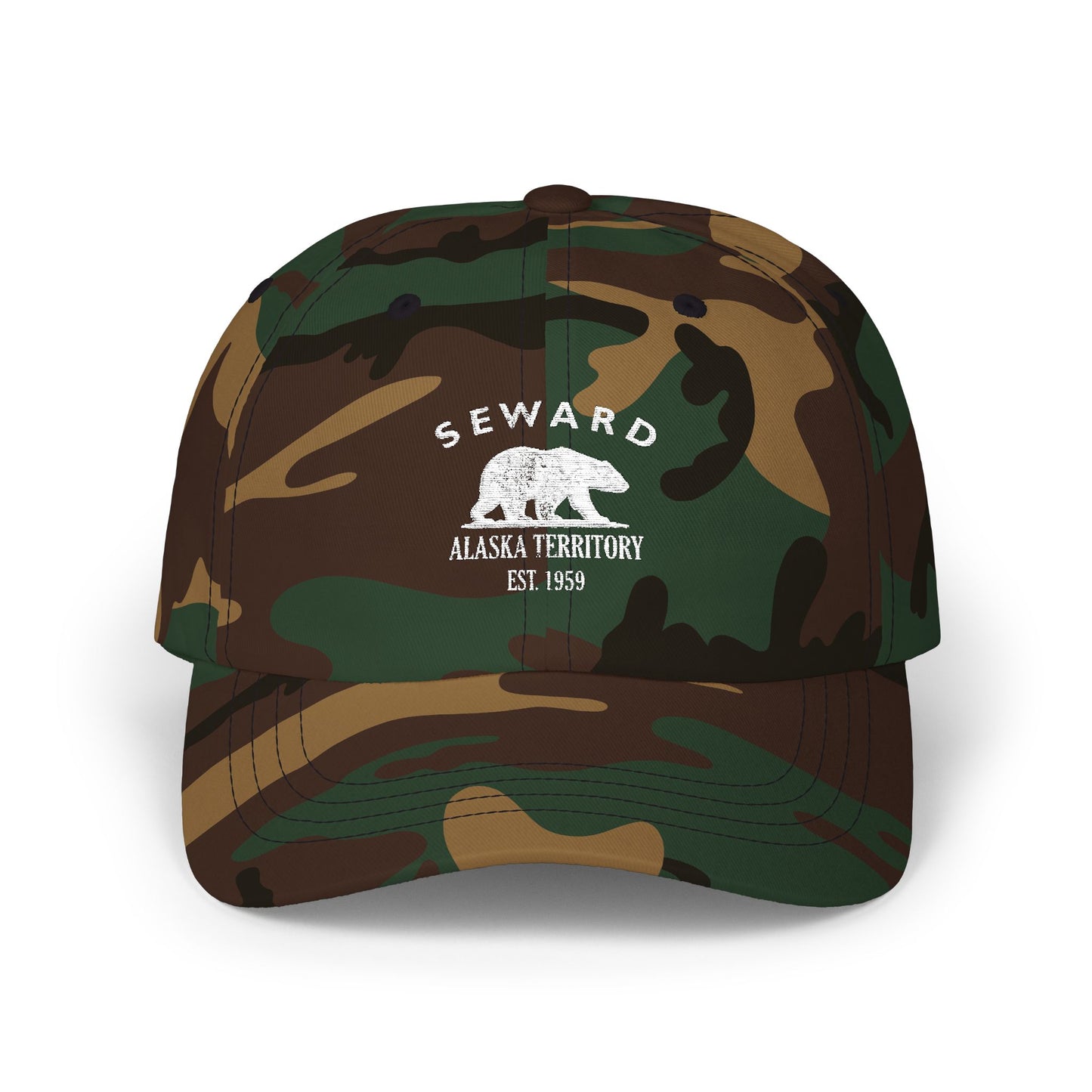
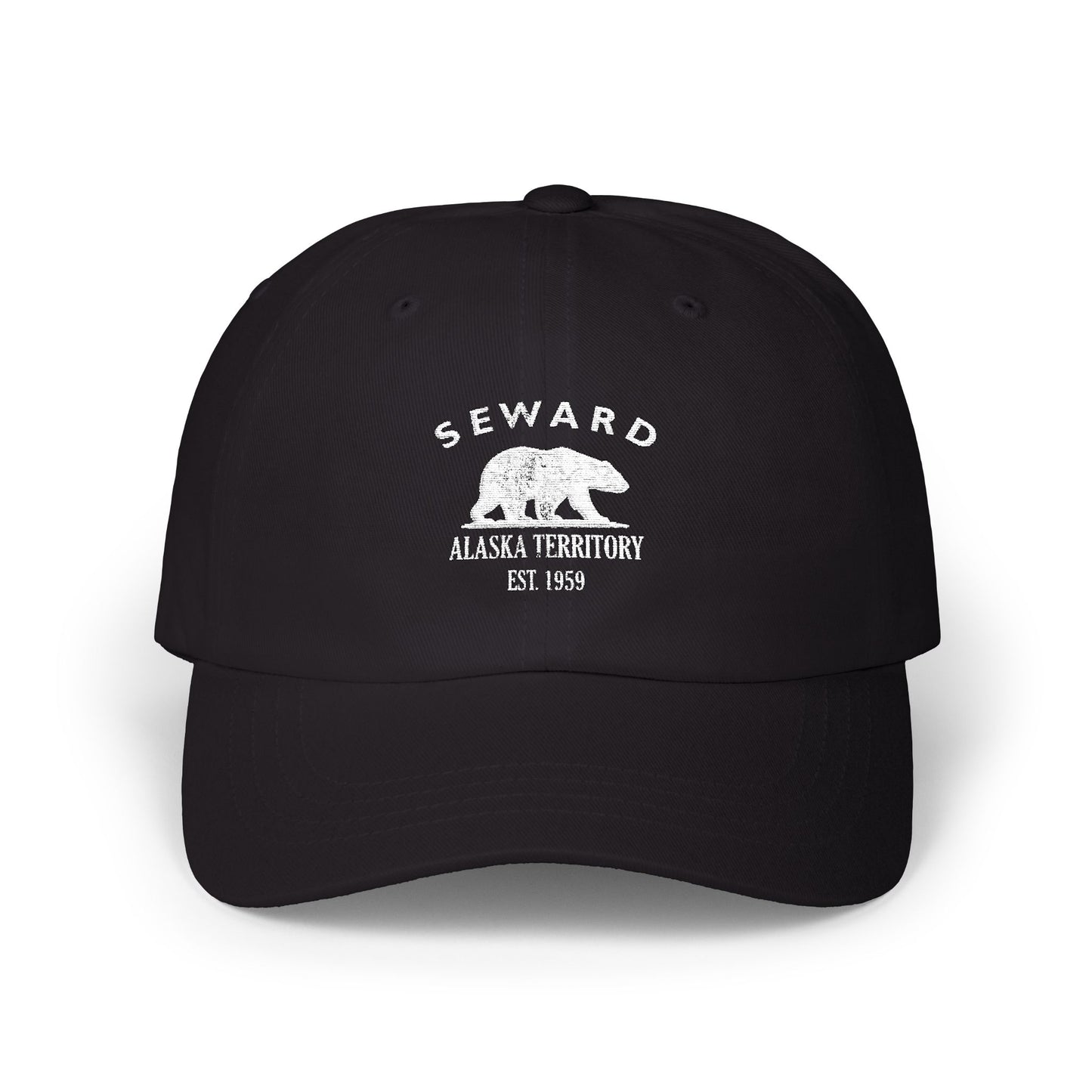
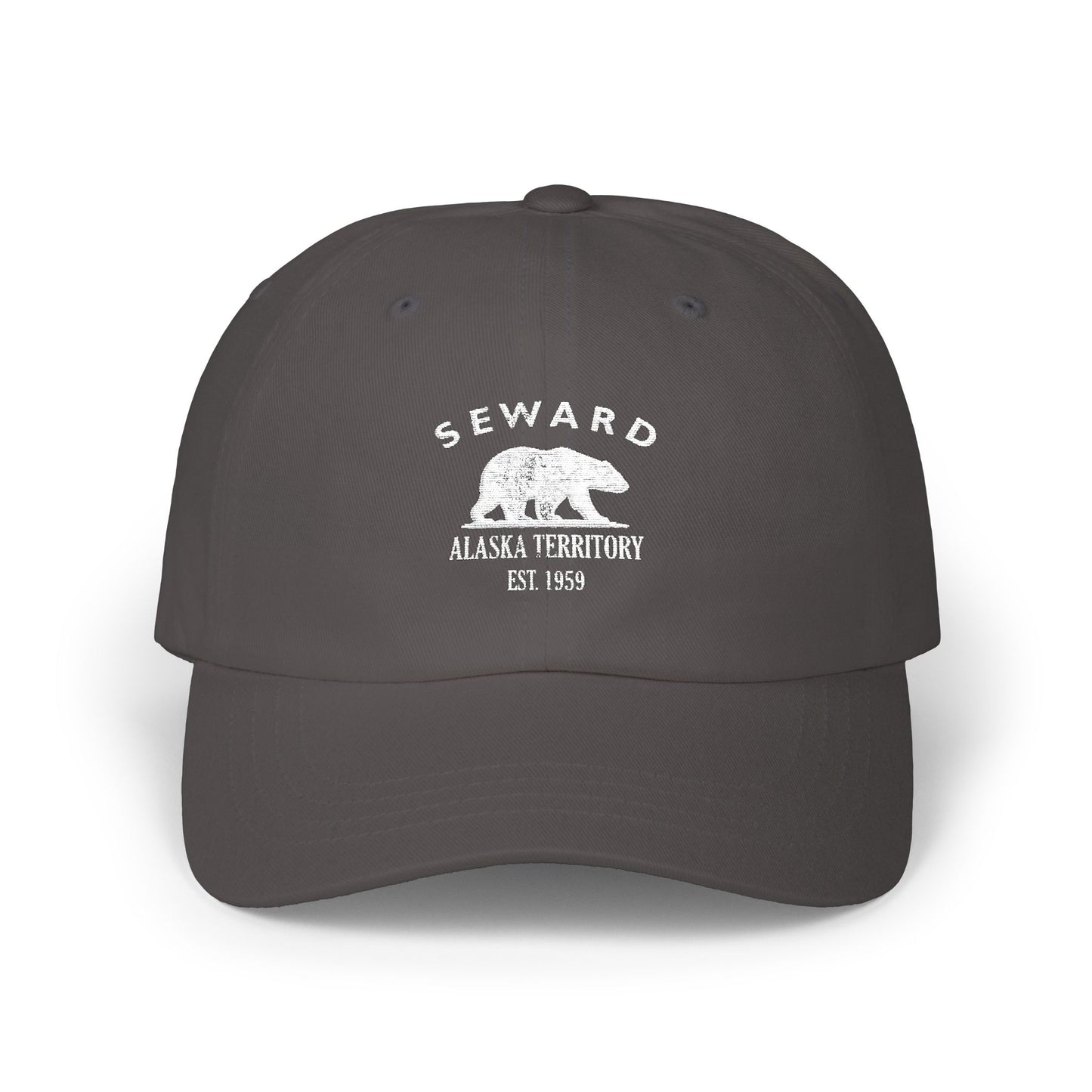
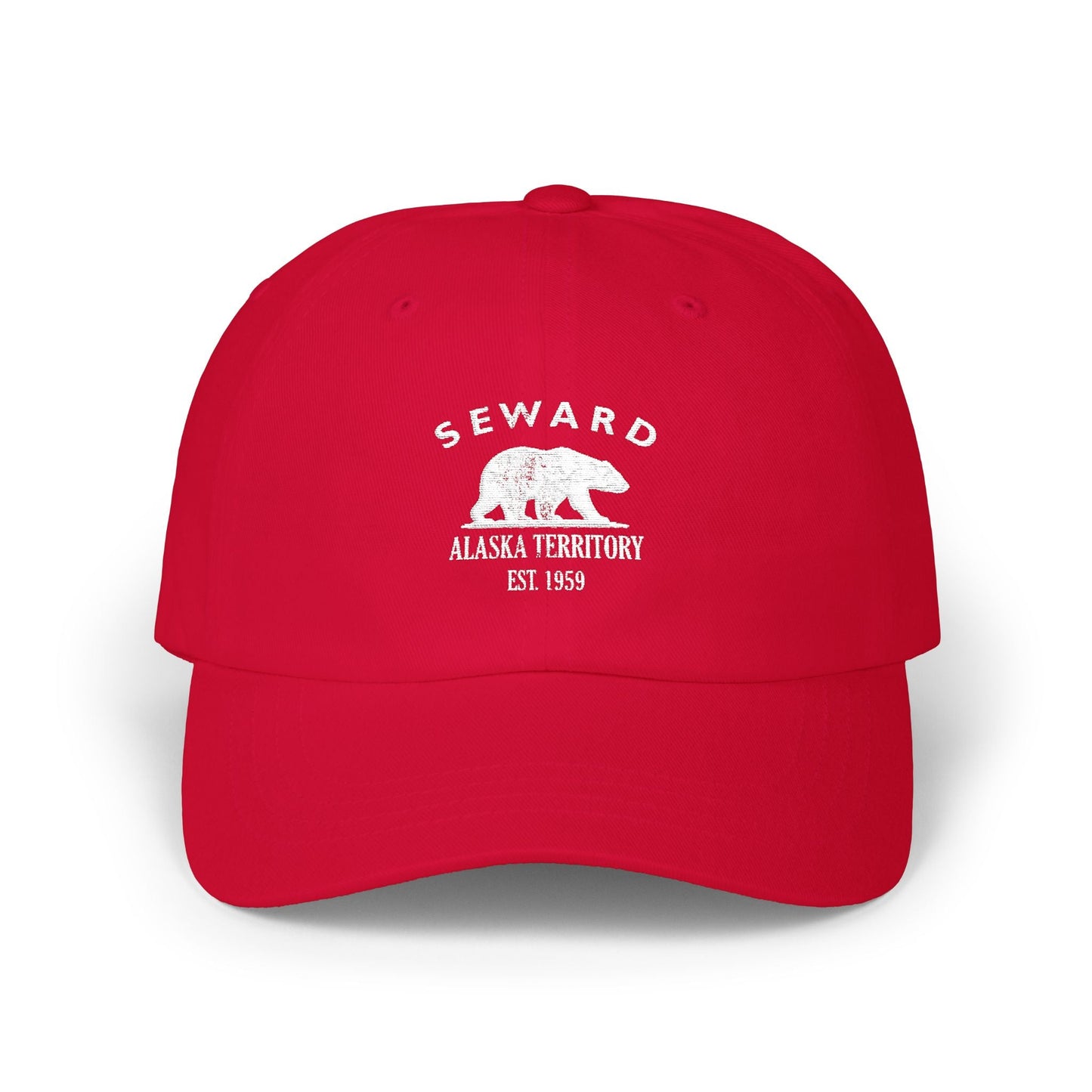
Our Seward logo carries the Alaska bear above ‘Alaska Territory — Est. 1959,’ the shared retro emblem of our Alaska towns, with 1959 marking statehood. The bear stands for the wilderness at the town's back — the mountains, the icefield, the country the trail and the rails were built to reach. Rendered in the distressed black-and-white of an outfitter's stamp, it ties Seward to every other Alaska town we make. What makes this one Seward is the water behind the bear: Resurrection Bay, the fjords, and the end of the line.
People had lived on that shore for a very long time. The Sugpiaq and Alutiiq made Resurrection Bay home for more than seven thousand years before Frank and Mary Lowell settled here in the early 1880s. The town itself dates to August 28, 1903, when John Ballaine and a party of pioneers landed to build a railroad north into the resource-rich interior. They named it for William H. Seward, the U.S. Secretary of State who had pushed through the 1867 Alaska Purchase — the deal mocked at the time as ‘Seward's Folly.’ The town belongs to the bay; the name it shares with half a dozen far-off places.
Why People Visit Seward
Seward blends marine science with glacier access and harbor life. Visitors mix easy waterfront walks with boat tours, public art, and museums, all beneath the mountains. It is dramatic, friendly, and photogenic, with year-round appeal in its parks, paths, and public spaces. Frontier railroad history and the wild coast sit side by side here — history and everyday Alaska life together in a welcoming way.
