

The Chumash people have lived on this coast for more than nine thousand years, crossing the Santa Barbara Channel to the islands in redwood-plank tomol canoes and building some of the most populous native towns on the Pacific coast, including Syuxtun at the foot of today’s downtown. On December 4, 1602 — the feast day of Saint Barbara — Sebastián Vizcaíno’s storm-battered fleet sailed into the channel and gave it her name. Spain built El Presidio Real here on April 21, 1782, its last military outpost in Alta California, and in 1786 Father Fermín Lasuén founded Mission Santa Barbara, the “Queen of the Missions.” The mission era was devastating for the Chumash — disease and forced change swept through communities that had thrived for millennia — an honest part of this story; their descendants remain on this coast today.
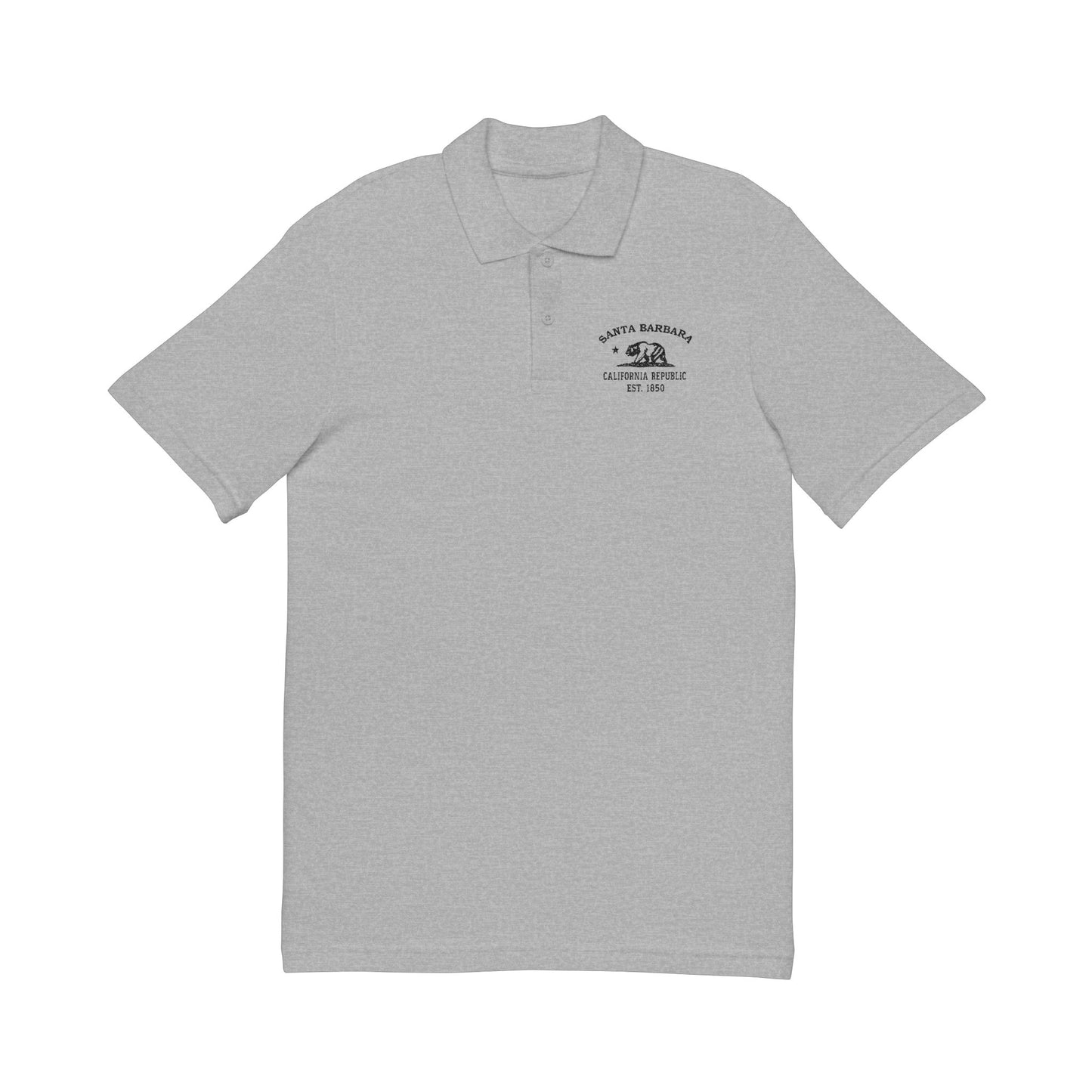
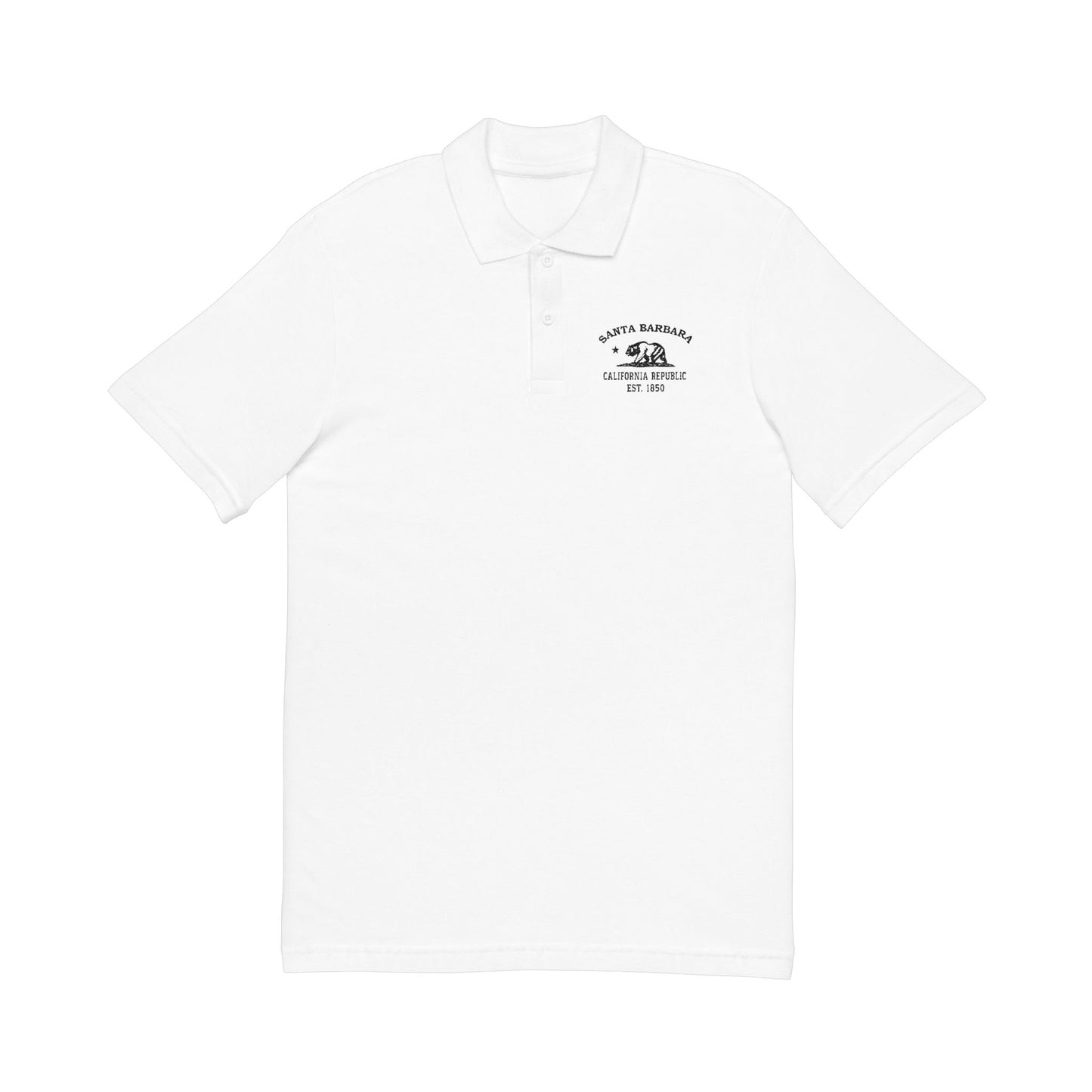
So Santa Barbara gathers a nine-thousand-year coast, a saint’s-day naming, a royal presidio, a mission called a queen, a rulebook rebuild, a courthouse called America’s most beautiful, and a bronze pod of dolphins with a twin across the Pacific — and our Santa Barbara designs gather that into wearable form. Whether Santa Barbara is your hometown, your beach, your college years, or the coast you keep coming back to, wear the history. Whitewashed since 1925, on the Channel since 1782.
Why People Visit Santa Barbara
Santa Barbara offers a south-facing Pacific coast, a 1786 mission, a 1782 presidio, a 1929 courthouse, a 1922 Spanish courtyard, a 1872 wharf, and an entire downtown legislated into matching whitewashed stucco and red tile a hundred years ago. Visitors come for the Queen of the Missions, the courthouse tower view, the wharf at sunset, the four miles of beach, the August Fiesta, and the simple Mediterranean pleasure of a city where the rulebook for what a block should look like was written down and is still followed. It is the American Riviera, and the architecture earns the name.
