


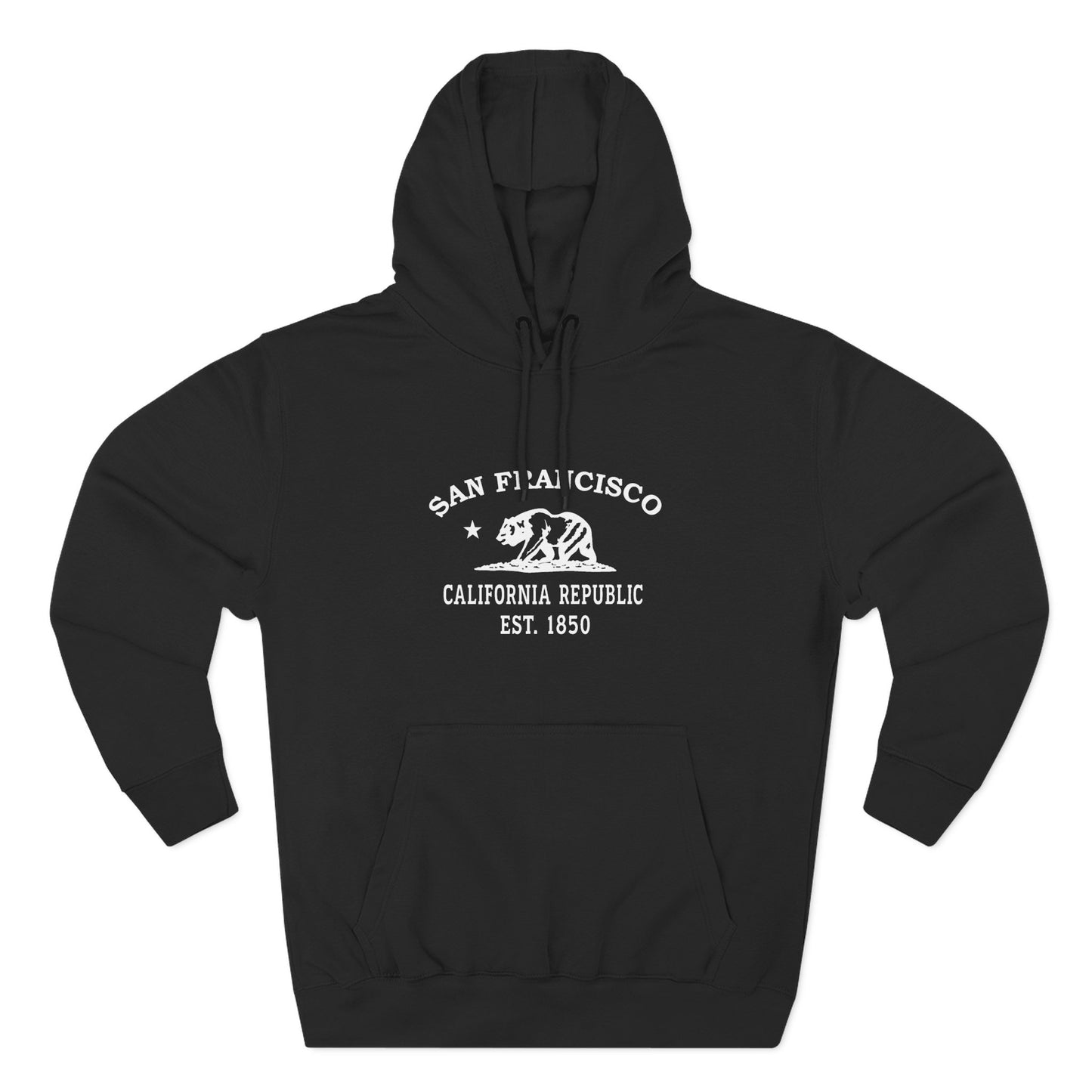
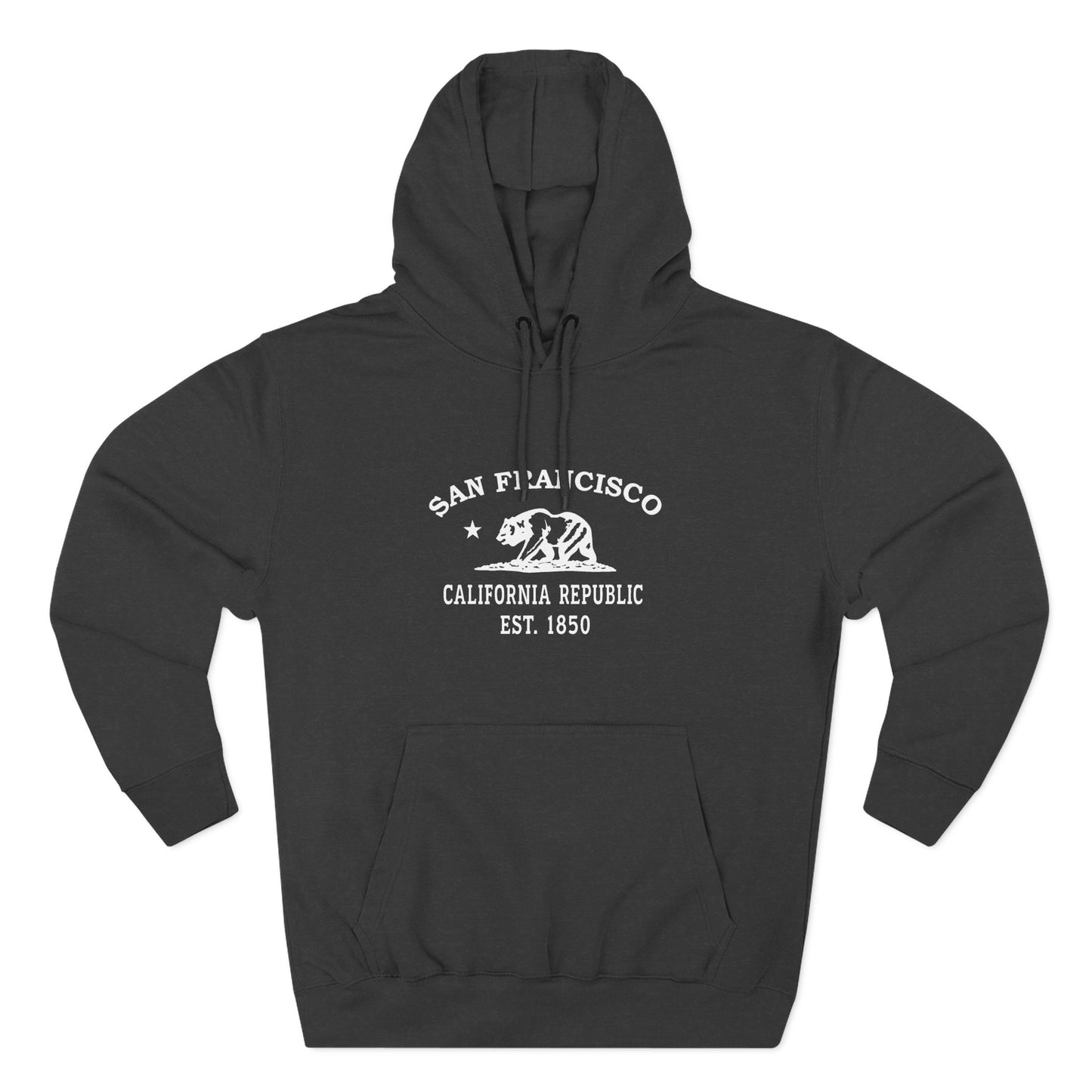
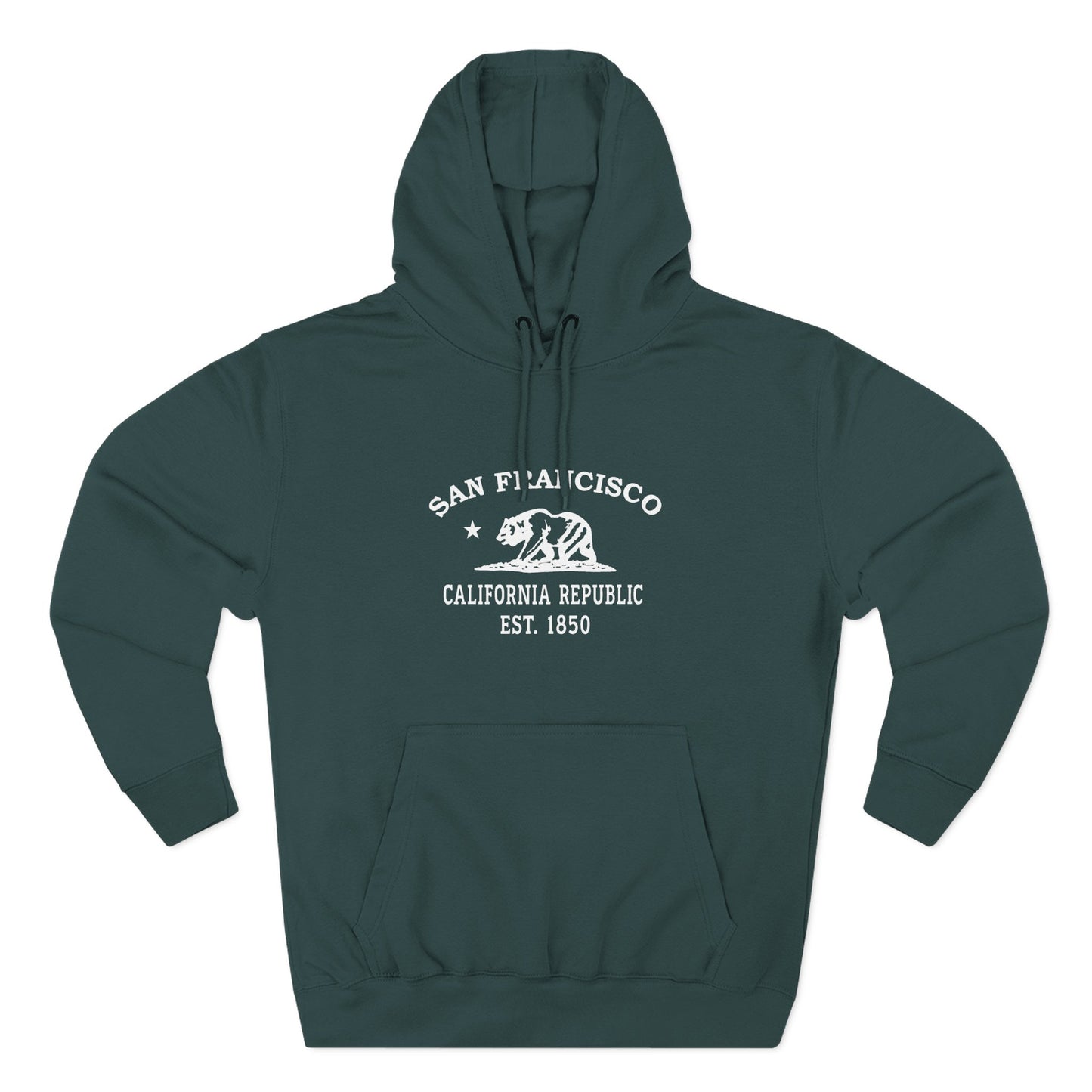
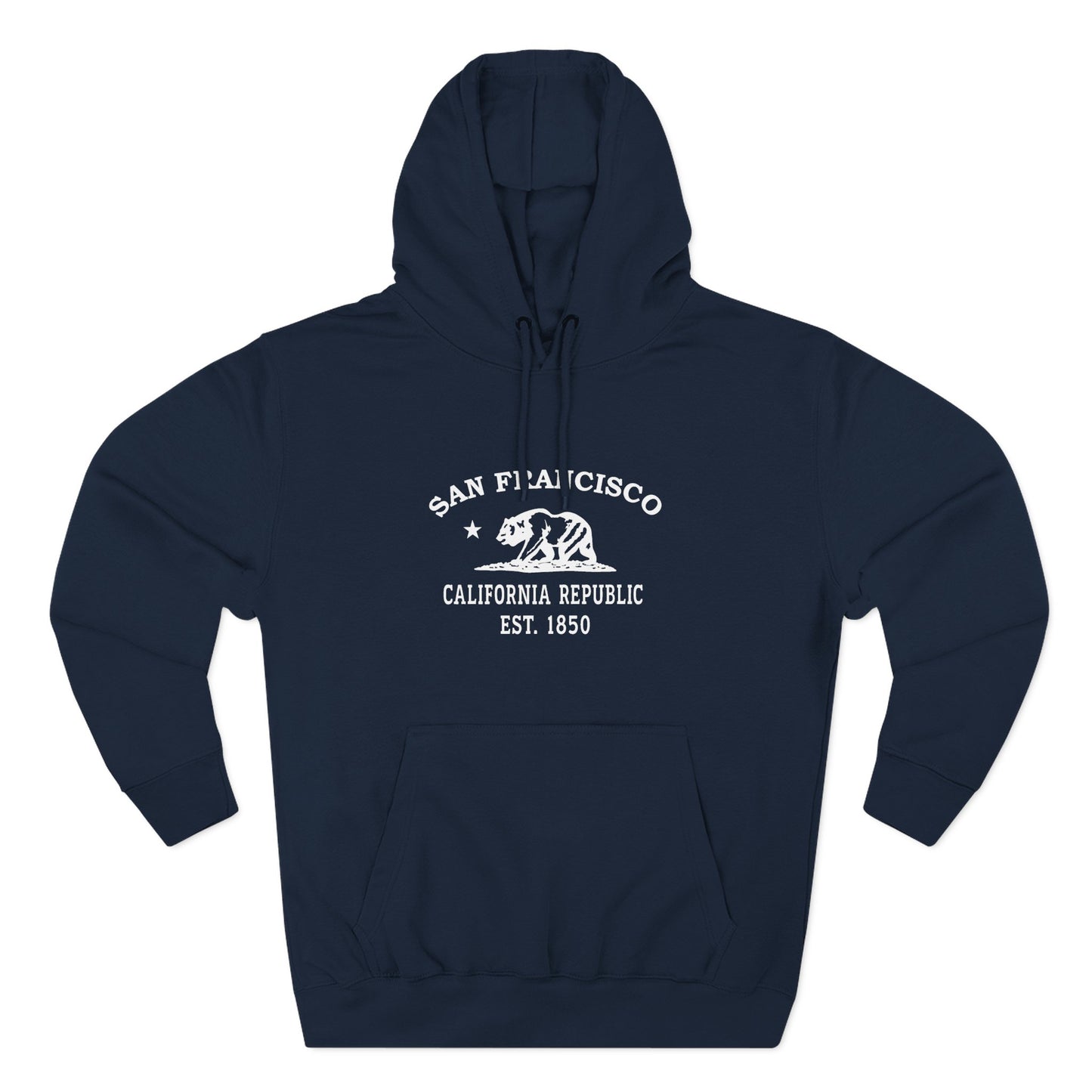
Our San Francisco retro logo carries the California Bear and star of the Bear Flag tradition, with "1850" stamped beneath — the year of California statehood and San Francisco’s incorporation. The black-and-white styling is retro, in the visual vocabulary of WPA posters, crate labels, and the wayfinding of the rebuilt city. The bear and star, paired with the date, place the design in the founding generation of the state — and the city that came back from 1906, built the Bridge, and ran the cable cars every day in between.
The peninsula was home long before the bridge or the gold. The Yelamu, a Ramaytush Ohlone people, lived on these seven miles by seven miles for thousands of years. The Spanish arrived in 1776: Fathers Francisco Palóu and Pedro Cambón celebrated the first mass at Mission San Francisco de Asís that June — five days before the Declaration of Independence was signed across the continent — and the Presidio followed in September. The mission era devastated the Yelamu, a loss the city’s story owes its first honesty to. The 1791 adobe chapel, Mission Dolores, still stands as the oldest intact building in San Francisco, and a Mexican-era village called Yerba Buena grew along the cove until 1847, when it took the name San Francisco.
Why People Visit San Francisco California
San Francisco offers the orange bridge in the fog, a moving landmark for a transit system, an island prison with a harbor view, Victorian rows and mission adobe, and hills that hand you a postcard at every crest. Visitors come for the Golden Gate, the cable cars, Alcatraz, the neighborhoods, the food, and the fog that is part of the architecture. On the Bay since 1776.