




It nearly washed away more than once. The rivers that made Sacramento a port also flooded it — catastrophically in 1850 and again in 1862 — and rather than move, the city raised itself, jacking up buildings and filling the streets a full story higher. That is why Old Sacramento has an "underground": the original ground floors are now basements. The levees and the raised grade held, and in 1854 the young river city won the prize that fixed its future — it became the capital of California, and the domed State Capitol rose over Capitol Park by 1874.
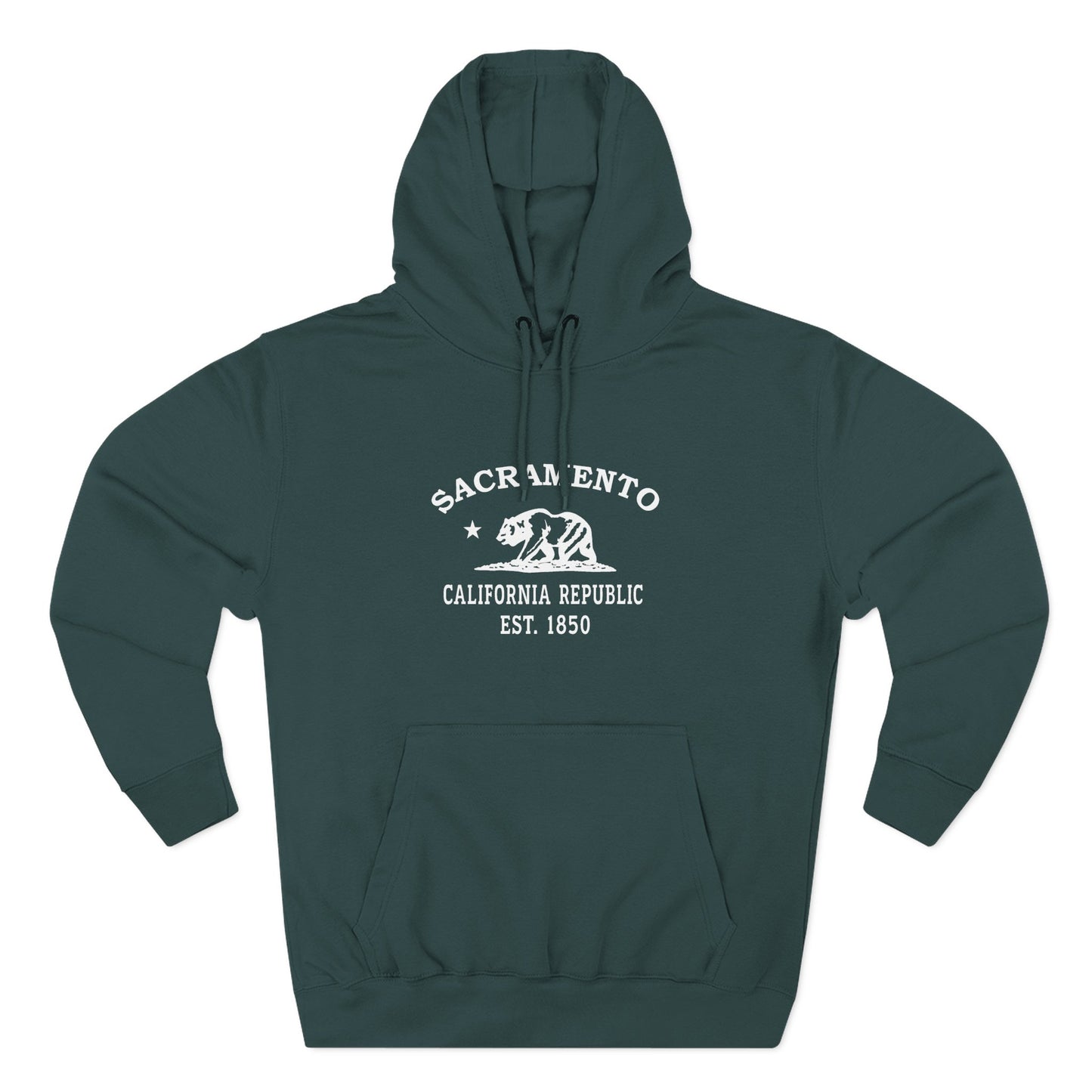
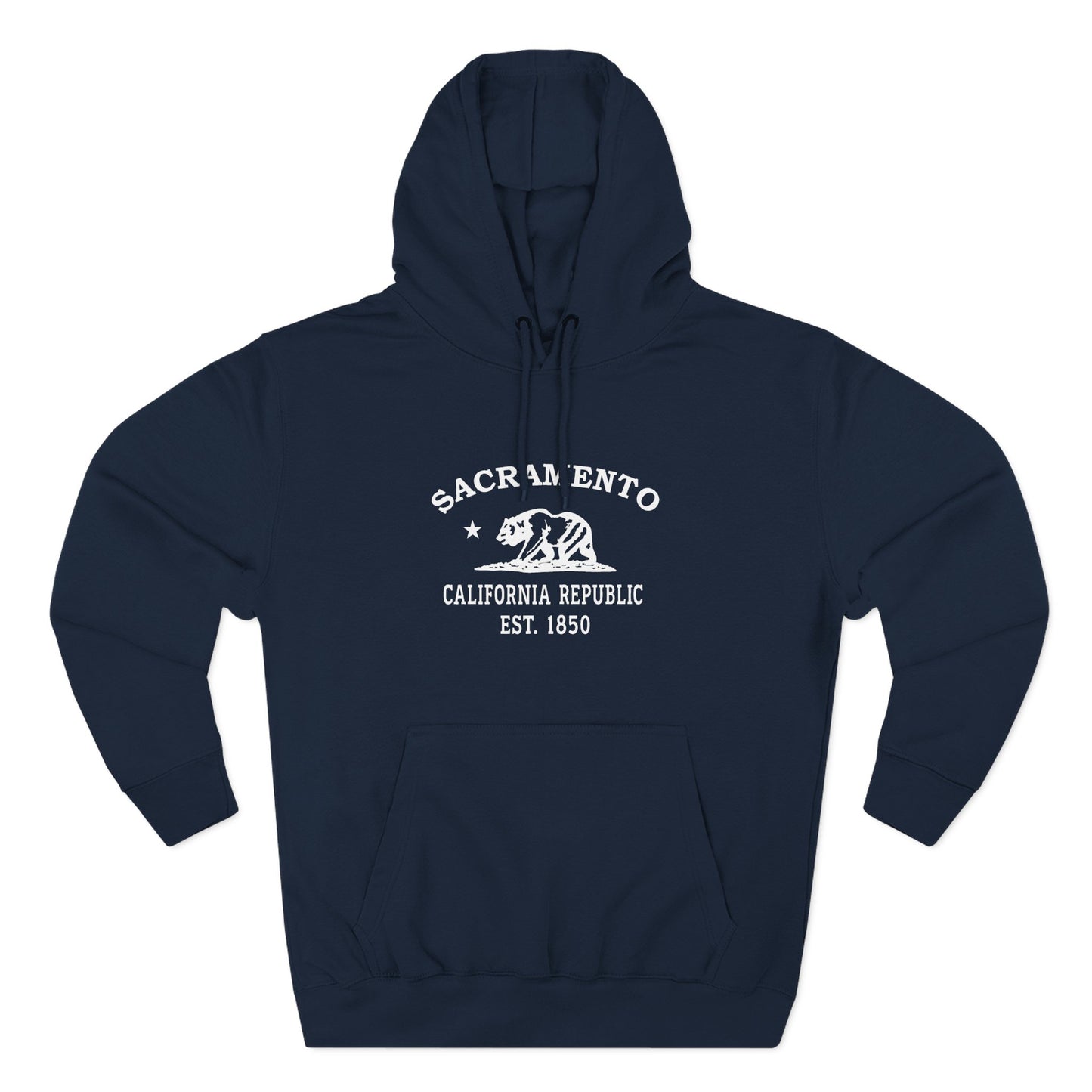
Our Sacramento logo carries the California bear and star above "Est. 1850," the shared retro emblem of our California towns, drawn in worn black-and-white like a WPA poster or an old crate label. The 1850 date marks both California statehood and the year Sacramento incorporated, and the bear of the California Republic is the through-line that links Sacramento to every other California town we make. The detail that makes this one Sacramento is the river city itself — the Gold Rush cobblestones of Old Sac, the gold Tower Bridge over the river, and the City of Trees that grew up around the capitol.
Why People Visit Sacramento
Sacramento rewards travelers who want history, rivers, and shade rather than a beach — the Gold-Rush waterfront, the railroad that started here, the capitol, and a walkable grid under a famous tree canopy. People come for Old Sacramento and the Railroad Museum, for the Capitol and the gold bridge, and for an easy California day where frontier history and a leafy capital city sit side by side at the meeting of two rivers.
