



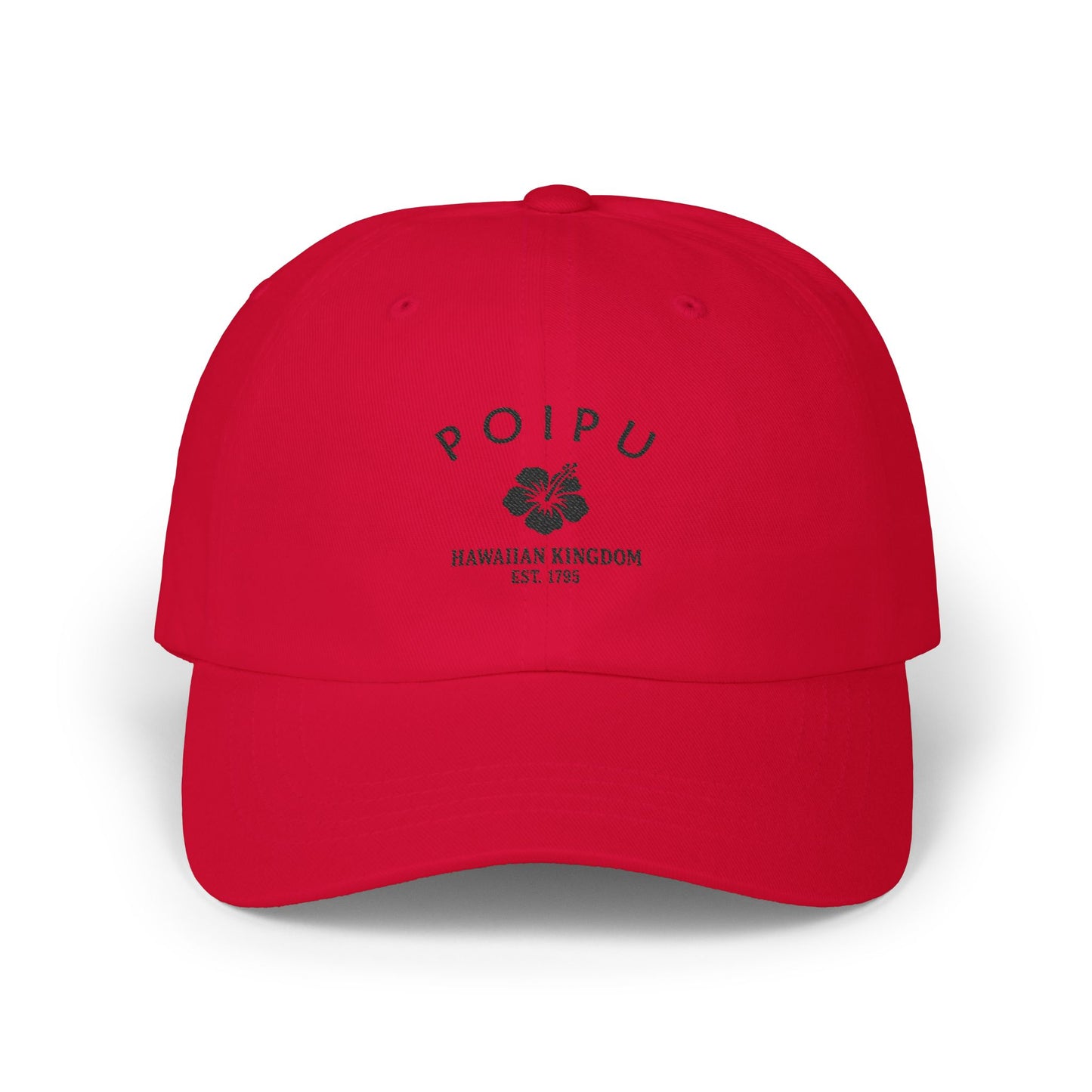
What's with Poʻipū? Poipu is Kauai's sunny south shore — a resort coast around a beach once named the best in America, with Old Koloa Town's plantation history inland. The name means "crashing waves," and the geography explains the sunshine: the trade winds drop their rain on Mount Waiʻaleʻale — among the wettest places on Earth — leaving this southern tip in a bright rain shadow. Kauaʻi at its warmest and most easygoing, with a century and a half of plantation history a mile up the road.
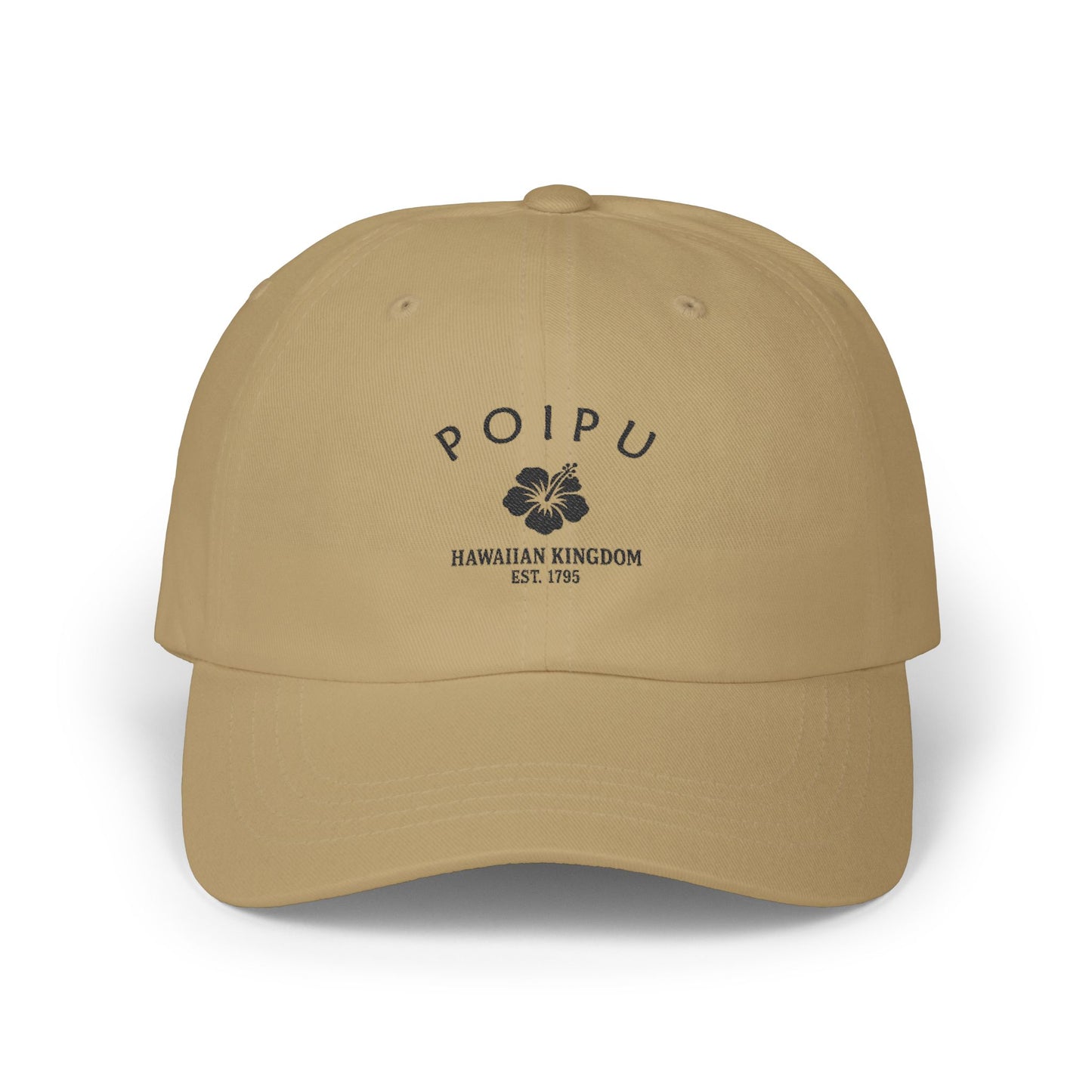
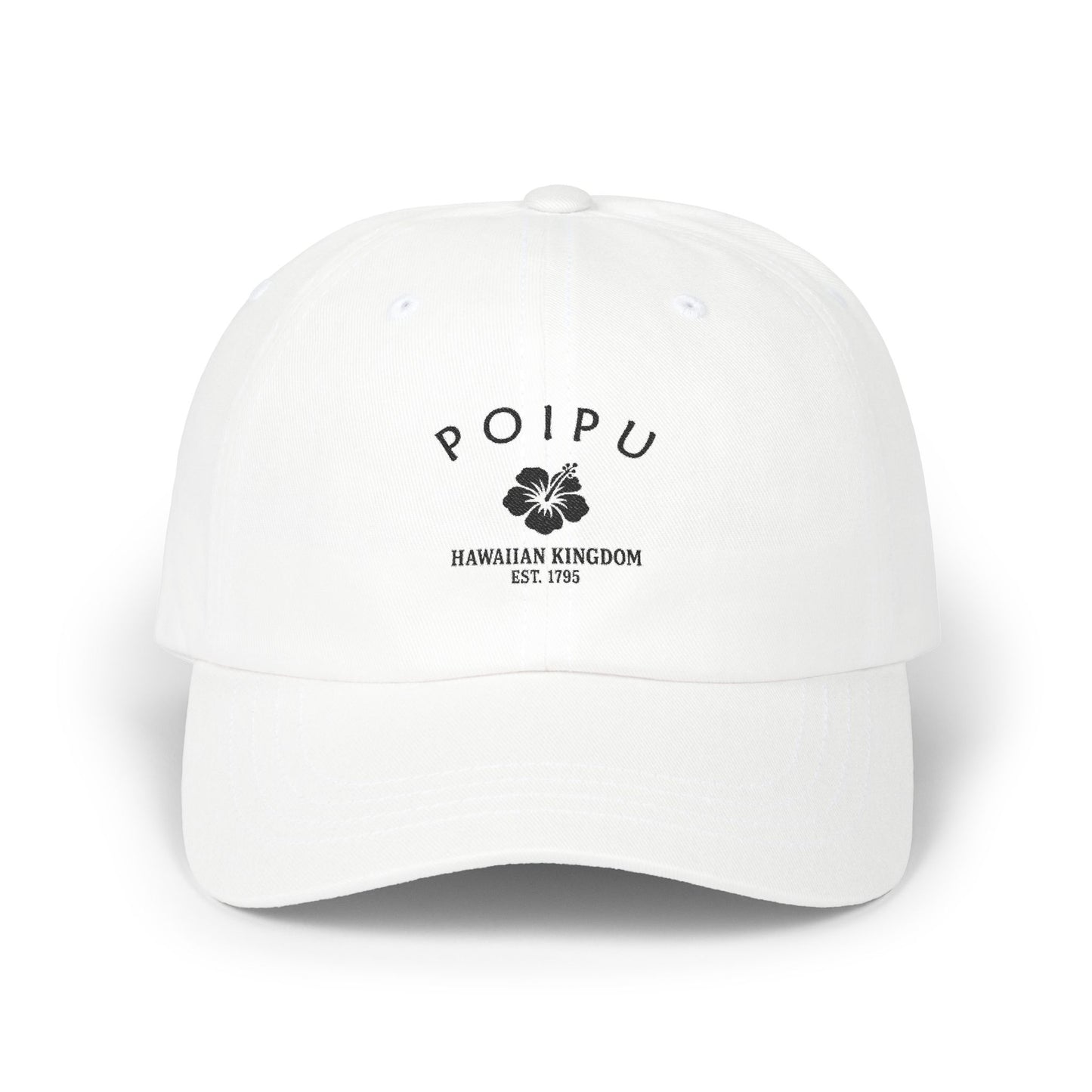
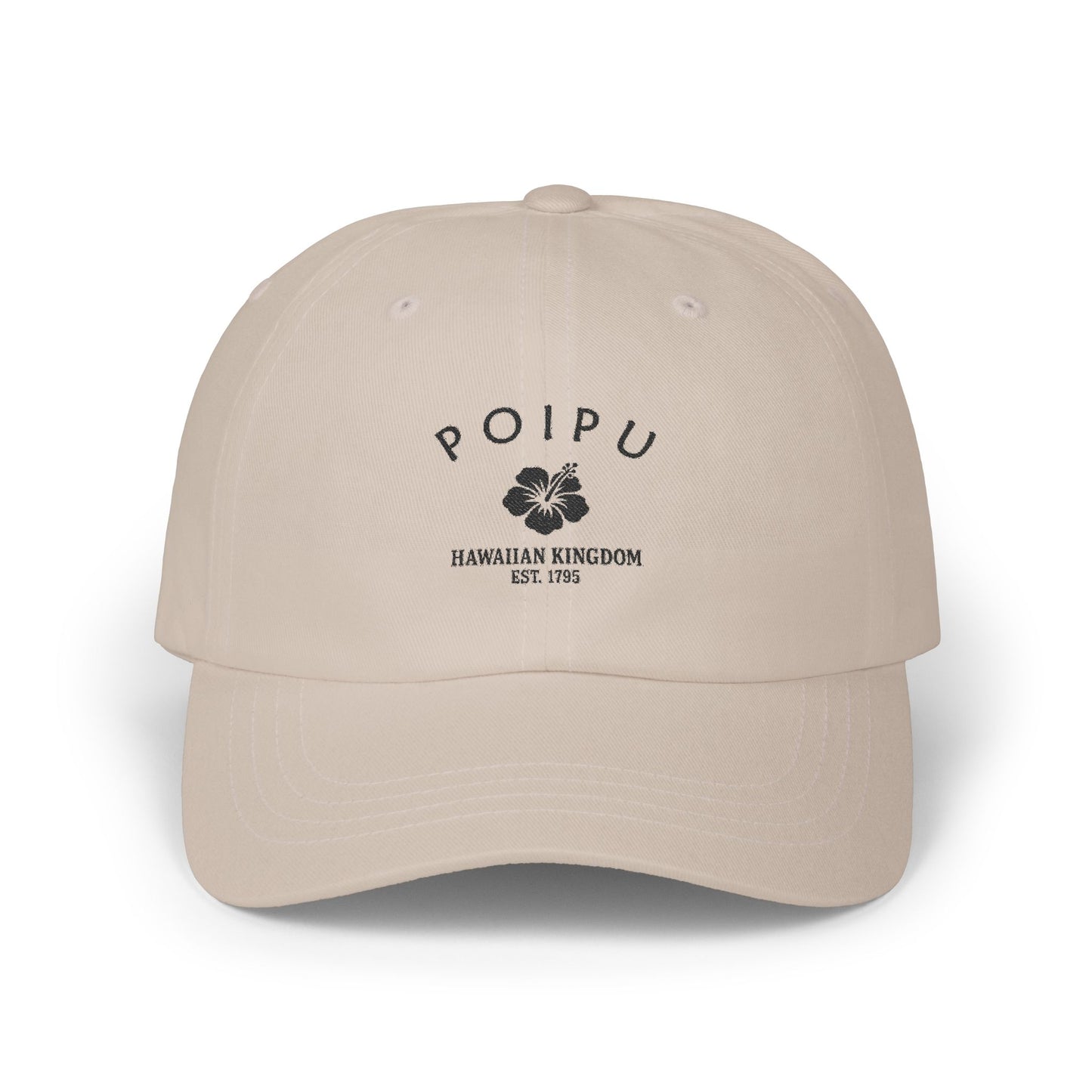
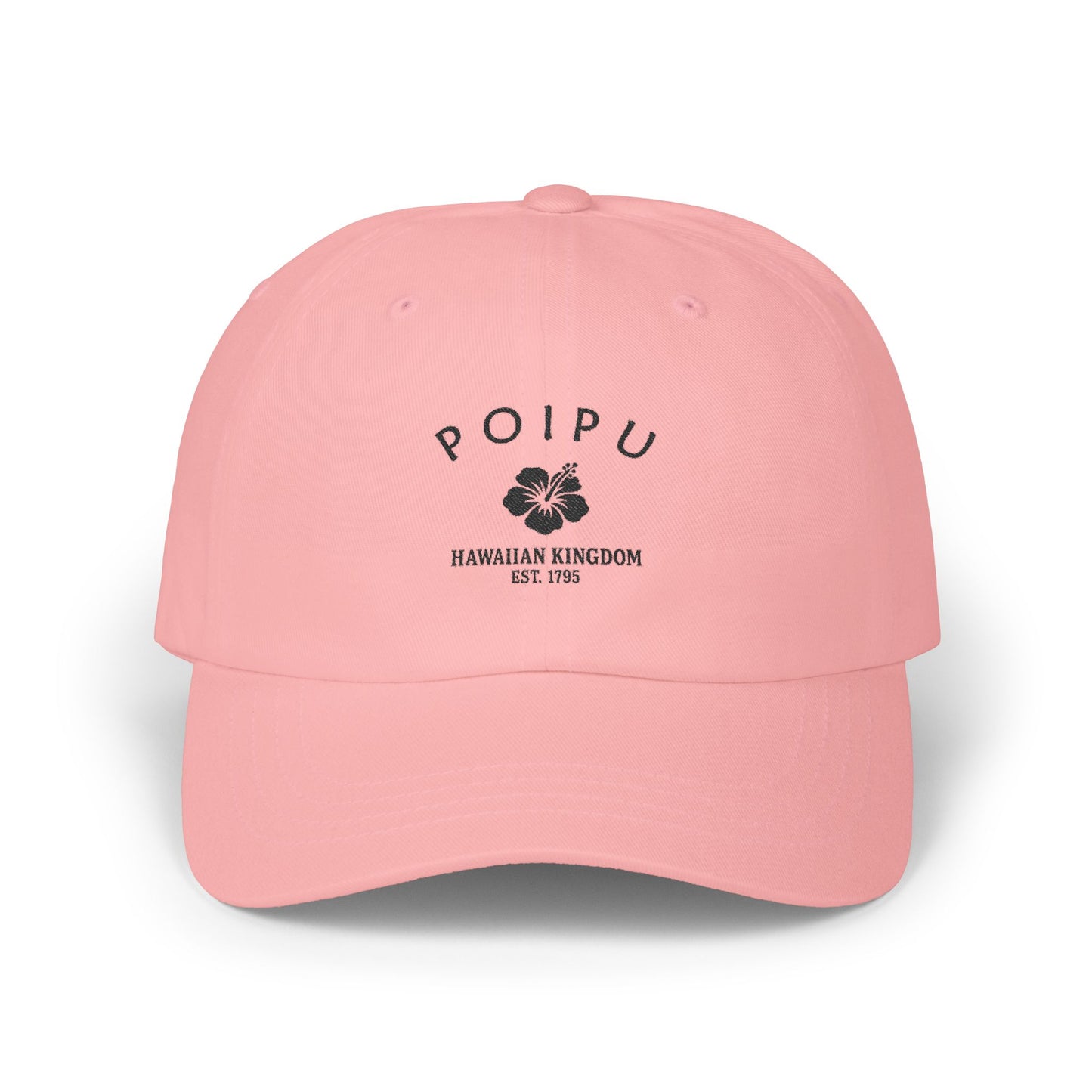
Our Poʻipū logo carries the Hawaiian hibiscus above "Hawaiian Kingdom — Est. 1795," the shared retro emblem of our Hawaiʻi places, drawn in worn black-and-white like an old travel decal. What makes this one Poʻipū is everything around it: the crashing-waves name, the sunniest shore on the Garden Isle, the People's Prince, and the honu asleep on the best beach in America. Wear the south shore.
Why People Visit Poʻipū
- Poʻipū Beach Park — the best-beach-in-America crescents, beginner surf, and honu (with monk seals as occasional guests).
- Spouting Horn — the lava-tube blowhole throwing spray forty or fifty feet, best at higher surf.
- The Tree Tunnel — the 1911 eucalyptus vault over Maluhia Road, the classic south-shore arrival.
- Old Kōloa Town & the Heritage Trail — plantation storefronts, the 1835 mill chimney, fourteen marked history stops.
- The gardens — Allerton and McBryde tours in the Lāwaʻi Valley; Prince Kūhiō Park on the shore road.
- Māhāʻulepū Heritage Trail — the wild two miles east from Shipwreck Beach along cliffs and lithified dunes.
