


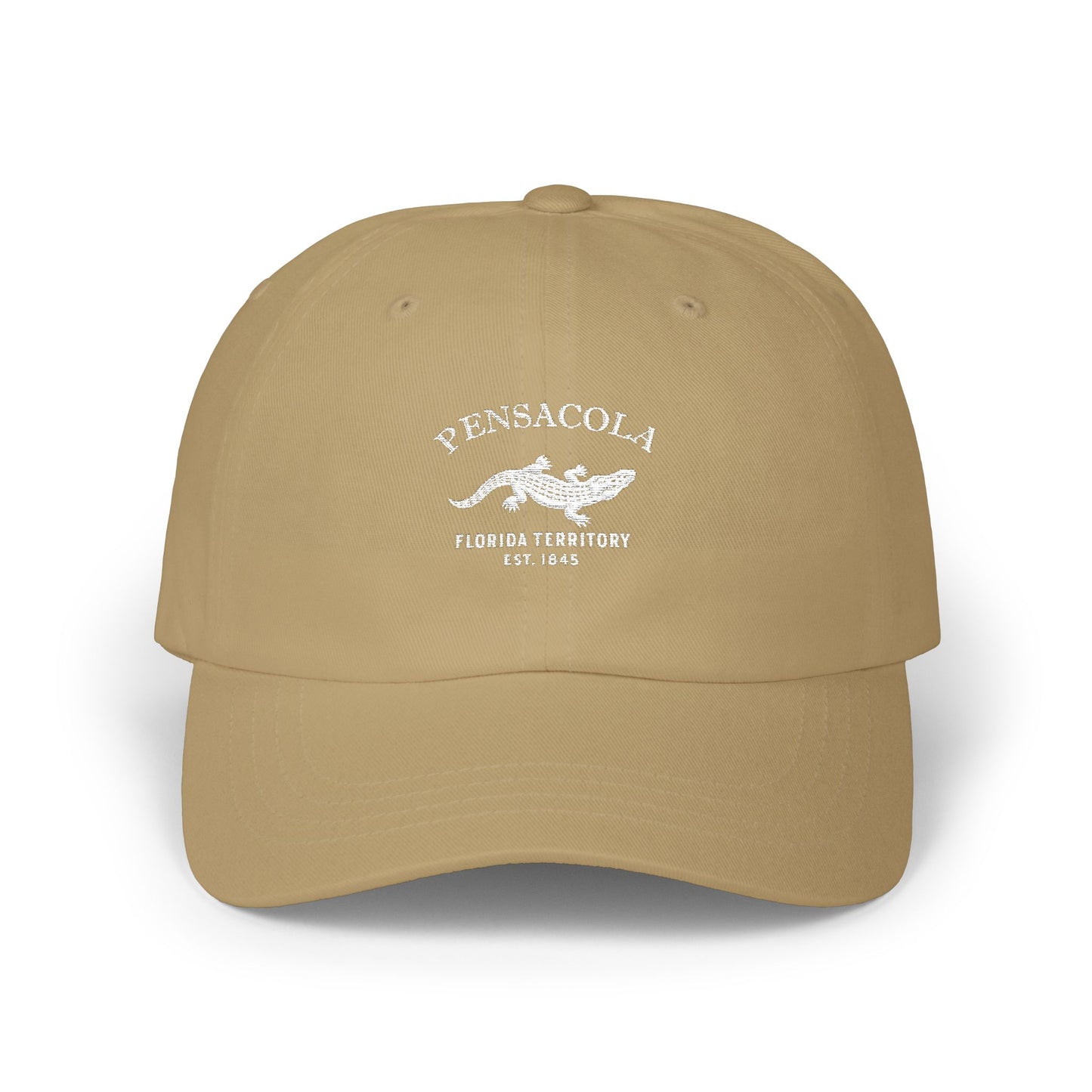
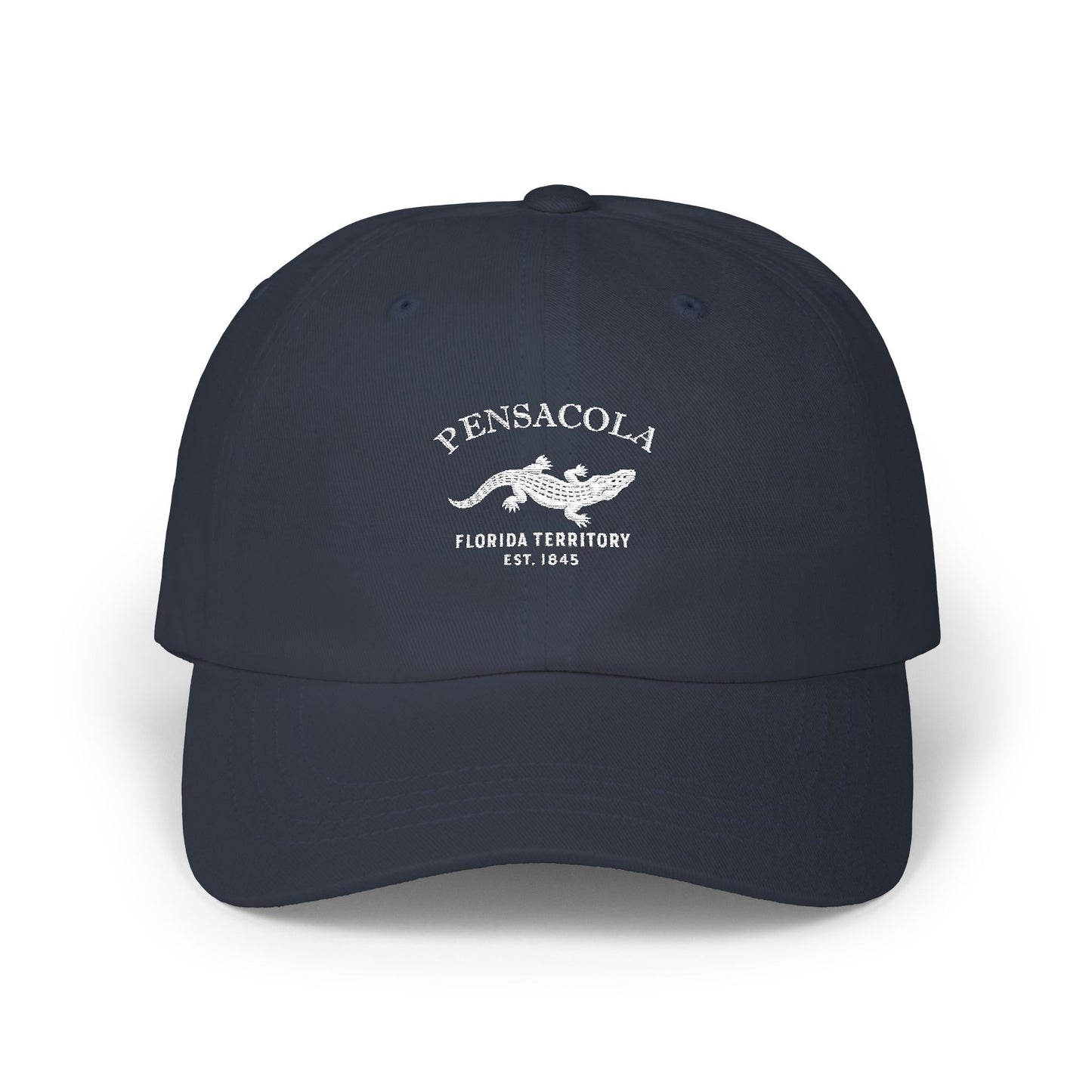
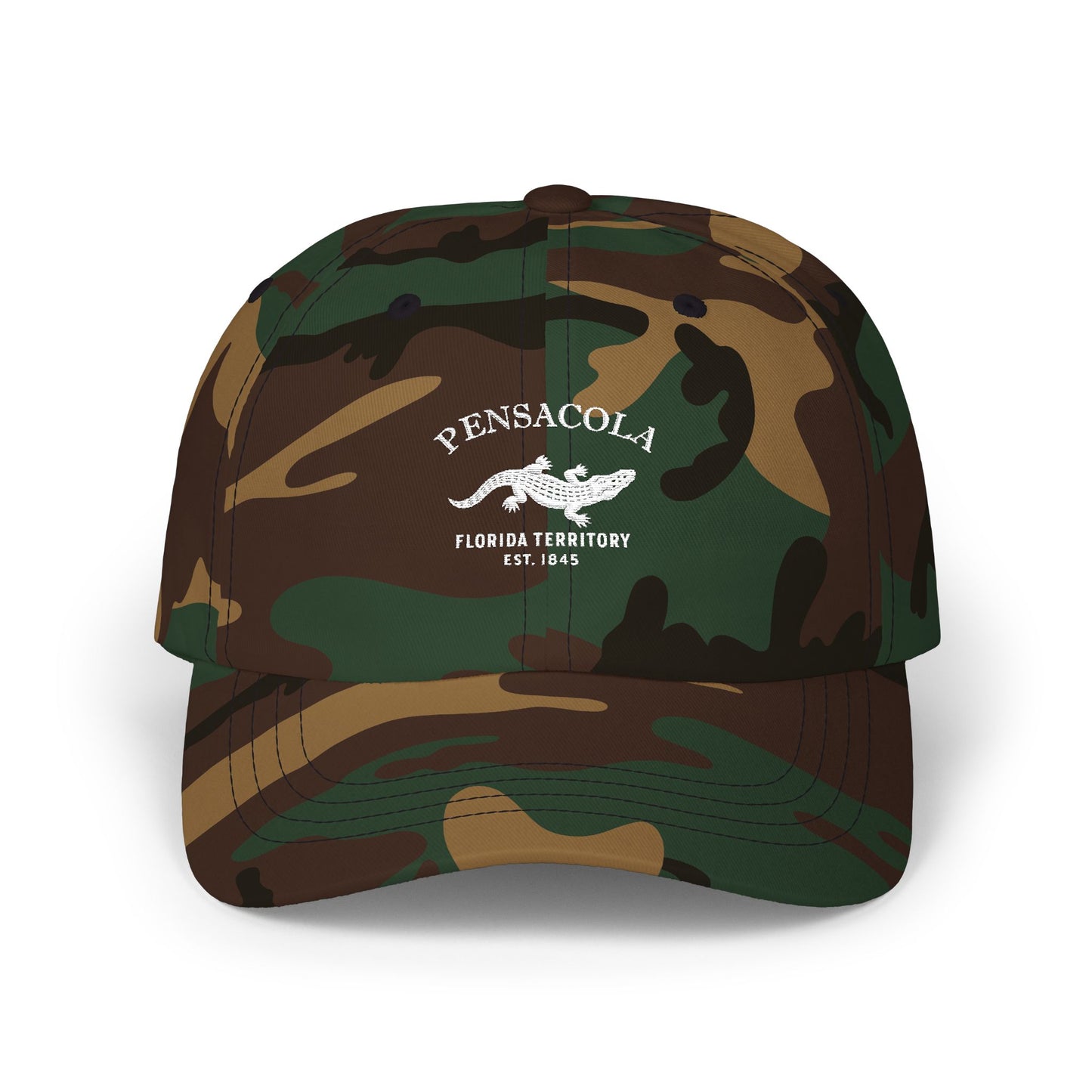
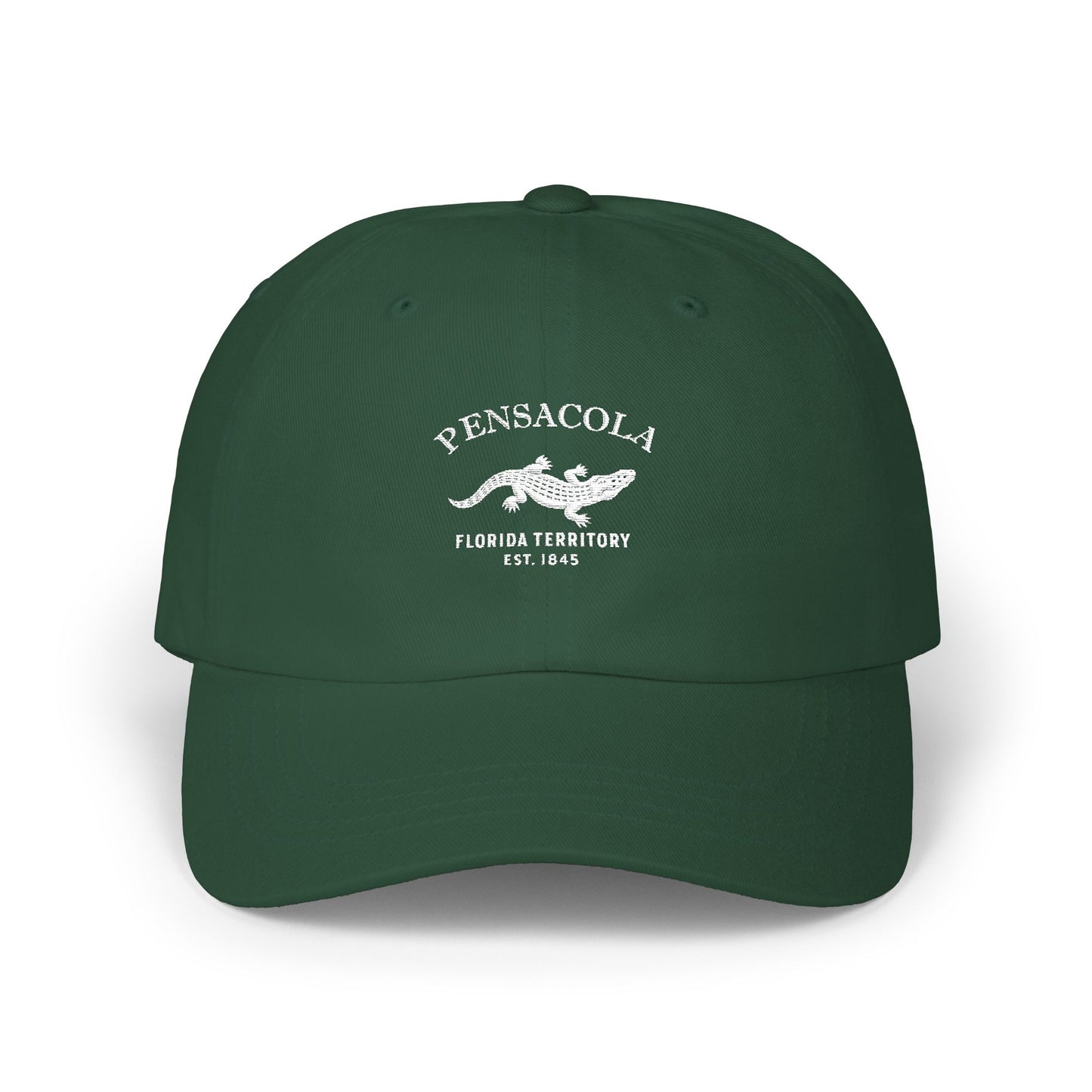
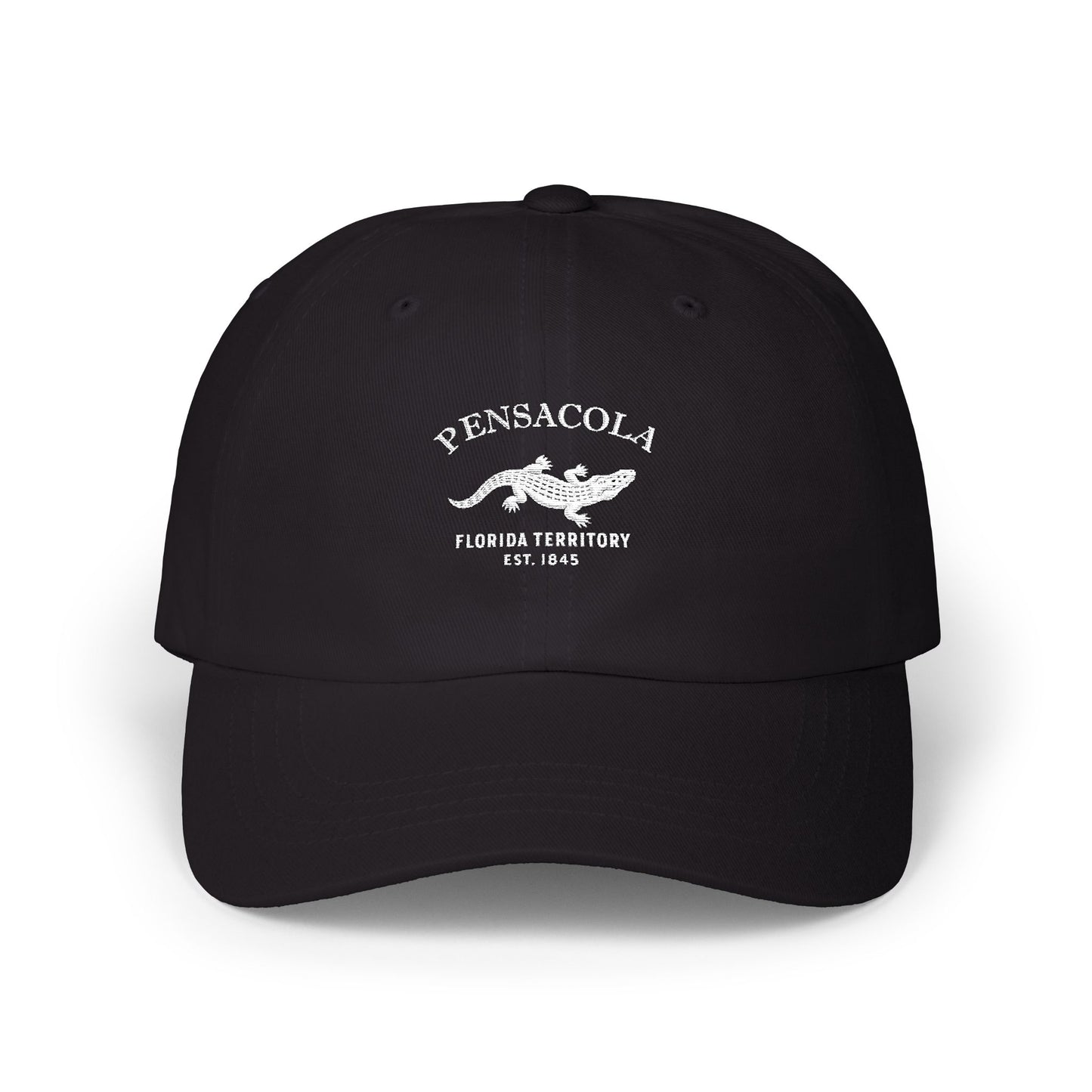
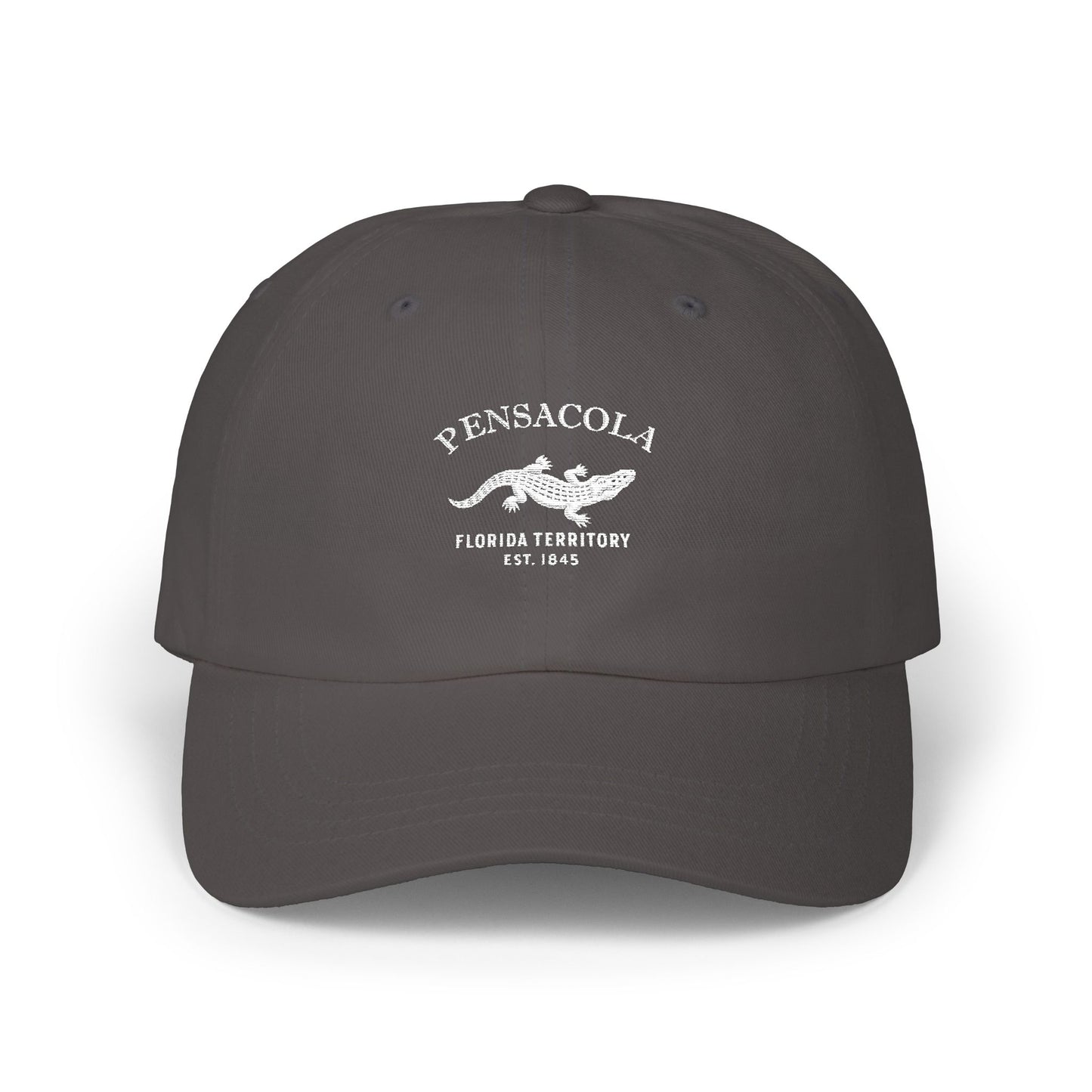

Our Pensacola logo carries Florida's alligator over "1845," the year of statehood and the shared emblem of every Merlin Classics Florida place. The alligator is the state in shorthand — toughness, the wild Gulf coast, the subtropical edge — printed black-and-white with the worn look of an old crate label or a woodcut stamp. What makes this one Pensacola is the place behind it: America's first settlement, the five flags, the cradle of naval aviation. On a tee or a cap it reads less like a souvenir and more like a piece of the Gulf coast — Est. 1845, worn plain.
They call it the City of Five Flags, and the count is literal: Spanish, French, British, then Spanish again, then American, then Confederate, then American once more — sovereignty over Pensacola changed hands again and again, making it one of the most-conquered cities in the country. Spain ceded Florida to the United States in 1821, and Pensacola incorporated as an American city in 1822. The nineteenth century brought lumber, naval stores, and a plantation economy built on the labor of enslaved people; the Civil War brought the Confederate flag, briefly, before the city returned to the Union. Each flag left a layer — in the street names, the colonial architecture of Seville Square, and the Creole culture of the old downtown.
Why People Visit Pensacola Florida
People come to Pensacola for both halves of it — the beaches and the history. Sugar-white sand and emerald water on the barrier islands, and four and a half centuries of layered story in the old town and the forts, with the naval-aviation heritage and the Blue Angels overhead. It's a Gulf-coast vacation and an American history lesson in one welcoming city.
