Around the farms, the valley filled in with the rest of an Alaska story. Up Hatcher Pass, miners had been chasing gold since before the colony, and the Independence Mine buildings still cling to the alpine bowl. The Musk Ox Farm raises shaggy Ice-Age survivors for their qiviut wool. Pioneer Peak and Matanuska Peak stand over the fields, the Matanuska Glacier grinds down its valley to the east, and the Mat-Su as a whole grows more than half of all the vegetables raised in Alaska. Farm country, with mountains for fences.
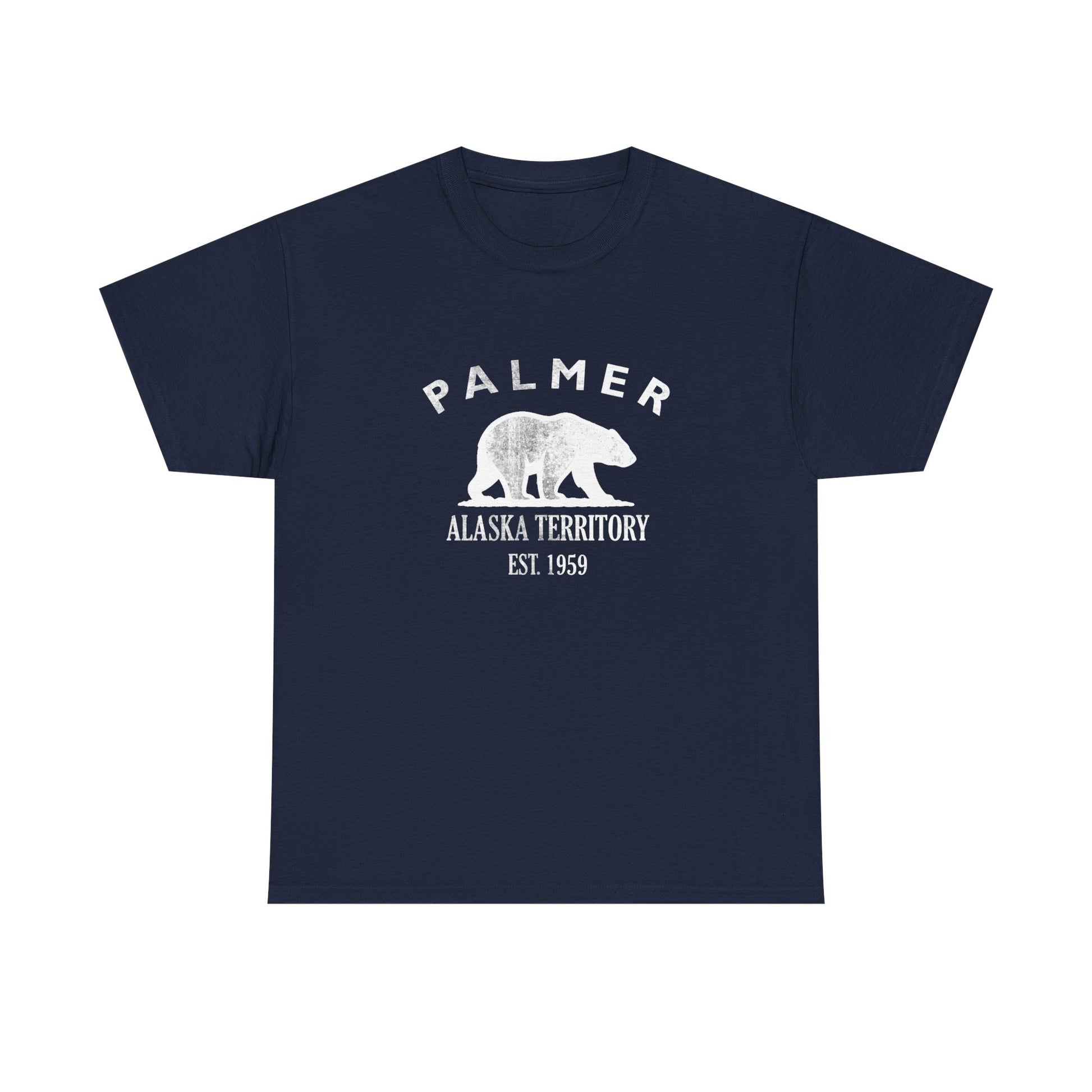
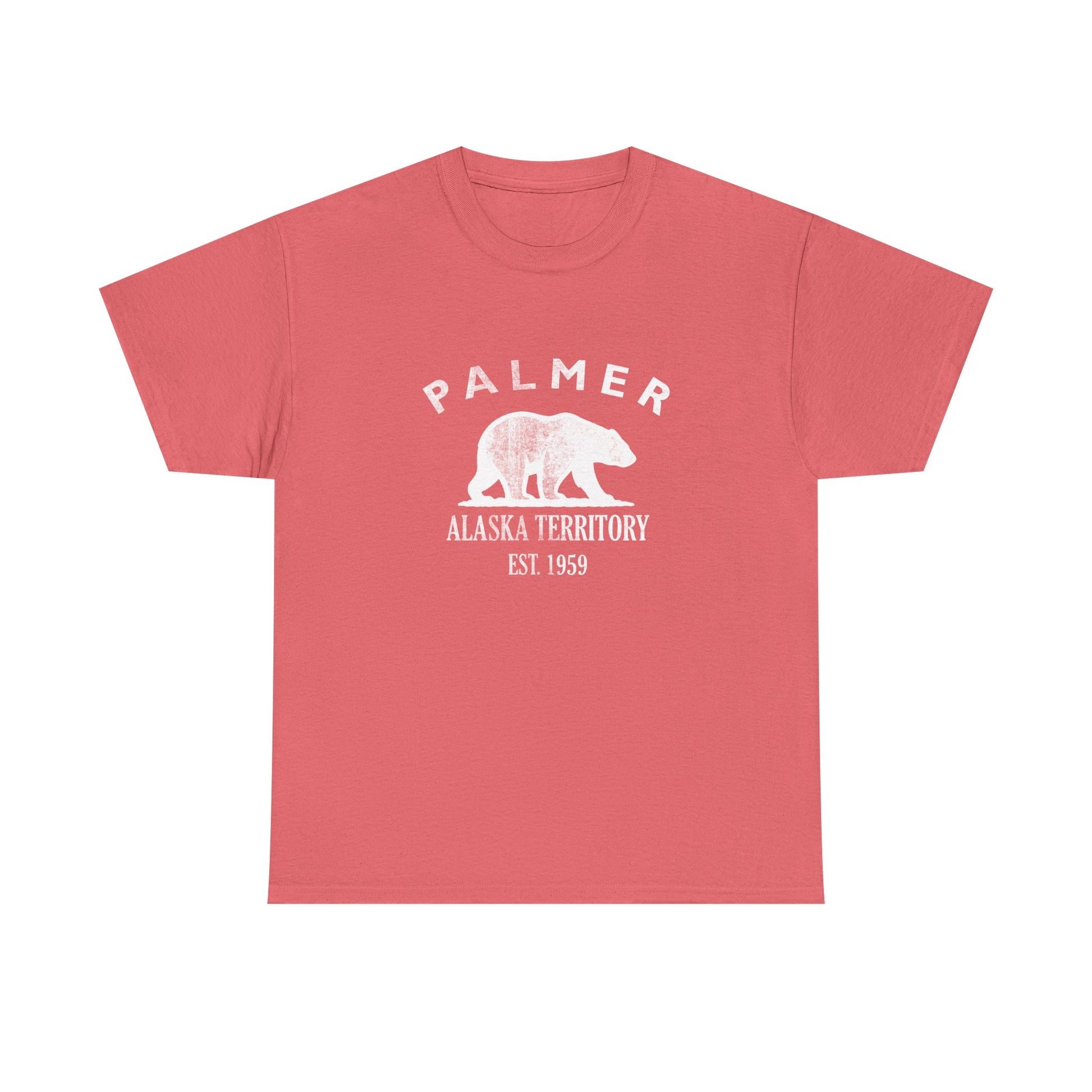
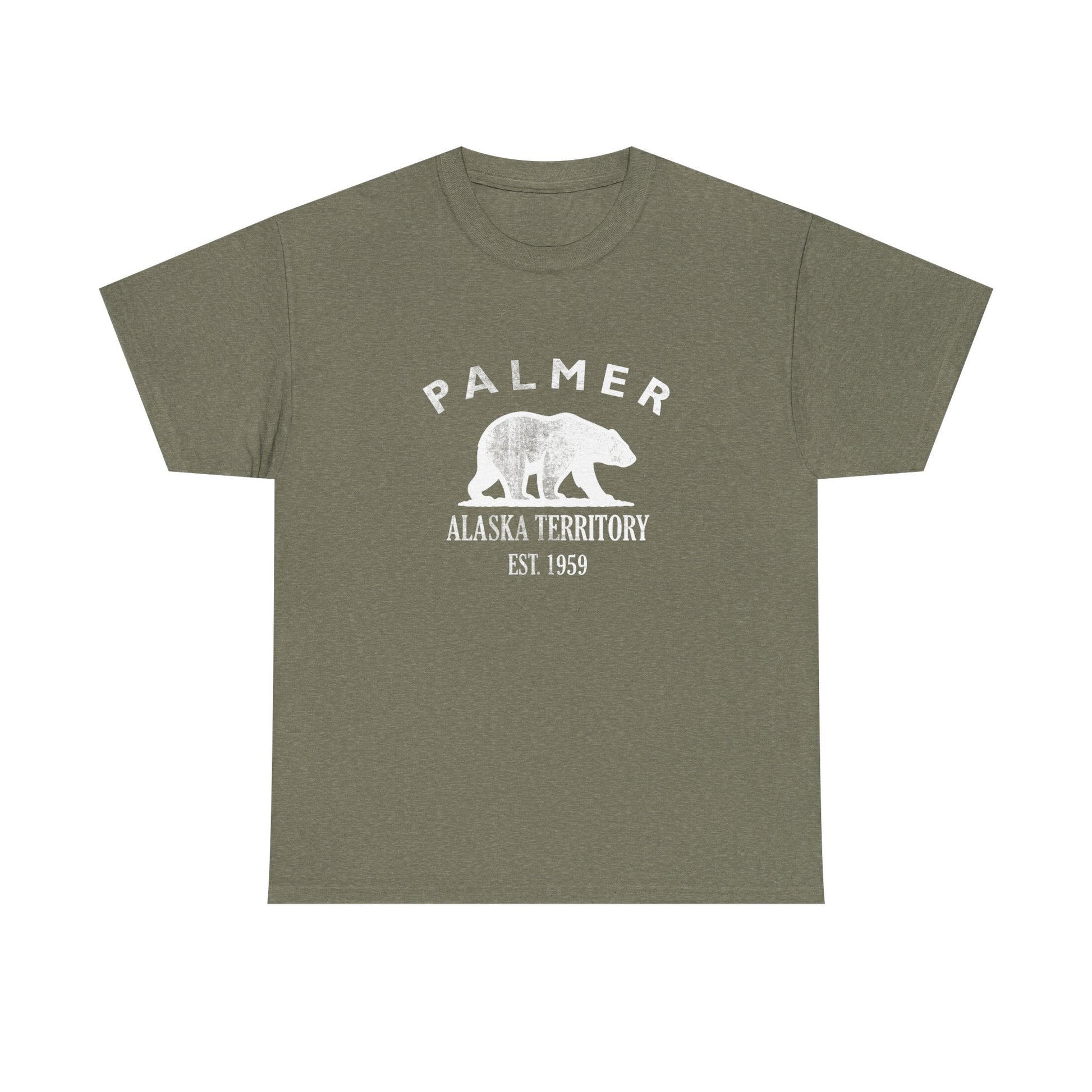
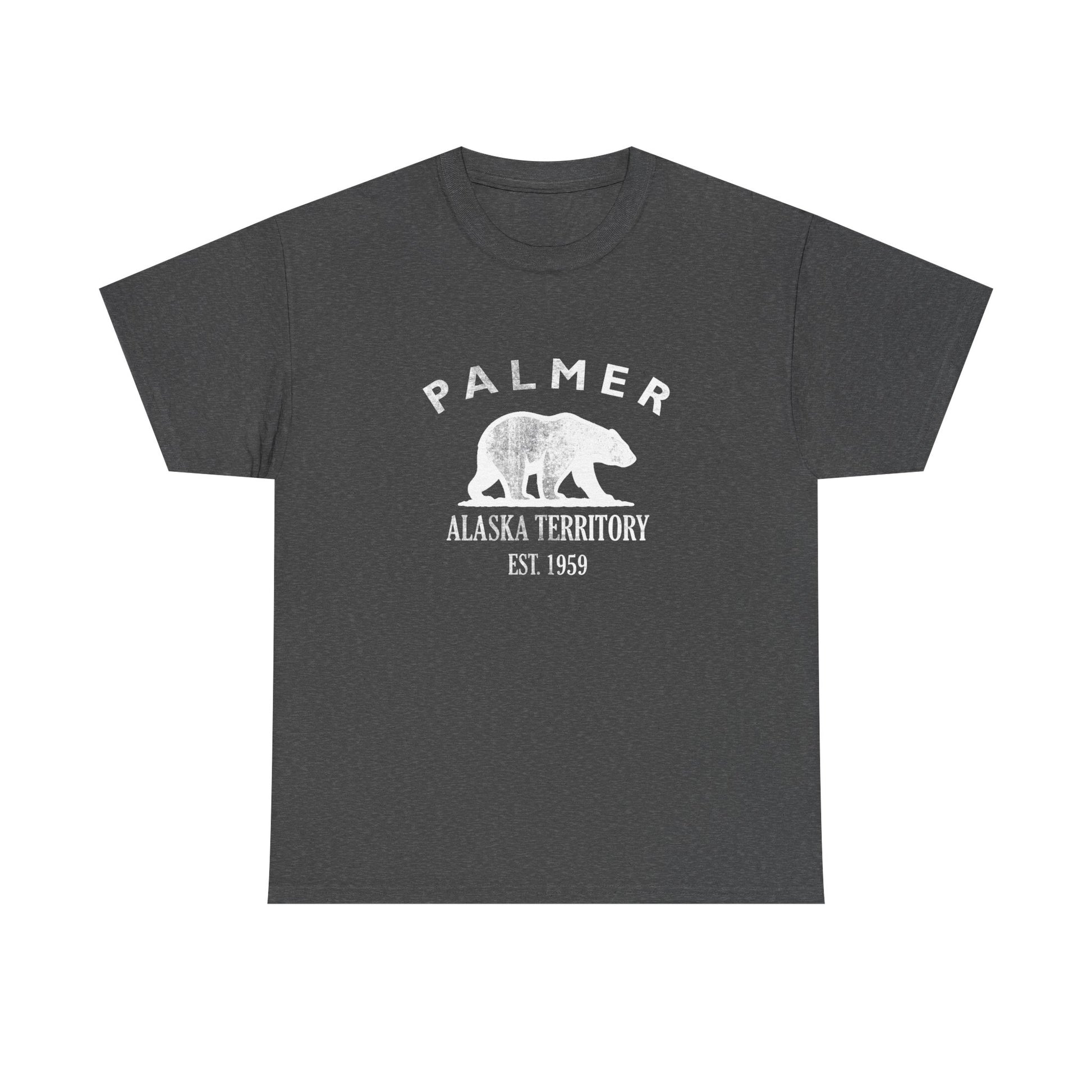
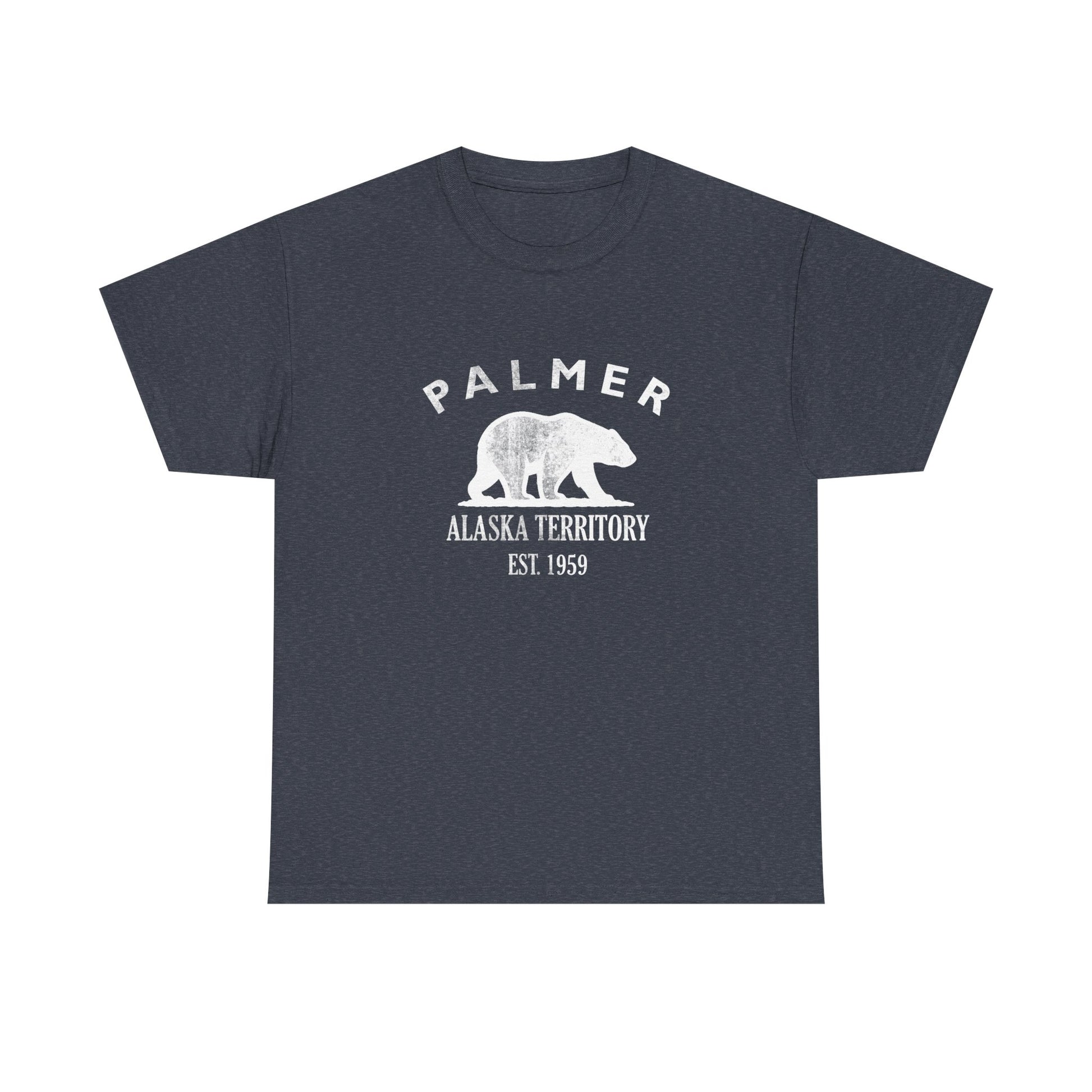
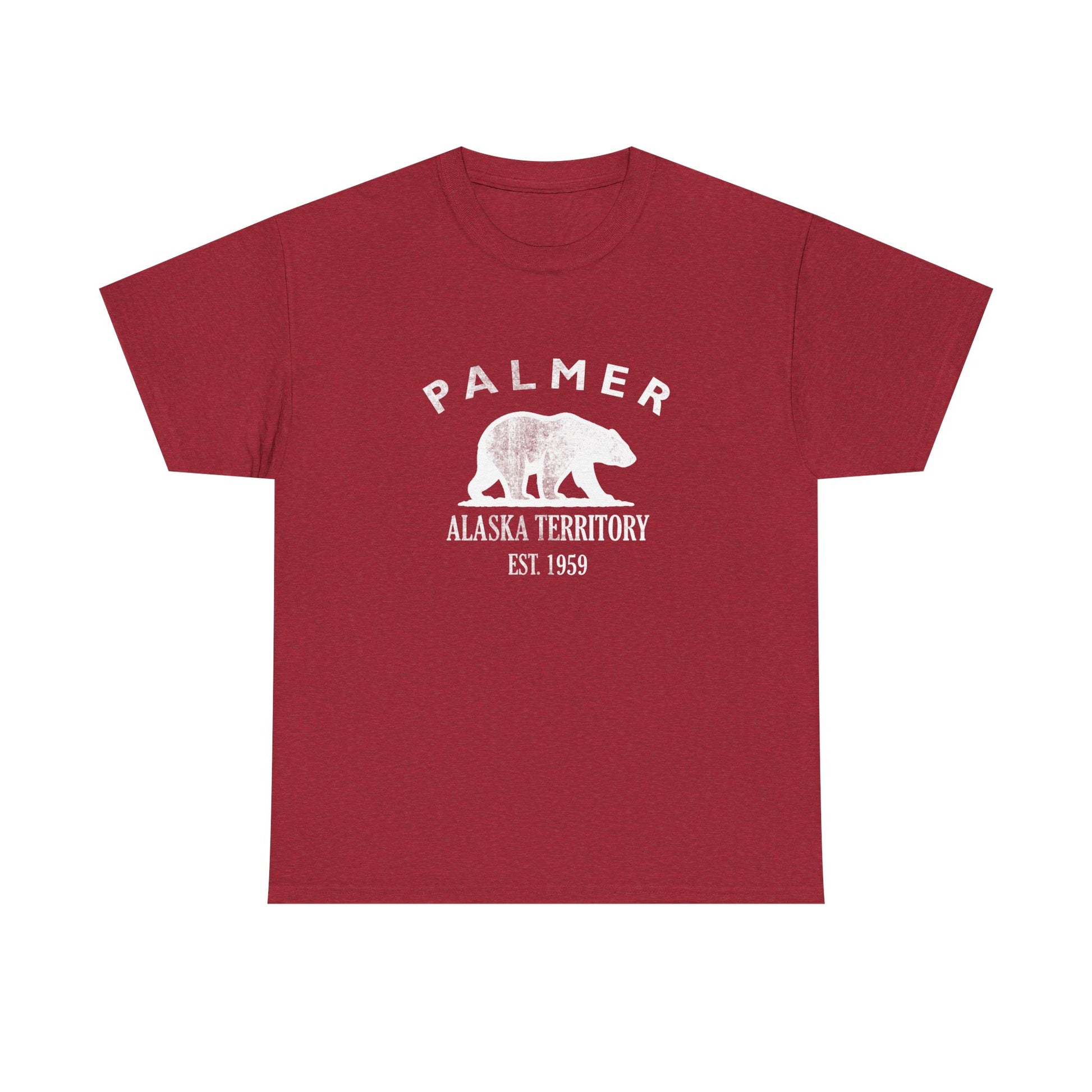
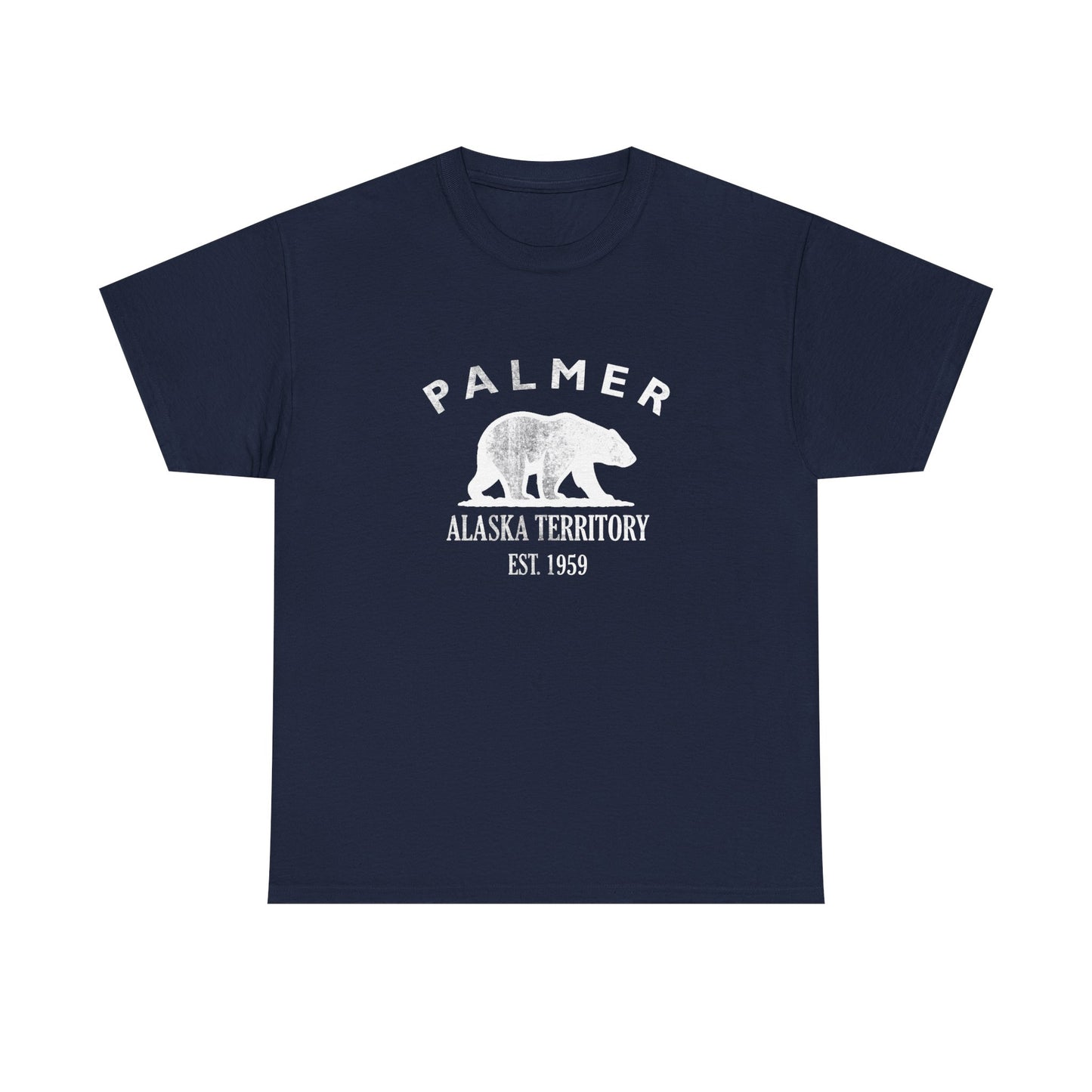
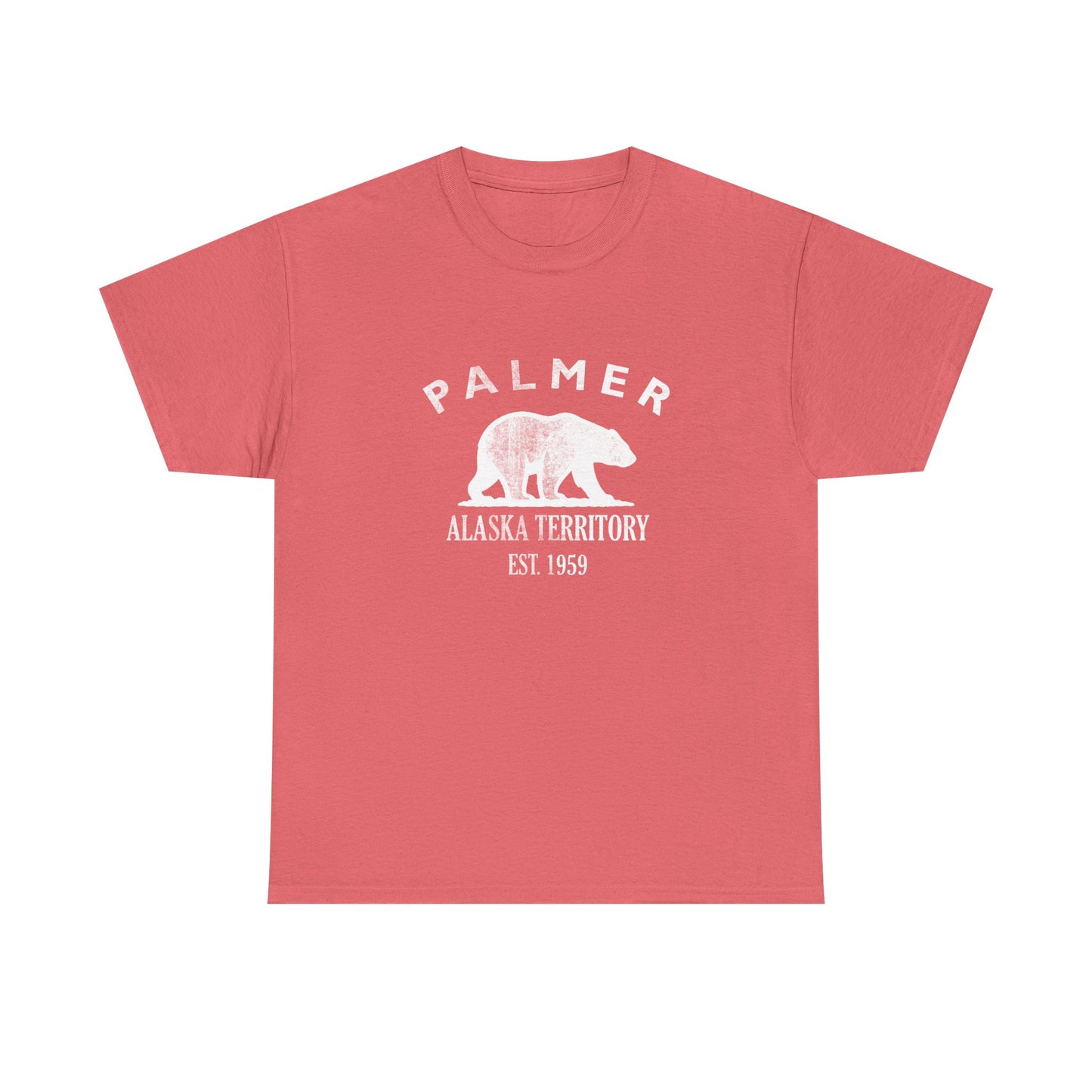
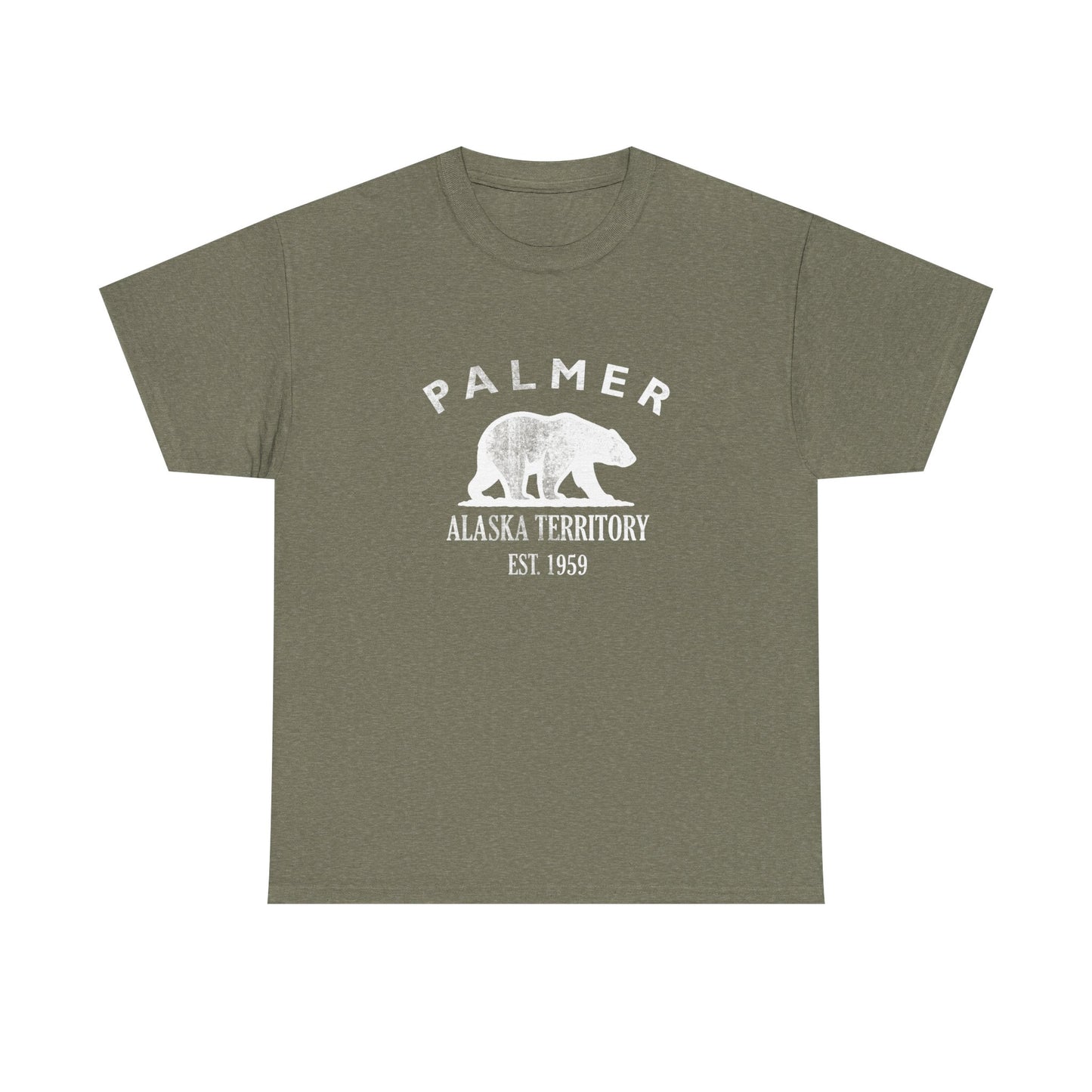
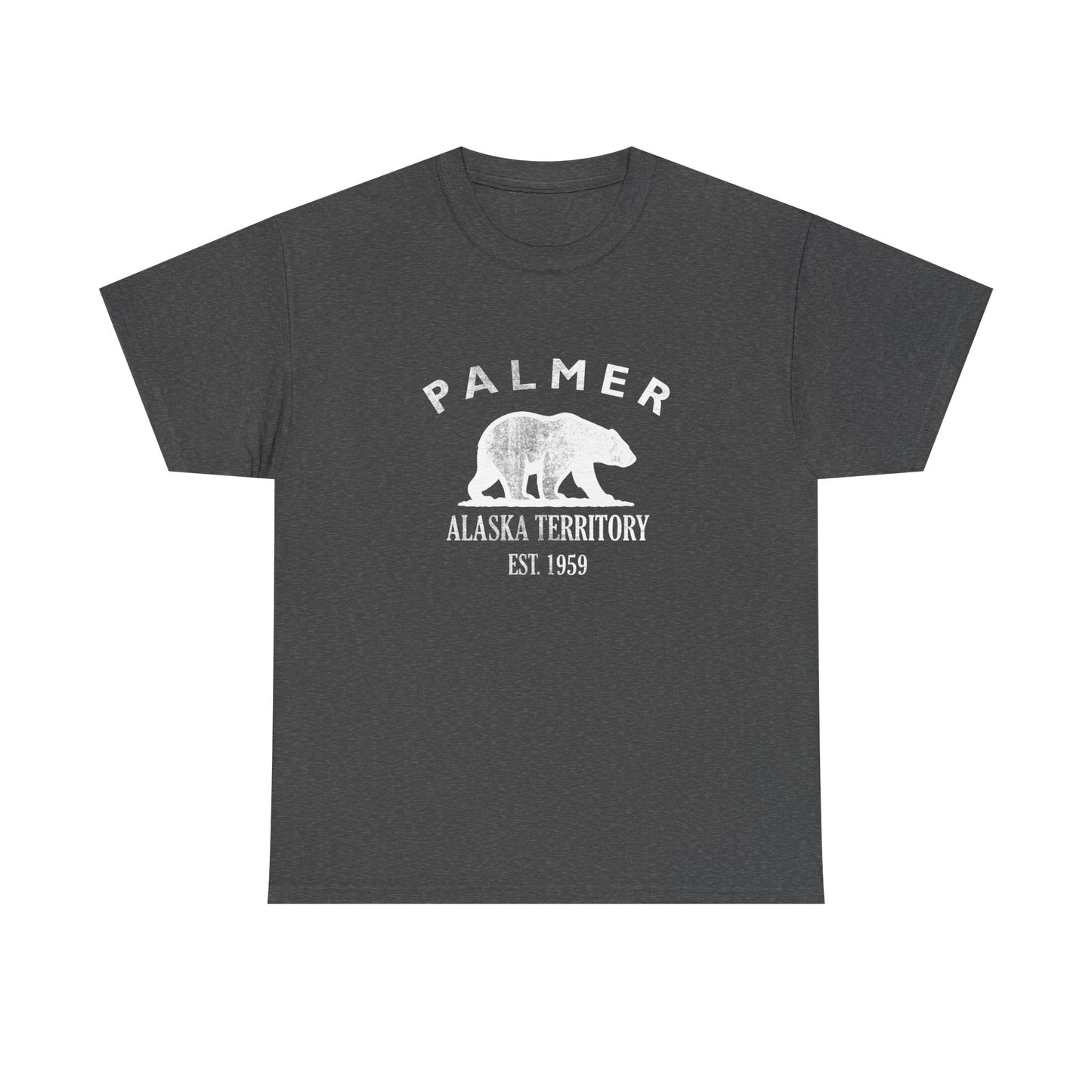
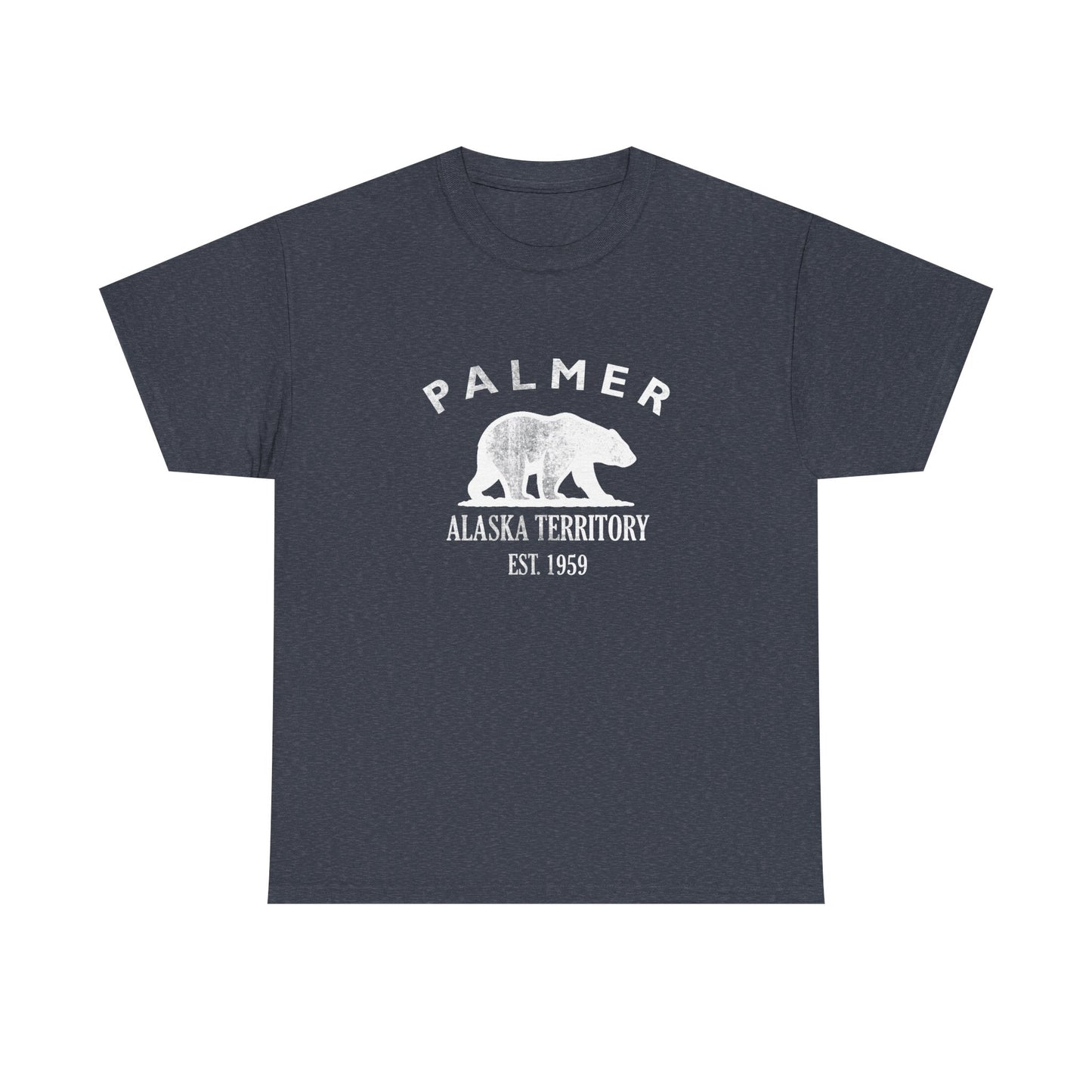
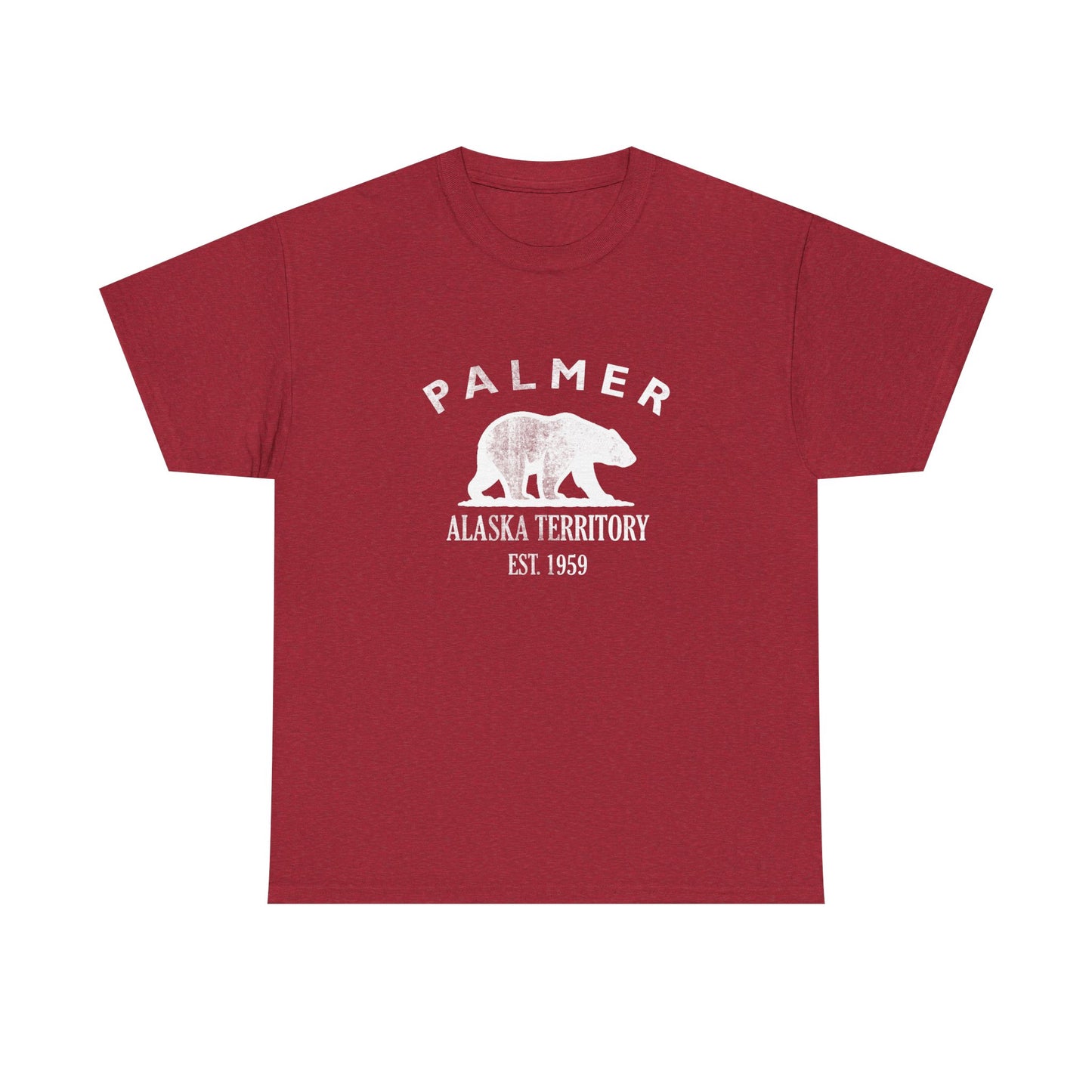
Our Palmer logo carries the Alaska bear above "Alaska Territory — Est. 1959," the shared retro emblem of our Alaska towns, drawn in worn black-and-white like an old outfitter's stamp or a crate label. The 1959 date marks Alaska statehood, and the bear is the through-line that links Palmer to every other Alaska town we make. The detail that makes this one Palmer is the colony itself — the New Deal farm families, the gambrel barns, the giant cabbages, and the Mat-Su Valley under Pioneer Peak.
Why People Visit Palmer
Palmer offers something rare in Alaska — real farm country, set against glaciers and peaks. Visitors come for the colony heritage and the State Fair, stay for the Hatcher Pass alpine and the Musk Ox Farm, and leave understanding why this one valley, under all that summer light, became the place Alaska grows its food.
