


People have gathered here for more than a thousand years. Polynesian voyagers settled Oʻahu from the south, raising taro in its valleys, walling fishponds along its reefs, and building heiau across the island — among them Puʻu o Mahuka above the North Shore, the largest temple site on Oʻahu. The island's defining moment came in 1795, when King Kamehameha I landed his war canoes on the south shore and met the forces of Kalanikūpule in the steep Nuʻuanu Valley. The fighting climbed the ridge to the cliffs of the Nuʻuanu Pali, where hundreds of defenders were driven over the precipice. With that victory Kamehameha took Oʻahu and all but completed the unification of the Hawaiian Islands — Kauaʻi would join by negotiation in 1810 — and the island stood at the center of the new kingdom.
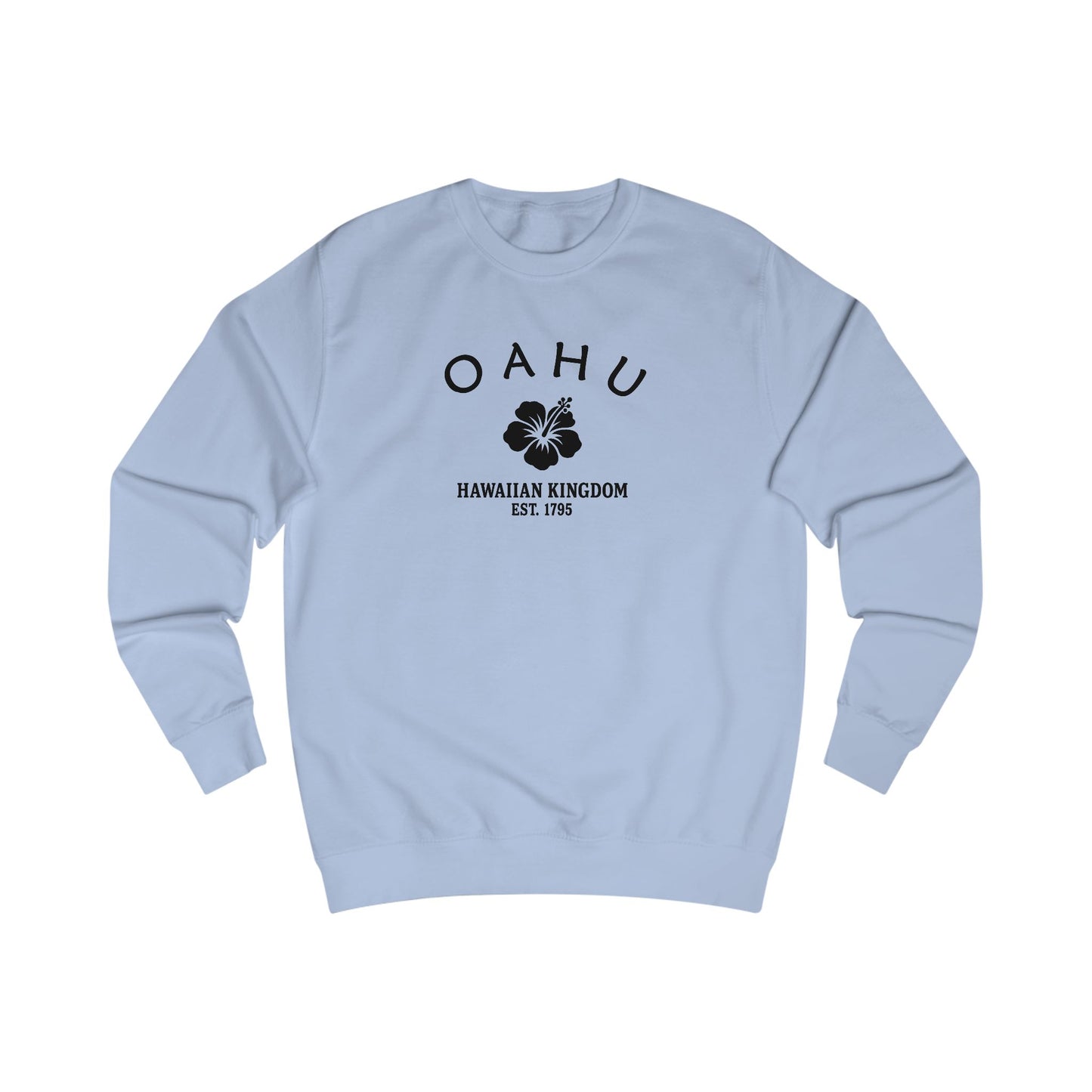
Our Oʻahu logo carries the Hawaiian hibiscus over "Hawaiian Kingdom · Est. 1795," the shared emblem of every Merlin Classics Hawaiʻi place, marking the 1795 unification that began on this very island at Nuʻuanu. Printed in clean retro black-and-white like an old travel decal, the hibiscus stands for the islands as a whole; what makes this one Oʻahu is everything around it — Diamond Head over Waikākā, the surf of the North Shore, the green wall of the Koʻolau, and the gathering-place spirit of Hawaiʻi's busiest island.
Why People Visit Oʻahu
Oʻahu offers the whole of Hawaiʻi in one place: deep history and living culture, world-famous surf, a great multicultural city, and beaches for every mood. It is where most visitors begin — and, for the million people who live here, simply home, the island where Hawaiʻi gathers.
