


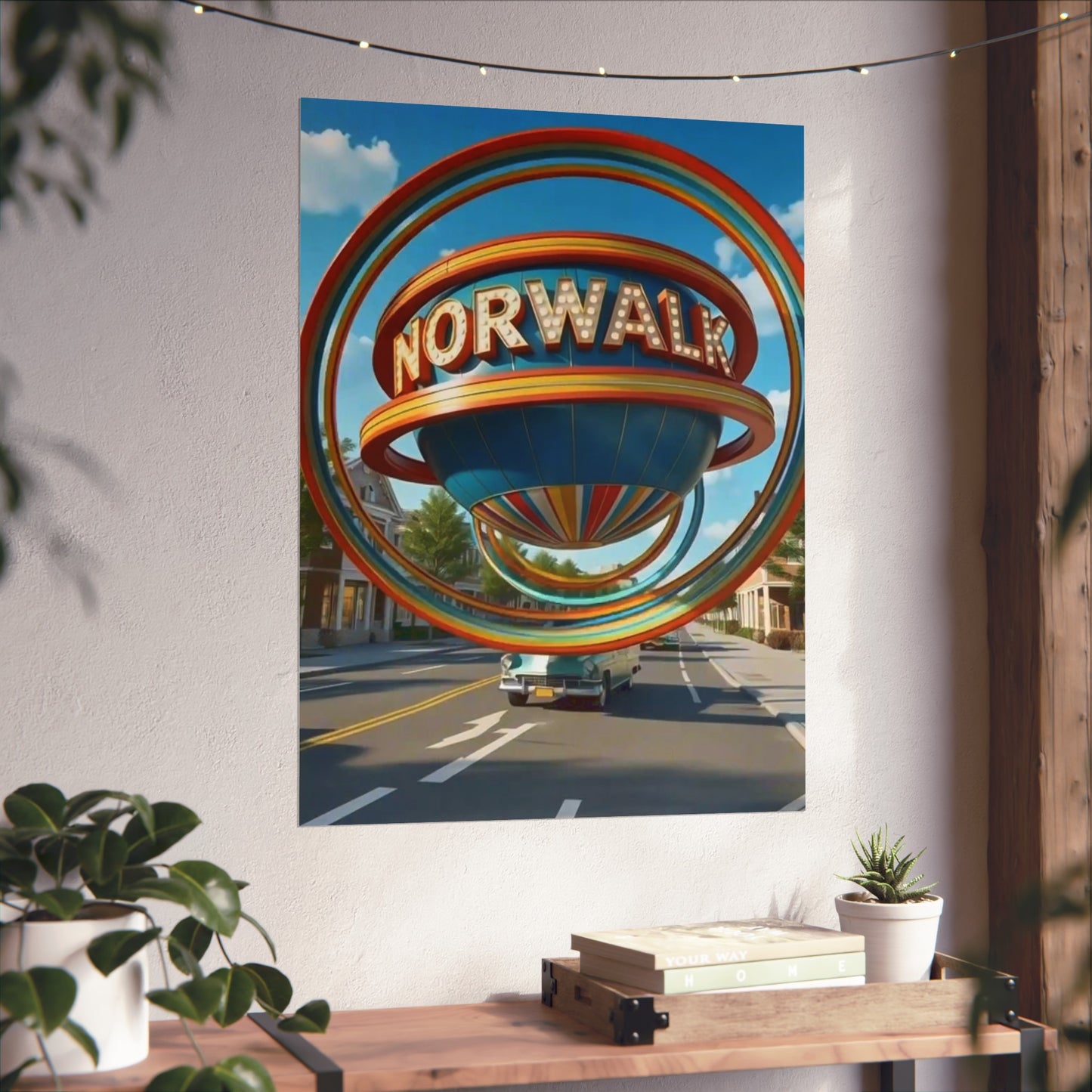
The nineteenth century made Norwalk an industrial force twice over. In 1860, at the corner of North Main and Union Streets in South Norwalk, the firm of Crofut & Knapp produced the first American-made derby hat — and Norwalk grew into one of the nation’s great hat-making centers, more than thirty factories at the peak, crowning America in derbies and straw boaters. The same era’s fortunes built landmarks: LeGrand Lockwood, a Wall Street banker, raised the Lockwood-Mathews Mansion in 1864–68 — one of the earliest and finest Second Empire country houses in America, a National Historic Landmark that predates the Vanderbilt palaces by a generation.
So Norwalk gathers a 1640 purchase and an honest name, a burned and rebuilt green, the first American derby, a pre-Vanderbilt mansion, three lighthouses, a string of islands, and the oyster beds that fed New York — and our Norwalk designs gather that into wearable form. Whether Norwalk is your hometown, your harbor, your SoNo years, or the town you still come back to, wear the history. On the half shell from the beginning — on Norwalk Harbor since 1640.
Why People Visit Norwalk Connecticut
Norwalk offers an authentic working harbor, one of America's earliest Gilded Age mansions, a major aquarium, an annual oyster festival, an offshore island ferry to an 1868 lighthouse, and a nineteenth-century industrial waterfront reborn as a historic district. Visitors come for the SoNo galleries and restaurants, the Maritime Aquarium with its harbor seals and Sound-habitat exhibits, the Lockwood-Mathews Mansion and its preserved Second Empire interiors, the September Oyster Festival, the Sheffield Island ferry, and the simple shoreline pleasures of Calf Pasture Beach. It is a Connecticut shoreline city built on the harbor, the hat, and the oyster, with all three still visible if you know where to look.
