Skip to product information
1 of 12

Nome Alaska Vintage Retro Premium Crewneck Sweatshirt - White Logo

Nome Alaska Vintage Retro Premium Crewneck Sweatshirt - White Logo

Regular price $48.00 USD
Regular price Sale price $48.00 USD
Sale
Free U.S. Shipping
Color
Size
Quantity


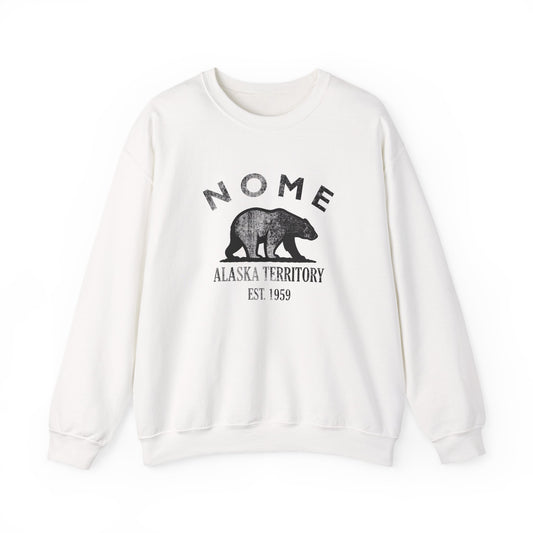
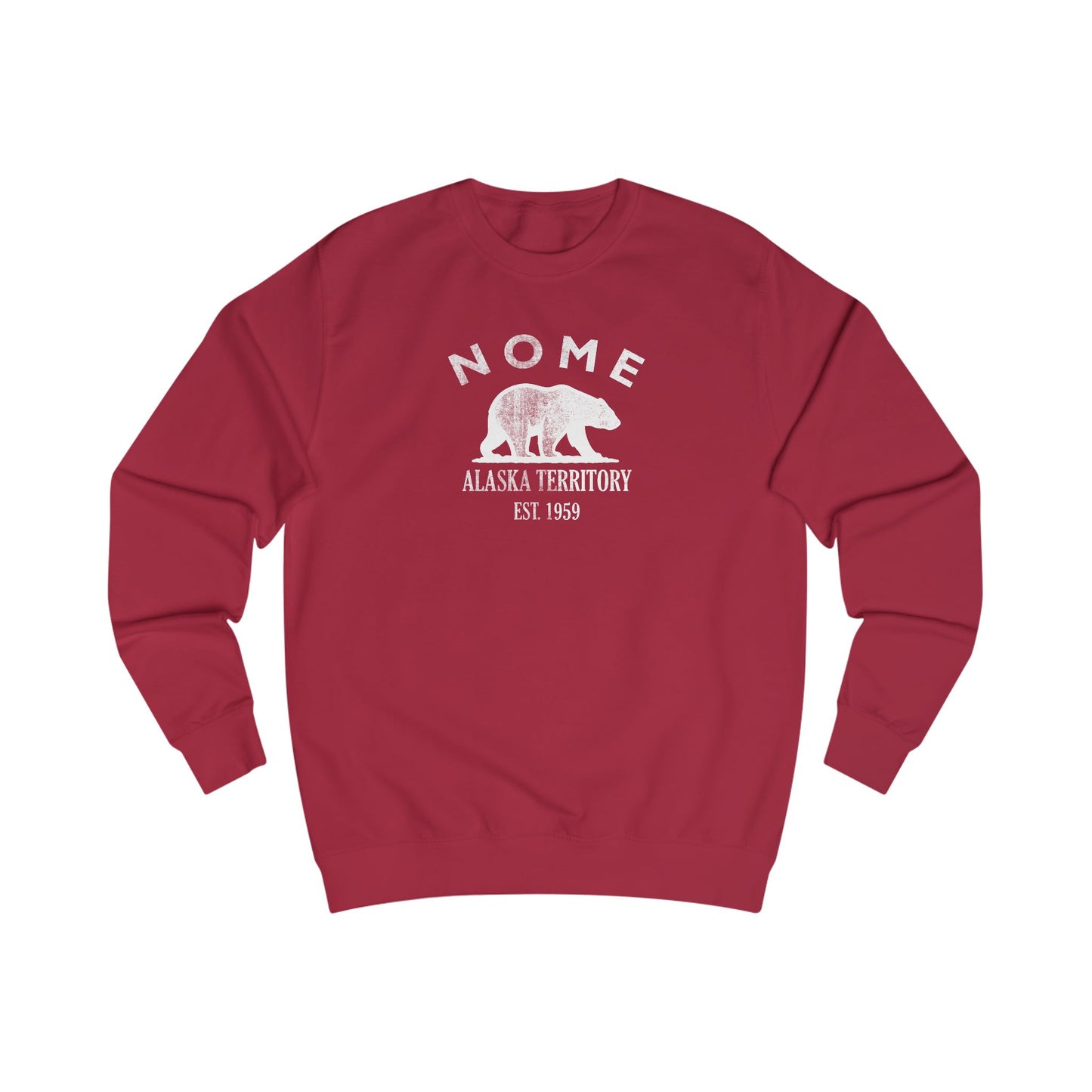
The Nome premium crewneck, for the town that is the finish line of the Iditarod. A 9.9 oz cotton-rich sweatshirt with a smooth face and the Nome vintage retro logo on the chest in white.

This is the softer, heavier of our two Nome crewnecks, the one that becomes the three-days-a-week sweatshirt from October on. Smooth face, rich print, no scratchy tag. If you want the sweatshirt that feels like a favorite on day one, this is it; order now for cold weather and holiday giving.

Cozy up in a piece built to last. This unisex soft cotton sweatshirt blends 80% cotton with 20% polyester for a medium-heavy 9.9 oz fabric that feels substantial without weighing you down, and its stylish, true-to-size fit works for everyone. The smooth cotton-rich surface takes our retro artwork with rich detail, while ribbed-knit cuffs and collar, reinforced side seams, and twill neck tape keep the shape crisp wash after wash. A tear-away label means no scratchy tag—just all-day comfort. Machine washable, ethically printed on demand, and made to become the one you reach for first.

The Three Lucky Swedes found gold at Anvil Creek on September 22, 1898, the beach itself turned out to be gold in 1899, and a tent city of ten thousand or more rose on the Bering Sea; Wyatt Earp ran the Dexter Saloon from 1899 to 1901 and the city incorporated in 1901. In the serum run of 1925 twenty mushers relayed diphtheria antitoxin 700 miles in 127 hours to save the town.

Every March since 1973 the Iditarod has ended under the Burled Arch on Front Street, and the 1901 St. Joseph’s Church survived the 1913 storm and the 1934 fire that took the rest of gold-rush Nome. Russia lies 161 miles across the Bering Strait. There is no place like Nome, and it is the mark on this piece.


QUICK FACTS — NOME AK PREMIUM CREWNECK SWEATSHIRT

Town: Nome, Alaska

Founded: Gold strike 1898; incorporated 1901

Known for: Finish line of the Iditarod since 1973; the 1898 gold rush at Anvil Creek; the 1925 serum run; 161 miles from Russia

Art: Nome vintage retro logo, white (printed)

Blank: Unisex premium crewneck sweatshirt, true-to-size fit

Fabric: 80% cotton / 20% polyester, 9.9 oz

Details: Ribbed-knit cuffs and collar, reinforced side seams, twill neck tape, tear-away label

Made to order in the USA


Made to order and shipped free in the U.S. More Nome pieces, and the rest of Alaska, are one button away.


View full details

Wear Local. Feed Local. Stay Classic.

Product FAQs

How does your sizing work?

Every item is made to order, so please check the size chart on this page before you buy. Women's fitted tees run small; size up for a looser fit. Caps are one size with an adjustable strap.

How are items made and when will they arrive?

We make each item to order using premium blanks, embroidery and soft-hand prints. Production takes 2-5 business days (weekends and holidays excluded), then 4-10 days in transit via USPS, UPS or FedEx to U.S. addresses; most orders arrive within 6-15 business days. You'll get a tracking link the moment it ships. Any current shipping offer is shown in the bar at the top of every page and applies automatically at checkout, no code needed.

How do I send a gift?

Enter the recipient's address as the shipping address and your own as the billing address at checkout. Nothing ships with a price; the package includes a plain packing slip. Tracking goes to your email, not theirs. For birthdays and holidays, order two weeks ahead to be safe.

What's the return policy?

Made-to-order items can't be returned or exchanged for size or color, so please use the size chart and photos before ordering. If anything arrives defective, misprinted or damaged, send a photo and your order number within 30 days and we'll replace it or refund you.

How do I care for my item?

Apparel: wash cold, inside out, with like colors; no bleach; tumble dry low or hang dry. Embroidered pieces: iron inside out to protect the stitching. Caps: spot clean. Printed glasses and water bottles: hand wash only, no dishwasher, so the artwork lasts. Mugs and engraved glasses are dishwasher safe. Any item-specific care notes are in the description above.

Who makes this?

Merlin Classics is a small Connecticut brand making original retro designs for the towns people love. Every piece is printed, embroidered or engraved to order in the USA, and the business supports hunger relief in the communities our collections celebrate.

What’s with the Three Lucky Swedes? The Three Lucky Swedes struck gold on Anvil Creek on September 22, 1898 — the strike that set off the last great American gold rush. The prospectors — Jafet Lindeberg, Erik Lindblom, and John Brynteson — were working a few miles above the Bering Sea beach on the Seward Peninsula. Two were Swedish; Lindeberg was Norwegian; the nickname stuck anyway, and the “Three Lucky Swedes” entered Alaska legend. The tent city that sprang up on the shore below — briefly called Anvil City — became Nome. Within two years the luckiest beach in the north held one of the largest cities on the Pacific coast above Seattle, out at the edge of the continent, facing Siberia.

The Iñupiat were here first, and they are here still. The coast around Sitŋasuaq — the Iñupiaq name for the Nome area — had been fished and hunted for centuries before any prospector arrived, part of a network of Seward Peninsula communities living by salmon, seal, walrus, and caribou. Roughly half of Nome’s people today are Alaska Native, and the town remains a hub for the surrounding Iñupiat villages of the region. Whatever gold built here, the deeper story of this coast is continuity — a homeland that long predates the stampede and outlasts it.

Why People Visit Nome Alaska

  • Walk Front Street, where the annual thousand-mile sled dog race from Anchorage has finished under a burled wooden arch since 1973 — a brand-new arch went up for 2025, and race week in March is the town’s biggest event of the year.
  • Visit the Carrie M. McLain Memorial Museum for collections from the 1898 Anvil Creek gold rush, the 1925 Serum Run, and the Iñupiat communities of the Seward Peninsula.
  • Drive the three gravel highways — Nome-Council, Kougarok, and Nome-Teller — for wide tundra views, seabirds, summer wildflowers, and muskox sightings before the roads simply end.
  • See the abandoned gold dredges standing on the tundra outside town, massive relics of the 1920s–30s deep-dredging era.
  • Visit Anvil Creek, the September 1898 discovery site a few miles north of town.
  • Look up at the four White Alice antennas on Anvil Mountain, the Cold War communications site in service until 1979, accidentally photogenic against the Arctic sky.
  • Stop at St. Joseph’s Church, completed in 1901 — one of the few structures to survive the town’s early disasters.
  • Try recreational beach gold panning in summer — the same sands that started it all still give up color, and visitor panning is permitted on the public beach.
  • Watch for the aurora borealis on clear nights from September through March — Nome’s long winter darkness makes it one of Alaska’s best northern-lights towns.

Nome Alaska Merlin Classics retro vintage logo featuring the distressed bear motif and 1959 Alaska statehood year