Skip to product information
1 of 4

Nome Alaska Holiday Ornament - Nome National Forest

Nome Alaska Holiday Ornament - Nome National Forest

Regular price $28.00 USD
Regular price Sale price $28.00 USD
Sale
Free U.S. Shipping
Size
Shape
Quantity


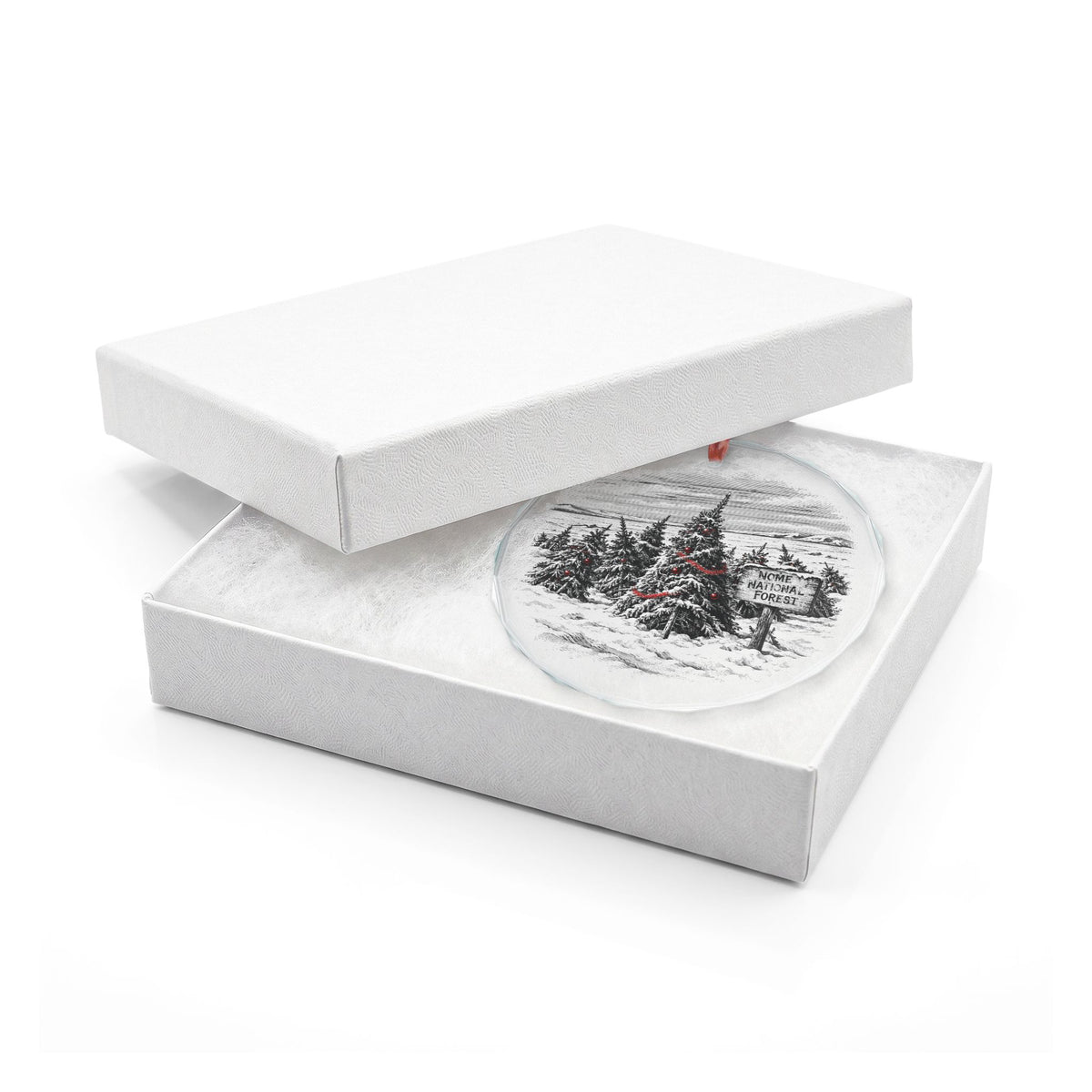
A dozen used Christmas trees planted in the sea ice with a hand-painted sign reading NOME NATIONAL FOREST. The only forest in Nome, and it only exists in January.

Nome sits on the tundra above the treeline, so the nearest real forest is a long way off. Every year after Christmas, people haul their used trees out onto the frozen Bering Sea in front of town, plant them in the ice, hang a few leftover ornaments and put up the sign. The forest stands until breakup, when the ice goes out and takes it along.

It started as a joke decades ago and became a tradition the whole town keeps. Visitors who arrive by snow machine in February ask what the trees are doing on the ocean. Locals tell them.

A town with no trees that plants a forest on the sea every winter is a town that understands the holiday. The red garland on the trees is the real thing: leftovers, hung with care.

The Nome National Forest is planted every winter on the frozen Bering Sea out of used Christmas trees, the Alaska Christmas joke of a town above the treeline. This Nome ornament is a Nome Christmas ornament and Alaska ornament for anyone who knows Nome, Alaska, from the gold rush to the Iditarod finish.

Every Nome ornament ships ready to give. Hang it on the tree, in a window, off a lamp, or send one to the person who misses Nome most.

3-inch faceted crystal glass ornament, white-backed print, line-drawn in 1880s engraving style, your choice of white or gold gift box.


QUICK FACTS — NOME AK CRYSTAL ORNAMENT — NOME NATIONAL FOREST

Town: Nome, Alaska

Founded: Gold strike 1898; incorporated 1901

Known for: Finish line of the Iditarod since 1973; the 1898 gold rush at Anvil Creek; the 1925 serum run; 161 miles from Russia

Art: Nome National Forest, original Merlin Classics engraving

Blank: 3-inch (76 mm) round clear crystal glass ornament, faceted gem-cut edge

Print: white-backed for contrast; red ribbon hanger

Packaging: white or gold gift box, chosen at checkout

Made to order in the USA


View full details

Wear Local. Feed Local. Stay Classic.

Product FAQs

How does your sizing work?

Every item is made to order, so please check the size chart on this page before you buy. Women's fitted tees run small; size up for a looser fit. Caps are one size with an adjustable strap.

How are items made and when will they arrive?

We make each item to order using premium blanks, embroidery and soft-hand prints. Production takes 2-5 business days (weekends and holidays excluded), then 4-10 days in transit via USPS, UPS or FedEx to U.S. addresses; most orders arrive within 6-15 business days. You'll get a tracking link the moment it ships. Any current shipping offer is shown in the bar at the top of every page and applies automatically at checkout, no code needed.

How do I send a gift?

Enter the recipient's address as the shipping address and your own as the billing address at checkout. Nothing ships with a price; the package includes a plain packing slip. Tracking goes to your email, not theirs. For birthdays and holidays, order two weeks ahead to be safe.

What's the return policy?

Made-to-order items can't be returned or exchanged for size or color, so please use the size chart and photos before ordering. If anything arrives defective, misprinted or damaged, send a photo and your order number within 30 days and we'll replace it or refund you.

How do I care for my item?

Apparel: wash cold, inside out, with like colors; no bleach; tumble dry low or hang dry. Embroidered pieces: iron inside out to protect the stitching. Caps: spot clean. Printed glasses and water bottles: hand wash only, no dishwasher, so the artwork lasts. Mugs and engraved glasses are dishwasher safe. Any item-specific care notes are in the description above.

Who makes this?

Merlin Classics is a small Connecticut brand making original retro designs for the towns people love. Every piece is printed, embroidered or engraved to order in the USA, and the business supports hunger relief in the communities our collections celebrate.

In January 1925, diphtheria broke out in Nome, and the nearest serum sat 674 miles away in Nenana. Twenty mushers and their dog teams ran it west in relay — 127 hours through interior cold that fell below minus forty. Leonhard Seppala and his lead dog Togo drove the longest and most dangerous leg, roughly 260 miles including a shortcut across the shifting sea ice of Norton Sound; Gunnar Kaasen and Balto brought the serum the final 55 miles into town through an eighty-mile-an-hour blizzard, arriving at 5:30 on the morning of February 2. The epidemic was stopped. The Great Race of Mercy made national heroes of the mushers and both dogs — and Alaskans will tell you Togo’s run was the harder one.

What’s with the Three Lucky Swedes? The Three Lucky Swedes struck gold on Anvil Creek on September 22, 1898 — the strike that set off the last great American gold rush. The prospectors — Jafet Lindeberg, Erik Lindblom, and John Brynteson — were working a few miles above the Bering Sea beach on the Seward Peninsula. Two were Swedish; Lindeberg was Norwegian; the nickname stuck anyway, and the “Three Lucky Swedes” entered Alaska legend. The tent city that sprang up on the shore below — briefly called Anvil City — became Nome. Within two years the luckiest beach in the north held one of the largest cities on the Pacific coast above Seattle, out at the edge of the continent, facing Siberia.

Why People Visit Nome Alaska

Nome combines gold-rush history, sled-dog tradition, Bering Strait geography, and open tundra in a way no other town can. Visitors come for race week in March, for the beach where the last great American gold rush ended, for muskox and wildflowers in the long summer light, for the aurora, and for the plain fact that the road runs out here. Remote, resilient, unforgettable.

Nome Alaska Merlin Classics retro vintage logo featuring the distressed bear motif and 1959 Alaska statehood year