


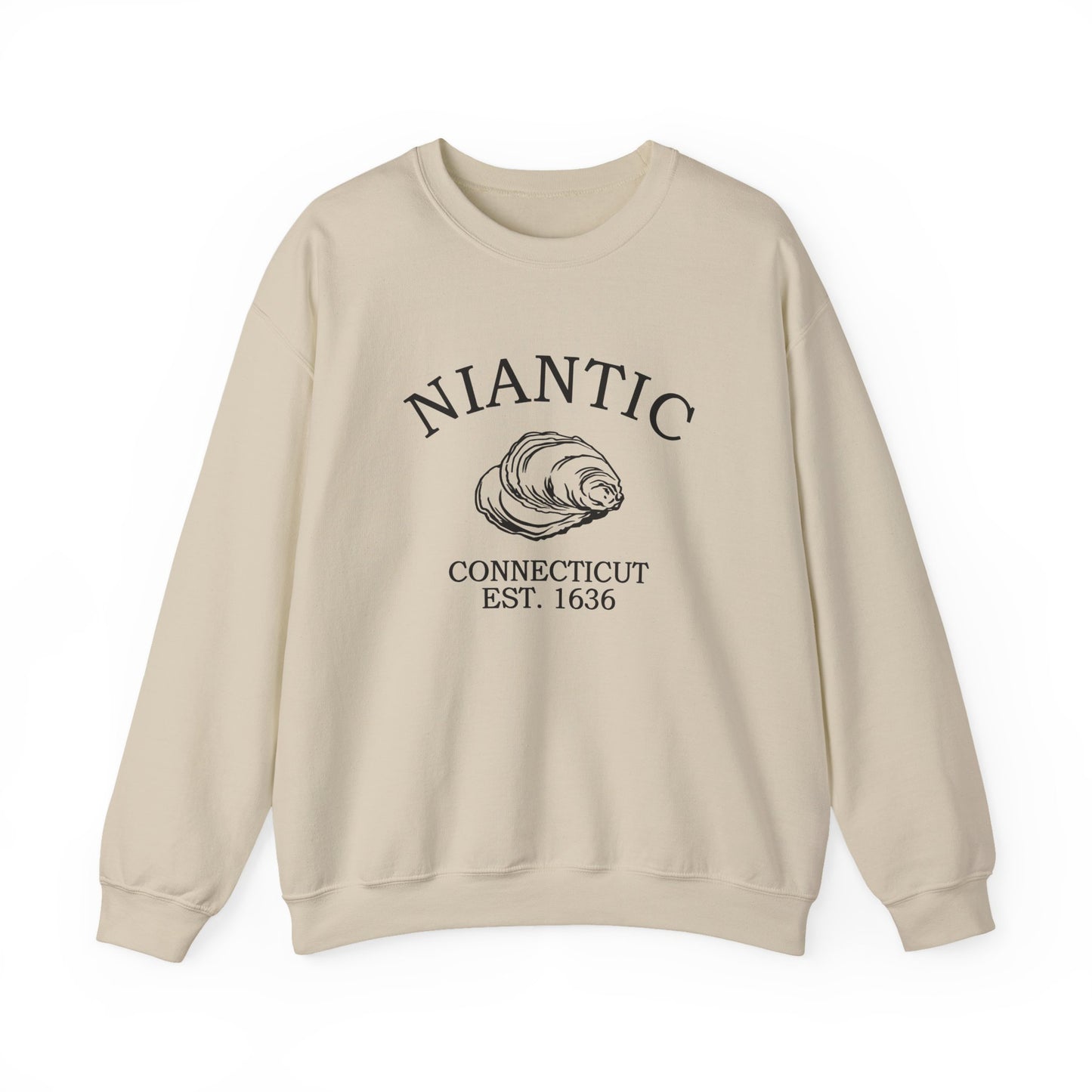
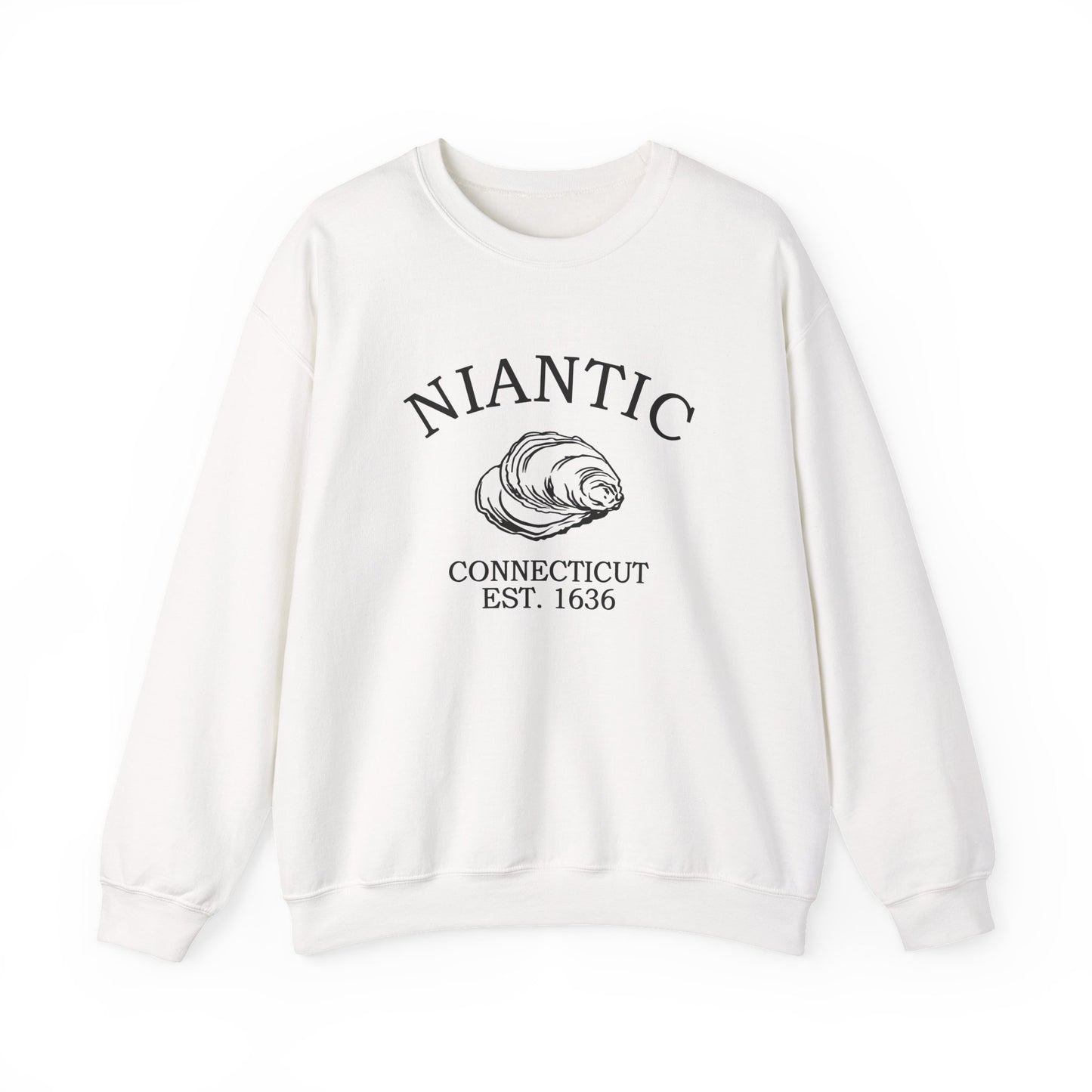
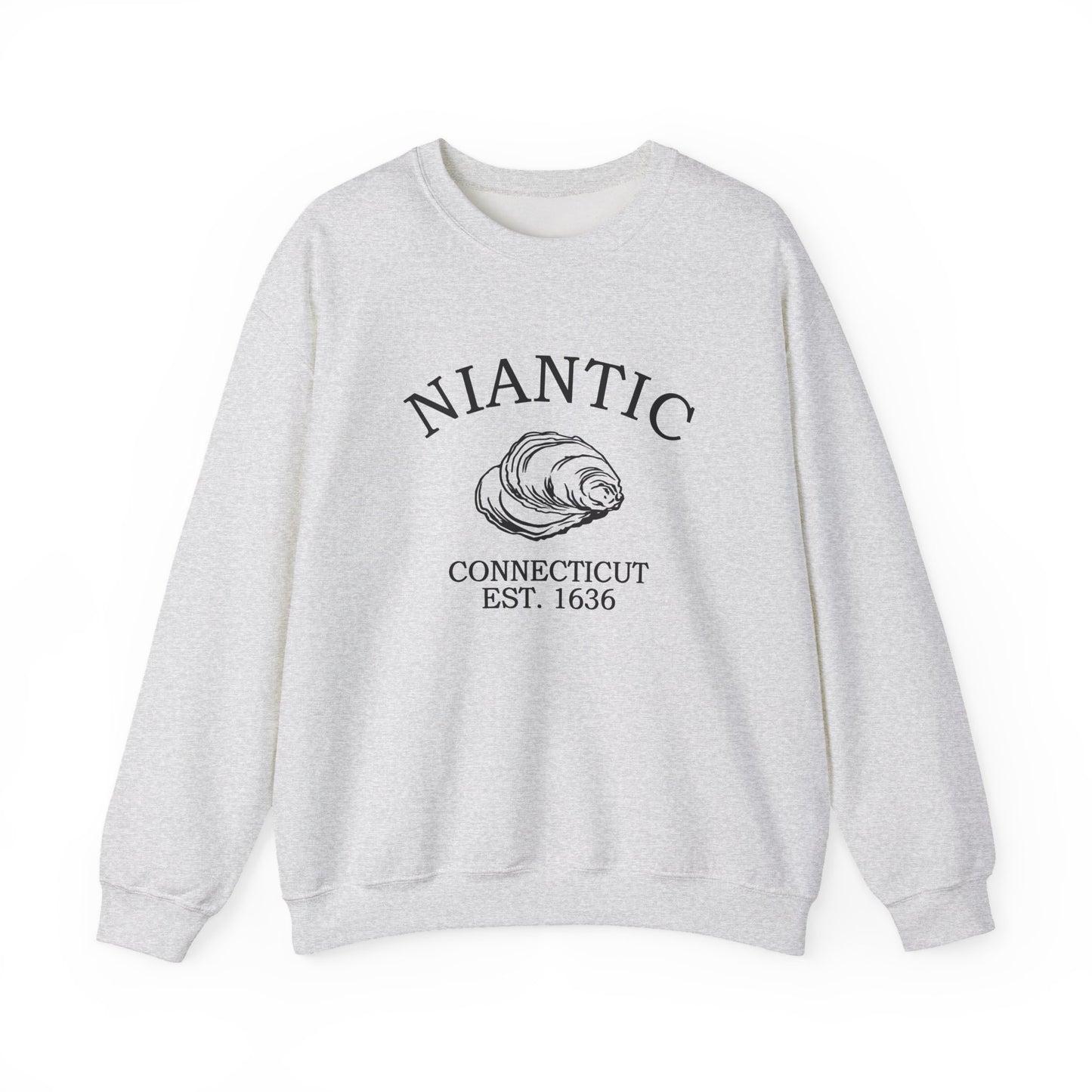
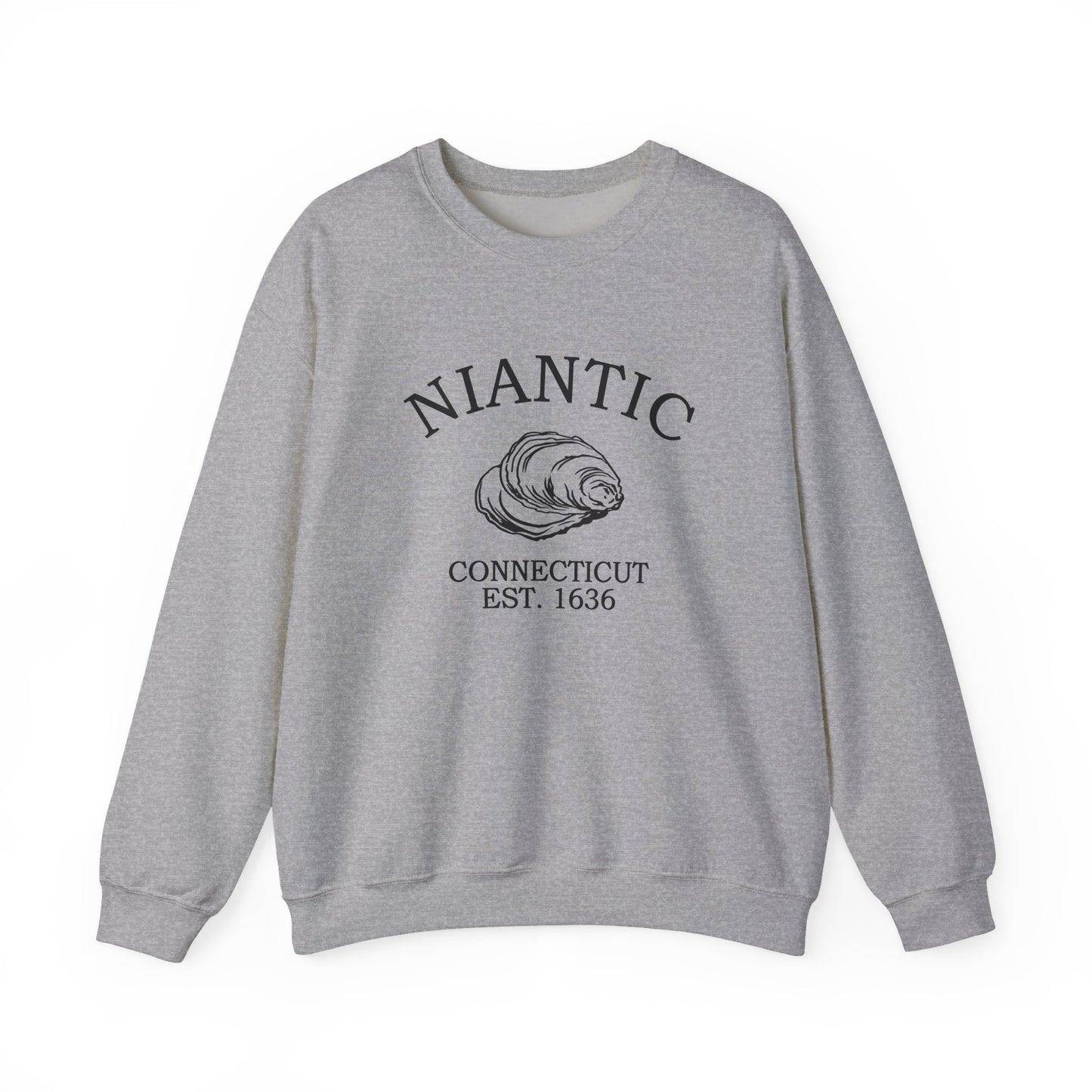
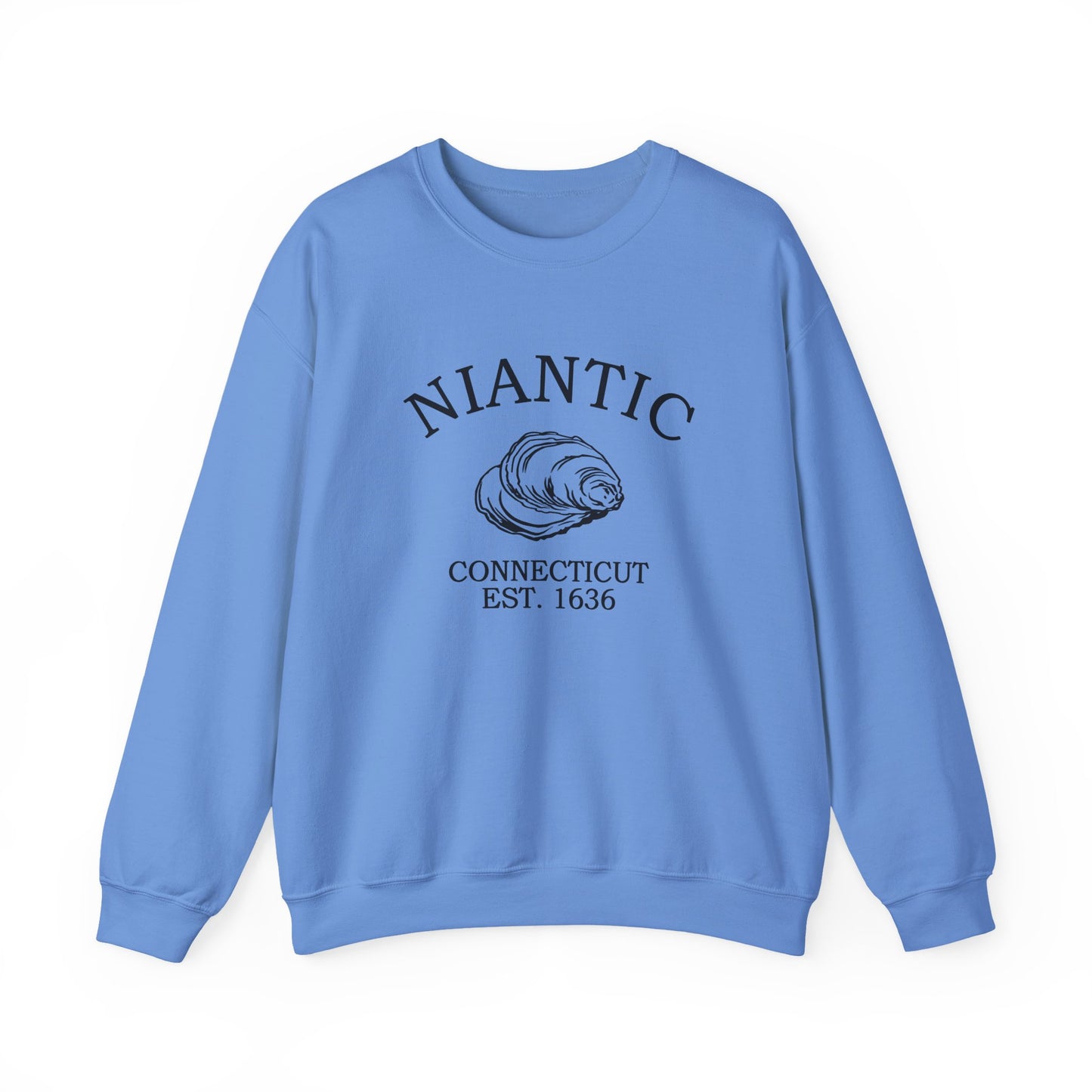
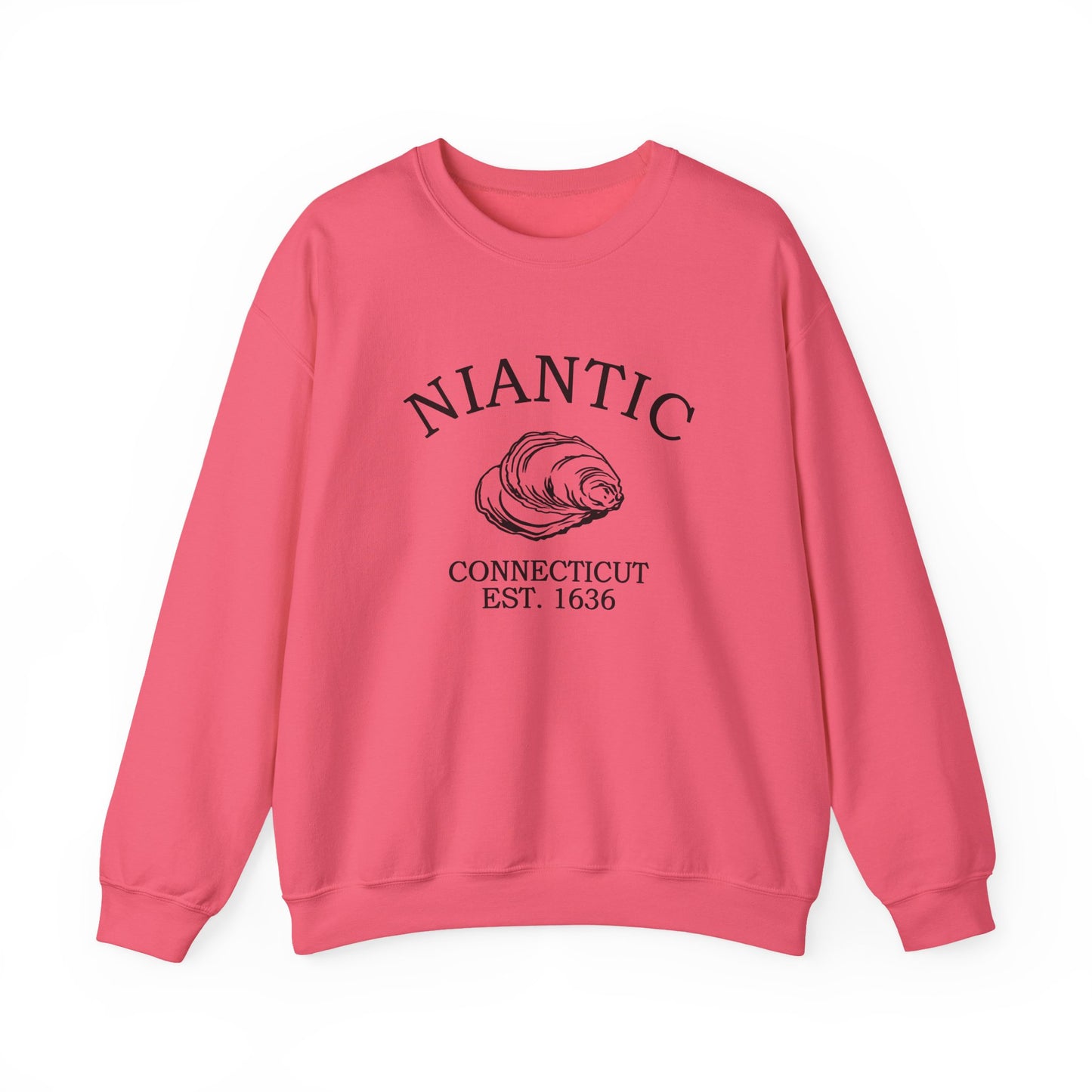
Today Niantic is a small shore village of a few thousand that doubles in summer and empties back to quiet in winter, the way beach towns do. Its story runs from the Nehantic ‘point of land on the water’ through the oyster boats and the 1851 railroad to the boardwalk full of strollers tonight. Our Niantic designs gather that into wearable form. Wear the history. This is the point of land on the Sound.
The name is older than the town. ‘Niantic’ comes from the Nehantic — the Western Nehantic people, an Algonquian shoreline tribe who summered along this bay for centuries — and means roughly ‘point of land on the water.’ English settlers spreading out from Lyme reached the shore in the mid-1600s and built farms and wharves; the little waterfront hamlet was once known simply as ‘The Bank.’ For a long time it was just one corner of Lyme, until the Town of East Lyme was carved out of Lyme and Waterford in 1839. Niantic has always been a village within that town — the beach side, the part everyone means when they say the name.
Why People Visit Niantic
Niantic offers straightforward coastal time for families. Visitors mix boardwalk walks with park picnics, beach days, and small museums, all on Long Island Sound. It is easygoing, scenic, and walkable, with year-round appeal in its parks, paths, and public spaces. The vintage feel of a New England beach village is evergreen, and history and everyday shoreline life sit side by side here in a welcoming way.
