







The bay is still the heart of it. Beyond the boardwalk, Niantic's white-sand beaches and nine beach communities swell the village to several times its winter size every July; the calm, shallow water and the easy shore make it a family town in season. Each September the village throws the Niantic Bay Oyster Festival on St. John's Green, a nod to the oyster beds that fed the place for generations. It is unhurried and unpretentious — a Connecticut beach town that has never tried to be anything fancier.
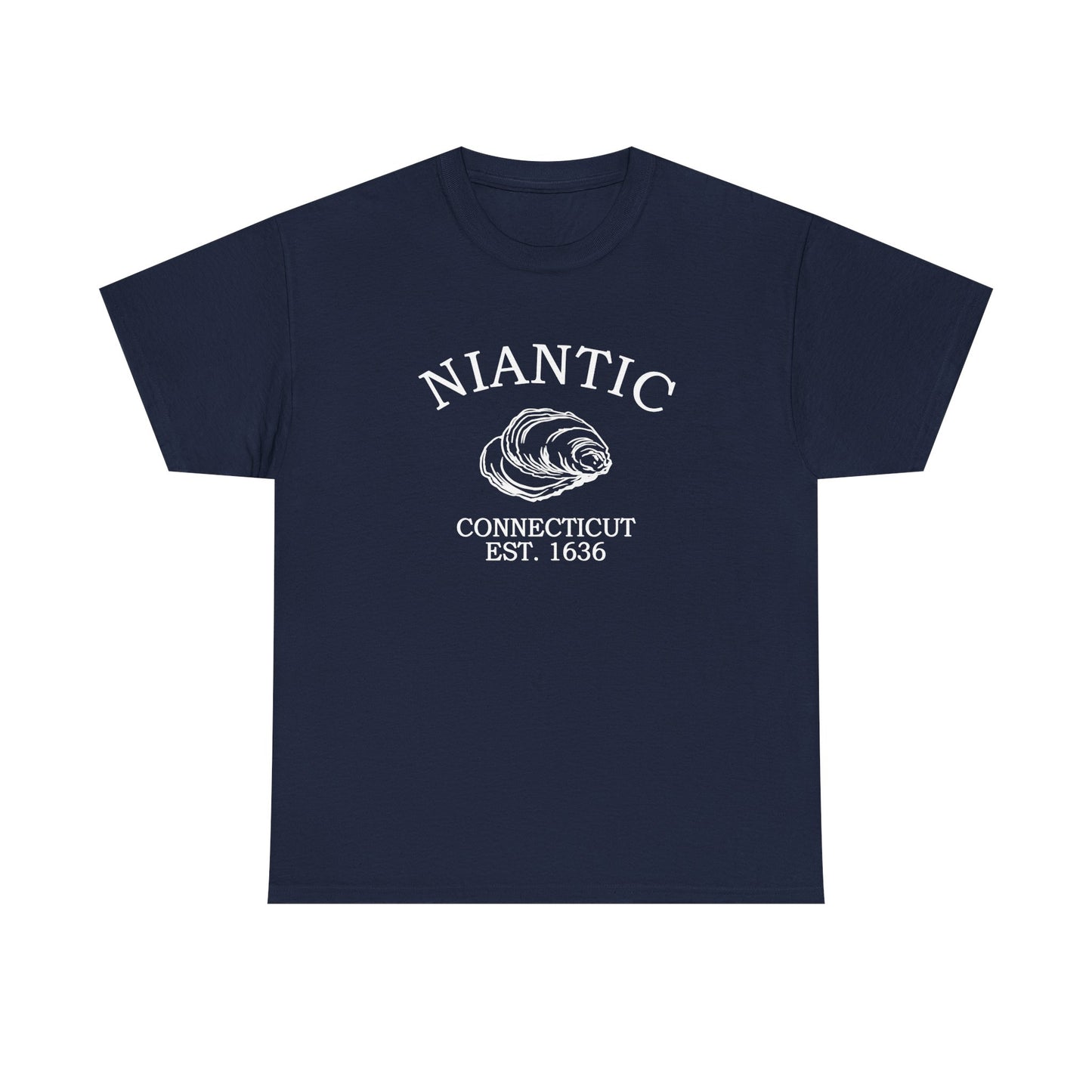
Our Niantic logo carries Connecticut's oyster above ‘Connecticut — Est. 1636,’ the shared retro emblem of our Connecticut towns. The oyster is the state shellfish, a fitting nod to the beds that the Nehantic and the early settlers worked in this bay, and 1636 marks the founding of the Connecticut Colony; the emblem is the through-line that links Niantic to every other Connecticut town we make. It could hardly fit a place better — an oystering shore village — rendered in the black-and-white of an old crate label. What makes this one Niantic is the bay behind it: the boardwalk, the beaches, and the train.
Why People Visit Niantic
Niantic offers straightforward coastal time for families. Visitors mix boardwalk walks with park picnics, beach days, and small museums, all on Long Island Sound. It is easygoing, scenic, and walkable, with year-round appeal in its parks, paths, and public spaces. The vintage feel of a New England beach village is evergreen, and history and everyday shoreline life sit side by side here in a welcoming way.
