


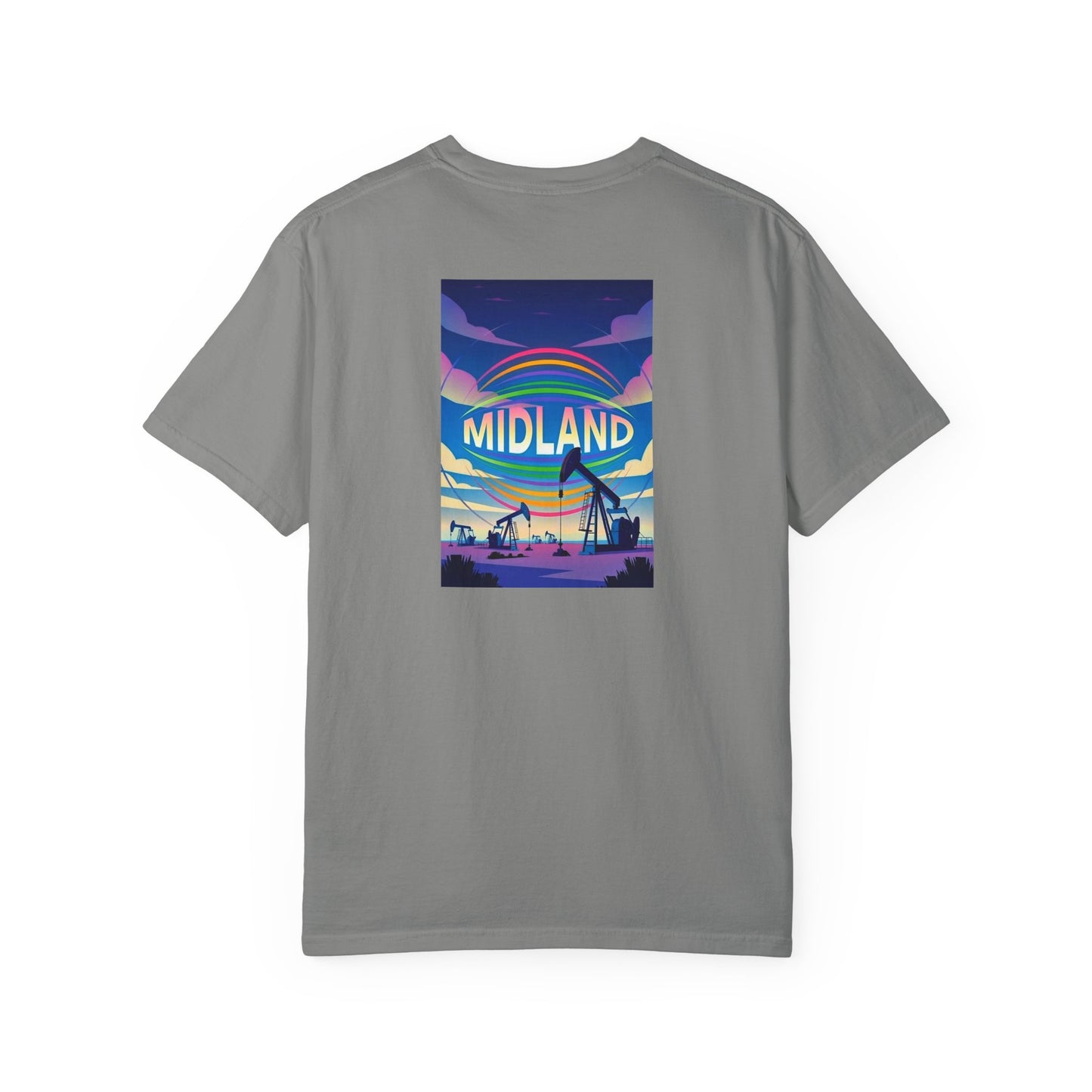

The boom has come and gone in waves ever since — the Depression bust, the postwar surge, the 1970s crest that doubled the tallest tower, the 1980s crash — and every cycle left its mark on the skyline. Then, after 2010, horizontal drilling and the Wolfcamp and Spraberry plays of the Midland Basin set the whole cycle spinning again, making the Permian the most productive oilfield in the country and Midland once more one of the fastest-growing cities in America. The wildcatter's gamble — fortunes made and lost on the price of a barrel — remains the town's founding faith.
The oil came in 1923. On May 28, out on University of Texas land in Reagan County southeast of town, the Santa Rita No. 1 — named by its crew for the patroness of impossible causes after four hard years of drilling — blew in and revealed what the Permian Basin held. Midland made itself the boom's headquarters: rather than the rigs and roughnecks of the field, it drew the offices, the geologists, the landmen, and the executives, and by 1929 thirty-six oil companies ran their Permian operations from downtown. Where blue-collar Odessa, twenty miles west, worked the field, white-collar Midland ran the business — two cities, one basin, a partnership written into West Texas ever since.
Why People Visit Midland Texas
- Tour the Permian Basin Petroleum Museum, with interactive galleries on the geology and engineering of the oil boom and a replica 1930s Boom Town.
- Visit the Museum of the Southwest, combining art, science, and a children's museum on a historic estate.
- Walk the downtown Tall City core to see the high-rise skyline that rises straight off the plains.
- See the Bush Family Home, a Texas Historical Commission state historic site in a 1940s neighborhood.
- Catch a performance at the Wagner Noël Performing Arts Center, the region's marquee venue.
