Skip to product information
1 of 5

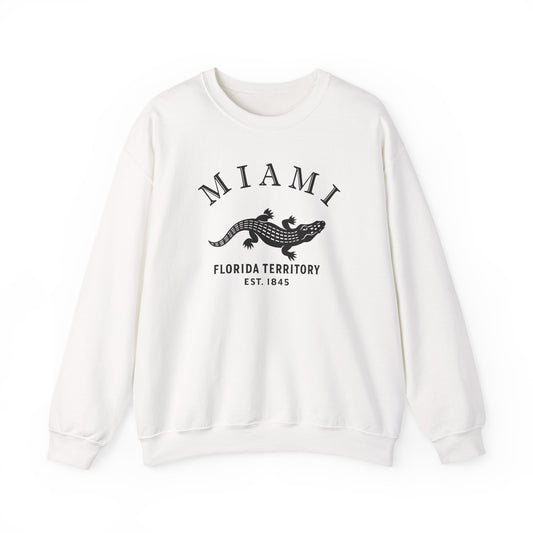
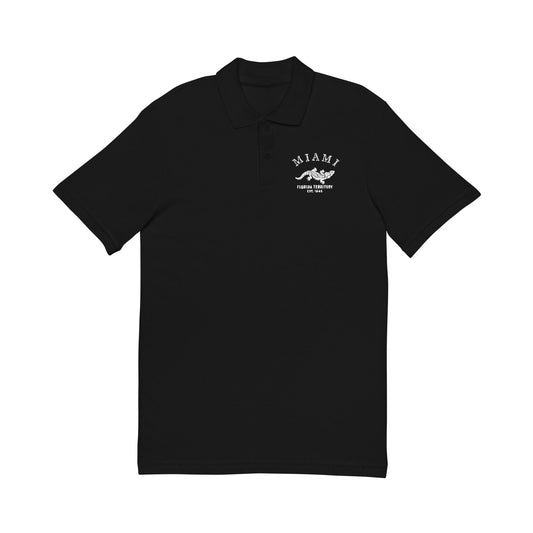
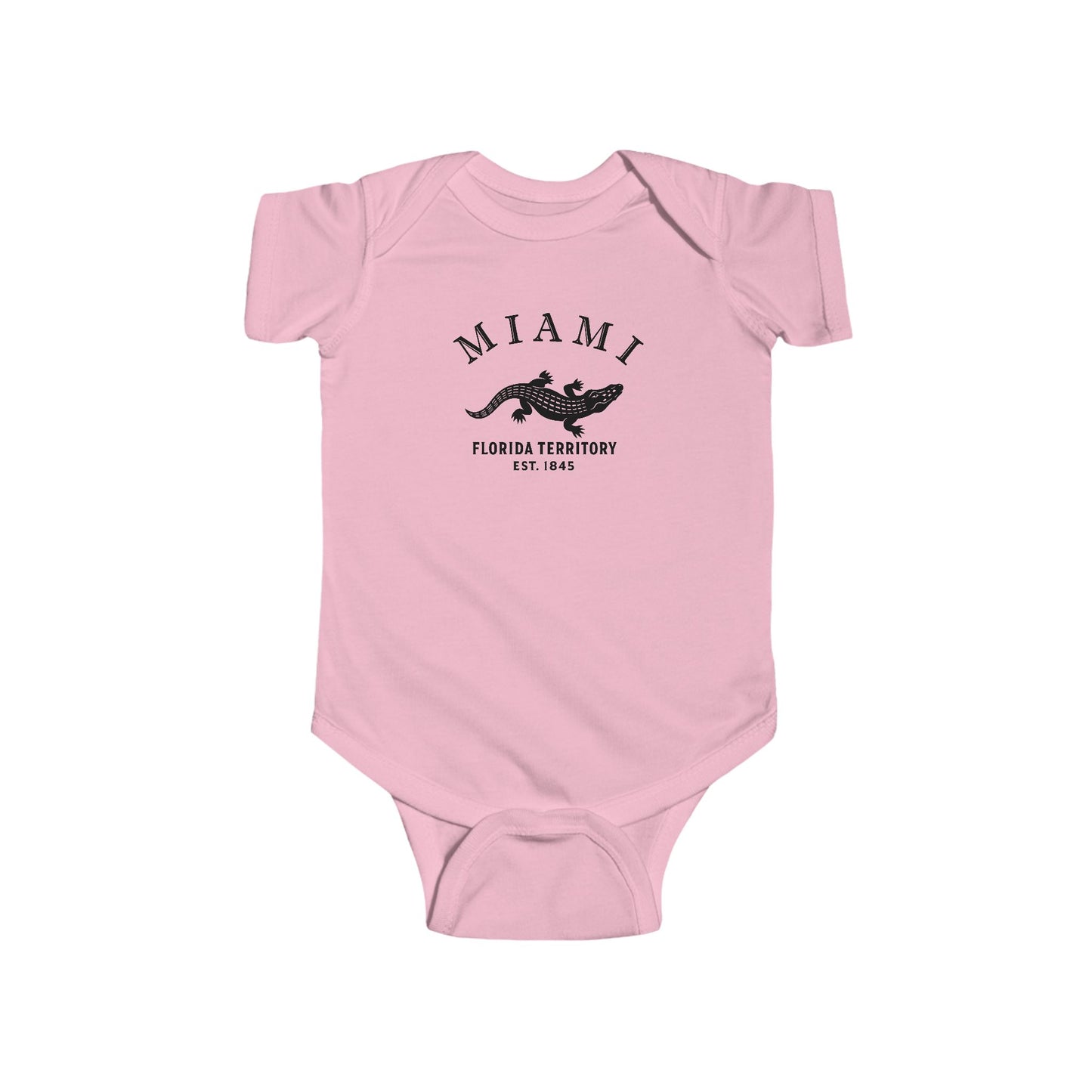
Miami Florida Vintage Retro Cotton Jersey Baby Bodysuit - Black Logo

Miami Florida Vintage Retro Cotton Jersey Baby Bodysuit - Black Logo

Regular price $26.00 USD
Regular price Sale price $26.00 USD
Sale
Free U.S. Shipping
Color
Size
Quantity


The Miami baby bodysuit, for the town that is the Magic City. Soft fine jersey with the Miami vintage retro logo on the front in black, newborn to 24 months.

This is the new-baby gift from the hometown: light, soft, with a snap crotch that makes changes easy and a logo the parents will photograph. Order it as soon as the news arrives; it is the Miami piece most often bought for someone else.

This unisex baby bodysuit is made from soft, breathable fine jersey at a light 4.5 oz (153 g/m²). A secure snap crotch makes changes easy, and ribbed binding with side seams adds durability. Solid colors are 100% combed ringspun cotton; heathers include a cotton–polyester blend.

The Tequesta lived at the mouth of the Miami River for centuries before Henry Flagler’s railway arrived in April 1896 and Julia Tuttle’s campaign incorporated the City of Miami on July 28 of that year, with 502 residents; she remains the only woman to found a major American city. The 1920s land boom built George Merrick’s Coral Gables and James Deering’s Vizcaya.

Between 1923 and 1943 more than eight hundred buildings went up in the Art Deco Historic District, the largest concentration of Art Deco in the world. Biscayne Bay, the Everglades at the city’s back and the causeways to the beach define it, and every generation has reinvented it. The Magic City is the mark on this piece.


QUICK FACTS — MIAMI FL COTTON JERSEY BABY BODYSUIT

Town: Miami, Florida

Founded: July 28, 1896

Known for: The Magic City, founded by Julia Tuttle; the world’s largest Art Deco district; Biscayne Bay; Vizcaya

Art: Miami vintage retro logo, black (printed)

Blank: Unisex infant bodysuit, ribbed binding, side seams, snap crotch

Fabric: 4.5 oz (153 g/m²) fine jersey; solids 100% combed ringspun cotton, heathers cotton–polyester

Made to order in the USA


Made to order and shipped free in the U.S. More Miami pieces, and the rest of Florida, are one button away.


View full details

Wear Local. Feed Local. Stay Classic.

Product FAQs

How does your sizing work?

Every item is made to order, so please check the size chart on this page before you buy. Women's fitted tees run small; size up for a looser fit. Caps are one size with an adjustable strap.

How are items made and when will they arrive?

We make each item to order using premium blanks, embroidery and soft-hand prints. Production takes 2-5 business days (weekends and holidays excluded), then 4-10 days in transit via USPS, UPS or FedEx to U.S. addresses; most orders arrive within 6-15 business days. You'll get a tracking link the moment it ships. Any current shipping offer is shown in the bar at the top of every page and applies automatically at checkout, no code needed.

How do I send a gift?

Enter the recipient's address as the shipping address and your own as the billing address at checkout. Nothing ships with a price; the package includes a plain packing slip. Tracking goes to your email, not theirs. For birthdays and holidays, order two weeks ahead to be safe.

What's the return policy?

Made-to-order items can't be returned or exchanged for size or color, so please use the size chart and photos before ordering. If anything arrives defective, misprinted or damaged, send a photo and your order number within 30 days and we'll replace it or refund you.

How do I care for my item?

Apparel: wash cold, inside out, with like colors; no bleach; tumble dry low or hang dry. Embroidered pieces: iron inside out to protect the stitching. Caps: spot clean. Printed glasses and water bottles: hand wash only, no dishwasher, so the artwork lasts. Mugs and engraved glasses are dishwasher safe. Any item-specific care notes are in the description above.

Who makes this?

Merlin Classics is a small Connecticut brand making original retro designs for the towns people love. Every piece is printed, embroidered or engraved to order in the USA, and the business supports hunger relief in the communities our collections celebrate.

What’s with the Queen of Salsa? Celia Cruz was born in Havana in 1925 with a voice that could fill a carnival, and when she left Cuba on tour in 1960, after the revolution, she never went home again. Miami became her second island. On Calle Ocho in Little Havana — among the cafecito windows and the domino tables — she was simply Celia: the Queen of Salsa, the Afro-Cuban dance music she carried around the world for four decades, her trademark shout of ¡Azúcar! ringing from every stage. In March 1988 she led the Calle Ocho festival’s conga line into the record books — some 119,000 dancers behind her, the largest ever — and in 1994 the nation awarded her the National Medal of Arts. In 2024 the nation honored her again — the United States Mint issued the Celia Cruz quarter in the American Women Quarters Program, its reverse showing her mid-song in a rumba dress with ¡AZÚCAR! inscribed beside her, the first Afro-Latina ever to appear on United States currency.

The city’s second founding came by sea and by air. After the Cuban Revolution of 1959, waves of exiles remade Miami across the decades, and the Freedom Tower — the old newspaper tower of 1925 — served from 1962 to 1974 as the Cuban Refugee Center, the "Ellis Island of the South," where hundreds of thousands of arrivals were processed into new American lives. Little Havana grew around Calle Ocho: the ventanitas passing cafecito across the counter, croquetas and pastelitos in the bakery cases, guayaberas on Sunday, dominoes clacking at Máximo Gómez Park. Little Haiti added its own quarter to the north, and Hialeah, just beyond the city line, grew into the Cuban-American heartland of the metro. Overtown, the historic heart of Black Miami once called the Harlem of the South, kept its own stage lights burning at the Lyric Theater. Miami became a city that lives in Spanish and a dozen other languages at once — the gateway to Latin America, facing south and belonging to both hemispheres.

Why People Visit Miami Florida

  • Walk Calle Ocho in Little Havana — order a cafecito at a ventanita, watch the domino games at Máximo Gómez Park, and pick up pastelitos from a Cuban bakery.
  • Stand before the Freedom Tower on Biscayne Boulevard, the 1925 landmark modeled on Seville’s Giralda that served as the Cuban Refugee Center from 1962 to 1974.
  • Tour the 1916 Vizcaya estate and its gardens on Biscayne Bay in Coconut Grove — the boom era’s Italian Renaissance fantasy, now a museum.
  • Drive the Mediterranean Revival streets of Coral Gables, George Merrick’s 1925 planned city, stroll Miracle Mile, and see the coral-rock Venetian Pool of 1924.
  • See the murals of Wynwood, the warehouse district turned open-air gallery north of downtown.
  • Take a boat tour of Biscayne Bay from Bayfront Park or the Miami River — the skyline from the water is the city’s best portrait.
  • Cross the Rickenbacker Causeway to Key Biscayne for beaches, the Cape Florida lighthouse, and bay views back toward the city — with the stilt houses of Stiltsville standing offshore on the flats.
  • Day-trip west to the Everglades or south toward Biscayne National Park — the wild tropical frame around the metropolis.
  • Time a winter visit for the height of snowbird season, when the bay is at its bluest and the café windows never close.