


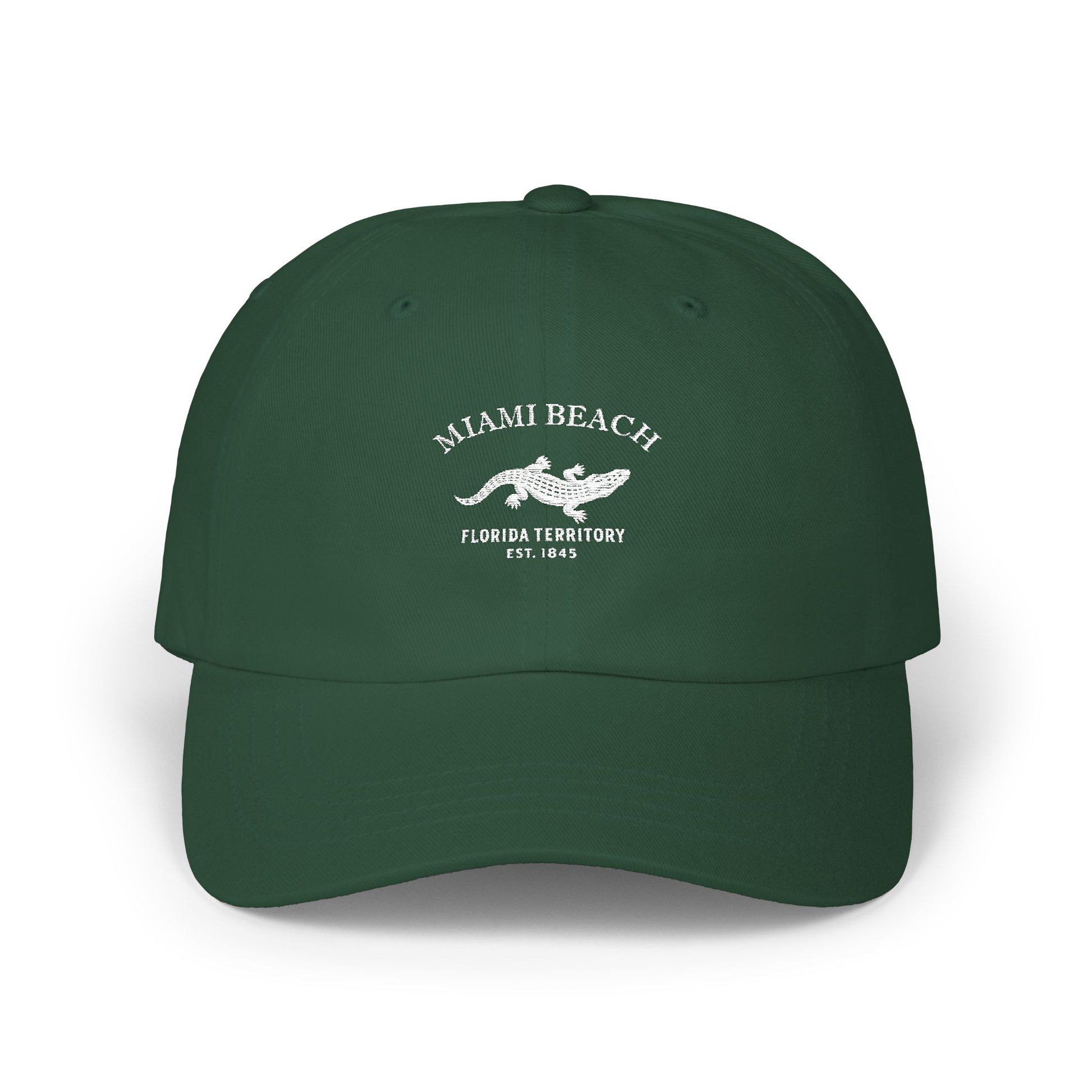




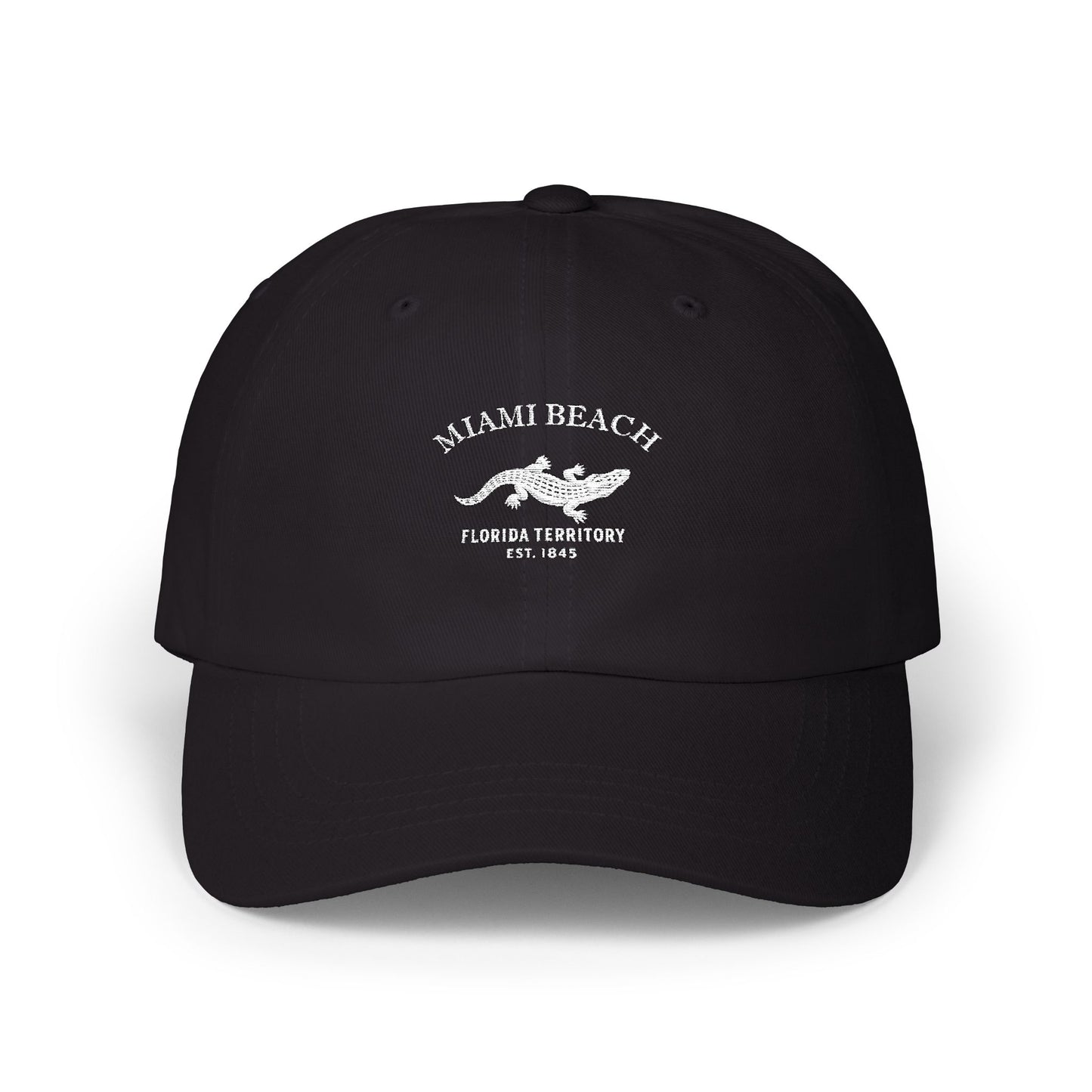
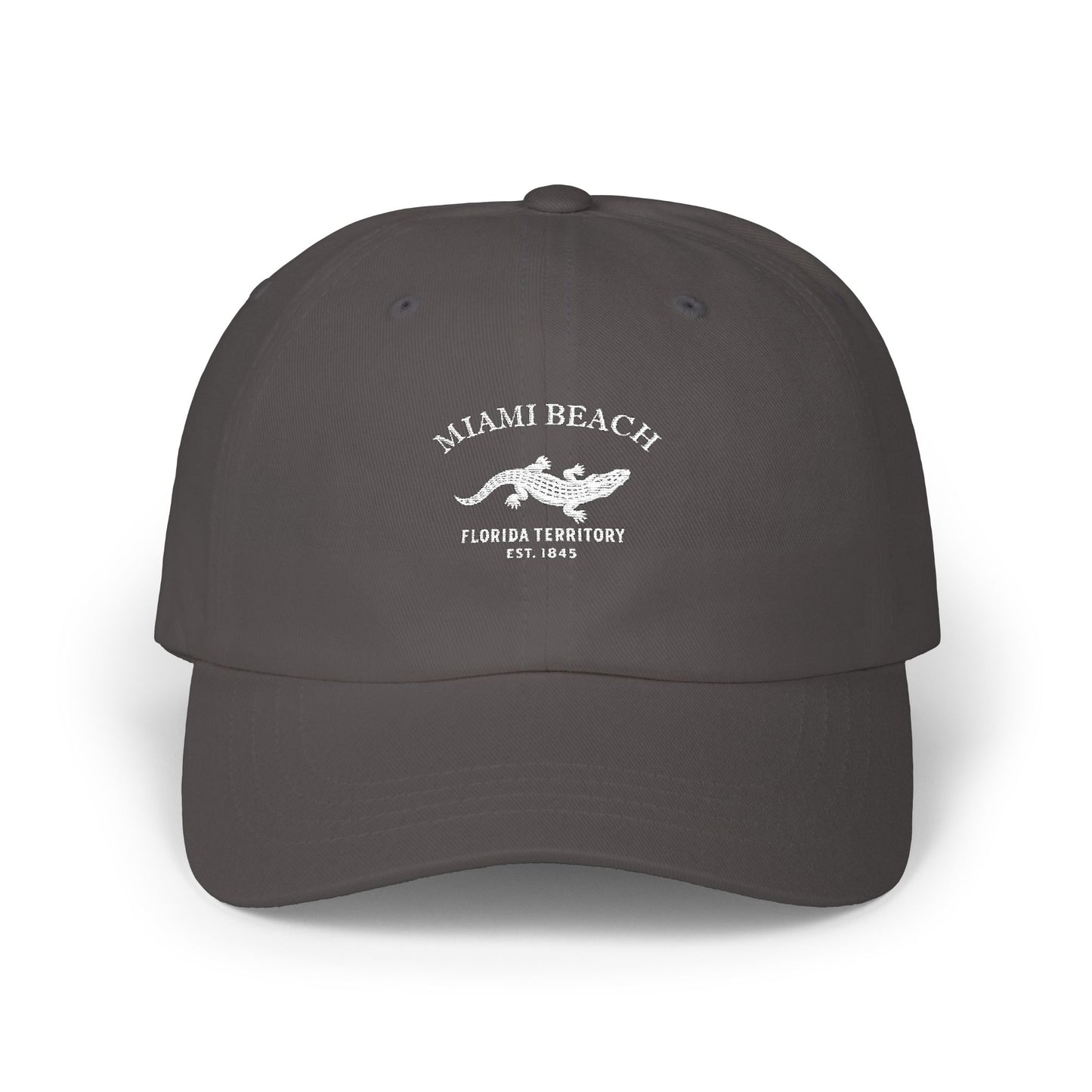

Today Miami Beach is pastel facades and turquoise water, neon nights and morning light on the sand — the most stylish stretch of barrier island in America. Our Miami Beach designs gather that identity — the alligator emblem, the Art Deco strip, the South Beach glow — into wearable form. Miami Beach, Florida — pastel Art Deco, neon nights, and the candy-colored towers where the sand meets South Beach.
By the 1970s the Deco district had faded into a stretch of peeling paint and aging retirees, and the bulldozers were circling. It was saved by an unlikely crusade: a preservationist named Barbara Capitman and the Miami Design Preservation League fought to protect the old hotels, and in 1979 the district became the first twentieth-century neighborhood listed on the National Register of Historic Places. The pastel was repainted, the neon relit, and South Beach — SoBe — reinvented itself as one of the most photographed places on earth.
Why People Visit Miami Beach
Miami Beach rewards visitors who want style with their sand: the world’s great Art Deco strip, a wide Atlantic beach, walkable streets, and neon nights. Add the South Beach glow and the year-round Florida sun, and the man-made island makes an easy case for itself.
