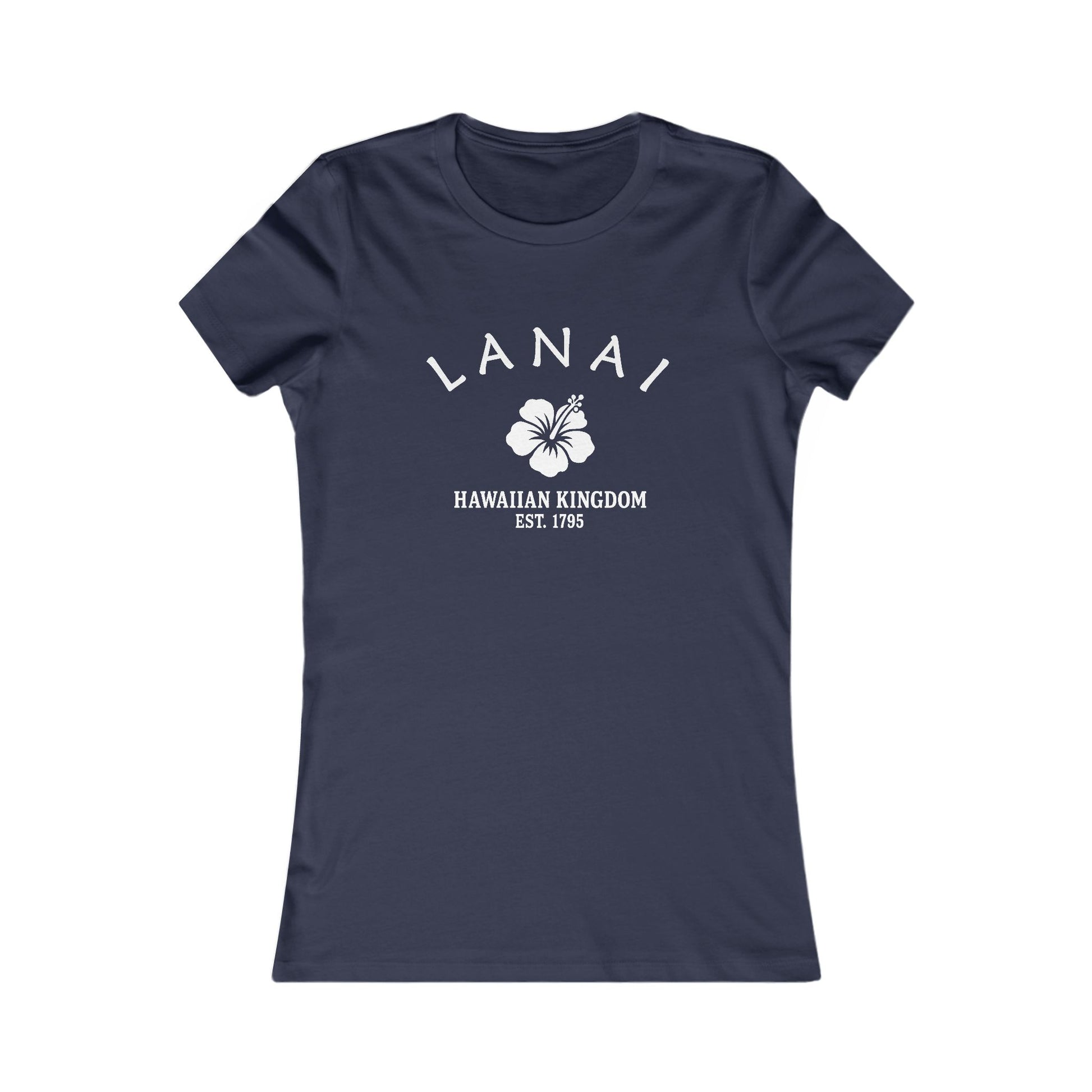
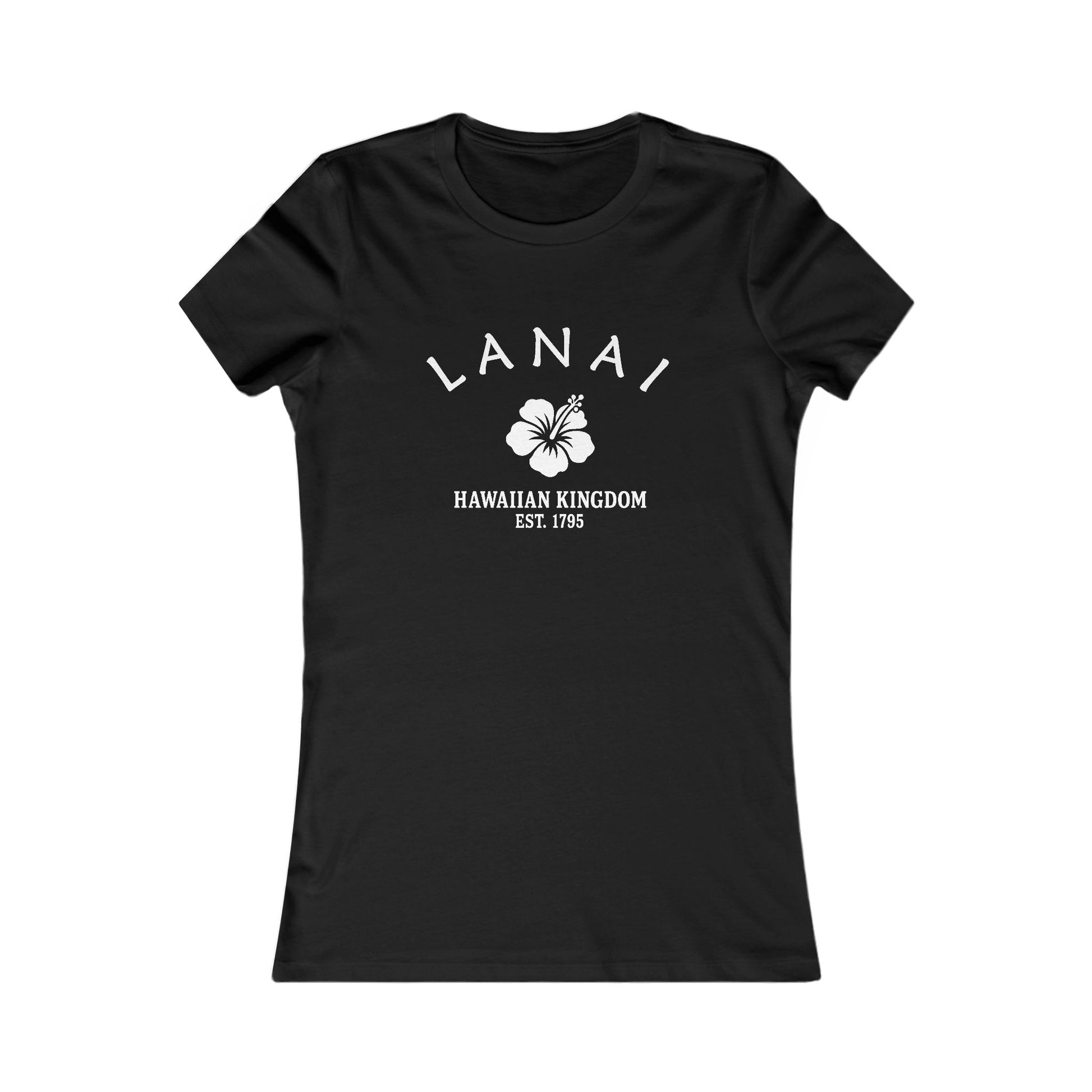
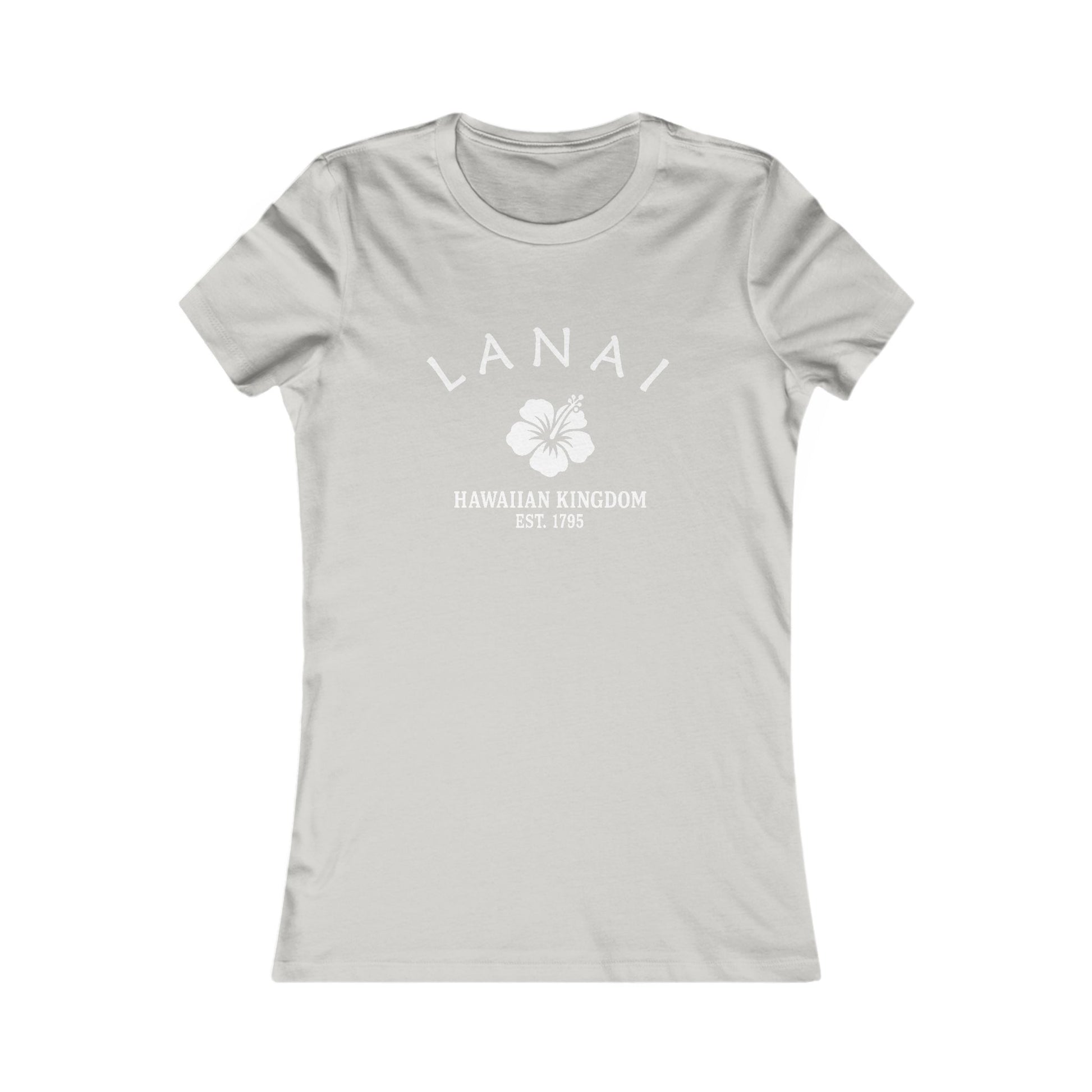
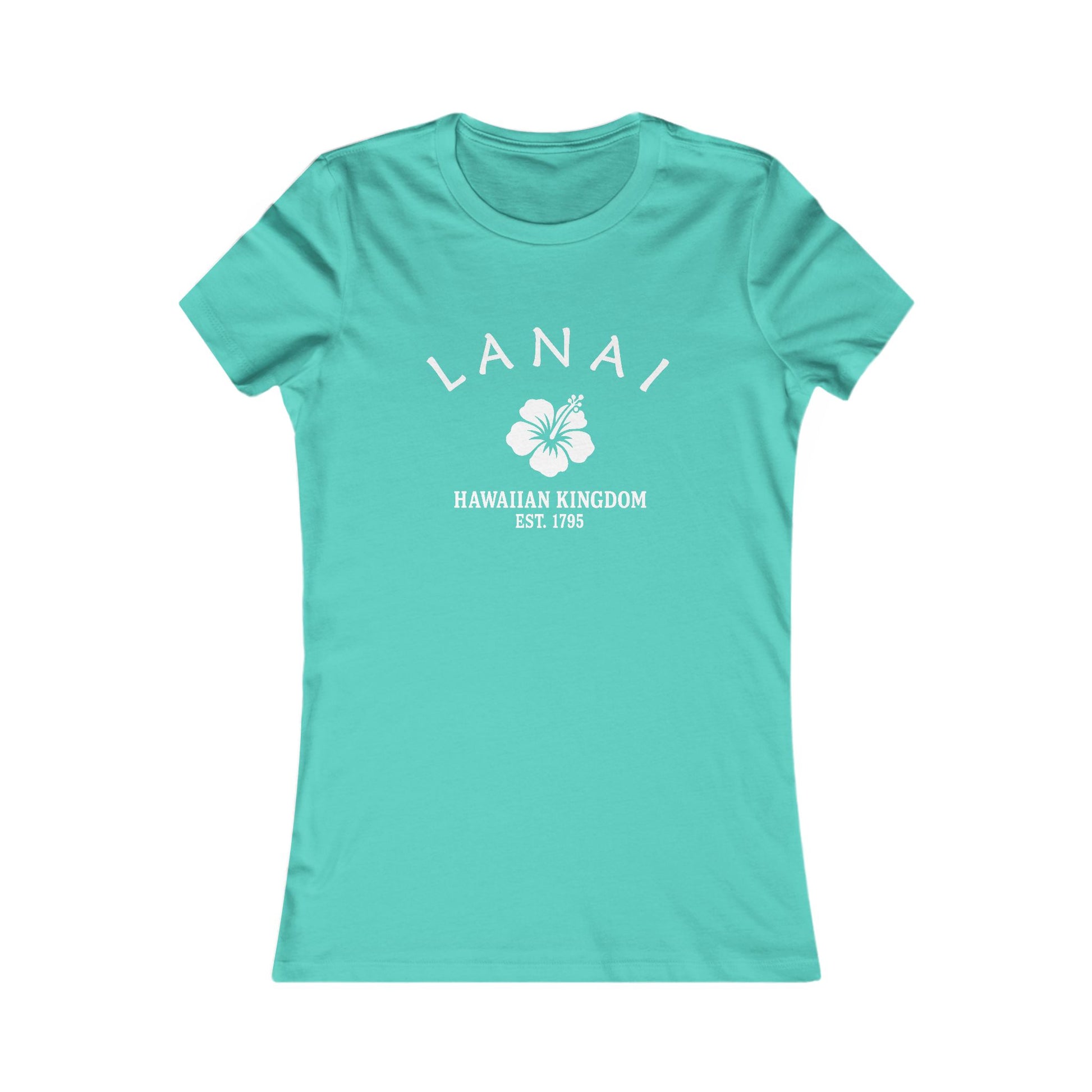
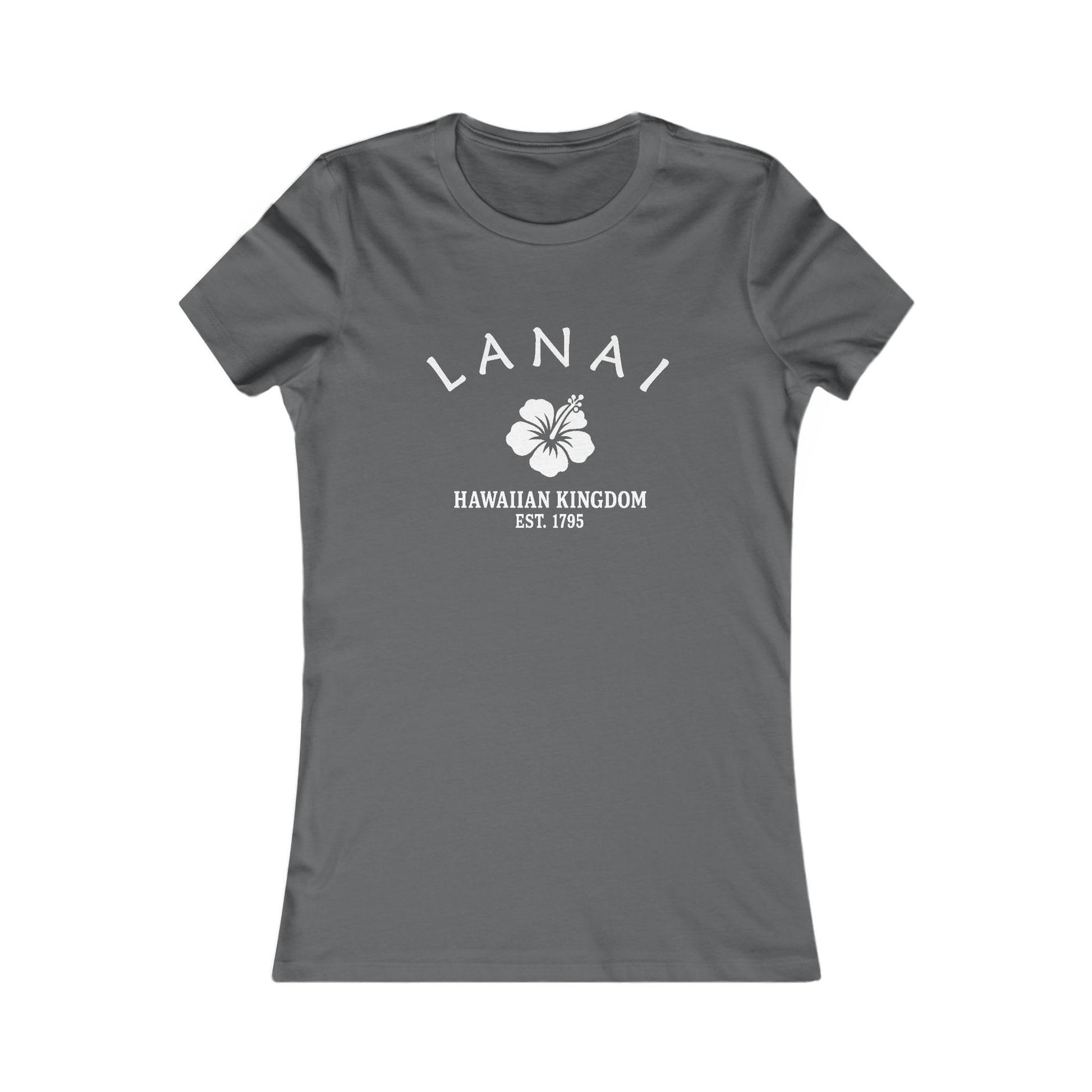
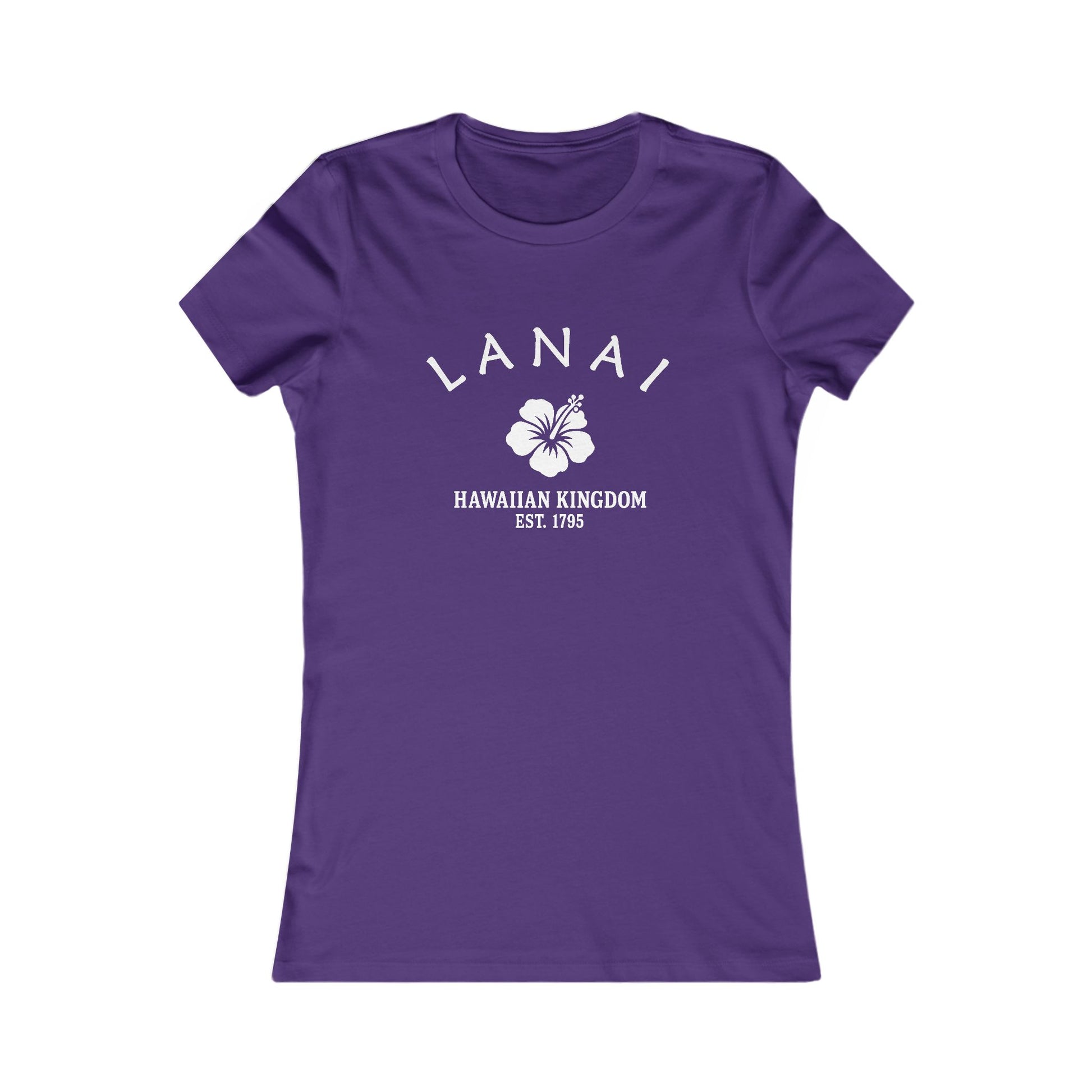
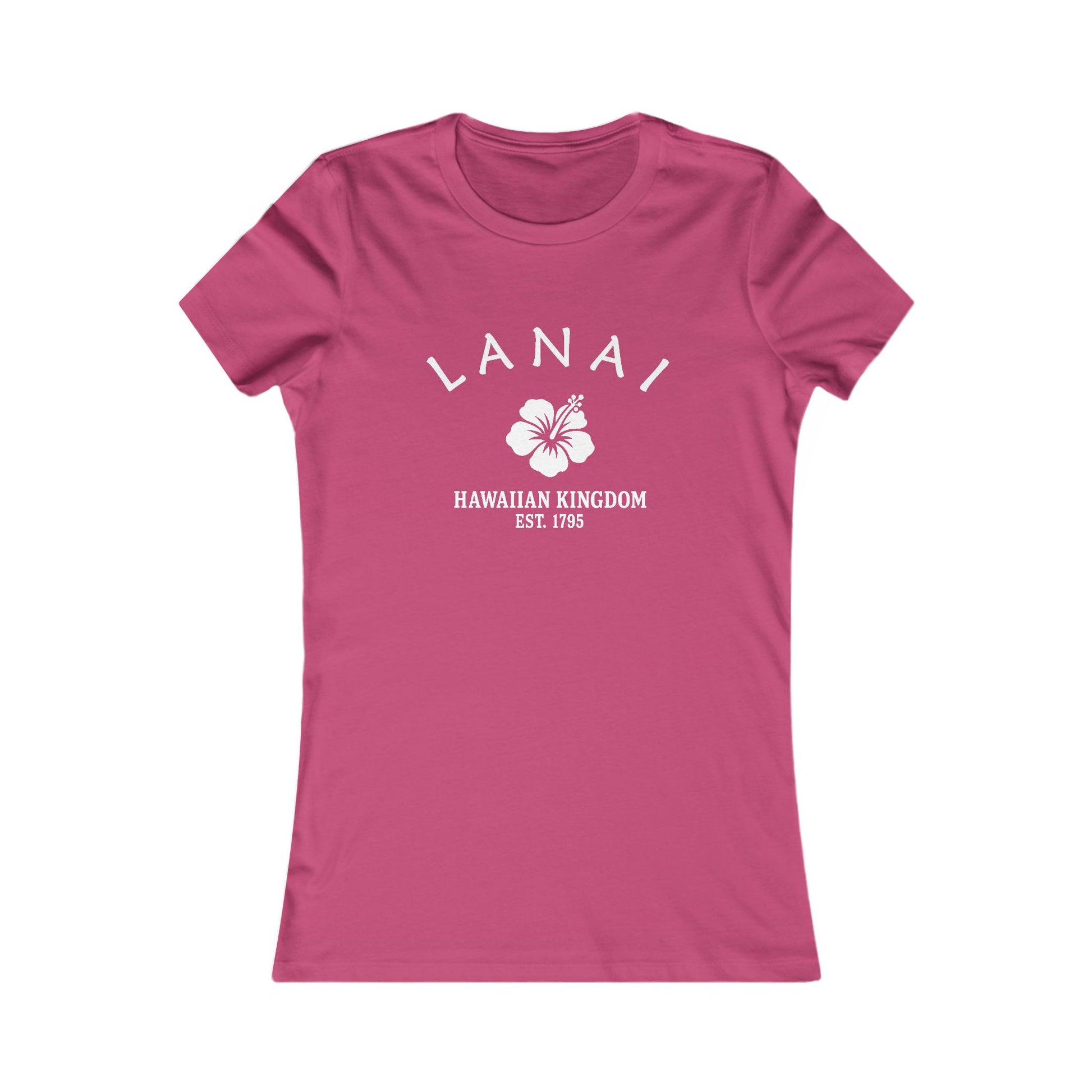
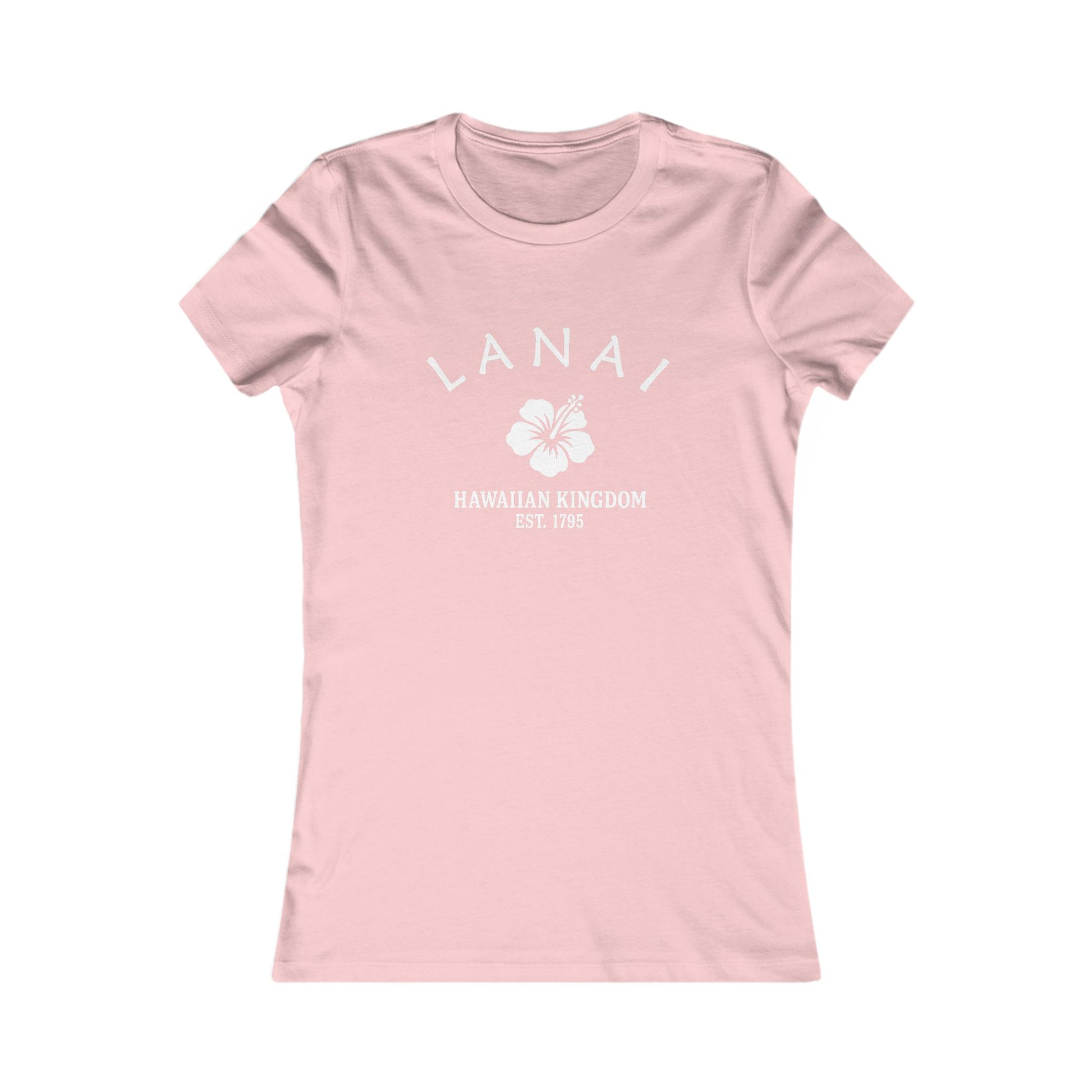
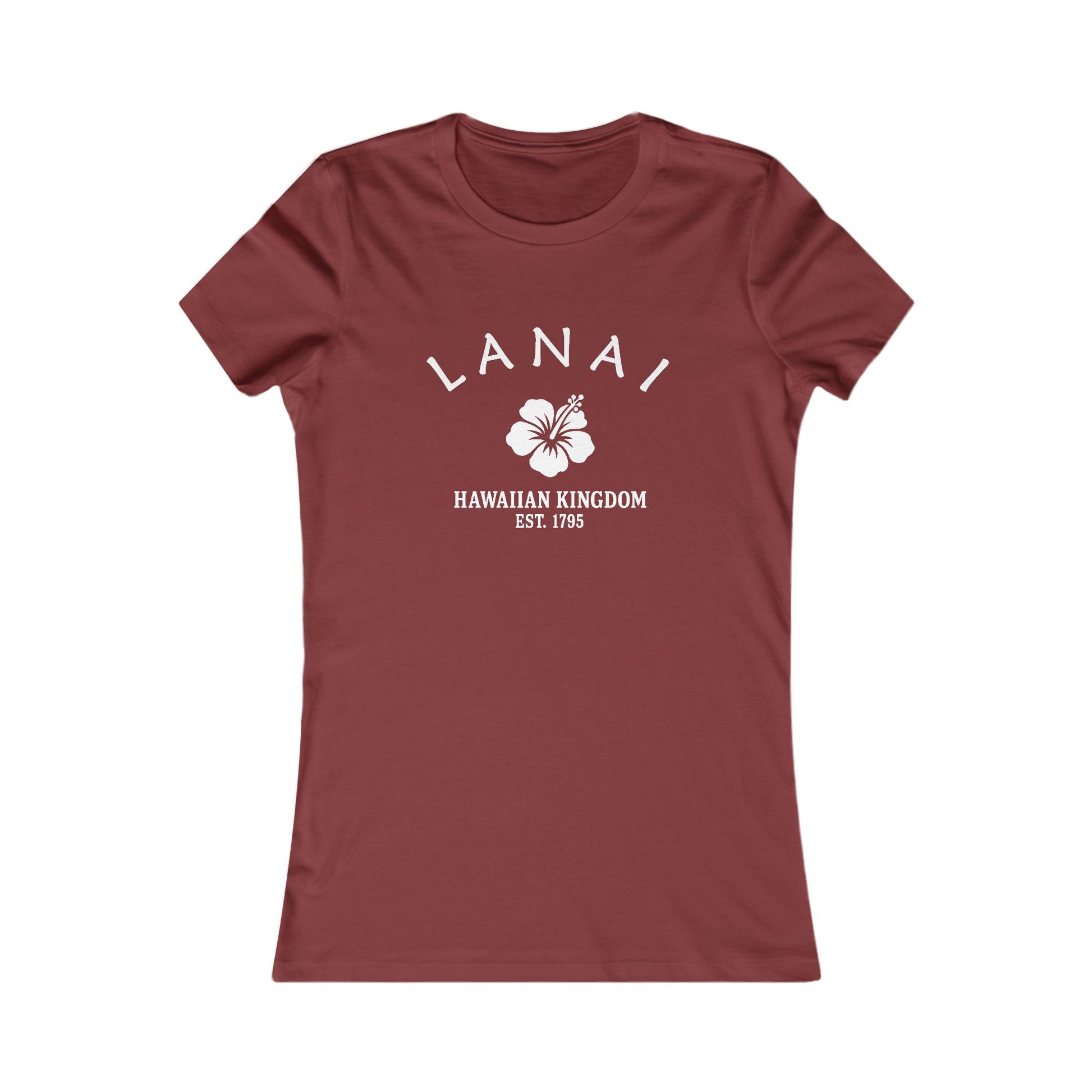
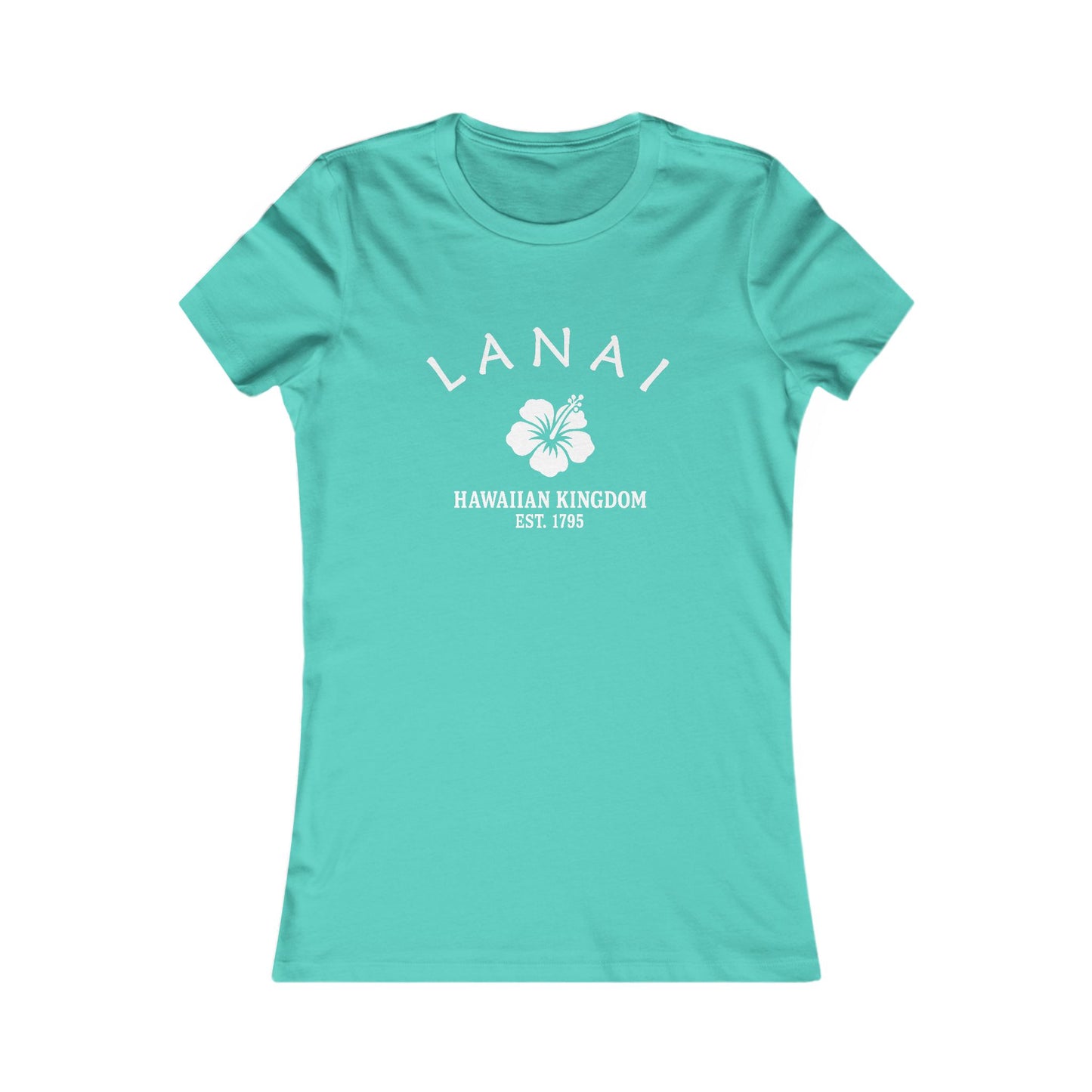
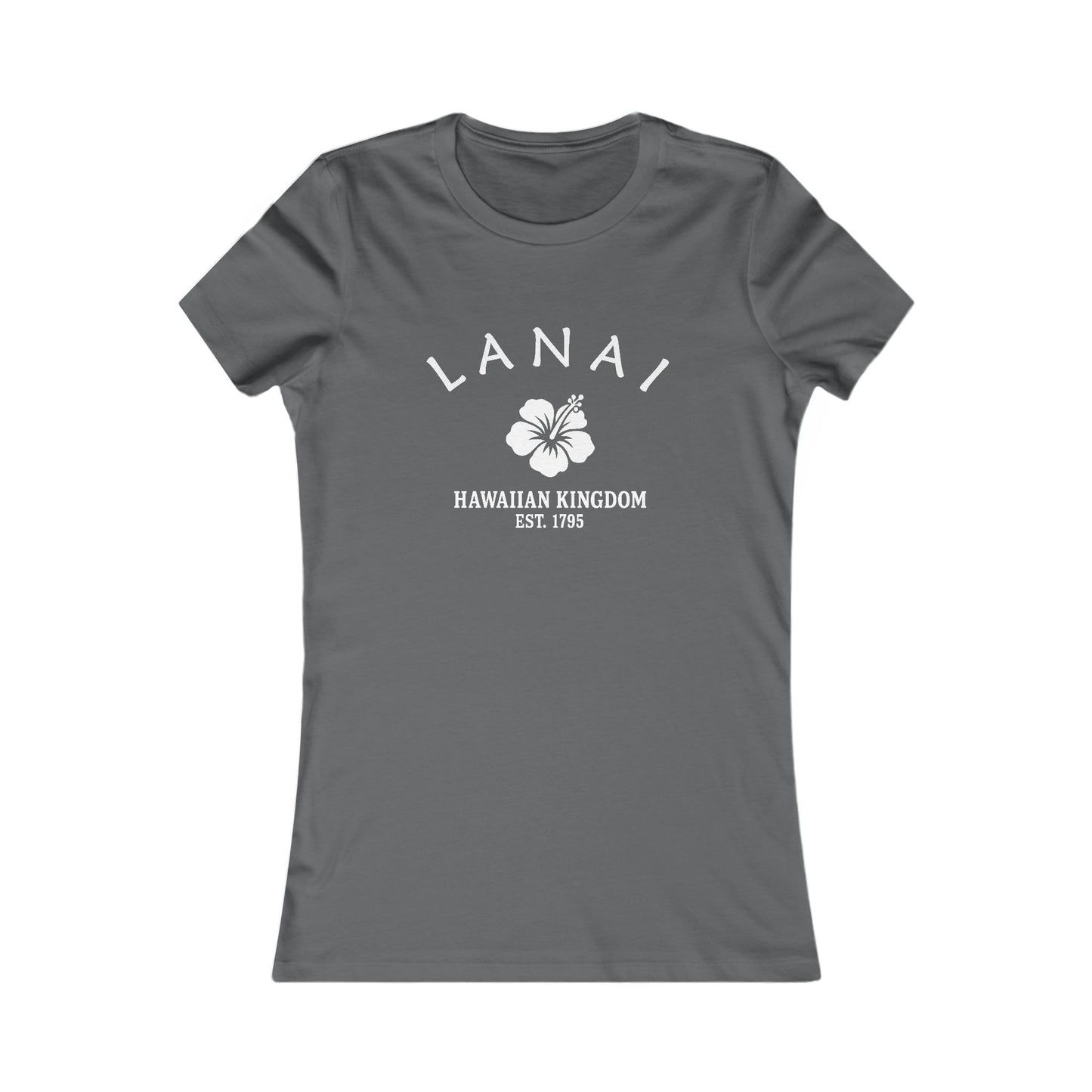
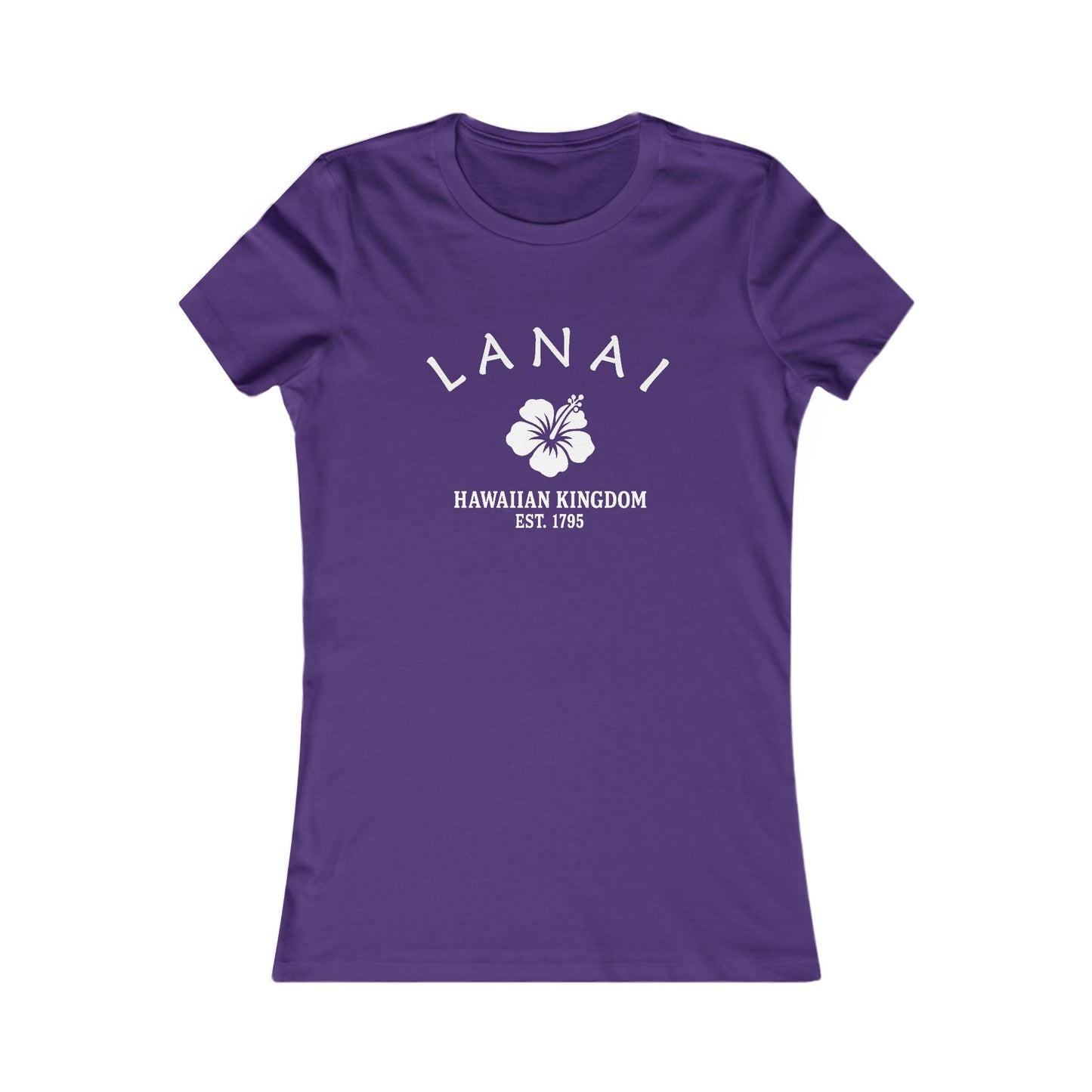
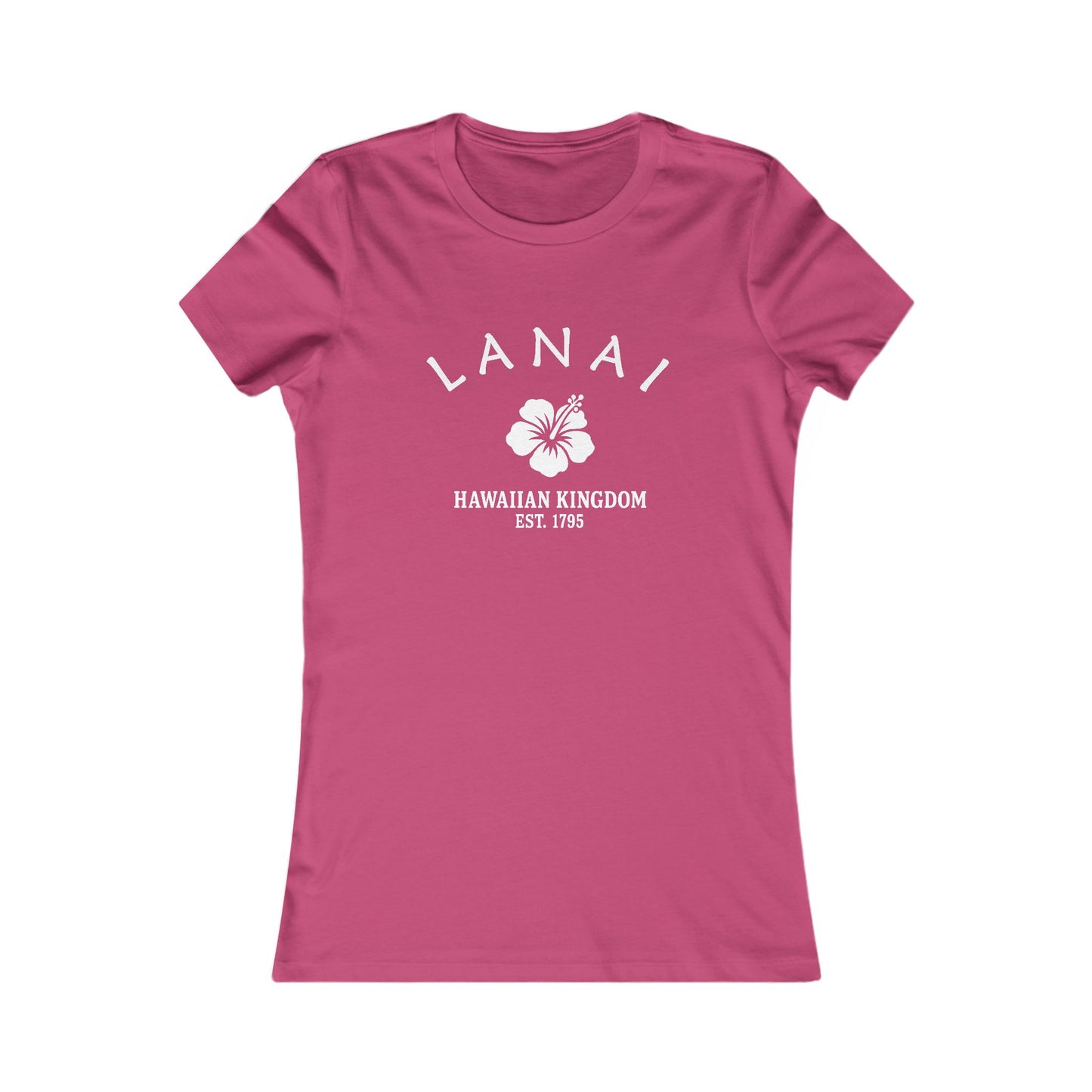
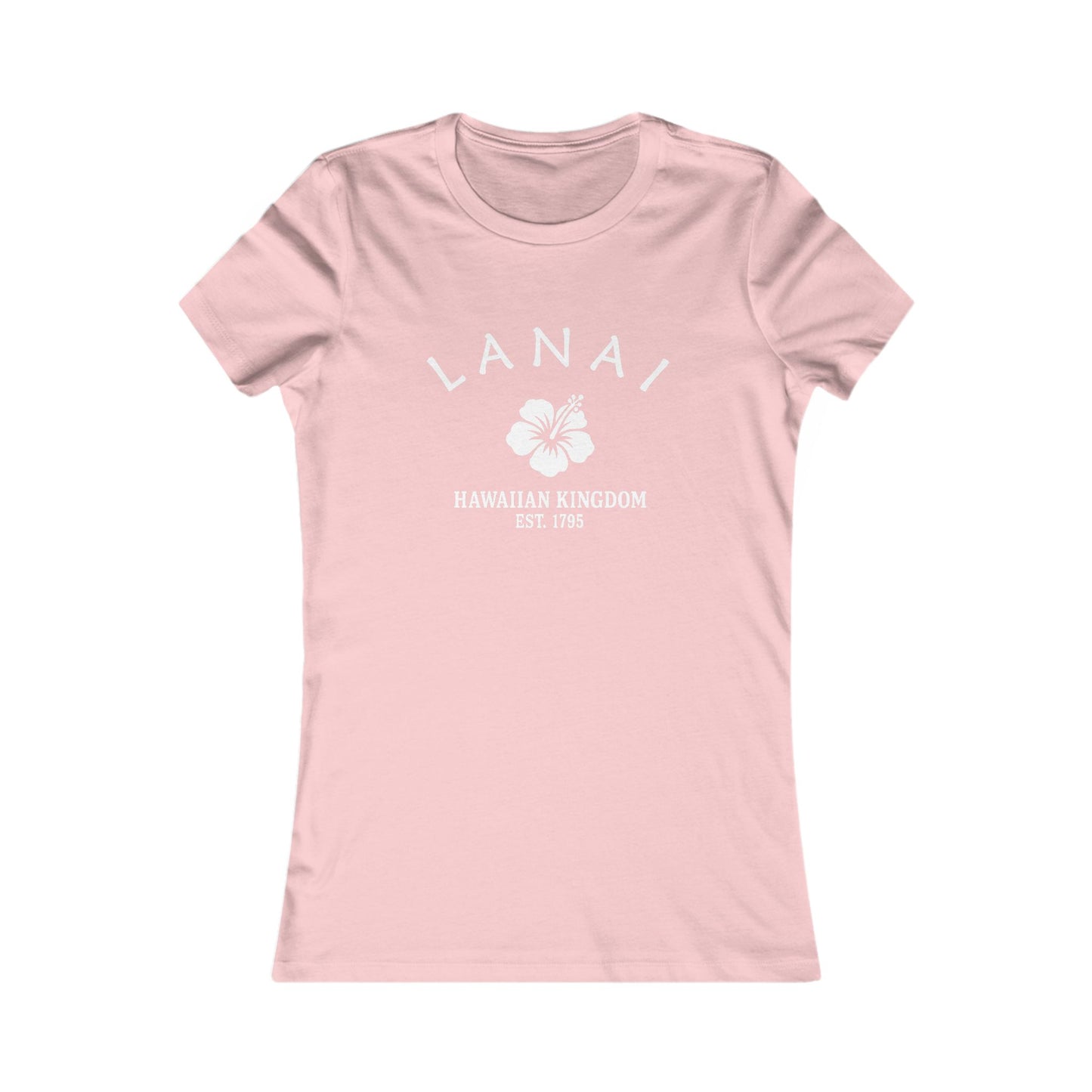
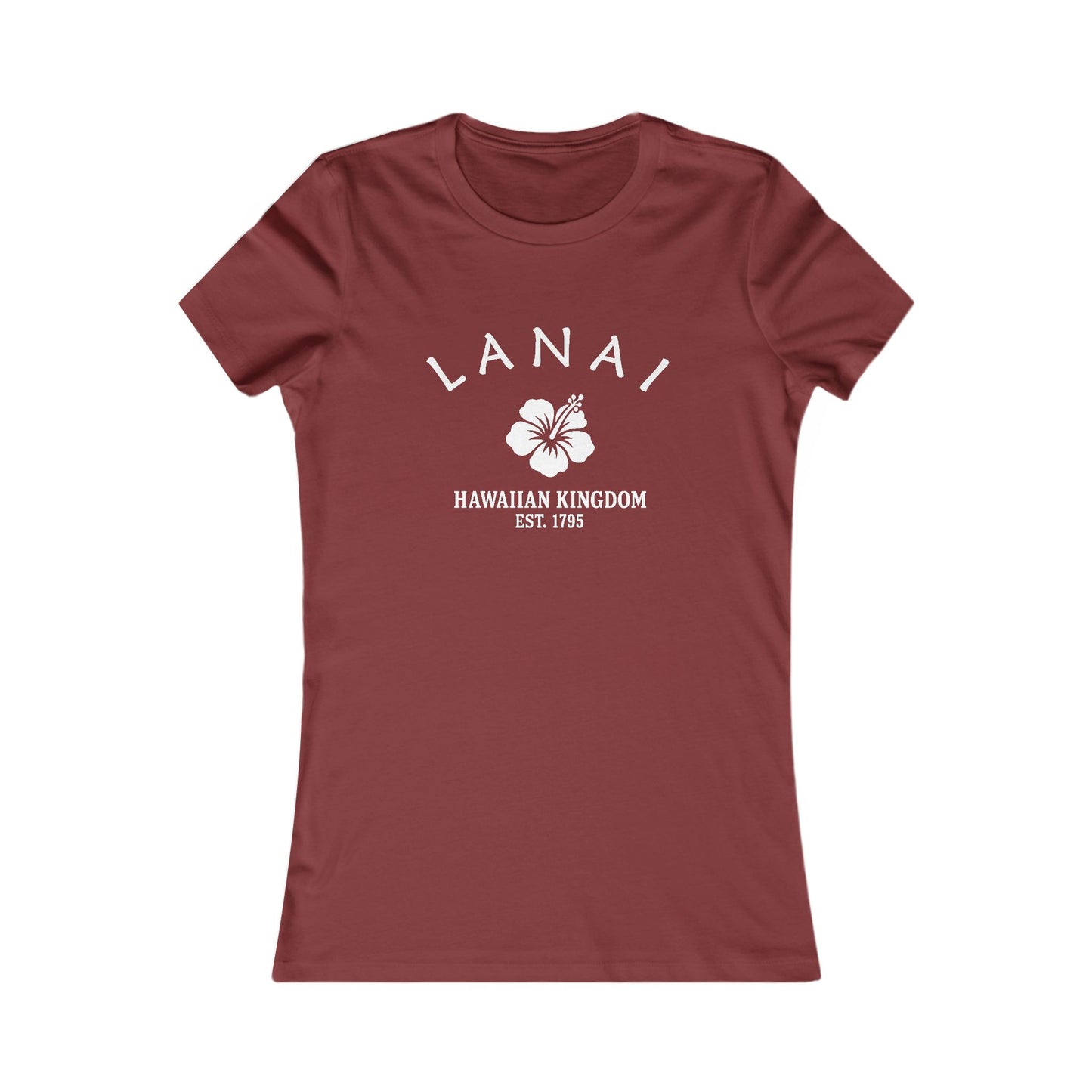
Today Lānaʻi is the quiet island: one small town, no traffic lights, two secluded resorts set against a back country of red dirt and empty roads. Bought almost whole by Larry Ellison in 2012, it is being remade around sustainability and tourism, but its character is older and slower than that — the smallest publicly accessible inhabited Hawaiian island, keeping its end-of-the-world calm. Our Lānaʻi designs gather that into wearable form. Lānaʻi, Hawaiʻi — the Pineapple Isle, where the world's quietest island keeps its golden past.
Our Lānaʻi logo carries the Hawaiian hibiscus over "Hawaiian Kingdom · Est. 1795," the shared emblem of every Merlin Classics Hawaiʻi place, marking the 1795 unification of the islands under Kamehameha. Printed in clean retro black-and-white like an old crate label, the hibiscus stands for the islands as a whole; what makes this one Lānaʻi is everything around it — the golden pineapple past and the old Lānaʻi City storefronts, the Cook-pine ridge, and the red rock of the Garden of the Gods.
Why People Visit Lānaʻi
Lānaʻi offers the rarest thing in Hawaiʻi: an island that still feels empty. It pairs a deep heritage — ancient fishing villages, a storied red-rock landscape, and the golden plantation past — with near-solitary beaches, pine-shaded uplands, and a single small town. It is quiet, scenic, and unhurried, made for travelers who want an island to themselves.
